
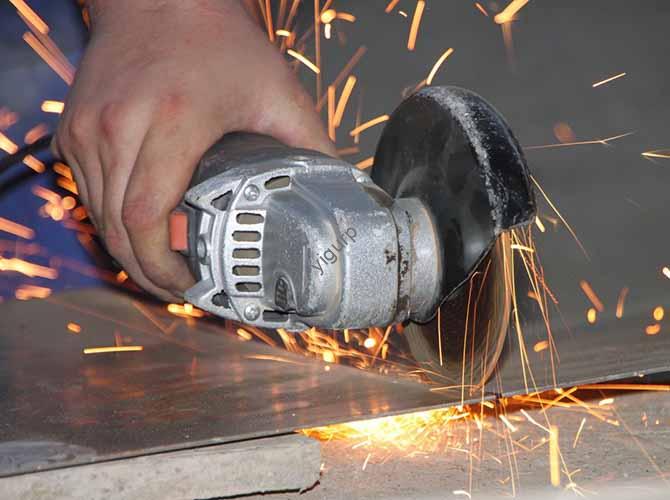
Si vous faites des recherches 16 prix de la tôle d'acier inoxydable de jauge, vous planifiez probablement un projet, comme des dosserets de cuisine, grillades en plein air, ou des équipements industriels – et doivent budgétiser avec précision. La réponse courte? Dès 2025, le prix moyen d'un standard 16 tôle d'acier inoxydable de mesure (4 pi x 8 pi, 304 grade) va de \(120 à \)250. But this number can jump or drop based on factors like the stainless steel grade, finition, taille, and even where you buy it. Dans ce guide, we’ll break down every detail that affects cost, share tips to save money, and help you avoid overpaying—so you can get the right sheet for your project without hidden fees.
D'abord: What Is a 16 Tôle d'acier inoxydable de mesure?
Before diving into prices, let’s make sure we’re on the same page about what a 16 gauge sheet is—this helps you avoid buying the wrong material and wasting money.
“Gauge” is a unit that measures the thickness of metal sheets, but it’s counterintuitive: the lower the gauge number, the thicker the sheet. UN 16 gauge stainless steel sheet has a thickness of about 0.0625 pouces (1.5875 mm)—thick enough to be durable for most residential and light commercial projects, but thin enough to cut and shape with basic tools.
Stainless steel itself is an alloy of steel and chromium (at least 10.5% chrome), which gives it its signature rust resistance. C'est pourquoi 16 gauge stainless steel sheets are popular for projects exposed to moisture—like kitchen sinks, mobilier d'extérieur, or marine parts—unlike mild steel, which needs painting to avoid rust.
Key Properties That Affect Its Value
The properties of 16 gauge stainless steel directly impact its price and use case. Here’s what to know:
| Propriété | Valeur typique (304 Grade) | Why It Matters for Your Budget |
| Thickness | 0.0625 dans (1.5875 mm) | Thicker than 18 jauge (0.050 dans) but thinner than 14 jauge (0.0781 dans)—balances durability and cost. |
| Rust Resistance | Haut (résiste à l'eau, food acids, and mild chemicals) | No need for extra coatings (like galvanizing), which saves long-term costs. |
| Résistance à la traction | 72,000 psi (pounds per square inch) | Strong enough for heavy-use projects (par ex., grill grates) but not overkill for simple tasks (par ex., backsplashes). |
| Ductilité | Modéré | Can be bent or formed without cracking—good for custom shapes, but less flexible than thinner gauges. |
Real-World Example: A local restaurant owner recently used 16 jauge 304 stainless steel sheets to replace their kitchen backsplash. They chose 16 gauge over 18 gauge because it’s more scratch-resistant (important for busy kitchens) and didn’t need 14 jauge (ce qui était 30% plus cher) for a backsplash. The sheets lasted 5 years without rust, even with daily exposure to water and cleaning chemicals.
2025 16 Gauge Stainless Steel Sheet Price Breakdown (By Grade)
Le qualité d'acier inoxydable is the biggest factor affecting 16 gauge sheet prices. Grades are labeled with numbers (par ex., 304, 316, 430) that indicate their alloy composition—and thus their performance (like rust resistance or heat tolerance). Here’s the 2025 price range for the most common grades, based on a standard 4 pi x 8 ft sheet:
1. 430 Grade (Acier inoxydable ferritique) – \(80 à \)130
430 grade is the most affordable 16 gauge stainless steel sheet because it has less chromium (16-18%) and no nickel. It’s still rust-resistant but not as durable as higher grades.
- Idéal pour: Indoor projects with minimal moisture exposure—like decorative wall panels, appliance trim, or non-food-contact surfaces (par ex., garage storage shelves).
- Price Why: Cheaper than 304 because it lacks nickel (a costly metal). Par exemple, un 4 pi x 8 pi 430 sheet costs about \(100, tandis qu'un 304 sheet of the same size is \)150+.
- Limitation: Can rust if exposed to saltwater or strong chemicals (par ex., pool water, industrial cleaners). Avoid using it outdoors or in kitchens/bathrooms.
Étude de cas: A home DIYer used 430 grade 16 gauge sheets to make custom garage cabinets. They paid \(95 per sheet (4 pi x 8 pi) and cut them into panels. The cabinets look sleek, and after 2 années, there’s no rust—since garages are dry. Ils ont sauvé \)50 per sheet compared to 304 grade, which they didn’t need for a garage project.
2. 304 Grade (Austenitic Stainless Steel) – \(120 à \)250
304 grade is the “workhorse” of stainless steel—and the most popular for 16 gauge sheets. It has 18% chromium and 8% nickel, making it highly rust-resistant and versatile.
- Idéal pour: Most residential and light commercial projects—kitchen backsplashes, grill grates, mobilier d'extérieur (covered), sink surrounds, and food-processing equipment (répond aux normes FDA).
- Price Why: More expensive than 430 because of the nickel content, but still affordable for most projects. Prices vary by finish (par ex., a brushed finish costs \(10–)20 more than a mill finish).
- Valeur: The most cost-effective choice for most people—balances performance and price. UN 304 sheet can last 10+ années à l'extérieur (if covered) et 15+ years indoors.
3. 316 Grade (Marine-Grade Stainless Steel) – \(200 à \)350
316 grade is the premium option for 16 gauge sheets. It adds molybdenum (2-3%) to the 304 formula, making it resistant to saltwater and harsh chemicals—hence the “marine-grade” label.
- Idéal pour: Outdoor projects exposed to saltwater (par ex., pièces de bateau, coastal outdoor furniture), équipement industriel (par ex., réservoirs chimiques), ou des dispositifs médicaux (meets strict hygiene standards).
- Price Why: Molybdenum and higher nickel content (10-14%) drive up costs. UN 4 pi x 8 pi 316 sheet is 50–75% more expensive than 304.
- When to Splurge: Only if your project is exposed to salt or chemicals. Par exemple, a homeowner in Florida used 316 grade 16 gauge sheets for their outdoor shower walls—after 3 années, there’s no rust from ocean air, whereas 304 would have started rusting within 18 mois.
4. 201 Grade (Economy Austenitic Stainless Steel) – \(90 à \)160
201 grade is a budget alternative to 304. It has less nickel (3.5-5.5%) and more manganese, which makes it cheaper but less rust-resistant.
- Idéal pour: Indoor, low-moisture projects—like decorative signs, présentoirs, or furniture legs. Avoid it for kitchens, bathrooms, or outdoors.
- Price Why: Cheaper than 304 but more expensive than 430. UN 4 pi x 8 pi 201 sheet costs about \(120, contre. \)150 pour 304.
- Risk: Can rust if exposed to even moderate moisture. A bakery owner once used 201 grade for their countertop edge—within 6 mois, it developed rust spots from daily water spills. They had to replace it with 304, costing them an extra $200.
How Finish and Size Affect 16 Gauge Stainless Steel Sheet Prices
After grade, le finition (surface texture) et taille of the sheet are the next biggest price drivers. Let’s break down how each impacts cost:
1. Finition: \(10 à \)50 Extra Per Sheet
The finish of a 16 gauge stainless steel sheet affects its appearance, durabilité, and price. Here are the most common finishes and their 2025 price add-ons (pour un 4 pi x 8 pi 304 grade sheet):
| Finish Type | Description | Price Add-On | Idéal pour |
| Mill Finish (2B) | Mat, slightly rough surface (the default finish). | $0 (included in base price) | Hidden parts (par ex., cabinet interiors), industrial projects where appearance doesn’t matter. |
| Brushed Finish (Non. 4) | Satin-like texture created by sanding. Hides fingerprints and scratches. | \(10–)20 | Visible indoor projects (par ex., dosserets de cuisine, appliance fronts). |
| Mirror Finish (8K) | Highly polished, reflective surface. Requires extra processing. | \(30–)50 | Decorative projects (par ex., restaurant walls, retail displays). |
| Embossed Finish | Patterned surface (par ex., diamond plate, stucco). Adds grip and texture. | \(20–)40 | Flooring, marches d'escalier, or outdoor furniture (prevents slipping). |
Pro Tip: Don’t pay for a mirror finish if the sheet will be hidden (par ex., the back of a cabinet). A mill finish is just as durable and saves you \(30–)50 per sheet.
2. Taille: Custom Cuts Cost More Than Standard Sizes
16 gauge stainless steel sheets come in standard sizes, but you can also get custom cuts (par ex., 2 pi x 3 ft for a small backsplash). Here’s how size affects price (pour 304 grade, mill finish):
| Taille | Standard Price (2025) | Custom Cut Price (Exemple: 2 pi x 3 pi) |
| 4 pi x 8 pi (32 sq ft) | \(120–)250 | N / A (standard size) |
| 3 pi x 6 pi (18 sq ft) | \(80–)150 | N / A (common size) |
| Coutume (par ex., 2 pi x 3 pi, 6 sq ft) | N / A | \(30–)60 (plus a \(10–)20 cutting fee) |
Why Custom Cuts Cost More: Suppliers charge a cutting fee (généralement \(10–)20 per sheet) because they need to use tools like laser cutters or shears to trim the sheet to your size. Cependant, buying a custom cut can save you money in the long run—you won’t waste material (par ex., buying a 4 pi x 8 ft sheet and cutting off 75% of it for a small project).
Exemple: A homeowner needed a 16 jauge 304 sheet for their bathroom backsplash (2 pi x 4 pi). They considered buying a standard 3 pi x 6 ft sheet (\(90) but opted for a custom cut (\)45 + \(15 cutting fee = \)60). Ils ont sauvé $30 and had no leftover material to store or discard.
Where to Buy 16 Gauge Stainless Steel Sheets (And Get the Best Price)
Where you buy your 16 gauge stainless steel sheet affects both the price and the quality. Here are the top places to buy, avec leurs pros, inconvénients, et 2025 price ranges (pour un 4 pi x 8 pi 304 grade sheet):
1. Local Metal Suppliers – \(130 à \)200
Local suppliers (par ex., Metal Supermarkets, regional metal yards) are great for DIYers and small businesses. They let you inspect the sheet in person and avoid shipping costs.
- Avantages:
- No shipping fees (you can pick up the sheet or get local delivery for \(20–)40).
- Inspect the sheet for defects (par ex., dents, rayures) before buying.
- Get advice from staff (par ex., which grade is best for your project).
- Inconvénients:
- Limited inventory (may not have 316 grade or specialty finishes in stock).
- Minimum order requirements (some require you to buy 2+ sheets for custom cuts).
- Idéal pour: Projects where you need the sheet quickly (par ex., emergency repairs) or want to see the material firsthand.
2. Online Retailers – \(120 à \)250 (Plus Shipping)
Online retailers (par ex., Amazon, McMaster-Carr, Online Metals) offer a wider selection than local suppliers. They’re convenient if you don’t have a local metal yard.
- Avantages:
- Wide inventory (all grades, finitions, and sizes in stock).
- Price comparisons are easy (you can check 5+ retailers in 10 minutes).
- Custom cuts are often cheaper (no minimum order fees for small sizes).
- Inconvénients:
- Shipping costs (\(30–)80 pour un 4 pi x 8 ft sheet, depending on weight).
- Can’t inspect the sheet before delivery (risk of dents or wrong size).
- Money-Saving Tip: Look for free shipping promotions (par ex., “Free shipping on orders over \(200»). Par exemple, if you buy two 4 pi x 8 pi 304 feuilles (\)150 each = \(300), you can avoid a \)50 shipping fee.
3. Wholesale Suppliers – \(100 à \)180 (For Bulk Orders)
Wholesale suppliers (par ex., Ryerson, Thyssenkrupp) sell 16 gauge stainless steel sheets in bulk (10+ feuilles). They’re ideal for contractors or businesses with large projects.
- Avantages:
- Bulk discounts (10–20% off per sheet when buying 10+).
- Negotiable prices (you can ask for a lower rate if you’re a repeat customer).
- Custom packaging (to protect sheets during shipping).
- Inconvénients:
- High minimum orders (most require 10+ feuilles).
- Long lead times (2–4 weeks for delivery).
- Exemple: A contractor building 10 outdoor grills bought 15 4 pi x 8 pi 304 grade 16 gauge sheets from a wholesale supplier. They paid \(120 per sheet (contre. \)150 at a local supplier) et sauvé $450 total. The lead time was 3 semaines, which fit their project timeline.
5 Tips to Save Money on 16 Gauge Stainless Steel Sheets
You don’t have to pay full price for 16 gauge stainless steel sheets. Voici 5 practical tips to cut costs without sacrificing quality:
1. Buy Offcuts or “Seconds”
Many suppliers sell “offcuts” (leftover pieces from large orders) or “seconds” (sheets with minor defects, like small scratches) at 30–50% off. These are perfect for small projects (par ex., un 2 pi x 2 ft sheet for a grill grate).
- How to Find Them: Ask local suppliers if they have an offcuts bin—most do but don’t advertise it. Online, search for “stainless steel offcuts [your area]” or check eBay for used sheets.
- Exemple: A DIYer found a 3 pi x 4 pi 16 jauge 304 offcut at a local supplier for \(40 (contre. \)90 for a new 3 pi x 6 ft sheet). The offcut had a small scratch on one edge, which was hidden when they installed it as a kitchen backsplash.
2. Avoid Over-Grading
Don’t buy a higher grade than you need. Par exemple:
- If your project is indoors (par ex., a bookshelf), 430 grade is enough—no need for 304.
- If it’s outdoors but not near saltwater (par ex., a patio table), 304 grade works—no need for 316.
Over-grading can add 50–100% to your cost. Use the grade guide earlier in this article to pick the right one.
3. Buy During Slow Seasons
Stainless steel prices fluctuate with demand. The slow seasons for metal suppliers are January–February (after holiday projects) et July–August (summer vacations). During these months, suppliers often offer 10–15% discounts to boost sales.
- Pro Tip: Call suppliers in late December or early June to ask about upcoming sales. Some will hold a sheet for you at the sale price if you put down a small deposit.
4. Compare Shipping Costs (And Pick Up If Possible)
Shipping a 4 pi x 8 pi 16 gauge stainless steel sheet can cost \(30–)80—sometimes more than the sheet itself. If you have a truck or can borrow one, pick up the sheet from a local supplier to avoid shipping fees.
- If You Can’t Pick Up: Use a freight calculator (par ex., uShip) to compare shipping rates from different carriers. Sometimes, shipping via a local freight company is cheaper than the retailer’s default shipping.
5. Negotiate for Bulk Orders
If you’re buying 5+ 16 gauge stainless steel sheets, don’t be afraid to negotiate with suppliers. Many retailers and wholesalers are willing to lower prices to secure a larger order—especially if you’re a repeat customer or can pay upfront.
- How to Negotiate:
- Research the average price first (use the ranges in this guide) so you know what’s a fair deal.
- Mention competitors’ prices (par ex., “Supplier X quoted me $130 per sheet—can you match that?»).
- Ask for extra perks if they can’t lower the price (par ex., free cutting, free delivery, or a free sample sheet).
- Exemple: A restaurant chain needed 20 4 pi x 8 pi 304 grade 16 gauge sheets for their new locations. The initial quote was \(160 per sheet (\)3,200 total). They negotiated by mentioning a wholesale supplier’s \(140 per sheet quote, and the retailer agreed to match it—saving them \)400 total. The retailer also threw in free cutting for all sheets, which saved an extra $200 in cutting fees.
Yigu Technology’s View on 16 Gauge Stainless Steel Sheet Pricing
Chez Yigu Technologie, we see 16 gauge stainless steel sheets as a cost-effective middle ground for most projects—sturdier than thinner gauges (comme 18) but more affordable than thicker ones (comme 14). When it comes to pricing, we always advise clients to prioritize grade over frills: un 304 grade sheet may cost 30% more than 430, but it avoids costly replacements from rust.
We’ve noticed a 5–8% price increase in 16 gauge stainless steel sheets in 2025 due to rising nickel and molybdenum costs, so buying during slow seasons or in bulk is smarter than ever. For small projects, offcuts are a hidden gem—we often help clients source them to cut costs by 40% ou plus. Overall, the key is to align your budget with your project’s needs: don’t overspend on 316 grade for a garage shelf, but don’t cut corners on 304 for a kitchen backsplash.
FAQ: Common Questions About 16 Prix de la tôle d'acier inoxydable de jauge
1. Is 16 gauge stainless steel sheet more expensive than 18 jauge?
Oui. UN 4 pi x 8 pi 304 grade 16 gauge sheet costs \(120–)250, while an 18 gauge sheet of the same grade and size costs \(90–)200. The price difference comes from thickness: 16 gauge is thicker (0.0625 in vs. 0.050 in for 18 jauge), so it uses more material. Choisir 16 gauge if you need extra durability (par ex., grill grates), et 18 gauge if weight or cost is a priority (par ex., decorative wall art).
2. Can I get a discount if I buy 16 gauge stainless steel sheets in bulk?
Absolument. Most suppliers offer 10–20% off per sheet when buying 10+ feuilles. Par exemple, un 4 pi x 8 pi 304 grade sheet costs \(150 each when buying 1–2 sheets, mais \)120–$135 each when buying 10+. Some suppliers also waive cutting or shipping fees for bulk orders. Always ask about bulk discounts—even if you need 5 feuilles, some retailers will offer a small discount.
3. Why do 16 gauge stainless steel sheet prices vary so much by supplier?
Prices vary due to three main factors:
- Overhead costs: Local suppliers with physical stores may charge more to cover rent, while online retailers with lower overhead can offer better prices.
- Inventory levels: Suppliers with excess stock may lower prices to clear inventory, while those with low stock may charge more.
- Services included: Some suppliers include free cutting or delivery in their price, while others charge extra for these services. Always compare “total cost” (sheet price + fees) instead of just the sheet price.
4. Is it cheaper to buy a standard size 16 gauge sheet or a custom cut?
It depends on your project. If you need a small piece (par ex., 2 pi x 3 pi), a custom cut is cheaper: a custom cut costs \(30–)60 + \(10–)20 cutting fee (\(40–)80 total), while a standard 3 pi x 6 ft sheet costs \(80–)150 (and you’ll waste 75% du matériel). If you need a large piece that matches a standard size (par ex., 4 pi x 8 ft for a backsplash), a standard sheet is cheaper—no cutting fee, and no wasted material.
5. Will 16 gauge stainless steel sheet prices go up in 2026?
It’s likely. Stainless steel prices are tied to the cost of raw materials like nickel and molybdenum, which have been rising due to global demand. Industry experts predict a 3–5% price increase for 16 gauge stainless steel sheets in 2026. If you have a long-term project, consider buying a few extra sheets now to lock in current prices—just store them in a dry, cool place to prevent rust.