
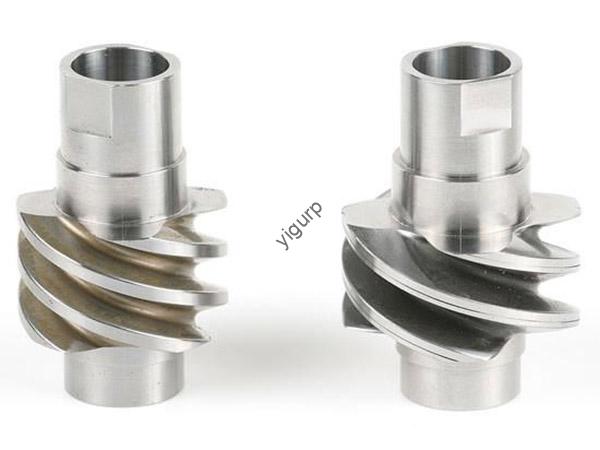
Si vous êtes ingénieur, fabricant, ou acheteur à la recherche d'un acier polyvalent à faible teneur en carbone, 1018 cold rolled steel is likely on your radar. Ce matériau équilibre l'usinabilité, force, et son prix abordable, ce qui en fait un choix de premier ordre pour d'innombrables pièces industrielles. Dans ce guide, nous allons détailler tout ce que vous devez savoir, de sa définition de base aux applications du monde réel, with data and examples to help you make informed decisions.
1. 1018 Cold Rolled Steel Fundamentals: What You Need to Start
Before choosing 1018 cold rolled steel, it’s critical to understand its core properties and how it’s made. Commençons par les bases.
What is 1018 Acier laminé à froid?
1018 cold rolled steel definition: A low-carbon steel (with ~0.18% carbon content) processed through cold rolling—where metal is pressed at room temperature after hot rolling. Unlike hot rolled steel, cold rolling creates a smoother surface and tighter dimensions.
CR 1018 basics boil down to its classification: it’s part of the AISI 1000 série, known for low carbon and excellent workability. Par exemple, a manufacturer making small gears might choose CR 1018 over hot rolled because it requires less post-processing (like grinding) to achieve a clean finish.
Cold vs. Laminé à chaud 1018: Différences clés
The main contrast lies in the manufacturing process and end properties:
- Cold rolled 1018: Processed at below recrystallization temperature (around 700°C for 1018 acier), ce qui provoque work hardening 1018—strengthening the metal but reducing ductility slightly. It has a bright, smooth surface and tight tolerances.
- Hot rolled 1018: Rolled at high temperatures, so it’s more ductile but has a rough, scaled surface. Tolerances are looser, making it better for large structural parts (par ex., poutres) rather than precision components.
How is 1018 Cold Rolled Steel Made?
Le cold rolling process steps pour 1018 steel typically include:
- Hot rolling: D'abord, the steel is heated and rolled into large coils or bars (the “hot rolled” stage).
- Pickling: The hot rolled steel is dipped in acid to remove scale (oxydation) from the surface.
- Cold rolling: The pickled steel is passed through rollers at room temperature to reduce thickness—this is where the cold reduction ratio (usually 50–90%) entre (higher ratios mean thinner, stronger material).
- Skin pass rolling: A final light rolling step to improve surface smoothness and remove minor defects.
2. Mécanique & Propriétés physiques: Data That Matters
Pour les ingénieurs, 1018 CRS yield strength, résistance à la traction, and other properties determine if the material fits an application. Below is a table of key metrics (tested per ASTM standards):
| Propriété | Valeur | Unité | Notes |
| Résistance à la traction 1018 | 440–590 | MPa | Higher than hot rolled 1018 (420–550 MPa) |
| 1018 CRS yield strength | 370–480 | MPa | Critical for parts under load (par ex., arbres) |
| Elongation at break | 15–20 | % | Measures ductility (higher = more bendable) |
| Brinell hardness HRB | 70–90 | HRB | Facile à usiner (hardness under 100 HRB is ideal) |
| Machinability rating | 70 | % | Based on 1018 hot rolled = 100%; lower but still excellent |
| Densité 7.87 g/cm³ | 7.87 | g/cm³ | Standard for carbon steels |
| Modulus of elasticity | 205 | GPa | Rigidité (comme la plupart des aciers au carbone) |
| Coefficient of thermal expansion | 11.7 | μm/(m·°C) | Important for high-temperature applications |
Real-world example: A hydraulic cylinder rod manufacturer uses 1018 CRS because its yield strength (370+ MPa) can handle pressure without bending, while its elongation (15%) allows for minor adjustments during assembly.
3. Caractéristiques & Normes: Ensuring Quality
To avoid inconsistencies, 1018 cold rolled steel must meet global standards. Voici les plus courants:
- AISI 1018 specification: Defines chemical composition (0.15–0.20% carbon, 0.60–0.90% manganese) and mechanical properties.
- ASTM A108 1018: Covers cold finished carbon steel bars (rond, carré, hex) for mechanical use.
- SAE J403 chemical limits: Matches AISI 1018’s carbon and alloy content.
- UNS G10180: Unique identifier for 1018 steel in the Unified Numbering System.
- DEPUIS 1.0419 équivalent: European standard for low-carbon steel (similar to 1018).
- DANS 10277-2: European standard for cold finished steel bars (includes grades comparable to 1018).
When buying, always ask for special bar quality (SBQ) au lieu de merchant quality if you need precision. SBQ has stricter tolerances and fewer defects—critical for parts like automotive pins.
4. Forms, Sizes & Tolérances: Choose the Right Shape
1018 cold rolled steel comes in multiple forms to fit different applications. Voici une ventilation:
| Form | Common Sizes | Tolérances | Typical Use |
| 1018 cold rolled round bar | Diamètre: 3–100 mm | ±0,05mm | Arbres, spindles |
| Flat bar sizes | Thickness: 1–20mm; Largeur: 10–150 mm | ±0,1 mm | Supports, luminaires |
| Square bar stock | Side length: 5–80 mm | ±0,05mm | Attaches, poignées |
| Hex bar | Across flats: 6–60 mm | ±0,03 mm | Precision bolts, noix |
| CRS strip coil | Thickness: 0.3–3 mm; Largeur: 10–200mm | ±0,02 mm | Sheet metal parts, ressorts |
| Sheet thickness 0.5–3 mm | Longueur: 1–2 m; Largeur: 1–1.5 m | ±0,05mm | Boîtiers, panneaux |
Most bars come with bar length 3–6 m et chamfered ends (to prevent damage during shipping). For custom sizes, many suppliers offer cutting services.
5. Finition de surface & Apparence: Pourquoi c'est important
The surface of 1018 cold rolled steel is one of its biggest advantages. Key features include:
- Smooth bright finish: No scale (unlike hot rolled steel), so it’s ready for painting or plating.
- Ra 0.2–0.6 µm: A measure of surface roughness (lower = smoother). Par exemple, a Ra of 0.4 µm is ideal for parts that need to slide (par ex., rouleaux de convoyeur).
- Oiled surface: Most 1018 CRS comes lightly oiled to prevent rust during storage—easily cleaned with solvent.
- Scale-free et burr-free: Reduces post-processing time (par ex., no need for sanding to remove burrs).
For cosmetic parts (like bicycle frames), look for cosmetic quality 1018 CRS—it has no visible defects (par ex., rayures, edge breaks).
6. Traitement & Fabrication Techniques: How to Work With 1018 CRS
1018 cold rolled steel is easy to fabricate, but following best practices ensures quality. Here’s what you need to know:
Usinage
- Usinage CNC 1018: Perfect for precision parts (par ex., engrenages). Utiliser turning feeds & vitesses of 150–250 m/min (for HSS tools) to avoid overheating.
- Drilling recommendations: Use a high-speed steel (HSS) drill bit with a 118° point angle. Lubricate with cutting oil to extend tool life.
Soudage
Unlike high-carbon steels, 1018 CRS requires no preheat for welding. Use MIG or TIG welding with ER70S-6 wire for strong joints. Exemple: A manufacturer welding hydraulic cylinder rods uses this method to avoid warping.
Other Techniques
- Case hardening carburizing: Booste surface hardness increase (depuis 70 HRB to 58 CRH) for parts like gears (needs heat treatment at 920°C for 2 heures).
- Cold heading: Ideal for fasteners (par ex., boulons)—the material’s ductility allows it to be shaped without cracking.
- Bending springback: Because of work hardening 1018, expect 2–5° of springback when bending—compensate by over-bending slightly.
7. Applications & End-Use Industries: Where 1018 CRS Shines
1018 cold rolled steel is used across industries because of its versatility. Here are common applications:
- Automobile: Automotive pins, composants de frein, and suspension parts (par ex., a car manufacturer uses 1018 CRS for door hinge pins).
- Hydraulique: Tiges de vérins hydrauliques (handles high pressure and has a smooth surface for seals).
- Machinerie: Spindles & arbres, engrenages & pinions, et fixture jigs (par ex., a factory uses 1018 CRS for CNC machine spindles).
- Outils électriques: Motor shafts and housing parts (balances strength and machinability).
- Biens de consommation: Bicycle parts (cadres, pédales) and furniture hardware (par ex., chair legs).
Yigu Technology’s Perspective on 1018 Acier laminé à froid
Chez Yigu Technologie, we’ve supplied 1018 cold rolled steel à plus 500 manufacturers in automotive and machinery industries. Nous recommandons 1018 CRS for clients needing precision and cost-efficiency—its consistent properties reduce production waste. For high-wear parts, we often pair it with case hardening to extend service life. Our team can help select the right form (par ex., round bar vs. strip coil) and quality grade (SBQ vs. merchant) pour votre projet.
FAQ About 1018 Acier laminé à froid
- Is 1018 cold rolled steel rust-resistant?
Non, it’s not rust-resistant—its low carbon content means it can oxidize. Pour éviter la rouille, coat it with paint, zinc (galvanisation), ou de l'huile.
- Can 1018 CRS be heat-treated for higher strength?
Oui, but only for surface hardening (case hardening). Full heat treatment (like quenching and tempering) won’t work because of its low carbon content.
- What’s the difference between 1018 cold rolled and 1018 cold drawn steel?
1018 cold drawn steel is pulled through a die for even tighter tolerances (used for precision shafts), while cold rolled steel is pressed through rollers (better for sheets/coils). Both have similar mechanical properties.