
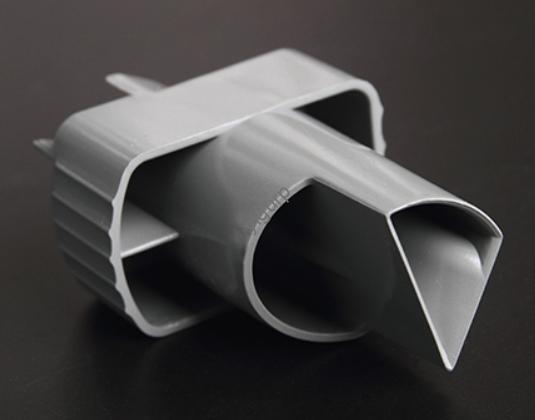
Si es diseñador o fabricante de productos y busca crear tableros manuales de impresión 3D precisos para el desarrollo de nuevos productos, una de las primeras preguntas que harás es: “¿Qué materiales debo utilizar??“La elección del material adecuado afecta directamente la durabilidad de tu handboard, apariencia, y si coincide con el rendimiento de su producto final. Let’s break down the most common 3D printing handboard materials, their uses, and how to pick the best one for your project.
Common 3D Printing Handboard Materials & Their Key Details
To make it easy for you to compare, we’ve organized the top materials into a clear table. Each entry includes the material name, suitable 3D printing technology, main advantages, and typical handboard applications.
| Tipo de material | Suitable 3D Printing Technology | Ventajas clave | Typical Handboard Applications | Average Cost (Por kilogramo) |
| Plásticos de ingeniería (ABS/PLA) | MDF (Modelado por deposición fundida) | Bajo costo, fácil de imprimir, buena resistencia al impacto (ABS) | Prototipos de productos de consumo. (juguetes, household goods), structural test parts | \(20 – \)50 |
| Photopolymer Resins | SLA (Estereolitografía)/DLP (Procesamiento de luz digital) | Alto detalle, smooth surface finish, alta precisión | High-precision prototypes (carcasas electronicas, jewelry models), visual display handboards | \(80 – \)150 |
| Rubber-Like Materials | FDM/SLS (Sinterización selectiva por láser) | Flexible, elástico, good grip | Handboards for soft parts (apretones, juntas, shoe soles) | \(60 – \)120 |
| Materiales metálicos (Titanium Alloy/Stainless Steel) | SLM (Fusión selectiva por láser)/SLS | Alta resistencia, resistencia a la corrosión, resistencia al calor | Industrial part prototypes (componentes automotrices, piezas aeroespaciales), functional test handboards | \(300 – \)800 |
| Materiales cerámicos | SLA/SLS | Resistencia a altas temperaturas, alta precisión, atractivo estético | Artistic handboards, dental implant models, high-temperature test parts | \(150 – \)300 |
| Materiales compuestos (Carbon Fiber-Reinforced Plastic) | FDM/SLS | Ligero, alta resistencia, rígido | High-performance handboards (marcos de drones, sports equipment prototypes) | \(100 – \)250 |
| Food Materials (Sugar/Chocolate) | Specialized Food 3D Printers | Edible, customizable shapes | Promotional handboards (food product samples, decorative cake toppers) | \(50 – \)100 |
| Gypsum Materials (Colored) | Chorro de aglutinante | Vibrant colors, easy to shape, bajo costo | Visual display handboards (esculturas, modelos arquitectonicos) | \(30 – \)80 |
| Artificial Bone Powder | SLS/SLM | Biocompatible, matches bone structure | Medical handboards (orthopedic implant prototypes, guías quirúrgicas) | \(500 – \)1,200 |
How to Choose the Right Material for Your 3D Printing Handboard
Picking a material isn’t just about cost—it needs to fit your handboard’s purpose. Aquí están 4 key factors to consider, with simple questions to guide your decision:
1. What’s the Handboard’s Main Use?
- If it’s for visual display (p.ej., showing a product’s design to clients), go for resinas de fotopolímero (superficie lisa) o colored gypsum (colores vibrantes).
- If it’s for pruebas funcionales (p.ej., checking if a part can withstand pressure), choose plasticos de ingenieria (ABS) o metal materials (alta resistencia).
- If it’s for medical or biocompatible needs (p.ej., orthopedic prototypes), artificial bone powder is the top choice.
2. What’s Your Budget?
- Budget-friendly options (under $50/kg): PLA (a type of engineering plastic) and gypsum. Great for simple visual handboards.
- Mid-range options (\(50 – \)200/kilos): ABS, rubber-like materials, y materiales compuestos. Balanced for most testing and display needs.
- High-end options (over $200/kg): Rieles (aleación de titanio) and artificial bone powder. For industrial or medical-grade handboards.
3. Do You Need Special Properties?
- Flexibilidad: Rubber-like materials are the only choice for handboards that need to bend (p.ej., a prototype of a phone case with a soft edge).
- Resistencia al calor: Ceramic materials or stainless steel work best if your handboard will be exposed to high temperatures (p.ej., a prototype of a kitchen appliance part).
- Ligero & Fortaleza: Composite materials like carbon fiber-reinforced plastic are perfect for handboards that need to be strong but not heavy (p.ej., a drone frame prototype).
Yigu Technology’s View on 3D Printing Handboard Materials
En Yigu Tecnología, we believe that the right 3D printing handboard material is the bridge between design ideas and market-ready products. Based on our work with hundreds of manufacturing clients, plasticos de ingenieria (ABS/PLA) y resinas de fotopolímero are the most versatile choices for most new product 研发 (R&D) projects—they balance cost, ease of printing, y rendimiento. For industrial clients needing high-strength handboards, we recommend carbon fiber composites or stainless steel, as they replicate the durability of final parts. We also see growing demand for biocompatible materials like artificial bone powder in medical R&D, and we’re committed to offering these options to support innovative healthcare solutions.
Preguntas frecuentes
Q1: Can I use PLA for functional test handboards?
PLA is great for visual handboards, but it’s less durable than ABS. For light functional tests (p.ej., checking fit), it works. But for tests involving impact or heat, ABS or metal is better.
Q2: Are rubber-like materials suitable for long-term handboard use?
Rubber-like materials can degrade slightly over time (especially if exposed to sunlight), so they’re best for short-term handboards (p.ej., 1-3 meses de pruebas). For longer use, consider adding a protective coating.
Q3: How much does a metal 3D printing handboard cost compared to a plastic one?
De término medio, a metal handboard costs 5-10 times more than a plastic one. Por ejemplo, a small plastic handboard (100gramo) might cost \(5-\)10, while a similar metal handboard could cost \(50-\)100. The exact price depends on the metal type (titanium is more expensive than stainless steel) and handboard size.