
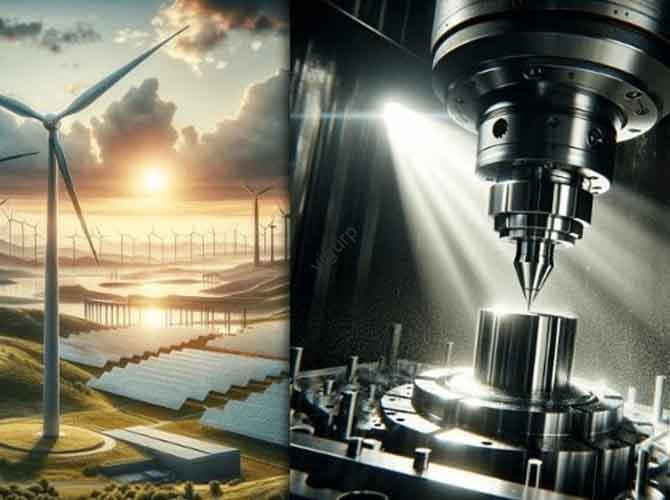
El mecanizado profesional de prototipos de hardware es la piedra angular del desarrollo de productos, uniendo conceptos de diseño y producción en masa. Implica procesos de precisión para crear prototipos metálicos que cumplan con los requisitos estructurales., funcional, y requisitos de rendimiento, ya sea para componentes aeroespaciales, dispositivos médicos, o equipos industriales. Este artículo desglosa sistemáticamente los procesos de mecanizado central., selección de materiales, control de precisión, and cost-saving strategies for professional hardware prototypes, with practical tools and comparisons to guide engineers and businesses.
1. Core Machining Processes for Professional Hardware Prototypes
Different machining processes excel at specific prototype types, based on complexity, volumen, y material. Choosing the right process is critical to balancing quality and efficiency.
1.1 Process Comparison & Application Scenarios
| Proceso de mecanizado | Ventajas clave | Unit Price Range (Single Piece, CNY) | Applicable Prototype Characteristics | Typical Use Cases |
| Mecanizado CNC | Alta precisión (±0.05-0.1mm), suitable for complex geometries (trapos, superficies curvas) | 500 – 3,000 | – Solid metal parts (aluminio, acero inoxidable)- Parts requiring tight tolerances- Low to medium volume (1-50 piezas) | Equipment shells, mechanical brackets, disipadores de calor |
| Impresión 3D de metales | No mold needed; ideal for intricate structures (cavidades internas, celosías) | 1,000 – 5,000 | – Complejo, non-traditional shapes- Piezas pequeñas (50-200gramo)- Low volume (1-20 piezas) | Componentes aeroespaciales, implantes medicos, custom gears |
| Estampado | Fast production for thin-walled parts; cost-effective for medium volume | 1,000 – 5,000 (including mold) | – Thin metal sheets (0.5-3mm de espesor)- Simple to moderately complex flat parts- Medium to high volume (50+ piezas) | Cajas electrónicas, auto body panels, connector shells |
| fundición a presión | High efficiency for complex metal housings; excellent for mass production transition | 2,000 – 8,000 (including mold) | – Complex 3D shapes with thin walls- High-volume prototypes (100+ piezas)- Metales no ferrosos (aluminio, aleación de zinc) | Auto parts (componentes del motor), consumer electronics housings |
1.2 Key Considerations for Process Selection
- Complejidad: For parts with internal channels or lattice structures (p.ej., lightweight aerospace brackets), metal 3D printing is the only feasible option—CNC machining cannot reach internal features without splitting the part.
- Volumen: If you need 1-10 prototypes for design testing, CNC machining avoids mold costs. Para 100+ piezas (pre-mass production), die casting or stamping becomes cost-effective (mold costs are spread across more units).
- Material: Stamping works best with ductile metals (aluminio, cobre), while CNC machining handles rigid materials (acero inoxidable, aleación de titanio) more effectively.
2. Material Selection for Hardware Prototypes
Material choice directly impacts prototype performance, dificultad de mecanizado, y costo. Understanding material properties helps align prototypes with end-use requirements.
2.1 Materiales comunes & Machining Compatibility
| Tipo de material | Propiedades clave | Machining Difficulty | Cost Level (Relative) | Recommended Machining Process |
| Aleación de aluminio (6061/6063) | Ligero (2.7gramos/cm³), buena conductividad térmica, fácil de mecanizar | Bajo | Bajo (Base cost: ~20-30 CNY/kg) | Mecanizado CNC, fundición a presión |
| Acero inoxidable (304/316) | Alta resistencia, resistencia a la corrosión, durable | Medio | Medio (Base cost: ~80-100 CNY/kg) | Mecanizado CNC (5-axis for complex parts), impresión 3D de metales |
| Cobre | Excellent electrical/thermal conductivity, maleable | Low to Medium | Medio-alto (Base cost: ~60-80 CNY/kg) | Mecanizado CNC, estampado |
| Aleación de titanio | Alta relación resistencia-peso, biocompatible, resistente a la corrosión | Alto (duro, baja conductividad térmica) | Alto (Base cost: ~500-800 CNY/kg) | Mecanizado CNC (tasas de alimentación lentas), impresión 3D de metales |
| Zinc Alloy | Punto de fusión bajo, easy to cast, good dimensional stability | Bajo | Low-Medium (Base cost: ~30-50 CNY/kg) | Die casting |
2.2 Material Selection Tips
- Pruebas funcionales: For load-bearing parts (p.ej., soportes industriales), use stainless steel (304) to simulate real-world strength—aluminum may deform under stress, leading to inaccurate test results.
- Cost Optimization: For appearance-only prototypes (p.ej., carcasas de dispositivos), use aluminum alloy instead of titanium—aluminum costs 1/10 of titanium and is easier to machine.
- Special Scenarios: For medical prototypes (p.ej., herramientas quirúrgicas), choose titanium alloy (biocompatible) o 316 acero inoxidable (corrosion-resistant for sterilization).
3. Precision Control in Hardware Prototype Machining
Precision is non-negotiable for professional hardware prototypes—even 0.1mm deviations can cause assembly failures or functional issues. Below is how to ensure and measure precision.
3.1 Niveles de precisión & Achieving Methods
| Precision Requirement | Tolerancia típica | Machining Equipment/Technology | Ejemplos de aplicación |
| Conventional Precision | ±0,1 mm | 3-axis CNC machining centers, standard end mills | General mechanical parts (paréntesis, simple shells) |
| Alta precisión | ±0,05 mm | 5-axis CNC machining centers, slow wire EDM | Componentes aeroespaciales (piezas del motor), dispositivos médicos (implantes) |
| Ultra-High Precision | ±0.005-0.01mm | Precision grinding machines, laser machining | Micromechanical parts (componentes del sensor, microconectores) |
3.2 Quality Inspection Tools & Procesos
To verify precision, use these tools after machining:
- Calibrador & micrómetros: For basic dimension checks (p.ej., longitud, diámetro) with ±0.01mm accuracy.
- Máquina de medición de coordenadas (MMC): For 3D dimensional analysis of complex parts—scans 1000+ points to confirm tolerance compliance.
- Surface Roughness Tester: Measures surface smoothness (valor ra)—critical for parts with fluid flow (p.ej., componentes hidráulicos) or tight fits (Ra ≤0.8μm recommended).
4. Surface Treatment for Professional Hardware Prototypes
Surface treatment enhances prototype durability, estética, y funcionalidad. Choosing the right treatment aligns with end-use conditions.
4.1 Common Surface Treatments & Beneficios
| Tratamiento superficial | Objetivo | Costo (Added per Piece, CNY) | Compatibility with Materials |
| Anodization | – Resistencia a la corrosión- Color customization (negro, plata, rojo)- Improved surface hardness | 200 – 500 | aleación de aluminio (6061/6063) |
| galvanoplastia | – Conductividad mejorada (cobre, gold plating)- Resistencia a la corrosión (níquel, cromado)- Aesthetic shine | 500 – 2,000 | Acero inoxidable, cobre, aleación de zinc |
| Arenado | – Acabado mate (reduce el deslumbramiento)- Hides minor machining marks- Agarre mejorado | 200 – 400 | Aluminio, acero inoxidable, titanio |
| Pulido | – Mirror-like surface (Ra ≤0.2μm)- Fricción reducida (para piezas móviles)- Estética mejorada | 100 – 300 | todos los metales (especially stainless steel, cobre) |
| Grabado láser | – Part numbering/Branding- Decorative patterns- No material removal (preserves precision) | 100 – 300 | todos los metales (high contrast on anodized aluminum) |
5. Cost-Saving Strategies for Hardware Prototype Machining
Professional hardware prototypes can be costly, but strategic choices reduce expenses without compromising quality.
5.1 Practical Cost-Reduction Tips
- Optimize Design:
- Simplify geometries: Remove non-functional features (p.ej., decorative grooves) that increase machining time—saves 20-30% on CNC costs.
- Merge parts: Combinar 3 separate brackets into 1 integrated design—reduces machining and assembly steps.
- Choose Cost-Effective Processes:
- Use CNC machining for 1-10 pieces instead of metal 3D printing (guarda 50-70% para piezas simples).
- Para 50+ thin-walled parts, switch from CNC to stamping (mold costs are offset by lower unit prices).
- Control Surface Treatment:
- Skip electroplating for internal parts (use basic anodization instead)—saves 300-1,500 CNY per piece.
- Use sandblasting to hide minor machining marks instead of expensive polishing.
- Leverage Local Suppliers:
- Work with suppliers in Shenzhen or Dongguan (mature hardware clusters)—logistics costs are 10-20% más bajo, and communication is faster (reduces rework from misinterpretation).
5.2 Getting Accurate Quotes to Avoid Hidden Costs
To prevent budget surprises, follow this quote request process:
- Provide Detailed 3D Drawings: Submit STEP, IGS, or STL files (not 2D sketches) to clarify dimensions and tolerances.
- Specify Requirements Clearly:
- Material (p.ej., “6061 aluminum alloy, 5mm thickness”)
- Precisión (p.ej., “±0.1mm for external dimensions”)
- Tratamiento superficial (p.ej., “black anodization, Ra ≤1.6μm”)
- Cantidad (p.ej., “5 pieces for iteration testing”)
- Ask for Cost Breakdown: Request separation of material, mecanizado, tratamiento superficial, and setup fees—identifies expensive components (p.ej., if surface treatment is 40% of the cost, you can opt for a cheaper alternative).
Yigu Technology’s Viewpoint
For professional hardware prototype machining, process-material-precision alignment is key. Yigu Technology recommends starting with clear prototype goals: if it’s functional testing, prioritize CNC machining (alta precisión, cost-effective for small batches); if it’s complex geometry, metal 3D printing is worth the investment. Material selection should avoid over-engineering—aluminum works for most non-critical parts, while titanium is only necessary for special scenarios (aeroespacial, médico). Precision control requires collaboration with suppliers: specify tolerances based on actual needs (±0.1mm suffices for most parts, avoiding unnecessary high-precision costs). Finalmente, local suppliers in Shenzhen/Dongguan offer the best balance of quality, velocidad, and cost—their mature supply chains reduce lead times and rework risks.
Preguntas frecuentes
- When should I choose metal 3D printing over CNC machining for hardware prototypes?
Choose metal 3D printing if your prototype has: 1) Intricate internal structures (p.ej., lattice cores, canales internos) that CNC cannot reach; 2) tamaño pequeño (50-200gramo) with complex 3D shapes; 3) Low volume (1-5 piezas) where mold costs for other processes are prohibitive. CNC is better for solid parts, larger sizes, or higher volume (10+ piezas).
- How does material choice affect machining time and cost?
Harder materials (p.ej., aleación de titanio) increase machining time—CNC feed rates are 50-70% slower than for aluminum, raising labor costs. Material cost also scales with rarity: titanium costs ~20x more than aluminum, so a 100g titanium prototype is ~20x more expensive than an aluminum one of the same size. Choose softer, materiales comunes (aluminio, 304 acero inoxidable) for cost-sensitive projects.
- What is the most cost-effective surface treatment for aluminum alloy prototypes?
Anodization is the most cost-effective option. It costs 200-500 CNY per piece (vs. 500+ CNY for electroplating) and provides corrosion resistance and color customization. For internal or non-visible parts, even basic sandblasting (200-400 CNY) works—it hides machining marks and avoids unnecessary costs. Only use electroplating if you need enhanced conductivity (p.ej., conectores electricos).