
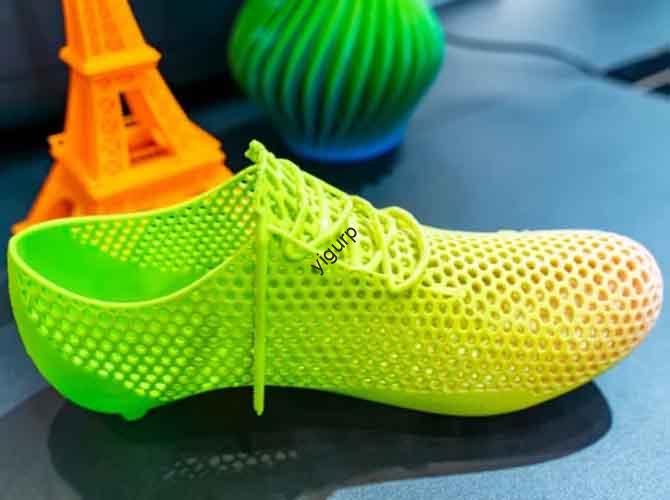
A plastic prototype is a physical model crafted from plastic materials (p.ej., ABS, PLA, ordenador personal) para validar el diseño del producto, funcionalidad de prueba, o mostrar la estética antes de la producción en masa. Cierra la brecha entre los dibujos de diseño 2D y los productos finales., permitiendo a los equipos detectar fallas tempranamente, optimizar costos, y acelerar el tiempo de comercialización. A diferencia de los prototipos de metal., plastic prototypes excel in flexibility, rentabilidad, and suitability for complex shapes—making them ideal for industries like consumer electronics, juguetes, y dispositivos médicos. This article breaks down their core roles, production workflows, material/process choices, and real-world applications to guide effective prototype use.
1. What Are the Core Roles of Plastic Prototypes?
Every plastic prototype serves specific objectives that directly reduce risks in product development.
| Role | Descripción | Ejemplo del mundo real |
| Design Validation | Verify if the product’s shape, size ratio, and assembly structure align with design requirements (no interference between parts). | Testing if a 3D-printed smartphone case prototype (materiales ABS) fits the phone body perfectly—no gaps around the camera or buttons. |
| Pruebas funcionales | Evaluate key performance traits: mobility (joints/gears), capacidad de carga, or user interaction (button feel, agarre). | Checking if a plastic gear prototype (POM material) rotates smoothly with a motor for 1,000 cycles without jamming. |
| Mercado & Stakeholder Demonstration | Act as tangible samples for trade shows, comentarios de los clientes, or investor pitches—replacing costly mass-produced models. | Using a colored PLA prototype of a toy car to gather feedback from parents on grip comfort and visual appeal. |
| Mold Development Support | Provide a reference for optimizing mass-production molds (p.ej., adjusting draft angles or wall thickness) to avoid costly reworks. | A CNC-machined PC prototype of an automotive dashboard guiding mold makers to add 2° draft angles for easier demolding. |
2. What Is the Step-by-Step Production Workflow for Plastic Prototypes?
The process follows a linear sequence—each stage builds on the previous one to ensure precision and consistency.
2.1 Stage 1: Preparación del diseño (Lay the Foundation)
Clear design inputs prevent rework and align the prototype with end goals.
| Task | Key Details |
| 3Modelado D | Use CAD software (SolidWorks, ProE, Rinoceronte) to create a detailed model with: – Exact dimensions (p.ej., 150mm×75mm×10mm for a phone case). – Critical features: chaflanes (≥0.5mm to avoid sharp edges), agujeros (diameter ±0.1mm), and assembly interfaces. – Material notes (p.ej., “Use PC for heat resistance” or “PLA for low-cost testing”). |
| Part Splitting | For complex products (p.ej., a multi-component toy), split the model into smaller parts (shell, botones, internal brackets) to simplify machining and assembly. |
| Tolerance Definition | Set precision standards based on use case: – Visual prototypes: ±0,5 mm (p.ej., una figura decorativa). – Prototipos funcionales: ±0,1 mm (p.ej., a gear or hinge). |
2.2 Stage 2: Choose the Right Production Process
Select a method based on batch size, complejidad, and cost—each has unique strengths.
| Production Process | Ideal para | Key Details | Ventajas | Contras |
| 3Impresión D | Pequeños lotes (1–10 unidades), estructuras complejas (hollows, diseños de celosía), or rapid iterations. | Common technologies: – MDF: Uses PLA/ABS; bajo costo (≈\(0.5/gramo) but visible layer lines. <br> – **SLA**: Uses photosensitive resin; superficie lisa (Ra 0,8μm) but higher material cost (≈\)3/gramo). | – No mold needed (fast setup: 1–2 horas). – Supports intricate shapes (p.ej., a hollow toy with internal details). – Low cost for small runs. | – Large prototypes may deform (MDF). – Material strength limited (PLA is brittle vs. ABS). |
| Mecanizado CNC | High-precision functional prototypes (±0,05 mm), large-size parts (p.ej., paneles automotrices), or strong materials (ordenador personal, POM). | Proceso: A cutting tool removes material from a plastic block per 3D model; uses ABS, ordenador personal, or POM. | – Excellent surface quality (no post-processing needed for some parts). – High material strength (suitable for load-testing). | – Expensive for complex shapes (needs custom toolpaths). – Slow for small batches (1–2 days per part). |
| Silicone Duplication | Lotes medianos (5–50 unidades), consistent copies of a master prototype (3D-printed/CNC-machined). | Proceso: 1. Make a silicone mold from the master. 2. Inject PU/epoxy resin into the mold. 3. Cure and demold. | – Low per-unit cost (\(5–\)20/part). – Fast replication (3–5 days per batch). | – Mold production takes 1–2 days. – Complex undercuts may cause demolding issues. |
| Manual Crafting | Quick proof-of-concept (1–2 units), low budget, or simple shapes (p.ej., a cardboard-reinforced PLA prototype). | Herramientas: Scissors, glue, papel de lija, and hand-cut plastic sheets. | – Near-zero setup cost. – Instant modifications (p.ej., trimming a phone case to fit). | – Low precision (±1mm+). – Not suitable for functional testing. |
2.3 Stage 3: Postprocesamiento (Refine the Prototype)
Post-processing enhances appearance, funcionalidad, and realism—critical for stakeholder demos.
| Paso | Objetivo | Métodos & Ejemplos |
| Support/Burr Removal | Eliminate excess material from 3D printing (apoya) o mecanizado CNC (destello). | – 3D prints: Use pliers to pull supports; sand with 120-grit sandpaper. – CNC parts: File burrs with a fine metal file. |
| Lijado & Pulido | Improve surface smoothness (reduce layer lines or machining marks). | – Lijado: 120→240→400→800-grit sandpaper (coarse to fine). – Pulido: Apply acrylic polish to SLA resin parts for a mirror finish. |
| Spray Coloring & Texturizado | Match the final product’s aesthetics (bandera, texturas) or add branding. | – Pulverización: Use matte/glossy paint (p.ej., black spray for a phone case) or metallic coatings. – Serigrafía: Add logos (p.ej., “2024 Model”) or warning labels (p.ej., “Keep Away from Fire”). |
| Asamblea | Combine split parts into a complete prototype; test fit and functionality. | – sujetadores: Use small screws (M2–M3) for PC/ABS parts. – Adhesivos: Cyanoacrylate glue (super glue) for PLA/ABS; epoxy for high-strength bonds. – Snaps: Design plastic snap fits for easy assembly/disassembly (p.ej., a toy car’s removable roof). |
3. How Do Plastic Prototypes Compare to Metal Prototypes?
Understanding key differences helps teams choose the right material for their needs.
| Comparison Factor | Plastic Prototype | Metal Prototype |
| Materiales | PLA, ABS, ordenador personal, POM, resina | aleación de aluminio, acero inoxidable, cobre |
| Processing Methods | 3impresión D, Mecanizado CNC, silicone duplication | Mecanizado CNC, chapa de metal, soldadura |
| Costo | Bajo (\(5–\)200/part) – ideal for small batches | Alto (\(50–\)500/part) – suitable for high-strength needs |
| Peso | Luz (0.9–1.2 g/cm³) – good for portable products | Pesado (2.7–8.9 g/cm³) – better for load-bearing parts |
| Tratamiento superficial | Pulverización, silk screening, pulido | Anodizado, enchapado, chorro de arena |
| Fortaleza & Durabilidad | Moderado (ABS: 40 Resistencia a la tracción MPa) – limited to low-load use | Alto (aleación de aluminio: 200 Resistencia a la tracción MPa) – for mechanical/automotive parts |
| Aplicaciones ideales | Electrónica de consumo (fundas de móvil), juguetes, carcasas para dispositivos médicos | Auto parts (paréntesis), mechanical gears, componentes aeroespaciales |
4. What Are the Key Application Scenarios?
Plastic prototypes solve critical problems across industries where flexibility and cost-efficiency matter.
4.1 Electrónica de Consumo
- Caso de uso: Testing smartphone/headphone prototypes (apariencia, agarre, and button feel).
- Ejemplo: A 3D-printed PLA prototype of wireless earbuds to validate if the ear tips fit different ear sizes and if the charging port aligns with cables.
4.2 Automotor
- Caso de uso: Validating interior parts (tableros, light covers) before mold production.
- Ejemplo: A CNC-machined PC prototype of a car’s center console guiding designers to adjust button placement for better ergonomics.
4.3 Dispositivos médicos
- Caso de uso: Ensuring housings/handles meet ergonomic and safety standards.
- Ejemplo: A 3D-printed resin prototype of a surgical instrument handle tested for grip comfort (no slippage during use) and compatibility with sterilization.
4.4 juguetes & Anime Peripherals
- Caso de uso: Verifying character models, movable joints, and paint effects.
- Ejemplo: An SLA resin prototype of an anime figure with articulated arms/legs tested to ensure joints don’t break under light pressure.
5. What Are Critical Precautions for Success?
Avoid common pitfalls with these targeted safeguards.
5.1 Selección de materiales
- Match Material to Use Case:
- Transparencia: Choose PMMA (acrílico) for clear parts (p.ej., light covers).
- Flexibilidad: Use TPU for bendable parts (p.ej., bordes de la caja del teléfono).
- Resistencia al calor: Opt for PC or PA (nylon) for parts exposed to high temperatures (p.ej., componentes del motor automotriz).
- Test Compatibility: Ensure the material works with your production process (p.ej., PLA is not suitable for CNC machining due to brittleness).
5.2 Control de precisión
- Account for Shrinkage: 3D-printed PLA shrinks ~1.5% after cooling—design the model 1.5% larger to compensate.
- Calibrate Equipment: For CNC machining, calibrate the cutting tool to avoid dimensional errors (p.ej., a 0.1mm offset in a hole can ruin assembly).
5.3 Cost Optimization
- Choose the Right Process: Use 3D printing for simple, small-batch prototypes; CNC machining only for high-precision functional parts.
- Minimize Post-Processing: Design parts with fewer supports (for 3D printing) or larger tolerances (for non-critical features) to reduce sanding/polishing time.
5.4 Intellectual Property Protection
- Sign a confidentiality agreement with prototype manufacturers to protect patents or trade secrets (critical for unreleased products like new smartphones).
La perspectiva de la tecnología Yigu
En Yigu Tecnología, we see plastic prototypes as a “product development accelerator.” Too many clients skip this step, only to discover design flaws after opening expensive molds—costing \(10k–\)50k in reworks. Our approach: We help clients select the right process (p.ej., FDM for low-cost testing, SLA for high-detail toys) y material (ABS for durability, PLA for speed). Por ejemplo, we helped a consumer electronics client cut prototype time by 40% by using FDM to test 3 phone case designs in 3 días, then CNC-machining the final version for functional testing. Plastic prototypes aren’t just a cost—they’re an investment in getting mass production right the first time. For small batches or complex shapes, they remain the most efficient, flexible choice.
Preguntas frecuentes
- Can plastic prototypes replace metal prototypes for load-bearing tests?
No—plastic’s lower strength (p.ej., ABS tensile strength: 40 MPa frente a. aluminum’s 200 MPa) makes it unsuitable for high-load scenarios (p.ej., soportes automotrices). Use plastic for low-load tests (button feel, agarre) and metal for structural load-bearing validation.
- How long does it take to make a plastic prototype?
It depends on the process: FDM 3D printing takes 4–24 hours (piezas pequeñas); CNC machining takes 1–3 days (piezas de alta precisión); silicone duplication takes 3–5 days (batches of 5–50 units). Add 1–2 days for post-processing (lijado, spraying).
- What’s the most cost-effective process for 20 identical plastic prototypes?
Silicone duplication is best. Make a single master prototype via 3D printing (\(50–\)100), then use a silicone mold to produce 20 copies for \(5–\)20 each—total cost (\(150–\)500) is cheaper than 20 CNC-machined parts (\(1,000–\)4,000).