
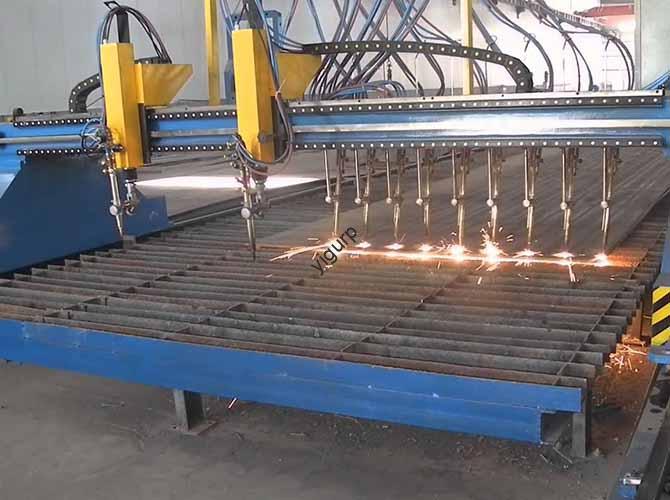
Precision aluminum die casting stands as a cornerstone of advanced manufacturing, fusionando conformado a alta presión, diseño de molde preciso, y optimización de materiales para producir complejos, piezas de aluminio de alta precisión. A diferencia de la fundición a presión tradicional, prioriza la precisión dimensional (tolerancia ±0,1–0,2 mm) y calidad de la superficie (Ra 1,6–6,3 µm), haciéndolo indispensable para industrias como la automotriz, electrónica, y aeroespacial. This article breaks down its technical characteristics, core workflow, escenarios de aplicación, and defect-solving strategies, helping you leverage its potential for high-performance part production.
1. Core Technical Characteristics: What Sets It Apart?
Precision aluminum die casting’s uniqueness lies in four key technical traits, each addressing modern manufacturing demands. Below is a 总分结构 explaining each characteristic, supported by specific data and examples:
| Technical Characteristic | Key Details | Industrial Value |
| High-Pressure & High-Speed Filling | Uses specialized die-casting machines to inject molten aluminum alloy into mold cavities at 900–1200 bar pressure and 0.5–5 m/s speed. This ensures complete filling of complex features (p.ej., 0.5–1 mm thin walls, internal porous structures). | Enables production of parts with intricate geometries that traditional machining (p.ej., fresado CNC) struggles to achieve—critical for miniaturized electronics (p.ej., 5Componentes de la estación base G). |
| Precisión superior & Acabado superficial | Dimensional accuracy meets ISO 8062 CT6–CT7 standards (tolerance ±0.1 mm for small parts), and surface roughness reaches Ra 1.6–3.2 μm. This reduces post-processing by 70–80% compared to sand casting. | Cuts production costs by eliminating redundant machining steps; p.ej., automotive battery housings require only minor trimming (no full-surface grinding). |
| High Material Utilization | Near-net forming technology reduces aluminum waste to 5–10% (vs. 20–30% for CNC machining from solid aluminum blocks). Scrap aluminum from the process can be recycled directly, further lowering material costs. | Ideal para producción de gran volumen (10,000+ partes/mes), where raw material savings translate to significant cost advantages—e.g., a smartphone shell production line saves $50,000+/month on aluminum. |
| Strong Adaptability to Complex Structures | Manufactures parts with integrated features: caries profundas (depth-to-diameter ratio >5:1), concave surfaces, and multi-hole arrays (p.ej., engine oil passages with 10+ microagujeros). | Replaces multi-part assemblies with single die-cast components—e.g., an automotive gearbox housing that previously required 5 welded parts is now produced in one piece, reduciendo el tiempo de montaje 40%. |
2. Step-by-Step Core Workflow
Precision aluminum die casting follows a linear, rigorous workflow to ensure part quality. The table below details each stage, key operations, and quality control points:
| Workflow Stage | Key Operations | Quality Control Requirements |
| 1. Diseño de moldes & Preparación | – Design considerations: Structural strength (to withstand high pressure), heat dissipation channels (enfriamiento uniforme), sistemas de escape (gas evacuation), y ángulos de tiro (3–5° for easy demolding).- Mold material: Usar H13 hot-work tool steel (resists 600–800°C temperatures) with TiAlN coating (reduces aluminum adhesion).- Debugging: Test mold with 50–100 trial casts to adjust cavity dimensions and cooling efficiency. | – Mold dimensional accuracy: ±0,05 milímetros (ensures part precision).- Exhaust efficiency: No visible gas pores in trial casts (detected via X-ray inspection). |
| 2. Aluminum Alloy Smelting | – Raw material ratio: Mix aluminum ingots (99.5% pureza) with alloying elements (p.ej., 9–12% silicon for ADC12, 5% magnesium for 5052) to enhance strength and castability.- Charging sequence: Add small scrap pieces first, then aluminum ingots/large scrap, and finally easy-oxidation alloys (p.ej., magnesio) to minimize burn loss.- Temperature control: Calentar para 700–750°C (monitored via infrared thermometers); add flux (p.ej., sodium chloride) to remove impurities and degas (argon injection to eliminate hydrogen). | – Alloy composition accuracy: ±0.1% (tested via optical emission spectroscopy).- Molten aluminum purity: No visible dross (scraped off before injection). |
| 3. Die Casting Molding | – Equipment selection: Elegir maquinas de camara fria for large-batch, partes complejas (p.ej., automotive engine blocks) o hot chamber machines for small-batch, piezas de alta precisión (p.ej., conectores electronicos).- Parameter control: Set injection pressure (900–1200 bar), filling time (0.1–0.5 seconds for thin parts), and holding pressure (600–800 bar) until solidification (10–30 segundos). | – Part filling rate: 100% (no incomplete features, checked via visual inspection).- Solidification uniformity: No internal shrinkage (detected via ultrasonic testing). |
| 4. Post-Treatment | – Guarnición: Remove sprues, corredores, and burrs via CNC machining or hydraulic trimmers (tolerance ±0.1 mm).- Tratamiento térmico: Aplicar T6 treatment (solution annealing at 520°C + aging at 170°C) to improve tensile strength (ADC12: 220 MPa → 280 MPa).- Tratamiento superficial: Choose anodizing (creates 10–20 μm oxide layer for corrosion resistance), cuadro (acrylic paint for aesthetics), or electroplating (nickel/chrome for wear resistance). | – Heat treatment effect: Tensile strength tested via universal testing machine (pass rate ≥99%).- Acabado superficial: Ra 1,6–3,2 µm (measured via surface roughness tester). |
3. Key Application Areas: Industry-by-Industry Breakdown
Precision aluminum die casting serves diverse sectors, each leveraging its lightweight, high-precision advantages. The table below highlights critical applications and their rationales:
| Industria | Aplicaciones clave | Rationale for Choosing Precision Aluminum Die Casting |
| Automotor | – Componentes del motor: Culatas, cacerolas de aceite (require heat resistance and complex cooling channels).- NEV parts: Battery housings (lightweight—reduces EV weight by 5–8%—and corrosion-resistant), motor casings (high precision for bearing fit). | Aluminum’s low density (2.7 gramos/cm³) boosts fuel efficiency/EV range; high-pressure filling creates leak-proof battery housings (crítico para la seguridad). |
| Electronic Communication | – Smartphone/tablet parts: Middle frames (paredes delgadas, 0.8–1.2 mm), disipadores de calor (high thermal conductivity—200–230 W/(m·K)).- 5G infrastructure: Base station structural parts (high precision for antenna alignment), router housings (electromagnetic shielding via aluminum’s conductivity). | Precision meets miniaturization needs; acabado superficial (Real academia de bellas artes 1.6 µm) eliminates post-polishing for cosmetic parts. |
| Electrodomésticos & Daily Necessities | – Appliance components: Air conditioner compressor shells (resistencia a la presión), washing machine inner drums (resistencia a la corrosión).- Daily goods: Luggage frames (ligero, durable), kitchenware handles (resistencia al calor). | Rentable para producción de gran volumen; tratamientos superficiales (p.ej., anodizado) enhance durability and aesthetics. |
| Aeroespacial | – Piezas estructurales ligeras: Satellite brackets (alta relación resistencia-peso), aircraft interior components (corrosion resistance to cabin humidity).- High-precision connectors: Avionic system plugs (tolerance ±0.05 mm for signal stability). | Aluminum’s low density reduces aircraft/satellite launch costs; precision meets aerospace safety standards (p.ej., ISO 9001 aerospace certification). |
4. Common Defects & Targeted Solutions
Even with precise control, defects may occur. Use this 因果链 structure to diagnose and resolve issues:
| Common Defect | Root Cause | Solución |
| Gas Pores/Bubbles | Molten aluminum entrains air during injection; mold exhaust channels are blocked or insufficient. | – Adopt fundición a presión al vacío (reduce cavity pressure to <50 mbar) to extract air before injection.- Optimize exhaust channel design: Increase number/size of channels (0.5–1 mm width) near cavity corners.- Degas molten aluminum with argon for 5–10 minutes (reduces hydrogen content to <0.15 mL/100g Al). |
| Part Strain/Sticking Mold | Mold surface is rough or lacks release agent; draft angle is too small (<3°). | – Polish mold cavity to Ra <0.8 µm; apply high-temperature-resistant release agent (p.ej., boron nitride-based) before each cast.- Increase draft angle to 3–5° (especially for deep cavities).- Cool mold to 200–250°C (prevents aluminum from adhering to hot mold surfaces). |
| Dimensional Deviation | Mold wears (después 80,000+ ciclos); die casting parameters (temperatura, presión) fluctuate. | – Use wear-resistant mold materials (p.ej., H13 steel with nitriding treatment) to extend mold life to 120,000+ cycles.- Monitor parameters in real time (install pressure/temperature sensors) and adjust injection pressure by ±50 bar if deviations occur.- Calibrate mold every 10,000 ciclos (vía CMM) to correct cavity dimensional changes. |
5. Industry Status & Future Trends
Precision aluminum die casting is experiencing steady growth, driven by emerging industries:
- Tamaño del mercado: China’s precision aluminum die casting market reached $35 mil millones en 2024, con un 12% annual growth rate—fueled by NEV and 5G investments.
- Regional Clusters: The Yangtze River Delta (Shanghai, Suzhou) and Pearl River Delta (Shénzhen, Dongguan) dominate production, con 70% of China’s die casting factories—benefiting from complete supply chains (mold manufacturing, alloy smelting).
- Technological Trends:
- Integrated Die Casting: Merge multiple parts into one (p.ej., Tesla’s 4680 battery pack housing) to cut assembly time by 50%.
- AI-Driven Optimization: Use machine learning to predict defects (p.ej., gas pores) and adjust parameters in real time—reducing defect rates by 30%.
- Eco-Friendly Practices: Increase recycled aluminum usage (objetivo 60% por 2030) to lower carbon emissions by 40% vs. virgin aluminum.
La perspectiva de la tecnología Yigu
En Yigu Tecnología, we see precision aluminum die casting as a catalyst for lightweight, high-efficiency manufacturing. Para clientes automotrices, we use H13 steel molds with vacuum die casting to produce battery housings with <1% porosidad, meeting IP67 waterproof standards. For electronics clients, our T6 heat treatment and anodizing processes deliver smartphone frames with Ra 1.6 μm surface finish and 280 Resistencia a la tracción MPa. We also adopt AI parameter monitoring to cut defect rates by 25% and recycled aluminum (50% of raw materials) para reducir costos. Ultimately, this process isn’t just about making parts—it’s about delivering sustainable, high-performance solutions that meet the demands of modern industries.
Preguntas frecuentes
- What is the minimum wall thickness achievable with precision aluminum die casting?
The process can produce parts with wall thicknesses as thin as 0.5 milímetros (for small components like electronic connectors). Key requirements: Use high injection pressure (1100–1200 bar), fast filling time (0.1–0.2 seconds), and a well-designed cooling system to prevent premature solidification.
- How long does a precision aluminum die casting mold last?
H13 steel molds with proper maintenance (regular cleaning, re-coating) último 80,000–150,000 cycles for aluminum alloys. Para piezas de alta precisión (p.ej., componentes aeroespaciales), molds are recalibrated every 10,000 cycles to maintain ±0.05 mm tolerance—extending effective lifespan by 20%.
- Can precision aluminum die casting parts be used in high-temperature environments?
Yes—with heat treatment and alloy selection. Por ejemplo:
- ADC12 alloy with T6 treatment withstands 150–200°C (suitable for automotive engine bay parts).
- 5052 aleación (5% magnesio) resists 200–250°C (ideal for electronic heat sinks).
- For temperatures >250°C, use aluminum-silicon-magnesium alloys (p.ej., A356-T6) with tensile strength >300 MPa.