
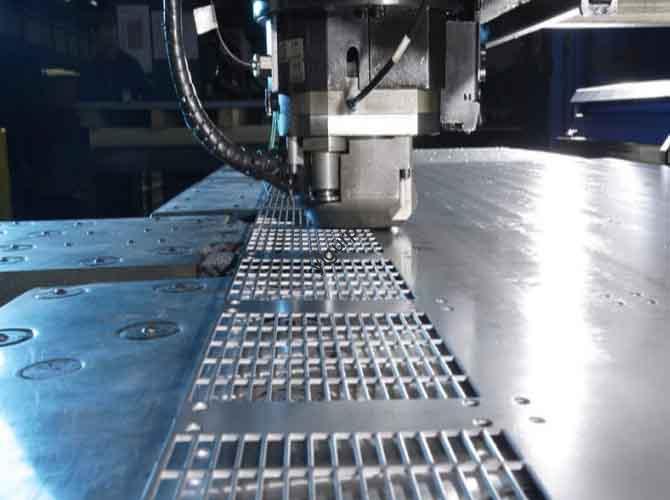
Aluminum die casting has become an indispensable manufacturing process in modern industry, leveraging the lightweight, high-strength, and corrosion-resistant properties of aluminum alloys. By injecting molten aluminum alloy into precision molds under high pressure, it produces complex, high-precision components efficiently—catering to the demands of large-scale production across automotive, electrónica, and aerospace sectors. This article breaks down its core principles, key characteristics, application scenarios, and practical solutions to common challenges, helping you fully harness its technical advantages.
1. Core Process Principle: How Aluminum Die Casting Works
Aluminum die casting relies on two core mechanisms—high-pressure injection and rapid solidification—to achieve precision and efficiency. Below is a linear 叙述 of its workflow and key technical parameters:
1.1 Flujo de trabajo paso a paso
- Fusión & Preparación: Heat aluminum alloy ingots (p.ej., ADC12, A380) to 650–700°C until fully molten. Remove impurities (p.ej., dross) via refining agents to ensure material purity (>99.5%).
- High-Pressure Injection: Use a hydraulic system to inject the molten aluminum into a preheated (150–250°C) precision steel mold at 2,000–15,000 kPa pressure y 10–50 m/s filling speed. High pressure ensures the molten metal fills every detail of the mold cavity.
- Rapid Solidification: Activate the mold’s cooling system (circulating water or oil) to cool the molten aluminum. Solidification takes just 10–30 segundos (dependiendo del espesor de la pieza), locking in the part’s shape and dimensions.
- Desmoldeo & Guarnición: Open the mold, eject the finished part, and trim excess material (p.ej., sprues, corredores) via CNC machining or hydraulic trimmers.
1.2 Key Technical Parameters
The table below outlines critical parameters that determine casting quality:
| Parameter | Typical Range | Impact on Product Quality |
| Injection Pressure | 2,000–15,000 kPa | Too low → incomplete cavity filling; too high → mold damage or part deformation |
| Filling Speed | 10–50 m/s | Too slow → cold shuts (unfused metal); too fast → turbulence (trapped gas) |
| Temperatura del molde | 150–250°C | Too low → surface cracks; too high → slow solidification (low productivity) |
| Solidification Time | 10–30 segundos | Too short → internal shrinkage; too long → reduced production efficiency |
2. Main Characteristics: Product & Process Advantages
Aluminum die casting stands out for its superior product performance and process efficiency. Below is a 总分结构 highlighting its key traits, supported by specific data:
2.1 Product Characteristics
- Alta precisión: Casting dimensional accuracy reaches ISO 8062 CT6–CT7 levels (tolerance ±0.1–0.2 mm for small parts), and surface roughness is Ra 1,6–6,3 µm—eliminating 80% of post-machining needs for general components.
- Enhanced Mechanical Properties: Tensile strength is 25–30% higher than sand-cast aluminum (p.ej., ADC12 die-cast parts have a tensile strength of 220–280 MPa vs. 170–210 MPa for sand-cast equivalents). Nota: Elongation is slightly reduced (5–8% vs. 8–12% for sand casting), which is acceptable for non-load-bearing parts.
- Complex Shape Capability: Produces thin-walled components (minimum wall thickness 0.5–1 mm) y características intrincadas (p.ej., canales internos, micro-holes) that are difficult to achieve with other processes.
2.2 Process Advantages
- High Efficiency: A single die casting machine can complete 1,000–3,000 cycles per day (each cycle produces 1–4 parts). Por ejemplo, an automotive gearbox housing production line outputs 5,000+ parts daily.
- Long Mold Life: Steel molds (typically H13 tool steel) last 80,000–150,000 cycles—lowering per-unit mold costs for high-volume production.
- High Material Utilization: Near-net forming technology reduces metal waste to 5–10% (vs. 20–30% for CNC machining from solid aluminum blocks), significantly cutting raw material costs.
3. Typical Application Areas: Industry-by-Industry Breakdown
Aluminum die casting serves diverse sectors, each leveraging its lightweight and precision advantages. The table below details key applications and their rationales:
| Industria | Aplicaciones clave | Rationale for Choosing Aluminum Die Casting |
| Automotor | Bloques de motor, gearbox housings, body structural parts, battery brackets (for NEVs) | Ligero (aluminum density 2.7 gramos/cm³, 1/3 of steel) reduces vehicle weight by 10–15%, mejorando la eficiencia del combustible; high production efficiency meets mass automotive demand |
| Electronic Communication | Smartphone middle frames, disipadores de calor (for CPUs/LEDs), communication base station housings | High precision fits tight electronic assemblies; buena conductividad térmica (200–230 W/(m·K)) enhances heat dissipation for electronic components |
| Aeroespacial | Aircraft landing gear components, satellite mounts, cabin interior parts | Alta relación resistencia-peso (critical for reducing aircraft takeoff weight); resistencia a la corrosión (via anodizing) withstands harsh aerospace environments |
| Electrodomésticos & Médico | Air conditioner compressor shells, washing machine inner drums, carcasas para dispositivos médicos (p.ej., ultrasound equipment) | Cost-effective for high-volume production; smooth surface finish meets hygiene standards (para dispositivos médicos) |
4. Ventajas & Limitaciones: A Balanced Comparison
To make informed decisions, it’s essential to weigh aluminum die casting’s strengths against its constraints. Below is a 对比式 analysis:
| Aspecto | Ventajas | Limitaciones | Mitigation Strategies |
| Flexibilidad de diseño | Handles complex thin-walled structures | Difficult to form deep concave structures (depth-to-width ratio >3:1) | Optimize mold design (add draft angles, use split molds); combine with post-machining for deep features |
| Defect Control | Low surface defects | Prone to internal porosity (caused by trapped gas), which limits heat treatment (p.ej., T6 heat treatment may cause pore expansion) | Adopt fundición a presión al vacío (reduces porosity by 50–70%); use X-ray inspection to detect internal defects |
| Costo | Low per-unit cost for high volume | High initial mold cost (\(50,000–\)200,000 per mold) | Para lotes pequeños (<10,000 regiones), use modular molds; for large batches, spread mold costs across high production numbers |
5. Future Development Prospects
With technological advancements and market demand growth, aluminum die casting is poised for broader adoption:
- Material Innovation: Development of high-strength aluminum alloys (p.ej., Al-Mg-Si-Cu series) will expand applications to load-bearing components (p.ej., automotive suspension parts).
- Process Upgrade: Integration of AI-driven process monitoring (real-time adjustment of injection pressure/speed) will reduce defect rates by 30–40%.
- Sostenibilidad: Increased use of recycled aluminum (targeting 50%+ of raw material by 2030) will lower carbon emissions, aligning with global green manufacturing trends.
La perspectiva de la tecnología Yigu
En Yigu Tecnología, we view aluminum die casting as a core enabler of lightweight and efficient manufacturing. For automotive clients, we optimize mold cooling systems to reduce solidification time by 20%, boosting production efficiency while maintaining CT7 precision. For electronic clients, we use vacuum die casting to cut porosity rates to <1%, ensuring heat sinks meet thermal conductivity requirements (≥200 W/(m·K)). We also offer mold design consulting—helping clients avoid common pitfalls like deep concave structures, which reduces development cycles by 30%. Ultimately, aluminum die casting isn’t just a process—it’s a solution to balance performance, costo, and sustainability for modern manufacturing needs.
Preguntas frecuentes
- Can aluminum die casting parts undergo heat treatment?
Most can, but with limitations: Parts with low porosity (via vacuum casting) can undergo T5 or T6 heat treatment to improve strength (p.ej., ADC12 parts’ tensile strength increases by 15–20% after T6). Sin embargo, parts with high porosity should avoid heat treatment—expanding pores may cause surface blistering.
- ¿Cuál es la cantidad mínima de pedido? (Cantidad mínima de pedido) for aluminum die casting?
MOQ depends on mold costs: For standard molds (\(50,000–\)100,000), MOQ is typically 10,000–20,000 parts to justify investment. Para lotes pequeños (<5,000 regiones), consider prototype die casting (using low-cost aluminum molds) or hybrid processes (sand casting + Mecanizado CNC).
- How to improve the corrosion resistance of aluminum die casting parts?
- Aplicar anodizado (creates a 10–20 μm oxide layer) for general corrosion resistance (suitable for outdoor components like communication base station housings).
- Usar electrophoretic coating (E-coating) para un suave, acabado uniforme (ideal for automotive interior parts).
- For harsh environments (p.ej., marina), usar chromate conversion coating + powder coating—extending service life to 10+ años.