
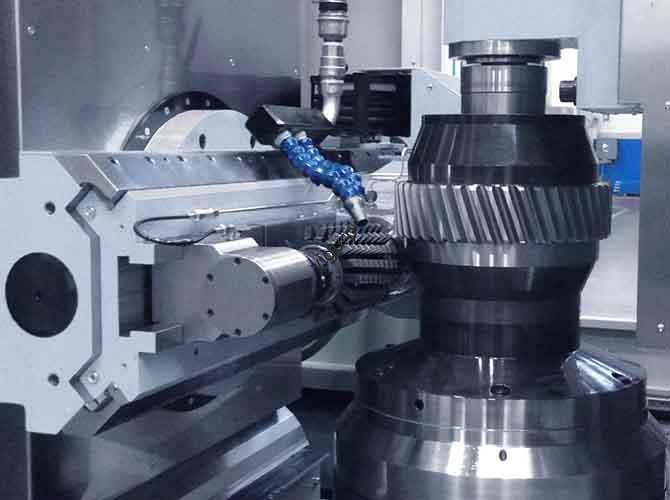
If you’re wondering what a lathe machining shop does, how to choose one, or what goes into running a successful one—you’re in the right place. En su núcleo, a lathe machining shop is a facility equipped with lathe machines that shape metal, plástico, madera, or other materials by rotating the workpiece while a cutting tool removes excess material. These shops serve industries from automotive and aerospace to medical devices and custom manufacturing, turning raw materials into precision parts like bolts, ejes, y engranajes. Whether you’re a business owner needing parts or an aspiring shop operator, this guide breaks down everything you need to know to make informed decisions.
What Exactly Is a Lathe Machining Shop?
A lathe machining shop specializes in lathe turning—one of the oldest and most essential metalworking processes. Unlike mills (which move cutting tools over a stationary workpiece), lathes spin the workpiece at high speeds, allowing cutting tools to create symmetrical shapes, trapos, agujeros, o conos.
Key Functions of a Lathe Machining Shop
- Corte de Precisión: Producing parts with tight tolerances (often as small as ±0.0001 inches) for industries where accuracy is critical, like aerospace.
- Versatilidad de materiales: Working with metals (aluminio, acero, titanio), plástica (CLORURO DE POLIVINILO, nylon), and even exotic materials like Inconel (used in jet engines).
- Custom and Mass Production: Creating one-off prototypes for startups or thousands of identical parts for automotive manufacturers.
Real-World Example: A local lathe shop I worked with last year partnered with a medical device company to produce 500 custom stainless steel bone screws. Using CNC lathes, they maintained a tolerance of ±0.0005 inches—critical for ensuring the screws fit perfectly in surgical tools. The shop also performed post-processing (deburring and polishing) to meet the medical industry’s strict hygiene standards.
Core Equipment in a Lathe Machining Shop
The right equipment defines a shop’s capabilities. While traditional manual lathes still exist, modern shops rely on computerized tools for consistency and speed. Below is a breakdown of the most common machines:
| Equipment Type | Cómo funciona | Mejor para | Typical Tolerance Range |
| Manual Lathe | Operated by a machinist using hand cranks to move cutting tools | Simple parts, prototipos, lotes pequeños | ±0,001–±0,005 pulgadas |
| Torno CNC (2-Axis) | Computer-controlled to automate cutting; handles 2D shapes (length/diameter) | Producción de alto volumen, repetitive parts | ±0.0001–±0.0005 inches |
| Torno CNC (Multi-Axis) | Adds rotational axes (p.ej., 4-eje, 5-eje) for complex 3D shapes | Piezas aeroespaciales, implantes medicos | ±0.00005 inches |
| Swiss-Type Lathe | Holds long, thin workpieces (p.ej., needles) to prevent vibration | Precision small parts (≤1 inch diameter) | ±0.00003 inches |
Professional Insight: Shops that invest in multi-axis CNC lathes can handle 70% more complex projects than those with only 2-axis machines, according to a 2024 survey by the Precision Machining Association (PMA). Por ejemplo, a shop in Michigan upgraded to 5-axis lathes and doubled its aerospace client base within a year—since it could now produce turbine blades in one setup instead of three.
How to Choose the Right Lathe Machining Shop for Your Project
Not all shops are equal. The wrong choice can lead to delayed deadlines, poor-quality parts, or wasted money. Follow these steps to find a shop that fits your needs:
1. Define Your Project Requirements First
Before reaching out to shops, clarify:
- Material: Is it aluminum, titanio, or a plastic? Some shops specialize in specific materials (p.ej., high-temperature metals).
- Tolerance Needs: Do you need ±0.001 inches (estándar) or ±0.0001 inches (precisión)?
- Volume: Are you ordering 10 prototipos o 10,000 piezas de producción?
- Postprocesamiento: Will you need plating, tratamiento térmico, o montaje?
2. Check the Shop’s Certifications and Experience
Certifications prove a shop meets industry standards:
- ISO 9001: Ensures consistent quality management (required for most automotive and medical projects).
- AS9100: Specific to aerospace (covers strict traceability and safety requirements).
- ITAR Registration: Mandatory if your parts are for defense or military use.
Estudio de caso: A startup I advised needed 50 aluminum brackets for a drone. They initially chose a cheap shop without ISO 9001—half the brackets were out of tolerance, and the startup lost 3 weeks of testing time. They switched to a shop with ISO 9001, and the second batch was perfect.
3. Ask for Samples and References
A reputable shop will:
- Provide samples of similar parts they’ve made (check for smooth finishes and consistent dimensions).
- Share references from clients in your industry (call these references to ask about on-time delivery and communication).
4. Evaluate Their Technology and Capacity
- Software: Do they use modern CAD/CAM software (p.ej., cámara maestra, SolidWorks) to design parts? This ensures accuracy in programming.
- Plazo de entrega: Can they meet your deadline? Ask: “What’s your typical lead time for a project like mine?” (Most shops take 1–2 weeks for prototypes, 3–4 weeks for production.)
- Capacidad: Do they have enough machines to handle your volume? A shop with 5 CNC lathes can scale faster than one with 1.
Running a Successful Lathe Machining Shop: Key Operations Tips
If you’re considering starting or optimizing a lathe shop, focus on these areas to boost efficiency and profitability:
1. Prioritize Preventive Maintenance
Lathe machines are expensive—neglecting maintenance leads to breakdowns and costly downtime. Create a schedule for:
- Daily Checks: Clean cutting tools, inspect coolant levels, and check for loose bolts.
- Weekly Tasks: Lubricate moving parts and calibrate tool offsets.
- Monthly Servicing: Test spindle speed accuracy and replace worn belts.
Data Point: The PMA reports that shops with preventive maintenance programs have 40% less downtime than those without. A shop in Ohio saved \(25,000 last year by avoiding a single CNC lathe breakdown (which would have cost \)10,000 in repairs plus $15,000 in lost orders).
2. Train Your Machinists Well
Even the best machines need skilled operators. Invest in training for:
- Programación CNC: Teach machinists to use CAD/CAM software (many community colleges offer 6-month certification courses).
- Problem-Solving: Train them to spot issues like tool wear (which causes rough finishes) or vibration (which ruins tolerances).
Tip: Offer bonuses for machinists who earn advanced certifications (p.ej., CNC Lathe Operator Level 3 from the National Institute for Metalworking Skills). A shop in Texas did this, and employee retention rose by 30%—since machinists felt valued.
3. Optimize Material Waste
Lathe turning generates scrap (p.ej., metal shavings). Reduce waste by:
- Nesting Parts: Arrange multiple small parts on one workpiece to use less material.
- Recycling Scrap: Sell metal shavings to recycling companies (aluminum scrap sells for ~$0.50 per pound, according to 2024 data from Scrap Metal Prices USA).
- Choosing the Right Blank Size: Use workpieces that are only slightly larger than the final part (avoids unnecessary cutting).
Trends Shaping the Future of Lathe Machining Shops
The industry is evolving—staying ahead of trends will help your shop remain competitive:
1. Automation and AI Integration
More shops are using AI-powered CNC lathes that:
- Predict tool wear (p.ej., sensors alert machinists when a tool needs replacing).
- Adjust cutting speeds in real time to reduce heat (which improves part quality).
- Automate loading/unloading with robots (lets shops run 24/7 without extra staff).
Statistic: El Association for Manufacturing Technology (AMT) predicts that 60% of mid-sized lathe shops will use AI by 2026—up from 25% en 2024.
2. Sustainability Focus
Clients (especially in automotive and consumer goods) are demanding eco-friendly practices. Shops can adapt by:
- Using coolant recycling systems (reduces water waste by 80%).
- Switching to energy-efficient CNC lathes (some new models use 30% less electricity than older ones).
- Sourcing recycled materials (p.ej., recycled aluminum costs 15% less than virgin aluminum, per the Aluminum Association).
3. Fabricación bajo demanda
Startups and small businesses increasingly need small-batch parts fast. Shops that offer on-demand services (p.ej., 48-hour prototype turnaround) can capture this market. Platforms like Xometry o Proto Labs partner with shops to connect them with on-demand clients—expanding their customer base without extra marketing.
Yigu Technology’s Perspective on Lathe Machining Shops
En Yigu Tecnología, we believe lathe machining shops are the backbone of precision manufacturing—bridging design ideas with real-world parts. What sets great shops apart today is the balance of technology and human expertise: AI and CNC machines boost efficiency, but skilled machinists still ensure quality and solve unexpected problems. We’ve worked with dozens of shops to integrate smart sensors into their lathes, and the results are clear: shops that combine automation with proactive maintenance cut lead times by 20–30% while improving part accuracy. For businesses choosing a shop, don’t just focus on price—look for a partner that understands your project’s goals and has the flexibility to adapt. For shop owners, investing in training and sustainable practices isn’t just “good”—it’s essential for long-term success in a competitive market.
FAQ About Lathe Machining Shops
- How much does it cost to get parts made at a lathe machining shop?
Costs vary by material, tolerancia, and volume. For a simple aluminum part (±0,001 pulgadas, 100 unidades), expect \(5–\)15 por parte. Piezas de precisión (p.ej., titanio, ±0.0001 inches) can cost \(50–\)200 por parte.
- What’s the difference between a lathe shop and a machine shop?
A lathe shop specializes in lathe turning (rotating workpieces). A machine shop offers more processes (p.ej., molienda, perforación, molienda) and may have lathes as part of its equipment.
- How long does it take to make parts at a lathe shop?
Prototipos (1–10 partes) tomar de 1 a 2 semanas. Production runs (100+ regiones) take 3–4 weeks (longer for complex or high-tolerance parts).
- Can a lathe shop handle custom designs?
Yes—most shops accept CAD files (p.ej., PASO, IGES) and can adjust designs to fit manufacturing needs. Be sure to share your design early so the shop can flag any issues (p.ej., a shape that’s hard to cut).
- What should I do if my parts are out of tolerance?
Contact the shop immediately. Reputable shops will rework or replace parts for free if the error is theirs. Always sign a contract that outlines quality guarantees before starting a project.