
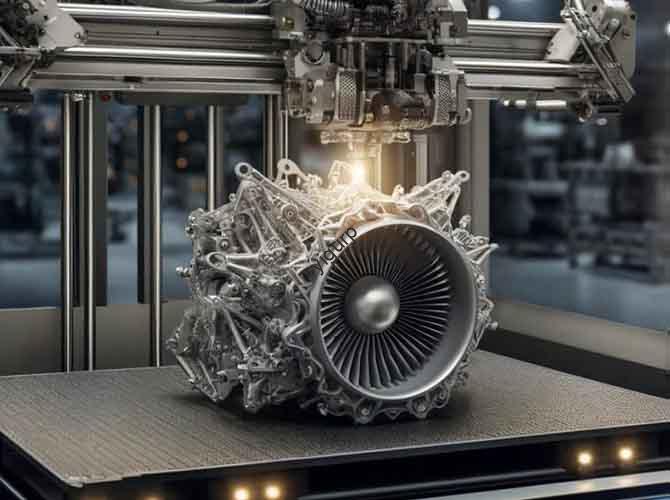
In modern manufacturing—from automotive transmission housings to consumer electronics casings—the proceso de fundición a presión stands as a cornerstone for producing complex, piezas metálicas de gran volumen. Transforma el metal fundido en componentes precisos mediante presión controlada., temperatura, y tiempo. Este artículo desglosa el flujo de trabajo completo de la fundición a presión., desde la preparación del molde hasta el posprocesamiento, highlights critical quality control points, and solves common process challenges, helping you master the technology for reliable production.
1. What Are the Core Stages of the Die Casting Process?
The die casting process follows a linear, step-by-step workflow with five interconnected stages. Each stage directly impacts the final part quality, and skipping or rushing any step leads to defects. Below is a detailed breakdown with actionable parameters:
1.1 Stage 1: Preparación del molde (Foundation of Precision)
Molds are the “blueprint” of die casting—their design and debugging determine part accuracy.
| Task | Requisitos clave | Critical Parameters | Objetivo |
| Diseño de moldes | – Parting surface alignment (no offset >0.02milímetros)- Gating system calculation (main sprue diameter: 8-15mm based on part size)- Auxiliary structures (overflow groove volume: 5-10% of cavity volume; exhaust groove depth: 0.05-0.1milímetros) | – Flow rate simulation: Ensure metal liquid fills cavity in 0.05-0.2s- Draft angle: 1-3° for easy demolding | Avoid turbulence, trapped gas, and demolding damage |
| Mold Material Selection | Mold core/cavity: H13 hot-work mold steel | Quenching hardness: CDH 48-52; Tempering temperature: 550-600°C | Withstand 100,000+ casting cycles; Resist heat fatigue |
| Mold Installation & Debugging | – Fix mold on die casting machine platen (parallelism error <0.05mmm)- Test ejection mechanism (push rod stroke accuracy: ±0,1 mm)- Preheat mold | Preheat temperature: 150-250°C (aleaciones de aluminio); 100-180°C (aleaciones de zinc) | Reduce metal liquid temperature loss; Improve filling capacity |
1.2 Stage 2: Preparación del metal fundido (Guarantee Material Quality)
Poor metal quality ruins even the best mold—this stage focuses on purity and fluidity.
| Paso | Operation Details | Key Parameters | Control de calidad |
| Raw Material Melting | Weigh metal ingots (p.ej., A380 aluminum alloy) by recipe; Melt in crucible furnace | – Aleaciones de aluminio: 670-720°C- Aleaciones de zinc: 400-450°C- Magnesium alloys: 650-700°C (inert gas protection) | Avoid overheating (causes alloy burning); Prevent underheating (reduces fluidity) |
| Refining & Desgasificación | Add refining agent (p.ej., hexachloroethane for aluminum); Use argon gas to stir | – Refining time: 10-15min- Argon flow rate: 5-10 L/min | Remove impurities (contenido <0.1%); Reduce gas content (≤0.15mL/100g metal) |
| Quality Monitoring | – Real-time temperature tracking (infrared thermometer accuracy: ±2°C)- Sampling for chemical composition (via 光谱分析 spectrometer) | Ensure alloy grade compliance (p.ej., Si content 7.5-9.5% for A380) | Avoid component segregation; Prevent performance degradation |
1.3 Stage 3: Injection Filling (Core of Die Casting)
This stage uses high pressure and speed to force metal into the mold—precision here eliminates internal defects.
1.3.1 Two-Stage Injection Process (Estándar de la industria)
| Injection Stage | Objetivo | Key Parameters | Common Mistakes to Avoid |
| Low-Speed Filling | Fill pressure chamber; Avoid metal splashing | Velocidad: 0.1-0.5 EM; Presión: 5-15MPa | Too fast → Air entrapment; Too slow → Metal solidifies early |
| High-Speed Filling | Fill mold cavity quickly; Ensure complex features are formed | Velocidad: 2-8 EM (aleaciones de aluminio); 1-3 EM (aleaciones de zinc); Presión: 30-70MPa | Too slow → Incomplete filling; Too fast → Turbulence (causes porosity) |
1.3.2 Boost & Tenencia
After cavity filling, apply boost pressure and hold to compensate for shrinkage:
- Boost pressure: 50-100MPa (higher for thick-walled parts);
- Holding time: 2-10s (depends on part thickness: +1s per 2mm thickness);
- Resultado: Eliminate internal shrinkage; Ensure part density (≥98%).
1.4 Stage 4: Mold Opening & Eliminación de piezas (Avoid Secondary Damage)
Gentle handling prevents part deformation or surface scratches.
| Operación | Métodos | Requisitos clave |
| Mold Opening | Die casting machine pulls moving mold away from fixed mold | Opening speed: 50-100 mm/s (slow first, then fast) |
| Expulsión de piezas | Ejection mechanism pushes part out (with gate cake and runners) | Fuerza de eyección: Uniforme (use multiple push rods for large parts) |
| Initial Cleaning | Remove gate cake and runners (manual for small batches; robotic for mass production) | Cut surface flatness: Ra ≤6.3μm |
1.5 Stage 5: Postprocesamiento (Finalize Part Quality)
Turns raw castings into market-ready parts—details are in Section 2.
2. How to Control Quality in Each Stage of the Die Casting Process?
Quality control isn’t just a final check—it’s integrated into every stage. Below is a stage-by-stage quality assurance system:
| Die Casting Stage | Quality Control Item | Testing Method | Standards/Acceptance Criteria |
| Preparación del molde | Mold Precision | Máquina de medición de coordenadas (MMC) | Cavity dimension tolerance: IT8-IT10 |
| Molten Metal | Gas Content | Reduced pressure test (RPT) | ≤0.15mL/100g (aleaciones de aluminio) |
| Injection Filling | Filling Process Stability | Pressure sensors + Data acquisition system | Pressure fluctuation <±5%; Speed fluctuation <±10% |
| Mold Opening & Eliminación | Part Surface Quality | Inspección visual + Magnifying glass (10incógnita) | No cracks, cold shuts, or severe burrs |
| Postprocesamiento | – Precisión dimensional- Internal Quality- Propiedades mecánicas | – MMC- X-ray flaw detection- Tensile test + Hardness test | – Tolerancia: ±0,05 mm (key dimensions)- No internal porosity (ISO 17636-1 Nivel 2)- Resistencia a la tracción: ≥200MPa (A380 aluminum); Dureza: media pensión 80-100 |
3. What Are Common Die Casting Process Defects and Their Solutions?
Even with strict control, defects can occur—targeted solutions save time and material.
| Defect Type | Visual/Detected Characteristics | Root Cause | Practical Solutions |
| Porosity | Tiny air bubbles (visible via X-ray or surface pinholes) | – Trapped cavity gas- High metal liquid gas content- Fast filling speed | 1. Enlarge exhaust grooves (depth 0.1-0.15mm); 2. Extend degassing time to 15-20min; 3. Reduce high-speed filling speed by 10-20% |
| Contracción | Depressions on part surface or internal voids (X-ray shows dark areas) | – Insufficient boost pressure- Too fast cooling (local heat loss)- Holding time too short | 1. Increase boost pressure to 60-80MPa; 2. Add cooling inserts in hot spots; 3. Extend holding time by 2-3s |
| Cold Shut | Linear seams on part surface (unfused metal layers) | – Low metal liquid temperature- Slow filling speed- Cold mold surface | 1. Raise metal temperature by 10-20°C; 2. Increase high-speed filling speed by 0.5-1 EM; 3. Check mold preheat (ensure no cold spots) |
| Mold Strain | Scratches or material adhesion on part surface | – Rough mold cavity (Real academia de bellas artes >0.8µm)- Failed release agent- High mold temperature | 1. Polish mold cavity to Ra ≤0.4μm; 2. Replace release agent (use water-based for aluminum); 3. Lower mold temperature by 20-30°C |
| Cracks | Fine lines on part (especially at fillets) | – Small fillet radius (<1milímetros)- Uneven cooling- Residual stress | 1. Optimize part design (fillet radius ≥2mm); 2. Balance mold cooling channels (flow rate difference <10%); 3. Add stress relief annealing (120-180°C for 2-4h) |
4. Yigu Technology’s Perspective on the Die Casting Process
En Yigu Tecnología, we view the proceso de fundición a presión as a “systematic precision chain”—each stage is linked, and a weak link ruins the whole part. Our data shows 65% of defects come from ignoring early-stage controls (p.ej., mold preheat or metal degassing) rather than post-processing fixes.
We recommend a “preventive control” approach: For automotive aluminum parts, we use AI to monitor injection pressure (real-time adjustment to ±2MPa) and mold temperature (maintain ±5°C stability); For consumer electronics zinc parts, we optimize gating systems to cut porosity rates to <0.5%. By integrating digital monitoring (p.ej., IoT sensors for molten metal temperature) and mold life cycle management, we help clients reduce defect rates by 30% and extend mold service life by 20%.
5. Preguntas frecuentes: Common Questions About the Die Casting Process
Q1: What’s the difference between high-pressure die casting (HPDC) and low-pressure die casting (LPDC) in the injection stage?
HPDC utiliza alta presión (30-100MPa) y velocidad (2-8 EM) for fast filling—ideal for thin-walled, partes complejas (p.ej., phone casings). LPDC utiliza baja presión (0.05-0.2MPa) and slow filling (gravity-assisted)—better for thick-walled, piezas de alta resistencia (p.ej., engine cylinder heads) as it reduces porosity.
Q2: How long does a typical die casting mold last, and how to extend its life?
A standard H13 steel mold lasts 100,000-200,000 ciclos. To extend life: 1. Clean mold cavity after every 500 ciclos (remove residue); 2. Avoid overheating (monitor mold temperature in real time); 3. Use mold maintenance oil (prevents rust during downtime); 4. Repair small scratches promptly (via laser cladding).
Q3: Can die casting process be used for high-melting-point metals like steel?
No. Steel’s melting point (1450-1510°C) exceeds the heat resistance of H13 mold steel (max working temperature ~600°C), causing rapid mold wear. Die casting is mainly for non-ferrous alloys (aluminio, zinc, magnesio) with melting points <800°C. For steel parts, forging or sand casting is more suitable.