
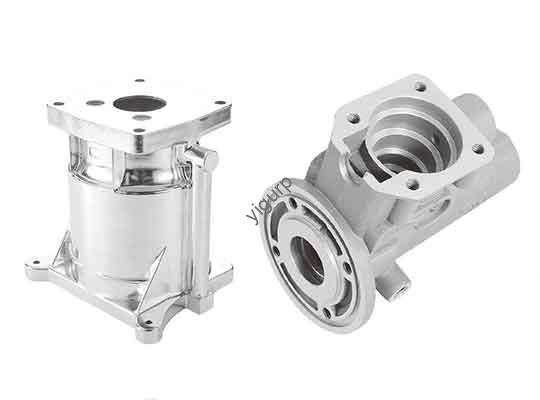
Si está explorando la fundición a presión en el Reino Unido, ya sea para obtener piezas de precisión, Lanzamiento de un proyecto de fabricación., o asociarse con una fundición local: aquí está el desglose principal: La industria de la fundición a presión del Reino Unido es un sector de más de 1.200 millones de libras esterlinas. (2024 datos de la Asociación Británica de Fundición a Presión, BDCA) que desempeña un papel fundamental en el apoyo a industrias clave como la automotriz, aeroespacial, electrónica, y dispositivos médicos. It’s defined by strict quality standards (aligned with EU and UK regulations), expertise in lightweight metals (aluminio, magnesio), and a focus on sustainability. To leverage it effectively, you need to understand the market landscape, top materials, how to choose a reliable foundry, regulatory compliance, and emerging trends. Let’s break this down clearly.
Key Overview of the UK Die Casting Market
Die casting in the UK has a long heritage—dating back to the 19th century—and today, it’s a modern, tech-driven sector with over 80 active foundries and 6,500+ employees (BDCA 2024). Its largest customer is the industria automotriz, which accounts for 55% of demand—think aluminum die-cast parts for electric vehicles (vehículos eléctricos) like battery housings, motor casings, y componentes de suspensión. The UK’s shift to EVs has been a major growth driver: 70% of UK die casters now specialize in EV-related parts, arriba de 35% en 2019 (BDCA survey).
Un ejemplo del mundo real: A Birmingham-based die casting foundry supplies Jaguar Land Rover (JLR) with aluminum die-cast EV battery enclosures. Using a 4,000-ton clamping force machine, the foundry produces single-piece enclosures that weigh 30% less than traditional steel versions—helping JLR meet its 2030 carbon reduction targets. The foundry also uses a closed-loop recycling system, reusing 98% of its aluminum scrap to cut waste and lower costs.
Beyond automotive, el aerospace sector drives 18% of the market (BDCA 2024)—UK die casters produce magnesium and aluminum parts for Airbus and Rolls-Royce, such as aircraft engine brackets and interior components. The “localization” trend is also boosting the industry: 60% of UK manufacturers now prefer domestic die casters to avoid post-Brexit supply chain delays, en comparación con 40% en 2020 (BDCA report).
Top Materials for Die Casting in the UK
UK die casters prioritize materials that balance strength, peso, and sustainability—critical for industries like automotive and aerospace. Below’s a breakdown of the most common materials, their benefits, y aplicaciones del mundo real:
| Material | Ventajas clave | Aplicaciones comunes | UK Market Share |
| Aluminio | Ligero (1/3 el peso del acero), high recyclability (95%+ in UK), rentable | Carcasas para baterías de vehículos eléctricos, automotive wheels, cajas electrónicas | 72% (BDCA 2024) |
| Magnesio | Incluso más ligero que el aluminio, alta relación resistencia-peso, good electromagnetic shielding | Piezas de motores aeroespaciales, carcasas para portátiles, medical device frames | 15% |
| Zinc | Punto de fusión bajo (ahorra energía), high precision for small parts, resistente a la corrosión | Conectores electrónicos, hardware (manijas de las puertas), componentes de juguete | 12% |
| Cobre | Excelente conductividad térmica/eléctrica., alta durabilidad | Heat sinks for electronics, terminales electricos | 1% |
Example of material selection: A Bristol-based aerospace die caster uses magnesium to produce engine brackets for Rolls-Royce’s Trent XWB jet engines. Magnesium’s light weight reduces aircraft fuel consumption by 5–7% per flight, while its strength meets Rolls-Royce’s strict safety standards. For consumer electronics, a Sheffield foundry uses zinc to make USB-C connector housings—zinc’s low melting point lets the foundry produce 10,000+ parts per hour with tight tolerances (±0,005 pulgadas).
How to Choose a Reliable Die Casting Foundry in the UK
Selecting the right UK foundry ensures your parts meet quality standards, comply with regulations, and are delivered on time. Here’s a step-by-step guide:
- Verify Industry Certifications: Look for foundries with certifications that match your sector. Para piezas de automoción, IATF 16949 is mandatory—it ensures compliance with UK and EU automotive quality standards. A Coventry-based foundry that supplies BMW holds IATF 16949 and undergoes annual audits to maintain its status. Para piezas aeroespaciales, AS9100 is critical—this standard requires traceability of every part, from raw material to delivery. A Derby foundry working with Airbus has AS9100, allowing it to supply parts for aircraft engines.
- Evaluate Production Capabilities: Ask about machine size (fuerza de sujeción, in tons) y volumen de producción. If you need large EV parts (like battery housings), a foundry with 3,000+ ton machines is essential. A Newcastle foundry, Por ejemplo, has a 5,000-ton machine that can cast aluminum parts up to 2 meters long—ideal for EV manufacturers. Para pequeños, piezas de alta precisión (like electronics connectors), choose a foundry with high-speed machines (capaz de 5,000+ parts per hour).
- Review Quality Control (control de calidad) Procesos: Top UK foundries use advanced QC tools to ensure part accuracy. A Leicester foundry uses X-ray inspection to detect internal defects (like porosity) in aluminum EV parts—critical for battery housings, which can’t leak. They also use 3D scanners to check dimensional accuracy, with a tolerance range of ±0.002 inches. The foundry provides a full QC report with every order, including material certificates and test results.
- Assess Sustainability Practices: The UK government’s net-zero targets (2050 deadline) make sustainability a key factor. Choose a foundry with recycling programs and energy-efficient processes. A Manchester foundry uses 100% recycled aluminum for its parts, cutting carbon emissions by 60% compared to using virgin aluminum. They also use solar panels to power 30% of their operations, helping clients meet their own sustainability goals.
UK Die Casting Regulations and Compliance
Compliance is non-negotiable in the UK—rules protect workers, the environment, and product safety. Here are the key regulations UK die casters must follow:
- Environmental Regulations: The UK Environment Agency enforces rules on emissions (like volatile organic compounds, COV) and waste disposal. Die casters must use low-VOC lubricants and recycle or treat waste (p.ej., metal scrap, wastewater) before disposal. A Liverpool foundry was fined £25,000 in 2023 for releasing untreated wastewater containing aluminum particles into a local river—violating the UK’s Environmental Protection Act.
- Worker Safety Standards: The Health and Safety Executive (HSE) sets strict rules for die casting facilities. Casters must provide personal protective equipment (PPE) like heat-resistant gloves and face shields, and conduct regular machine inspections. A Birmingham foundry was inspected by the HSE in 2024 and praised for its safety protocols, including automated machine guards and weekly fire drills.
- Industry-Specific Standards: For medical device parts, the UK Medicines and Healthcare products Regulatory Agency (MHRA) requires compliance with ISO 13485. This standard ensures parts are sterile and biocompatible. A Edinburgh foundry that makes magnesium medical device frames holds ISO 13485 and undergoes annual MHRA audits to confirm compliance.
Trends Shaping the Future of UK Die Casting
The UK die casting industry is evolving to meet EV demand, sustainability goals, and tech innovation. Here are the top trends:
- EV-Driven Innovation: As EV sales in the UK grow (projected to be 100% of new car sales by 2035, per UK government targets), die casters are investing in “mega-casting” technology. A London-based foundry recently installed a 6,000-ton machine to produce single-piece EV underbodies—reducing the number of parts from 70 a 1, reduciendo el tiempo de montaje 40%.
- Automation and AI: UK foundries are using automation to improve efficiency. A Nottingham foundry uses robots for part removal and sorting, reducir los costos laborales mediante 25% and increasing production speed by 30%. They also use AI-powered predictive maintenance—sensors on die casting machines collect data, and AI predicts when parts will fail, allowing for repairs before breakdowns. This has reduced downtime by 18%.
- Sustainable Materials: The UK’s net-zero goals are driving demand for eco-friendly materials. A Southampton foundry is testing bio-based lubricants for die casting machines—these lubricants are made from plant oils and are 100% biodegradable, replacing traditional petroleum-based lubricants. The foundry reports a 40% reduction in environmental impact since switching.
Yigu Technology’s Perspective on UK Die Casting
As a global provider of die casting solutions, Yigu Technology recognizes the UK’s role as a leader in sustainable, high-precision die casting. The industry’s focus on EV innovation and net-zero alignment matches our mission to deliver eco-friendly, tech-driven tools. We’ve noticed UK foundries need flexible solutions to adapt to EV part demand—like our energy-efficient die casting machines, which use 20% less power than traditional models. We’re also partnering with UK foundries to develop AI-powered QC software, helping them improve part accuracy and reduce defects. We believe the UK die casting industry will remain a key player in Europe’s manufacturing sector, and we’re excited to support its growth toward a sustainable future.
FAQ About Die Casting in the United Kingdom (Reino Unido)
- How much does die casting cost in the UK compared to other European countries?
UK die casting costs are typically 10–15% higher than in Eastern Europe (p.ej., Poland), but 5–8% lower than in Germany. The premium is offset by faster lead times (2–4 semanas frente a. 6–8 weeks from Eastern Europe), better quality control, and no post-Brexit customs delays. For high-value parts (like aerospace components), UK foundries often offer better value due to their expertise.
- What’s the typical lead time for die casting in the UK?
Lead times vary by part size and complexity: Piezas pequeñas (p.ej., zinc connectors) tomar de 2 a 3 semanas. Large EV parts (p.ej., carcasas de batería) tomar de 4 a 6 semanas (incluyendo herramientas). Many UK foundries offer “rush” service for urgent projects, reduciendo los plazos de entrega 30% for an extra fee.
- Can UK die casters handle both low-volume prototypes and high-volume production?
Sí. Most UK foundries offer “bridge tooling” for prototypes (10–100 partes) and can scale up to mass production (100,000+ regiones). A Sheffield foundry, Por ejemplo, hecho 50 aluminum prototype parts for a startup and then scaled to 500,000 parts per year once the product launched.
- Which regions in the UK are major die casting hubs?
The top hubs are:
- West Midlands: Birmingham, Coventry (automotive focus, close to JLR and BMW plants).
- North West: Manchester, Liverpool (sustainability-focused foundries).
- East Midlands: Derby, Leicester (aerospace focus, near Rolls-Royce facilities).
- Do UK die casters offer design support?
Most do! Many UK foundries have in-house design engineers who optimize part designs for die casting (p.ej., adding draft angles to reduce tool wear, adjusting wall thickness to prevent defects). A Bristol foundry helped an EV startup redesign its battery housing—cutting material usage by 15% and improving structural strength.