
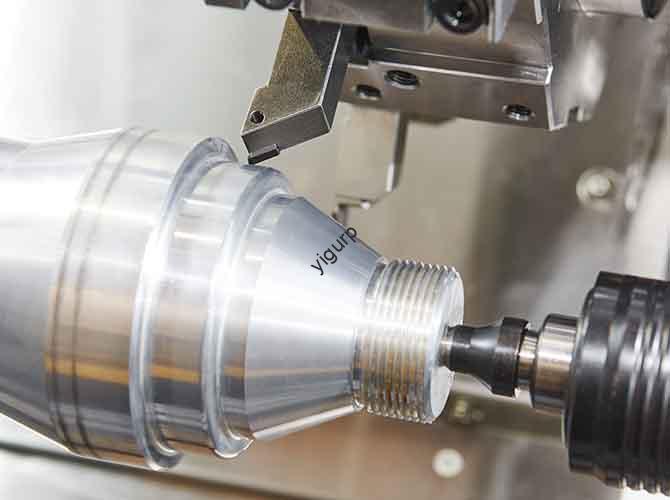
En el mecanizado CNC, ya sea para componentes aeroespaciales, dispositivos médicos, or automotive parts—the common tools used in CNC machining directly determine machining efficiency, calidad de la superficie, y costos de producción. Estas herramientas no son una colección aleatoria; están categorizados por función (molienda, perforación, torneado) y adaptado a las propiedades del material (aluminio blando vs. acero duro) y necesidades del proceso (desbaste vs.. refinamiento). This article breaks down the core tool categories, their key features, escenarios de aplicación, and practical selection strategies, helping you avoid mismatches and optimize your machining workflow.
1. What Are the Core Categories of Common CNC Machining Tools?
CNC machining tools are mainly divided into four functional categories, each covering multiple specialized types. Below is a clear breakdown to help you quickly identify the right tool for your task:
| Tool Category | Key Functions | Typical Tool Types | Suitable Machining Processes |
| Herramientas de fresado | Remove material from workpiece surfaces; Shape flat, curvo, or grooved features | Face mills, round nose mills, flat bottom mills, ball end mills, chamfer mills | Molienda (vertical/horizontal machining centers); Contour shaping; Cavity machining |
| Herramientas de perforación | Create holes of different diameters; Finish hole accuracy and surface quality | Standard twist drills, taladros centrales, U-drills, escariadores, grifos | Perforación; Hole finishing; Thread machining |
| Torneado & Boring Tools | Machine cylindrical, cónico, or hole features on lathes; Achieve high-precision hole diameters | Turning tools, fine boring tools, rough boring tools | Torneado (Tornos CNC); Aburrido (for existing holes); Grooving on cylindrical parts |
| Specialized Tools | Handle unique features or materials; Reduce tool changes and improve efficiency | Thread cutters, slot milling cutters, herramientas de formación, engraving tools | Thread machining; Keyway/T-groove cutting; Custom feature shaping; Fine engraving |
2. What Are the Key Features and Applications of Milling Tools?
Milling tools are the most versatile in CNC machining, used for everything from large-area roughing to precision contouring. Below is a detailed guide to the most common types:
2.1 Common Milling Tools: Características & Use Cases
| Milling Tool Type | Core Function | Características clave | Ideal Application Scenarios | Compatibilidad de materiales |
| Molino de cara | Large-area roughing/finishing of flat surfaces | – Multi-flute design (4-12 flautas)- Gran diámetro (φ20-100mm)- High material removal rate | – Machining automotive engine blocks (flat top surfaces)- Finishing mold bases (Ra 1.6-3.2μm) | todos los metales (aluminio, acero, titanio); Best for large flat parts |
| Round Nose Mill | Balanced roughing + corner clearing; Complex contour machining | – Rounded cutting edge (radius 0.5-10mm)- Avoids sharp corner damage | – Machining shallow cavities with rounded edges (p.ej., electronic device housings)- Medium-area material removal (50-100cm² parts) | Aleaciones de aluminio (soft materials); Acero (with coated blades) |
| Flat Bottom Mill | Straight wall + straight bottom machining; Sharp corner forming | – Flat cutting edge (no radius)- Subdivided into: • Aluminum mills (focus on side edge sharpness) • Tungsten steel mills (for hard materials) | – Machining straight-wall grooves (p.ej., keyways in shafts)- Finishing rectangular cavities (p.ej., sensor mounting slots) | Aluminum mills: Al/Mg alloys; Tungsten steel mills: 45# acero, acero inoxidable |
| Ball End Mill | Curved surface machining; Complex contour trimming | – Hemispherical cutting edge- Improves surface finish via step adjustment (stepover 10-20% of tool diameter) | – Machining aerospace turbine blade curves- Engraving 3D patterns on mold inserts | todos los metales; Best for curved surfaces (p.ej., optical lens molds) |
| Chamfer Mill | Chamfer cutting; Desbarbado; Countersink machining | – Fixed angles (30°, 45°, 60°)- Single/multi-flute options | – Deburring hole edges (prevents part damage during assembly)- Machining countersinks for screws (p.ej., herrajes para muebles) | todos los metales; Universal for post-processing |
3. How to Select Drilling Tools for Different Hole Requirements?
Drilling tools are critical for hole creation, but choosing the wrong type leads to low accuracy or broken tools. Below is a selection guide based on hole depth, precisión, y material:
3.1 Drilling Tool Comparison: Precision vs. Eficiencia
| Drilling Tool Type | Primary Use | Nivel de precisión | Eficiencia | Key Limitations |
| Standard Twist Drill | Universal pre-drilling | Bajo (diameter tolerance: ±0,1 mm) | Alto (fast drilling speed: 100-300mm/min) | Cannot achieve high precision; Needs reaming for tight tolerances |
| Center Drill | High-precision hole positioning | Alto (precisión de posicionamiento: ±0,02 mm) | Medio (slow feed rate: 20-50mm/min) | Only for positioning; Cannot drill deep holes (>5milímetros) |
| U-Drill (Violent Drill) | Deep hole machining (depth-to-diameter ratio >5:1) | Medio (tolerancia: ±0,05 mm) | Very high (one-pass drilling; Center outlet cooling) | Not suitable for shallow holes (<3x diameter); Requires high-pressure coolant |
| Reamer | Hole finishing; Correcting verticality | Very high (tolerancia: ±0,01 mm; Real academia de bellas artes <0.8µm) | Bajo (slow feed rate: 10-30mm/min) | Cannot change hole position; Requires pre-drilled holes (90-95% of final diameter) |
| Tap | Internal thread machining | Medium-high (thread tolerance: 6H/7H) | Medio | – Cutting taps: Para materiales blandos (aluminio); Produce chips- Forming taps: Para materiales duros (acero); No chips (better for blind holes) |
4. What Are the Must-Know Turning & Boring Tools for Lathe Machining?
Turning and boring tools are essential for cylindrical parts and hole refinement on CNC lathes. Below is a breakdown of their key roles:
| Tipo de herramienta | Función | Key Parameters | Ejemplos de aplicación |
| Turning Tool | Outer circle, inner circle, and grooving machining | – Cutting edge angle: 30-90°- Insert material: Carburo (para acero); PCD (para aluminio) | – Turning automotive drive shafts (outer circle diameter φ50-100mm)- Grooving for O-rings (groove width 2-5mm) |
| Fine Boring Tool | Precision hole finishing | – Adjustable edge position (±0,001 mm)- Acabado superficial: Real academia de bellas artes <0.4µm | – Finishing hydraulic cylinder holes (tolerance H7)- Machining bearing seats (redondez <0.005milímetros) |
| Rough Boring Tool | Rough boring or reaming | – Large cutting volume (depth of cut 1-3mm)- Tolerancia: ±0,1 mm | – Pre-processing engine cylinder bores (before fine boring)- Enlarging existing holes (from φ20mm to φ30mm) |
5. How to Choose the Right CNC Machining Tool: Una guía paso a paso
Choosing tools randomly leads to 30-50% costos más altos (due to rework or tool breakage). Follow this 4-step process for optimal selection:
Paso 1: Define Machining Requirements
Clarify core goals to narrow down tool types:
- If roughing: Prioritize tools with high material removal rates (p.ej., fresas frontales, U-drills).
- If finishing: Choose tools with sharp edges and high precision (p.ej., ball end mills, escariadores).
- If hole machining: Match tool to hole depth (U-drill for deep holes) y precisión (reamer for tight tolerances).
Paso 2: Match Tool to Material Properties
Soft and hard materials require different tool materials:
| Material de la pieza de trabajo | Recommended Tool Material | Key Reason |
| Aluminum/Magnesium Alloys (Suave) | PCD (polycrystalline diamond) or high-speed steel (HSS) | PCD has ultra-sharp edges; Avoids material adhesion |
| Steel/Stainless Steel (Duro) | Tungsten carbide (with TiAlN coating) or CBN (cubic boron nitride) | Coated carbide resists wear; CBN handles high temperatures |
| Aleaciones de titanio (Difficult-to-Cut) | Ultra-fine grain carbide (with TaN coating) | Alta dureza (HRC70) y resistencia al calor |
Paso 3: Consider Machine Tool Performance
Ensure tools match your CNC machine’s capabilities:
- Velocidad del husillo: High-speed spindles (>15,000 rpm) work best with PCD tools (para aluminio); Low-speed spindles need carbide tools (para acero).
- Coolant system: U-drills require high-pressure coolant (30-50MPa); Micro lubrication suits ball end mills (reduces chip adhesion).
Paso 4: Evaluate Cost-Efficiency
Balance tool life and price:
- Producción de alto volumen: Invest in durable tools (p.ej., coated carbide) to reduce tool changes (guarda 20-30% in labor time).
- Bajo volumen, piezas personalizadas: Use universal tools (p.ej., standard twist drills) instead of expensive custom tools (cuts tool costs by 40-60%).
6. Yigu Technology’s Perspective on Common Tools Used in CNC Machining
En Yigu Tecnología, we see common tools used in CNC machining as the “silent efficiency drivers”—the right tool choice can cut production time by 20-40% while improving quality. Our data shows 70% of machining defects (p.ej., mal acabado superficial, hole deviation) come from tool-material mismatches, not machine errors.
We recommend a “scenario-driven” tool selection approach: For auto part manufacturers, we pair tungsten steel flat bottom mills with 45# acero (reducing tool wear by 50%); For medical device clients, we use PCD ball end mills for titanium alloys (logrando ra <0.2μm for implants). We also help clients build tool life trackers (via IoT sensors) to replace tools before failure—avoiding costly rework. Ultimately, tool selection isn’t just about “buying the best”—it’s about “matching the right tool to the right task.”
7. Preguntas frecuentes: Common Questions About CNC Machining Tools
Q1: Can I use a ball end mill for flat surface machining instead of a face mill?
Technically yes, but it’s inefficient. Ball end mills have a smaller cutting area (only the tip contacts the surface), so machining a 100mm×100mm flat surface takes 3-5x longer than a face mill. Face mills also produce smoother surfaces (Ra 1.6μm vs. Ra 3.2μm for ball end mills) and last longer—they’re the better choice for flat surfaces.
Q2: Why do forming taps work better for hard materials (p.ej., acero inoxidable) than cutting taps?
Forming taps use cold extrusion to shape threads (no chip removal), while cutting taps remove material to create threads. Para materiales duros, cutting taps are prone to chip clogging (causing broken taps) and edge wear (reducing thread quality). Forming taps avoid these issues—they produce stronger threads (20-30% mayor resistencia a la tracción) and last 2-3x longer than cutting taps for stainless steel.
Q3: How often should I replace common CNC tools (p.ej., fresas de carburo)?
It depends on tool type and material:
- Carbide face mills (para acero): Replace after 80-120 minutes of cutting (or when surface roughness worsens to Ra >3.2µm).
- PCD ball end mills (para aluminio): Last 300-500 minutos (replace when edge chipping is visible).
- Standard twist drills: Replace after 50-80 agujeros (or if drilling force increases suddenly, indicating dull edges).
Always track tool life with a log—don’t wait for tool breakage (which can damage workpieces).