
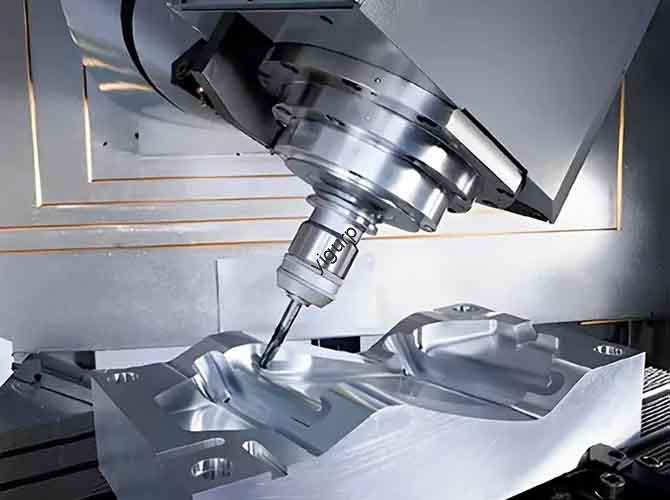
El mecanizado de piezas de torneado CNC se ha convertido en la piedra angular de la fabricación de alta precisión, Impulsando la producción de componentes críticos en industrias desde la automoción hasta la aeroespacial.. Sin embargo, muchos ingenieros y compradores luchan con preguntas.: ¿En qué se diferencia del torneado tradicional?? ¿Qué materiales y herramientas funcionan mejor?? Y cómo evitar errores comunes? Este artículo desglosa los conceptos básicos., procesos, material-tool matching, aplicaciones, and optimization strategies—helping you unlock the full potential of CNC turning parts machining.
1. What Is CNC Turning Parts Machining? Definición & Core Characteristics
en su corazon, CNC turning parts machining is a subtractive manufacturing process that uses computer numerical control (CNC) systems to rotate a workpiece while a cutting tool shapes it into precise, piezas personalizadas. Below is a 总分 breakdown of its key traits:
1.1 Definición central
A diferencia del torneado manual (relying on human skill for precision), CNC turning uses pre-programmed G-codes/M-codes to control machine tool movements—ensuring consistent, repeatable results for both simple (p.ej., cylindrical shafts) y complejo (p.ej., threaded sleeves) regiones.
1.2 4 Unmatched Characteristics
- Ultra-High Precision: Modern CNC lathes achieve dimensional accuracy of ±0.005mm and surface roughness as low as Ra1.6μm—critical for parts like medical surgical instruments where even tiny deviations affect performance.
- Multi-Material Versatility: Handles a wide range of materials, from common metals (aleación de aluminio, acero inoxidable, acero carbono) to high-performance options (aleación de titanio, cobre) and even non-metals (engineering plastics like PEEK).
- Complex Structure Capability: Con 2-axis to 5-axis linkage, it can integrate machining of outer circles, inner holes, end faces, trapos, surcos, and even special-shaped surfaces—eliminating the need for multiple machine setups.
- Eficiencia & Stability: Automated operation reduces human error by up to 80% compared to manual turning. Cuando se combina con dynamic milling technology, roughing efficiency can be boosted by 30-50%, cutting production cycles for high-volume orders.
2. Core Process of CNC Turning Parts Machining: Guía paso a paso
The quality of CNC turning parts depends on strict control of every process stage. Below is a lineal, time-axis breakdown of the 4 key steps:
| Process Stage | Key Actions | Critical Notes |
| 1. Preparación preliminar | – Selección de materiales: Choose raw materials based on product performance needs (p.ej., aluminum alloy for lightweight parts, acero inoxidable para resistencia a la corrosión). – Material Pretreatment: Cut raw materials into appropriate lengths, sand to remove surface burrs, and clean to eliminate oil/stains—ensuring flatness and preventing tool damage. | Avoid using materials with surface defects (p.ej., grietas, inclusions); they can cause tool chipping during machining. |
| 2. Diseño & Programación | – Product Design: Use CAD software (p.ej., SolidWorks, autocad) para crear modelos 3D de la pieza, then generate G-code via CAM software (p.ej., cámara maestra). – Scheme Review: Engineers check drawing accuracy (p.ej., tolerancias, assembly relationships) and optimize tool paths to minimize material waste and machining time. | Test the program in CNC simulation software (p.ej., Vericut) first—this avoids costly collisions between the tool and workpiece. |
| 3. Ejecución de mecanizado | – Configuración de la máquina: Install suitable fixtures (p.ej., chucks, trampas) to secure the workpiece, mount cutting tools (based on material), and input the programmed code. – Turning Operation: The CNC lathe rotates the workpiece (velocidad del husillo: 500-5000 RPM, dependiendo del material), while the tool feeds along the axis to shape the part—first roughing (removing excess material) then finishing (achieving precision). | Monitor spindle load during machining; sudden spikes may indicate tool wear or material impurities. |
| 4. Post-Treatment & Inspección | – Cleaning & Pulido: Remove burrs (via deburring tools or ultrasonic cleaning) and oil stains (with industrial detergents). – Tratamiento térmico: For high-strength parts (p.ej., automotive drive shafts), use processes like quenching/tempering to eliminate residual stress and improve hardness. – Inspección de calidad: Use tools like calipers, micrómetros, y máquinas de medición de coordenadas (MMC) para verificar dimensiones, rugosidad de la superficie, and geometric accuracy. | All parts must meet industry standards (p.ej., ISO 8062 for dimensional tolerances) before shipment. |
3. Material & Tool Matching: The Key to High-Quality CNC Turning Parts
Choosing the right tool for each material is critical to avoiding tool wear, mal acabado superficial, and production delays. Below is a comparison table of common materials and their ideal tools:
| Common Material | Características clave | Recommended Tool Type | Tool Coating (for Enhanced Performance) | Machining Tips |
| Aleación de aluminio (p.ej., 6061) | Suave, punto de fusión bajo, easy to stick to tools | herramientas de carburo (p.ej., WC-Co) | Titanium Nitride (Estaño) or Diamond-Like Carbon (contenido descargable) | Use high cutting speed (1000-3000 RPM) to reduce sticking. |
| Acero inoxidable (p.ej., 304) | Alta dureza, easy to cause tool wear, prone to work hardening | Cemented carbide tools (with high cobalt content) or ceramic tools | Titanium Carbonitride (TiCN) or Aluminum Titanium Nitride (AlTiN) | Use low feed rate (0.1-0.2mm/vuelta) to avoid work hardening. |
| Acero carbono (p.ej., 45#) | Moderate hardness, buena maquinabilidad | Acero de alta velocidad (HSS) or carbide tools | TiN or TiCN | Balance cutting speed (300-800 RPM) and feed rate for efficiency. |
| Aleación de titanio (p.ej., Ti-6Al-4V) | Alta resistencia, baja conductividad térmica (causes tool overheating) | herramientas de carburo (with fine grain size) or cubic boron nitride (CBN) herramientas | AlTiN or Titanium Aluminum Carbonitride (TiAlCN) | Use coolant with high heat dissipation (p.ej., water-soluble coolant) to protect tools. |
| Cobre (p.ej., C1100) | Alta ductilidad, easy to deform during machining | herramientas de carburo (sharp cutting edges) | DLC or uncoated carbide | Use sharp tools to avoid burring; control cutting force to prevent deformation. |
4. Application Fields of CNC Turning Parts Machining
CNC turning parts are ubiquitous across high-end manufacturing. Below is a scenario-based list of key industries and their typical parts:
| Industria | Typical CNC Turning Parts | Key Requirements Met by CNC Turning |
| Automotor | Engine crankshafts, ejes de transmisión, wheel hub bearings, fuel injector sleeves | Alta precisión (ensures engine smoothness) and mass production consistency (10,000+ parts per batch). |
| Electrónica de Consumo | Mobile phone middle frames, laptop hinge shafts, tablet stand components | Thin-walled precision (p.ej., 0.5mm wall thickness for phone frames) and excellent surface finish (no need for extra polishing). |
| Dispositivos médicos | Artificial joint stems, surgical forceps shafts, componentes de la bomba de insulina | Biocompatible material machining (p.ej., aleación de titanio) and ultra-high precision (±0.002mm for joint parts). |
| Aeroespacial | Palas de turbina, aircraft engine connectors, satellite structural parts | High-temperature resistance material machining (p.ej., heat-resistant alloys) and complex structure integration (reduces part count and weight). |
5. Ventajas & Critical Precautions
While CNC turning parts machining offers huge benefits, ignoring precautions can lead to costly mistakes. Below is a balanced breakdown:
5.1 3 Core Advantages
- Flexibility for Small Batches: Quickly switch between product models by updating the program—ideal for customized orders (p.ej., 50-1000 pieces of special-shaped parts).
- Consistency in Mass Production: Program control ensures dimensional uniformity across 10,000+ parts—no more variations from manual operation.
- Cost Controllability: Optimized tool paths reduce material waste by 15-20%, and automated operation cuts labor costs—lowering comprehensive production costs.
5.2 3 Critical Precautions
- Programming Accuracy: Even a small G-code error (p.ej., wrong coordinate value) can cause tool-workpiece collisions. Always hire professional programmers and test programs in simulation software.
- Equipment Maintenance: Regularly calibrate the CNC lathe (p.ej., check spindle runout, tool turret positioning) to maintain accuracy. Replace worn parts (p.ej., portaherramientas) cada 6-12 months—neglecting this can reduce precision by 50%.
- Surface Treatment Selection: Choose post-treatment processes based on part use (p.ej., anodizado for aluminum parts needing corrosion resistance, galvanoplastia for parts needing decoration and wear resistance). Avoid over-treating (p.ej., unnecessary electroplating) to cut costs.
Yigu Technology’s Perspective on CNC Turning Parts Machining
En Yigu Tecnología, we believe process optimization and material-tool synergy are the keys to maximizing CNC turning efficiency. Many clients face issues like tool wear or poor surface finish—often due to mismatched tools or unoptimized programs. We adopt a “3-step optimization approach”: 1) Analyze part requirements (material, precisión, volumen) to recommend the right tool-coating combination; 2) Use AI-driven CAM software to optimize tool paths, reducing machining time by 20-30%; 3) Conduct pre-production tests to validate programs and adjust parameters (p.ej., velocidad del husillo, tasa de avance) for zero collisions. Para piezas de alta precisión (p.ej., componentes medicos), we also use CMM for 100% inspection to ensure compliance with strict industry standards—helping clients deliver reliable, productos de alta calidad.
Preguntas frecuentes (Frequently Asked Questions)
- q: Can CNC turning parts machining produce parts with complex 3D shapes (p.ej., non-cylindrical surfaces)?
A: Sí. Con 5-axis CNC turning centers, the machine can rotate the workpiece around multiple axes while the tool feeds at different angles—enabling machining of complex 3D shapes (p.ej., turbine blades with curved surfaces). For less complex non-cylindrical parts, 3-axis linkage is usually sufficient.
- q: How to reduce tool wear when machining hard materials like titanium alloy?
A: Primero, choose tools with high wear resistance (p.ej., CBN tools or fine-grain carbide tools with AlTiN coating). Segundo, use high-pressure coolant (30-50 bar) to dissipate heat—titanium alloy’s low thermal conductivity traps heat at the tool tip, accelerating wear. Finalmente, reduce cutting speed (50-100 RPM) para minimizar la fricción.
- q: What’s the difference between CNC turning and CNC milling for parts machining?
A: CNC turning rotates the workpiece while the tool is fixed (ideal for cylindrical or rotationally symmetric parts like shafts, mangas). CNC milling rotates the herramienta while the workpiece is fixed (ideal for non-rotational parts like brackets, marcos). For parts with both cylindrical and non-cylindrical features (p.ej., a shaft with a rectangular slot), many manufacturers use combined turning-milling centers.