
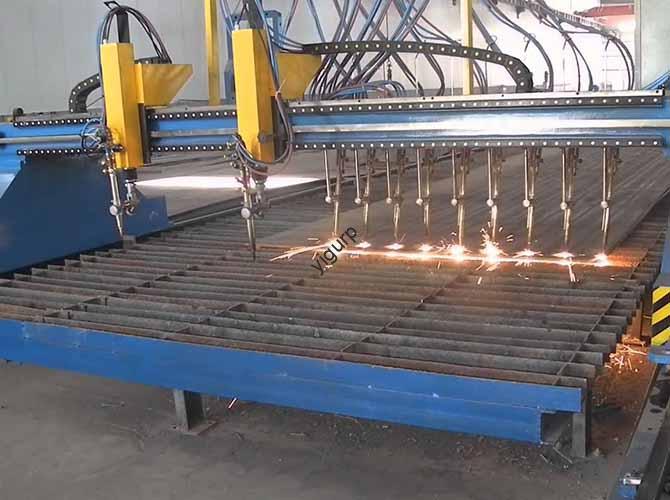
If you’re wondering what CNC metal design is and how it works for your projects, let’s start with a clear answer: CNC metal design is the process of using Computer Numerical Control (CNC) machines to create precise, custom metal parts or products from digital designs. Unlike traditional manual metalworking, CNC systems follow pre-programmed instructions to cut, forma, perforar, or mill metal—resulting in consistent, high-quality outcomes every time. Whether you’re building automotive components, maquinaria industrial, or custom consumer goods, CNC metal design eliminates human error, acelera la producción, and unlocks complex geometries that would be nearly impossible to achieve by hand. In this guide, we’ll break down everything you need to know, from core concepts to real-world applications, so you can make informed decisions for your next project.
What Exactly Is CNC Metal Design?
En su núcleo, CNC metal design blends two key elements: digital design software (like CAD, or Computer-Aided Design) y CNC metalworking machines (such as mills, tornos, enrutadores, or plasma cutters). Here’s how the process works step-by-step:
- Design Creation: Primero, a designer uses CAD software (p.ej., AutoCAD, SolidWorks) to create a 2D or 3D digital model of the metal part. This model includes exact measurements, anglos, and features (like holes or grooves).
- Programación: The CAD file is converted into a CNC-compatible code (usually G-code or M-code) using CAM (Computer-Aided Manufacturing) software. This code tells the CNC machine exactly how to move—including speed, tool path, and cutting depth.
- Configuración de la máquina: A technician loads the metal material (p.ej., aluminio, acero, latón) into the CNC machine and secures it with clamps. They also install the appropriate cutting tool (p.ej., an end mill for milling, a drill bit for holes).
- Producción: Once activated, the CNC machine follows the G-code instructions automatically. Sensors in the machine monitor progress to ensure accuracy, and some systems even adjust for material variations in real time.
- Refinamiento: After the part is cut, it may go through secondary processes like sanding, pulido, or coating to meet final quality standards.
A Real-World Example
Let’s say a small automotive parts shop needs 50 identical aluminum brackets for a custom truck. With traditional manual milling, a machinist might take 30 minutes per bracket—and each one could have slight variations (p.ej., a 0.1mm difference in hole placement). Using CNC metal design:
- The designer creates a CAD model of the bracket in 2 horas.
- The CAM software generates G-code in 30 minutos.
- The CNC mill produces each bracket in 5 minutos, con zero variation (tolerance as tight as ±0.02mm).
Total time: 5 horas (vs. 25 hours manually) — a 80% efficiency gain.
Key Materials Used in CNC Metal Design
Not all metals work the same with CNC machines. The choice depends on your project’s needs (fortaleza, peso, resistencia a la corrosión) and the CNC process (molienda, torneado, corte por láser). Below is a breakdown of the most common materials, sus propiedades, and ideal applications:
| Material | Key Properties | CNC Machinability | Ideal Applications | Average Cost (por kilogramo, 2025) |
| Aluminio (6061) | Ligero (2.7 gramos/cm³), resistente a la corrosión | Excelente | Piezas automotrices, cajas electrónicas | \(2.50–\)4.00 |
| Acero (A36) | Fuerte (yield strength: 250 MPa), durable | Bien | Structural frames, machinery components | \(0.80–\)1.50 |
| Acero inoxidable (304) | Resistente a la corrosión, a prueba de calor | Moderado | Equipos de procesamiento de alimentos, medical tools | \(3.00–\)5.50 |
| Latón (C360) | Alta conductividad, easy to polish | Excelente | Conectores electricos, piezas decorativas | \(6.00–\)8.50 |
| Titanio (Calificación 5) | Alta relación resistencia-peso, biocompatible | Poor (hard material) | Piezas aeroespaciales, implantes medicos | \(30.00–\)50.00 |
Expert Tip: Machinability Matters
Machinability refers to how easily a metal can be cut by a CNC tool. Metals like aluminum and brass have high machinability because they’re soft and produce clean chips (the small pieces of metal removed during cutting). Stainless steel and titanium, however, are harder—they require specialized tools (p.ej., fresas de carburo) and slower cutting speeds to avoid tool wear. Por ejemplo, cutting titanium with a high-speed steel (HSS) tool can reduce tool life by 70% compared to using carbide.
Common CNC Metal Design Processes
CNC metal design isn’t a one-size-fits-all method—different processes are used for different shapes, tamaños, and metal types. Here are the four most widely used techniques, along with their strengths and use cases:
1. Fresado CNC
CNC milling uses rotating cutting tools to remove material from a stationary metal block. Mills can have 3 a 5 ejes:
- 3-molinos de eje: Move along the X, Y, and Z axes (left/right, front/back, up/down) — ideal for simple 2D or 3D parts (p.ej., flat brackets).
- 5-molinos de eje: Add rotation around the X and Y axes (A and B axes) — perfect for complex, curved parts (p.ej., aerospace turbine blades).
Estudio de caso: A aerospace manufacturer needed 100 titanium turbine blades with intricate curved surfaces. Using a 5-axis CNC mill, they achieved a tolerance of ±0.005mm—critical for ensuring the blades fit and function in jet engines. Without 5-axis technology, this part would require multiple manual setups, increasing error risk and production time by 300%.
2. Torneado CNC
CNC turning is used for cylindrical parts (p.ej., pernos, ejes). The metal material spins (called the “workpiece”), and a stationary cutting tool shapes it as it rotates. Most turning machines are 2-axis (X and Z), but some advanced models add a Y-axis for more complex features (p.ej., agujeros descentrados).
Why It’s Useful: Turning is faster than milling for cylindrical parts. Por ejemplo, producing a 10cm steel shaft takes 2 minutes with a CNC lathe, en comparación con 10 minutes with a mill.
3. Corte por láser CNC
CNC laser cutting uses a high-powered laser beam to melt, burn, or vaporize metal. It’s ideal for thin to medium-thickness metals (up to 25mm for steel) and creates precise, clean edges without tool contact (reducing material damage).
Key Advantage: Laser cutting excels at intricate designs, like metal signs or decorative grilles. A furniture designer, por ejemplo, used CNC laser cutting to create custom brass table legs with detailed patterns—something that would be time-consuming and expensive with milling.
4. CNC Waterjet Cutting
CNC waterjet cutting uses a high-pressure stream of water (mixed with abrasive particles, like garnet) to cut metal. Unlike laser cutting, it doesn’t generate heat—making it safe for heat-sensitive metals (p.ej., titanio) or parts that can’t tolerate warping.
Fact Check: Waterjet cutting can cut metal up to 300mm thick, with a tolerance of ±0.1mm. It’s also eco-friendly: the water can be recycled, and the abrasive particles are non-toxic.
How to Design for CNC Metal: Tips for Success
Creating a digital design that translates well to physical metal parts requires careful planning. Even small mistakes in your CAD file can lead to costly errors during production. Aquí están 5 practical tips to avoid common pitfalls:
- Use the Right Tolerances: Tolerance is the allowable variation in a part’s dimensions. For CNC metal design, typical tolerances range from ±0.02mm (for precision parts like medical tools) to ±0.5mm (for structural parts like frames). Avoid over-specifying tolerances—tighter tolerances mean longer production times and higher costs. Por ejemplo, specifying a ±0.01mm tolerance when ±0.05mm is sufficient can increase costs by 20%.
- Add Clearance for Cutting Tools: CNC tools have a specific diameter (p.ej., 3mm for an end mill). If your design has internal corners with a radius smaller than the tool’s diameter, the machine can’t cut it—leading to a mismatched part. Always ensure internal corners have a radius equal to or larger than half the tool’s diameter. For a 3mm end mill, use a minimum internal radius of 1.5mm.
- Avoid Thin Walls: Thin metal walls (less than 1mm for aluminum, 2mm for steel) are prone to bending or breaking during CNC machining. If your design requires thin features, reinforce them with ribs or increase their thickness. Por ejemplo, a 0.8mm aluminum wall can be strengthened by adding a 1mm rib along its length.
- Simplify Complex Features: While CNC machines can handle complex designs, overly intricate features (p.ej., pequeños agujeros, sharp angles) can slow down production and increase tool wear. Ask yourself: Is this feature necessary? Por ejemplo, a 0.5mm hole in a steel part may be hard to drill and could weaken the material—consider increasing the hole size to 1mm if possible.
- Choose the Right Material Early: Your material choice affects your design. Por ejemplo, if you’re designing a lightweight part, aluminum is a good choice—but it can’t handle high temperatures like stainless steel. Decide on your material before finalizing the design to avoid reworking later. If you’re unsure, consult a CNC manufacturer—they can recommend materials based on your project’s needs.
The Benefits of CNC Metal Design for Businesses
CNC metal design isn’t just a “nice-to-have”—it’s a game-changer for businesses of all sizes. Here’s how it adds value compared to traditional metalworking:
- Consistencia: CNC machines produce identical parts every time. For a medical device company making surgical instruments, this consistency is critical—even a 0.1mm variation could make an instrument unsafe. Traditional manual machining, by contrast, relies on the machinist’s skill, leading to variations between parts.
- Velocidad: CNC machines work 24/7 with minimal supervision. A small hardware shop, Por ejemplo, can produce 500 steel bolts in 8 hours with a CNC lathe—something that would take 20 hours with manual tools. This speed lets businesses meet tight deadlines and scale production quickly.
- Ahorro de costos: While CNC machines have a higher upfront cost (que van desde \(10,000 for a basic mill to \)500,000 for a 5-axis model), they reduce long-term costs. Fewer errors mean less material waste (CNC reduces waste by 30–50% compared to manual machining), and fewer labor hours mean lower payroll costs. A study by the Manufacturing Technology Association found that businesses using CNC metal design see a 25% average reduction in production costs within the first year.
- Flexibilidad: CNC machines can switch between projects in minutes. If a furniture maker needs to switch from producing aluminum chair frames to brass table legs, they just load a new G-code file—no need to retool the entire machine. This flexibility is perfect for small-batch or custom projects.
Yigu Technology’s Perspective on CNC Metal Design
En Yigu Tecnología, we believe CNC metal design is the backbone of modern manufacturing—bridging creativity and precision. Over the years, we’ve worked with clients across industries (automotor, médico, aeroespacial) and seen firsthand how CNC technology transforms their ideas into tangible products. One key insight we’ve gained: the best CNC metal design isn’t just about the machine—it’s about collaboration. Our team works closely with clients to refine their CAD files, choose the right materials, and select the optimal CNC process—ensuring their vision is brought to life efficiently and cost-effectively. We also invest in the latest 5-axis CNC machines and eco-friendly cutting tools, because we know that technology and sustainability go hand in hand. For businesses looking to stay competitive, embracing CNC metal design isn’t an option—it’s a necessity.
FAQ About CNC Metal Design
- How much does CNC metal design cost?
Costs depend on the part’s size, material, complejidad, and production volume. For a small aluminum bracket (10cm x 5cm), you might pay \(5–\)15 per part for a batch of 100. For a complex titanium aerospace part, costs could be \(500–\)2,000 por parte. Always get a quote from a CNC manufacturer with your CAD file for an accurate price.
- What’s the minimum batch size for CNC metal design?
CNC machines are flexible—you can produce 1 part (creación de prototipos) o 10,000+ regiones (producción en masa). Prototyping is often cheaper with CNC than 3D printing for metal parts, as CNC produces fully functional, production-ready parts in one step.
- How long does it take to produce a CNC metal part?
Production time varies. A simple 2D part (p.ej., a flat steel plate with holes) can be made in 5–10 minutes. A complex 5-axis part (p.ej., a turbine blade) may take 1–2 hours per part. Design and programming time (1–4 hours for a simple part) is also added to the total timeline.
- Can CNC metal design work with recycled metals?
Sí! Recycled aluminum, acero, and brass work well with CNC machines—provided the recycled metal is free of contaminants (p.ej., óxido, paint). Using recycled metals reduces costs and environmental impact; recycled aluminum, Por ejemplo, usos 95% less energy to produce than virgin aluminum.
- What’s the difference between CNC metal design and 3D metal printing?
CNC metal design is a “subtractive” process (removes material from a metal block), while 3D metal printing is “additive” (builds parts layer by layer from metal powder). CNC is better for high-volume, simple-to-complex parts with tight tolerances. 3D printing is ideal for extremely complex parts (p.ej., estructuras reticulares) or small batches where CNC can’t reach.