
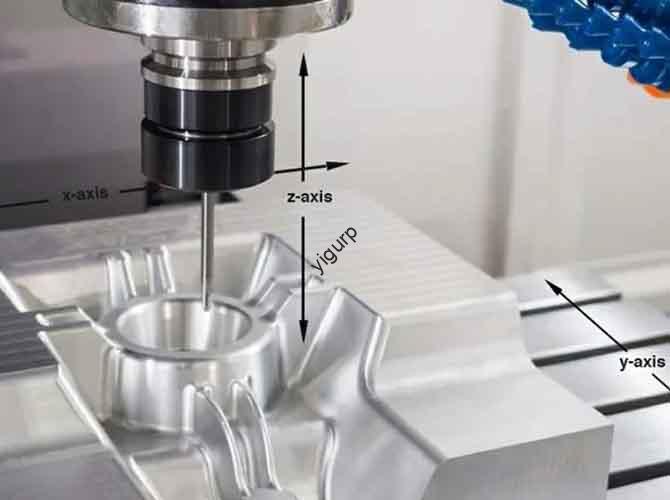
El desarrollo de un prototipo de horno eléctrico requiere un mecanizado CNC preciso para verificar la racionalidad estructural, viabilidad funcional, y apariencia textura, especialmente porque su estructura (gabinete, panel de puerta, componentes de calefacción) y las necesidades funcionales difieren de las de electrodomésticos como las ollas a presión eléctricas. Esta guía desglosa el flujo de trabajo completo del mecanizado CNC para prototipos de hornos eléctricos., Desde el diseño preliminar hasta el posprocesamiento., con parámetros clave, material choices, and problem-solving tips.
1. Preparación preliminar: Diseño & Data Processing
Before machining, thorough design and data optimization lay the foundation for accurate, producción eficiente. This stage focuses on 3D modeling and model splitting to align with CNC capabilities.
(1) 3D Modeling with CAD Software
The 3D model must fully reflect the electric oven’s exterior structure, internal components, y process characteristics—every detail impacts machining accuracy and final functionality. Key elements to include:
| Structure Category | Key Design Details | Precision Requirements | Objetivo |
| Exterior Structure | Cabinet outline, panel de puerta (glass viewing window + handle), heat dissipation holes, control knobs/buttons | Cabinet diagonal error ≤0.3mm | Ensure sealing when closed; match aesthetic standards |
| Internal Structure | Grill brackets (tragamonedas), heating tube mounting holes, thermostat mounting positions | Grill slot accuracy ±0.1mm; heating tube hole spacing tolerance ±0.2mm | Fit real components (p.ej., heating tubes, thermostats) |
| Process Features | Hinge mounting slots (panel de puerta + gabinete), draft slope for heat dissipation holes | 0.3mm movable clearance for hinges; 3°~5° draft slope | Enable smooth door operation; simplify CNC machining |
(2) Model Repair & Hierarchical Splitting
Complex structures (p.ej., multi-level grills, removable door panels) can’t be machined as a single piece—splitting them into individual components avoids tool interference and eases clamping.
Splitting Principles:
- Prioritize easy clamping: Split large parts (p.ej., gabinete) into single-sided machinable sections to reduce setup time.
- Minimize tool interference: Machine deep cavity structures (p.ej., internal grill slots) separately instead of trying to access them from the outside.
- Mark assembly datums: When exporting STL files, label reference points (p.ej., cabinet bottom, door dowel holes) to ensure accurate reassembly later.
2. Selección de materiales & Processing Process Planning
Choosing the right materials for each part is critical—they must balance machinability, funcionalidad, y costo. Below is a detailed breakdown of material options and their corresponding processes:
(1) Prototype Material Selection
Different components of the electric oven require materials with specific properties (p.ej., resistencia al calor, transparencia):
| Tipo de material | Applicable Parts | Machining Key Points | Tratamiento superficial |
| ABS | Cabinet body, control knobs | Easy to mill; low tool wear | Spray matte oil (adhesion ≥4B standard) to simulate metal texture |
| Aleación de aluminio | Heat dissipation hole panels, handle brackets | Requires high spindle speed (to avoid burrs); use carbide tools | Anodizado (silver-gray oxide film, 8–12μm thick) for anti-oxidation + wire drawing for uniform texture |
| Transparent Acrylic | Door panel observation window | Precision cutting; avoid chipping edges | Pulido (light transmittance ≥90%) to ensure clear visibility |
| POM (Polioximetileno) | Hinge shaft sleeves, grill rails | Bajo coeficiente de fricción; avoid overheating (prone to melting) | No additional treatment (naturally wear-resistant for sliding parts) |
(2) Core CNC Machining Processes
The machining process is tailored to each part’s shape and material. Below are the key process combinations and their purposes:
| Process Name | Application Scenarios | Key Parameters & Consejos |
| Fresado CNC | Cabinet cavities (depth ≥50mm), heat dissipation hole arrays | Use long-shank tools for deep cavities (prevenir la vibración); use array programming for hole arrays (improve efficiency by 30–50%) |
| Perforación & tocando | Hinge M3 threaded holes | Drill Φ2.5mm bottom holes first, then tap (avoids thread stripping) |
| Electroerosión por hilo | Special-shaped profiles (p.ej., acrylic viewing window) | Achieves accuracy ±0.02mm (critical for transparent, visible parts) |
3. Key Implementation Details for CNC Machining
To ensure precision and avoid defects, focus on programming strategies, clamping methods, and parameter optimization—especially for challenging structures like deep cavities or thin walls.
(1) Programación & Tool Strategy
Different features (p.ej., caries, heat dissipation holes) require specific toolpaths to balance speed and accuracy:
Cavity Machining (p.ej., Cabinet Internal Space)
- Rough machining: Usar “contour height layered cutting” with a Φ12mm flat-bottom tool to quickly remove material. Leave 0.3mm finishing allowance to avoid overcutting.
- Refinamiento: Switch to a Φ6mm ball-head tool and use “wrap cutting” along the cavity surface. This ensures the inner wall is smooth (surface roughness Ra ≤1.6μm), critical for proper component fit.
Heat Dissipation Hole Processing
- Round array holes (Φ5mm): Usar “pecking drilling” (drill 2–3mm, retract to clear chips) to prevent tool breakage in deep holes.
- Special-shaped holes (p.ej., long strips): Use a Φ3mm tool with a 0.8mm step “milled groove” path—this ensures clean edges without excessive tool wear.
(2) Clamping Methods & Parámetros de mecanizado
Clamping directly affects part stability during machining, while parameters (velocidad del husillo, tasa de avance) impact surface quality and efficiency:
| Part Type | Clamping Method | Velocidad del husillo (rpm) | Tasa de alimentación (mm/min) | Cutting Depth (milímetros) |
| Cabinet Body (ABS) | Flat pliers + platen | 10,000–15,000 | 1,200–2,000 | 0.5–0.8 |
| Aluminum Alloy Panel | Vacuum suction cup (superficie plana) | 18,000–22,000 | 800–1.500 | 0.2–0.5 |
| Transparent Acrylic | Double-sided tape fixing | 20,000–25,000 | 500–1,000 | 0.1–0,3 |
(3) Solving Common Machining Difficulties
Two major challenges in electric oven prototype machining are deep cavity vibration and thin-wall deformation—here’s how to address them:
| Difficulty | Cause | Solución |
| Deep Cavity Vibration (≥50mm depth) | Long tool overhang leads to instability | Use TiAlN-coated carbide tools (increase rigidity); reduce feed rate to 800mm/min; boost cutting fluid flow (cool tool and clear chips) |
| Thin-Wall Deformation (side wall ≤2mm) | Material is too fragile to withstand cutting forces | Adopt “layered cutting + reinforcement”: Add temporary support ribs during machining, then mill them off after the part is stable |
4. Postprocesamiento & Functional Verification
Después del mecanizado, post-processing enhances appearance and functionality, while functional tests confirm the prototype meets design goals.
(1) Tratamiento superficial
Surface treatment improves both aesthetics and performance—match the process to the part’s role:
| Part | Surface Treatment Steps | Expected Outcome |
| Cabinet Body (ABS) | 1. Grind with 600# papel de lija (remove tool marks); 2. Spray matte black paint; 3. Screen print control panel logos (temperature scales, function icons) | Paint adhesion ≥4B; logo accuracy ±0.1mm (claro, aligned) |
| Aluminum Alloy Panel | 1. Anodize (form 8–12μm silver-gray oxide film); 2. Hand-grind along grain direction (trefilado) | Resistencia al desgaste mejorada; uniform metal texture |
| Acrylic Viewing Window | Polishing with abrasive paste (step-by-step from coarse to fine) | Light transmittance ≥90%; sin rayones |
(2) Asamblea & Pruebas funcionales
Assembly ensures components work together, while tests validate key functions like heat insulation and temperature control:
Functional Assembly:
- Hinge installation: Ensure door opens/closes smoothly with a gap ≤0.5mm (prevents heat leakage).
- Grill fixing: Check that the grill slides along rails with resistance ≤5N; positioning slots fit tightly (no wobble).
Mock Tests:
- Heat insulation test: Simulate heating with a resistance wire (mimic heating tube). Ensure the distance between the cabinet shell and “heating tube” is ≥20mm; shell temperature rise ≤45°C (safe for users).
- Temperature control simulation: Adjust the control knob—verify that the stroke matches the “thermostat” (virtual element) scale with an error ≤5% (accurate temperature regulation).
5. Inspección & Cost Optimization
Inspection ensures precision, while optimization reduces costs without sacrificing quality—critical for prototype development.
(1) Critical Dimension Inspection
Use a Coordinate Measuring Machine (MMC) to check key dimensions that impact functionality:
- Door panel diagonal error ≤0.3mm (sealing when closed).
- Heating tube mounting hole spacing ±0.15mm (matches real component sizes).
- Hinge slot clearance 0.3mm (smooth door operation).
(2) Costo & Efficiency Optimization Tips
Three strategies to lower costs and speed up production:
- Disassemble for cost savings: Split the door into glass (acrylic cutting) and frame (ABS milling) instead of machining as one piece—cuts cost by 20–30%.
- Fast clamping with zero-point positioning: Use a zero-point system to reduce tool-setting time when changing parts; single clamping error ≤0.005mm (maintain accuracy).
- Hybrid processes for details: Combine CNC milling (for large structures) with SLA 3D printing (for small details like knob top grain)—faster than full CNC for intricate features.
Yigu Technology’s Perspective on Electric Oven Prototype CNC Machining
En Yigu Tecnología, we believe precision balancing and process optimization are key to efficient electric oven prototype machining. Many clients overcomplicate machining by treating all parts with the same precision—for example, using high-cost aluminum alloy for non-heat-related panels. Our team helps select materials strategically: ABS for cabinets (rentable, easy to finish) and aluminum alloy only for heat-dissipating parts (needs durability). We also optimize toolpaths—for deep cabinet cavities, our TiAlN-coated tools and reduced feed rates cut vibration by 40%, while our “layered cutting + reinforcement” method eliminates thin-wall deformation. Además, we use hybrid CNC + 3D printing to speed up detail production by 25%. Our goal is to deliver prototypes that accurately validate design goals at the lowest possible cost.
Preguntas frecuentes
- Why is acrylic used for the electric oven’s viewing window instead of glass?
Acrylic is lighter, more impact-resistant, and easier to CNC-cut with high precision (light transmittance ≥90%) than glass—critical for prototypes where weight and machining flexibility matter. Glass is heavier, more fragile during machining, and harder to shape into custom sizes, making it impractical for prototype development.
- What’s the purpose of the 3°~5° draft slope on heat dissipation holes?
The draft slope simplifies CNC machining: it allows the tool to exit the hole cleanly without scraping the edges (reducing burrs). Without a draft slope, the tool would rub against the hole’s vertical walls, causing rough surfaces or tool wear—both of which increase rework time.
- How long does it take to CNC machine a full electric oven prototype?
For a single prototype, the total time is ~3–5 days: 1 day for design/data processing, 1–2 days for CNC machining (depending on part complexity), 0.5–1 day for post-processing, and 0.5–1 day for assembly/testing. Batch production (10+ prototipos) can be shortened to 2–3 days using multi-cavity tools and parallel processing.