
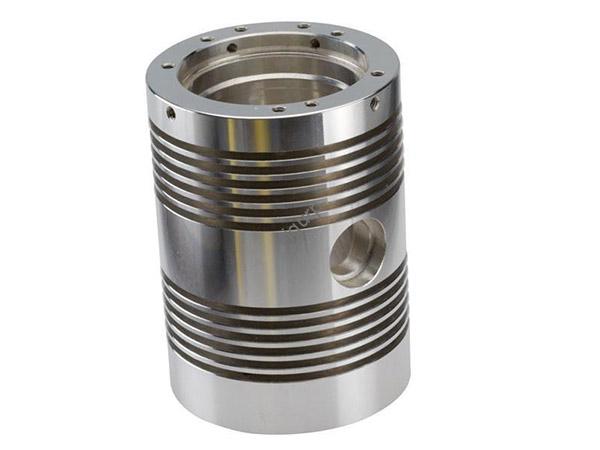
Si eres ingeniero, fabricante, o comprador en industrias como el petróleo y el gas o la desalinización, you need materials that balance strength and corrosion resistance.Acero súper dúplex UNS S32750 is a game-changer here—but how does it work, y cuando deberías elegirlo? Esta guía desglosa sus características clave., aplicaciones del mundo real, pasos de fabricación, and how it outperforms other metals. Al final, you’ll have the insights to pick the right material for your project.
1. Material Properties of UNS S32750
What makesUNS S32750 unique? It starts with itsduplex structure—a mix of 50% austenitic and 50% ferritic stainless steel phases. This structure, paired with itscomposición de la aleación, gives it unmatched strength and corrosion resistance. Let’s look at the details:
Key Alloy Elements
- High chromium content (24.0-26.0%): Fights oxidation and rust.
- High molybdenum content (3.0-5.0%): Resists pitting and crevice corrosion.
- Additional elements: Níquel (6.0-8.0%), nitrógeno (0.24-0.32%), y cobre (0.5-1.0%) for extra durability.
Mechanical Strength Data
| Propiedad | Valor típico | Test Standard |
|---|---|---|
| Yield Strength | 450 MPa | ASTM A370 |
| Resistencia a la tracción | 750 MPa | ASTM A370 |
| Alargamiento | 25% | ASTM A370 |
| Dureza (Brinell) | 290 media pensión | ASTM E10 |
| Densidad | 7.8 gramos/cm³ | ASTM B311 |
Por ejemplo, a Norwegian oil company usedUNS S32750 for offshore pipeline brackets. The material’s high yield strength (450 MPa) meant the brackets could support heavy pipes without bending—even in strong ocean winds.
2. Applications of UNS S32750
UNS S32750 excels in harsh, ambientes corrosivos. Here are its most common uses, with real 案例:
- Oil and Gas Industry: Used for wellheads, risers, and subsea pipelines. A Brazilian offshore platform replaced carbon steel parts with UNS S32750—these parts lasted 15 años, vs. 5 years for the old material.
- Desalination Plants: Ideal for reverse osmosis membranes and brine pumps. A plant in Dubai reported zero corrosion on UNS S32750 components after 8 years of handling saltwater.
- Procesamiento químico: Used for reactors and storage tanks holding acids (p.ej., ácido clorhídrico). A German chemical firm cut maintenance costs by 35% after switching to UNS S32750.
- Marine Applications: Found in ship hulls, ejes de hélice, and seawater cooling systems. A South Korean shipyard used UNS S32750 for a cargo ship’s hull—no anti-corrosion coating was needed, ahorro $50,000 per vessel.
- Food Processing Equipment: Safe for contact with food and resists cleaning chemicals. Estados Unidos. beverage factory used UNS S32750 tanks to store fruit juices—no rust contamination was found in 6 años.
- Other uses: Pharmaceutical Equipment (sterile tanks), Equipos industriales (intercambiadores de calor), y Componentes automotrices (exhaust systems for heavy-duty trucks).
3. Manufacturing Processes for UNS S32750
MakingUNS S32750 requires precise steps to keep its duplex structure and properties intact. Here’s the process breakdown:
- Hot Rolling: Heat the alloy to 1150-1200°C and roll it into plates or sheets. This step shapes the material while preserving its strength. A Swedish mill found hot rolling at 1180°C gave the best balance of ductility and hardness.
- Cold Rolling: Use room-temperature pressure to refine the surface (p.ej., for thin sheets used in pharmaceutical equipment). Cold-rolled UNS S32750 has a smoother finish but needs annealing afterward.
- Recocido: Heat to 1020-1080°C, hold for 30-60 minutos, luego apagar con agua. This restores the duplex structure—skip this, and the material may become brittle.
- Pickling: Dip in a mix of nitric and hydrofluoric acid to remove oxide scales. Pickling improves resistencia a la corrosión por 20%, according to tests by a U.S. fabricante.
- Forja: Hammer or press the alloy into complex shapes (p.ej., valves for oil pipelines). Forging at 1050°C ensures the material keeps its strength.
- Mecanizado: Cut the material into final parts. Use carbide tools and a cutting speed of 120-150 m/min—UNS S32750’s high strength means it wears tools faster than standard stainless steel.
- Extrusion/Drawing: Create tubes or wires by pushing/pulling the alloy through dies. Extruded UNS S32750 tubes are used in desalination plant piping.
4. Corrosion Resistance of UNS S32750
Corrosion is a top concern for industrial materials—andUNS S32750 is built to resist it. Here’s how it performs against common threats:
- Pitting Resistance: Its high chromium and molybdenum content prevents small holes (pitting) in saltwater. It has a Pitting Resistance Equivalent (PRE) of 42—far higher than SUS304 (PRE 18) or SUS316 (PRE 25).
- Crevice Corrosion: Resists corrosion in tight spaces (p.ej., bolted joints). A test in 3.5% saltwater showed no crevice corrosion on UNS S32750 después 2000 horas.
- Stress Corrosion Cracking (SCC): Handles tension without cracking. A chemical plant test found UNS S32750 survived 10,000 hours in chloride solutions—something SUS316 failed at after 2000 horas.
- Corrosión intergranular: Annealing prevents weakening at grain boundaries. UNS S32750 passes the ASTM A262 Practice E test (a key intergranular corrosion test) with no damage.
To boost performance further:
- Usar tratamiento superficial like passivation (citric acid) to enhance the protective oxide layer.
- Add corrosion inhibitors to coolants or process fluids.
- Check corrosion resistance charts (p.ej., from ASTM G48) for specific environments.
5. Welding UNS S32750
SoldaduraUNS S32750 needs care to keep its duplex structure and corrosion resistance. Here’s what you need to know:
- Soldabilidad: It’s weldable but requires controlled heat input (máximo 20 kJ/inch). Too much heat can shift the duplex phase balance (p.ej., more austenite) and reduce strength.
- Welding Processes: The best methods are:
- Gas Tungsten Arc Welding (GTAW/TIG): Ideal for thin sheets (p.ej., equipo farmaceutico).
- Shielded Metal Arc Welding (SMAW): Used for thick plates (p.ej., oil wellheads).
- Welding Rods: Use matching rods like ER2594 (for GTAW) or E2594 (for SMAW). These rods maintain the duplex structure in the weld.
- Welding Gases: Use argon with 2-5% nitrogen for shielding—this prevents oxidation and keeps the nitrogen content in the alloy.
- Post-Weld Heat Treatment (Pwht): Anneal at 1050°C for 30 minutos, luego apagar con agua. PWHT restores corrosion resistance—without it, welds may corrode in 6 meses.
- Welding Inspection: Use ultrasonic testing (UT) to check for defects. Follow welding standards like AWS D1.6 for stainless steel.
- Welding Safety: Wear heat-resistant gloves and a face shield—UNS S32750 produces more sparks than standard stainless steel during welding.
6. Standards and Specifications for UNS S32750
To ensure you’re getting high-qualityUNS S32750, check compliance with these standards:
- UNS S32750: The primary U.S. designation (Sistema de numeración unificado).
- ASTM A240: Covers flat products (platos, hojas)—requires UNS S32750 to meet strict chemical and mechanical limits.
- EN 10088: European standard—equivalent grade is X2CrNiMoCuWN25-7-4.
- ISO Standards: ISO 15510 specifies UNS S32750 for pressure equipment (p.ej., reactores químicos).
Always ask for:
- Material Certification (p.ej., Mill Test Report) to verify composition and strength.
- Conformance Testing resultados (p.ej., ASTM A370 for mechanical properties).
- Technical Data Sheets (TDS) from the manufacturer—these include detailed specs like corrosion rates.
Control de calidad is key: A Chinese manufacturer recalled 500 kg ofUNS S32750 en 2023 because it failed ASTM A262 corrosion tests—always verify compliance.
7. Comparación: UNS S32750 vs. Other Materials
How doesUNS S32750 stack up against common metals? comparemos:
| Material | Resistencia a la corrosión (PRE) | Yield Strength | Costo (vs. UNS S32750) | Mejor para |
|---|---|---|---|---|
| UNS S32750 | 42 | 450 MPa | 100% | Harsh environments (sal, acid) |
| SUS304 | 18 | 205 MPa | 40% | Mild uses (kitchen sinks) |
| SUS316 | 25 | 205 MPa | 60% | Moderate corrosion (procesamiento de alimentos) |
| SUS410 | 12 | 485 MPa | 35% | Low-corrosion strength parts (knives) |
| Super Austenitic Steel (UNS S31254) | 42 | 310 MPa | 120% | High-purity environments (productos farmaceuticos) |
| Aleaciones de titanio | 50 | 860 MPa | 300% | Aeroespacial (ligero) |
| Acero carbono | 5 | 250 MPa | 20% | Low-corrosion, piezas de bajo costo (construcción) |
Por ejemplo, if you need a material for offshore oil pipes, UNS S32750 is better than SUS316 (more corrosion-resistant) and cheaper than titanium. For food processing, SUS316 may be enough—butUNS S32750 lasts longer in acidic foods.
La perspectiva de la tecnología Yigu
En Yigu Tecnología, we’ve suppliedUNS S32750 components to oil, desalination, and chemical clients for 12 años. Its biggest advantage is balance: it has the strength of ferritic steel and the corrosion resistance of austenitic steel, at a lower cost than titanium or nickel alloys. We often recommend it for clients needing long-term reliability—our data showsUNS S32750 cuts equipment replacement costs by 40% encima 10 years vs. standard stainless steels. We also help clients with welding support to ensure optimal performance.
Preguntas frecuentes
- Can UNS S32750 be used at high temperatures?
Yes—it maintains strength up to 300°C. For temperatures above 300°C, sin embargo, its duplex structure may shift, so we recommend testing first for high-heat applications (p.ej., piezas del horno). - How does UNS S32750 compare to super duplex steel like UNS S32760?
UNS S32760 has higher tungsten content (1.0-2.0%) para una mejor resistencia a la corrosión, but it’s 20% more expensive than UNS S32750. For most offshore or desalination uses, UNS S32750 offers better value. - Do I need to coat UNS S32750?
No—its natural corrosion resistance eliminates the need for coatings. Coating can even trap moisture and cause crevice corrosion, so we advise against it for most applications.