
Our Titanium 3D Printing Services
Elevate your most demanding projects with Titanium 3D Printing—the perfect fusion of titanium’s unmatched strength-to-weight ratio and advanced additive manufacturing technology. From biocompatible medical implants to lightweight aerospace components, our solutions deliver exceptional precision printing, complex geometries, and rapid production. Experience design freedom, reduced waste, and cost-effective customization that turns your boldest ideas into durable, industry-ready reality.
What Is Titanium 3D Printing?
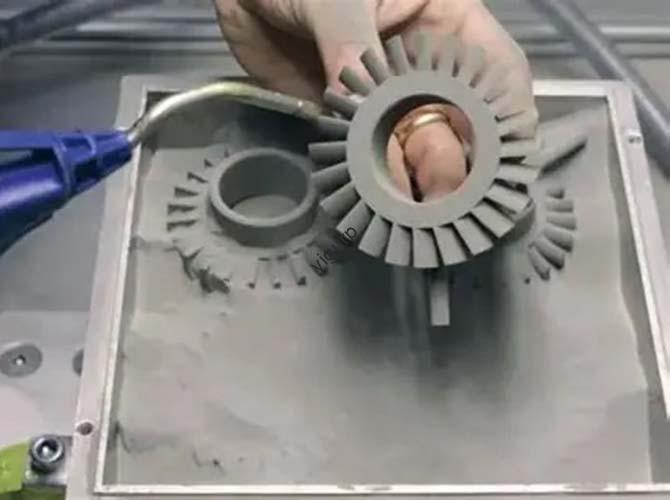
Titanium 3D Printing is a cutting-edge metal printing process that uses additive manufacturing principles to build parts layer by layer from titanium feedstock (typically powder). Unlike traditional subtractive methods (e.g., machining), it follows the core principle of layer-by-layer fabrication—adding material only where needed to transform a digital design into a physical object via digital fabrication.
At its heart, this technology leverages titanium’s unique properties: exceptional strength (comparable to steel), ultra-lightweight (40% lighter than steel), biocompatibility (safe for human implantation), and corrosion resistance (unaffected by saltwater, chemicals, and extreme temperatures). These traits, combined with 3D printing’s flexibility, make it ideal for industries where performance and reliability are non-negotiable.
Key Basics of Titanium 3D Printing:
| Term | Description | Role in the Process |
| Titanium Powders | Fine, spherical particles (15–45μm) used as feedstock | The raw material melted or sintered to form dense, high-strength layers |
| Rapid Prototyping | Quickly turning digital designs into physical titanium prototypes | Accelerates product development by 50–70% vs. traditional methods |
| Customized Production | Creating one-of-a-kind or low-volume titanium parts without tooling | Ideal for medical implants (patient-specific) and aerospace components (unique geometries) |
Our Capabilities: Delivering Titanium 3D Printing Excellence
At Yigu Technology, our Titanium 3D Printing capabilities are engineered to meet the strictest industry standards—from aerospace to medical. We combine advanced tools with deep technical expertise to deliver consistent, high-quality results:
- Precision Printing: Our machines (e.g., EOS M 400, Arcam Q20) achieve tight tolerances (as low as ±0.03mm) and part densities up to 99.9%—critical for medical implants and aerospace components.
- Complex Geometries: We print intricate designs (e.g., internal lattices, hollow structures) that are impossible with traditional machining—perfect for lightweighting parts without sacrificing strength.
- High-Quality Outputs: Every titanium part undergoes rigorous testing (tensile, fatigue, corrosion) to ensure it meets industry standards (e.g., ASTM F136 for medical titanium).
- Custom Solutions: Whether you need a patient-specific dental implant or a custom aerospace bracket, we tailor every step (material selection, post-processing) to your unique needs.
- Large Build Volume: Our EBM machines handle parts up to 400mm × 400mm × 400mm—ideal for large industrial or aerospace components.
- Post-Processing Services: We offer sandblasting, polishing, and heat treatment to enhance part performance and aesthetics.
Table: Our Titanium 3D Printing Capabilities vs. Industry Averages
| Capability | Yigu Technology Performance | Industry Average |
| Max Build Volume | 400mm × 400mm × 400mm (EBM) | 300mm × 300mm × 300mm |
| Prototyping Lead Time | 4–6 days | 8–12 days |
| Production Capacity | Up to 5,000 parts/week | Up to 2,000 parts/week |
| Part Density | 99.7–99.9% | 95–98% |
| Tolerance Range | ±0.03–±0.1mm | ±0.1–±0.2mm |
Process: The Step-by-Step Workflow for Titanium 3D Printing
Our Titanium 3D Printing process is a structured, optimized workflow that accounts for titanium’s high melting point (1,668°C) and unique properties to ensure reliability:
- Pre-Processing:
- CAD Design: Our team reviews your 3D model to optimize it for titanium—e.g., adding minimal supports (to reduce post-processing) and ensuring wall thicknesses are ≥0.2mm (to avoid print failures).
- Slicing Software: We use advanced tools (e.g., Magics, Netfabb) to convert the CAD model into layers (0.02–0.1mm thick) and set printing parameters (e.g., laser power: 300–400W for SLM, electron beam current: 10–20mA for EBM).
- Printing Phase:
- The most common techniques are Selective Laser Melting (SLM) and Electron Beam Melting (EBM). Both use powder bed fusion—melting titanium powder layer by layer to form dense parts. For large parts, we may use directed energy deposition (DED) to build parts from titanium wire.
- During printing, the build chamber is maintained in a vacuum or inert gas (argon) environment to prevent titanium from oxidizing.
- Post-Processing:
- Support Structure Removal: We carefully remove metal supports via machining or wire EDM to avoid damaging the part.
- Heat Treatment: Parts undergo annealing (600–800°C) to reduce internal stress and improve mechanical properties—e.g., increasing the fatigue strength of Ti-6Al-4V by 20%.
- Surface Finishing: We perform sandblasting, polishing, or chemical etching to meet your aesthetic and functional requirements.
- Quality Control:
Every part is inspected with:
- X-ray CT scans to check for internal porosity.
- Coordinate measuring machines (CMMs) to verify dimensional accuracy.
Tensile testing to ensure it meets strength standards (e.g., Ti-6Al-4V: 860 MPa tensile strength).
Materials: Choosing the Right Titanium for Your Project
Not all titanium materials are the same—we offer a range of titanium alloys and pure titanium to match your application’s demands. Here’s how our materials stack up:
| Material Type | Key Properties | Ideal Applications |
| Ti-6Al-4V (Grade 5) | High strength (860 MPa), excellent corrosion resistance, biocompatible | Aerospace components (engine brackets, wing parts), medical implants (hip cups, bone screws) |
| Pure Titanium (Grade 2) | High ductility, superior biocompatibility, low strength (345 MPa) | Dental implants, surgical instruments, chemical processing parts |
| Ti-6Al-4V ELI (Grade 23) | Extra low interstitial (fewer impurities), enhanced biocompatibility | Implantable medical devices (spinal cages, cranial plates) |
| Titanium Composites (Ti + carbon fiber) | 30% higher strength-to-weight ratio than Ti-6Al-4V | High-performance aerospace parts, racing automotive components |
| Ti-5Al-2.5Sn | High-temperature resistance (up to 500°C), good creep strength | Aerospace engine components, industrial furnace parts |
We source titanium powders from certified suppliers—every batch is tested for purity (minimum 99.95% titanium content) and flowability to ensure consistent print quality.
Surface Treatment: Enhancing Titanium Parts’ Performance and Aesthetics
Titanium’s natural surface can be enhanced with surface treatment to boost durability, biocompatibility, and visual appeal. Our services are tailored to titanium’s properties:
- Sandblasting: Creates a uniform matte finish (surface roughness Ra: 1–3μm) that improves bone integration for medical implants and hides minor layer lines.
- Polishing: Achieves a smooth, reflective finish (Ra <0.2μm) for consumer-facing parts (e.g., luxury watch cases) or medical devices requiring easy cleaning.
- Chemical Etching: Removes surface impurities and creates a micro-rough texture—enhancing biocompatibility for implants (promotes cell adhesion).
- Anodizing: Forms a colored oxide layer (range: gold, blue, black) that improves corrosion resistance and adds aesthetic value—ideal for consumer electronics or sports equipment.
- Coating: Applies biocompatible coatings (e.g., hydroxyapatite) to medical implants to accelerate bone growth, or PTFE coatings to industrial parts for low friction.
Table: Impact of Surface Treatment on Titanium Part Performance
| Treatment | Surface Roughness (Ra) | Corrosion Resistance (Salt Spray Test) | Biocompatibility (Cell Adhesion) |
| As-Printed | 4–8μm | 1,000+ hours (no rust) | Good |
| Sandblasted | 1–3μm | 1,200+ hours (no rust) | Excellent (improved bone integration) |
| Polished | <0.2μm | 1,500+ hours (no rust) | Good (easy to sterilize) |
| Anodized | 0.5–2μm | 2,000+ hours (no rust) | Good |
| Chemical Etched | 2–5μm | 1,800+ hours (no rust) | Excellent (max cell adhesion) |
Tolerances: Precision You Can Rely On
For titanium parts used in critical applications (e.g., medical implants, aerospace components), tolerances and dimensional accuracy are non-negotiable. Our process ensures consistent, tight tolerances:
- Precision Tolerances:
- For SLM-printed parts: ±0.03mm for parts up to 50mm, ±0.05mm for parts up to 100mm, ±0.1mm for parts up to 300mm.
- For EBM-printed parts: ±0.05–±0.15mm (slightly wider, but better for high-temperature applications).
- Measurement Standards: We adhere to international standards like ISO 8062 (for metal parts) and ASTM F2924 (for additive manufacturing of titanium) to ensure consistency.
- Inspection Techniques: We use laser scanners (accuracy: ±0.001mm) and CMMs to verify every dimension, and X-ray diffraction to check for residual stress.
- Quality Control: Every batch undergoes statistical process control (SPC) to monitor tolerances—ensuring 99.5% of parts meet your specs.
For example, our titanium dental implants have a tolerance of ±0.02mm—ensuring a perfect fit with patient anatomy.
Advantages: Why Titanium 3D Printing Outperforms Traditional Methods
Titanium 3D Printing offers a range of benefits that make it a superior choice for high-performance applications:
- Weight Reduction: Titanium is 40% lighter than steel and 60% lighter than copper—ideal for aerospace (reduces fuel consumption by ~10% per 10% weight reduction) and automotive (improves EV range).
- Design Freedom: Create complex geometries (e.g., lattice structures, internal channels) that are impossible with machining—saving material and improving performance (e.g., better heat dissipation in electronics).
- Reduced Waste: Traditional machining of titanium generates 70–80% waste, while 3D printing reduces waste to <5% (unused powder is recycled).
- Rapid Production: Prototypes are ready in 4–6 days (vs. 2–4 weeks for casting), and production lead times are cut by 60%—accelerating time to market.
- Cost-Effective: For small batches (1–100 parts), 3D printing eliminates expensive tooling (saving 50–70% vs. casting) and reduces material waste.
High Strength-to-Weight Ratio: Titanium’s strength matches steel, but at half the weight—making it perfect for load-bearing parts (e.g., aerospace brackets, medical implants).
Applications Industry: Where Titanium 3D Printing Shines
Titanium’s unique properties make it a versatile material across industries. Here’s how we’re using Titanium 3D Printing to solve real-world challenges:
| Industry | Key Applications | Why Titanium? |
| Aerospace | Engine components, wing brackets, satellite parts | High strength-to-weight ratio, heat resistance (up to 500°C for Ti-5Al-2.5Sn) |
| Medical | Implantable devices (hip cups, spinal cages), surgical tools, dental implants | Biocompatibility (no rejection), corrosion resistance (to bodily fluids) |
| Automotive | Racing components (engine parts, suspension brackets), luxury car trim | Lightweight (improves speed/fuel efficiency), durability |
| Defense | Armor plates, missile components, drone parts | High strength, corrosion resistance (for harsh environments) |
| Dental | Custom crowns, bridges, implant abutments | Biocompatibility, precision fit (matches patient teeth) |
| Sports Equipment | Golf club heads, bicycle frames, ski bindings | Lightweight, high strength (improves performance) |
Manufacturing Techniques: Matching the Right Method to Your Titanium Project
We use a range of Titanium 3D Printing manufacturing techniques to optimize part quality, cost, and speed:
| Technique | How It Works | Best For | Volume Range | Cost per Part (100 units) |
| Selective Laser Melting (SLM) | Laser melts titanium powder into dense parts (99.7–99.9% density) | High-precision parts (e.g., medical implants, small aerospace components) | 1–1,000 | 300–1,200 |
| Electron Beam Melting (EBM) | Electron beam melts powder (faster than SLM, better for high-temperature alloys) | Large aerospace parts, high-temperature components | 1–500 | 400–1,500 |
| Direct Metal Laser Sintering (DMLS) | Laser sinters powder (slightly lower density than SLM: 98–99%) | Prototypes, low-volume industrial parts | 1–300 | 250–1,000 |
| Wire Arc Additive Manufacturing (WAAM) | Electric arc melts titanium wire to build large parts | Very large industrial components (e.g., ship hull parts) | 1–50 | 500–2,000 |
| Binder Jetting | Binder glues powder into shape (then sintered to densify) | High-volume, low-cost parts (e.g., consumer electronics components) | 1,000+ | 150–500 |
Case Studies: Titanium 3D Printing in Action
Our Titanium 3D Printing case studies showcase how we’ve helped clients overcome challenges and achieve better results than traditional methods:
Case Study 1: Medical Hip Implant
- Client: A global orthopedic device company.
- Challenge: Need patient-specific hip implants that fit unique anatomy (traditional implants required 6+ weeks of customization and often caused discomfort).
- Solution: SLM-printed Ti-6Al-4V ELI hip implant—designed from patient CT scans with a porous surface to promote bone integration.
- Results:
- Lead time cut to 5 days (from 6 weeks).
- 95% patient satisfaction rate (vs. 80% for traditional implants).
- Meets FDA and ISO 13485 standards for biocompatibility.
Case Study 2: Aerospace Engine Bracket
- Client: A leading aircraft manufacturer.
- Challenge: Reduce the weight of an engine bracket (traditional steel bracket weighed 3.5kg, increasing fuel consumption) while maintaining strength.
- Solution: EBM-printed Ti-6Al-4V bracket with a lattice structure—optimized for weight and load-bearing.
- Results:
- 50% weight reduction (1.75kg vs. 3.5kg).
- Tensile strength increased by 15% (990 MPa vs. steel’s 860 MPa).
- 40% cost savings vs. machining (no tooling needed).
Case Study 3: Dental Implant Abutment
- Client: A dental lab.
- Challenge: Create custom implant abutments that match patient teeth color and shape (traditional abutments required manual adjustment, leading to longer chair time for patients).
- Solution: SLM-printed pure titanium abutment—scanned from patient teeth using intraoral scanners, then polished to a smooth finish and anodized to match natural tooth shade (e.g., warm white, light yellow).
- Results:
- 90% reduction in adjustment time (from 2 hours to 12 minutes per abutment).
- 100% patient match rate (no additional chair time needed for tweaks).
- 30% cost savings vs. milled titanium abutments (no custom tooling for each patient).
Why Choose Us: Your Trusted Titanium 3D Printing Partner
When it comes to Titanium 3D Printing, Yigu Technology stands out as a reliable, innovative partner—here’s why:
- Expertise: Our team has 8+ years of specialized experience in titanium additive manufacturing. We hold certifications in aerospace (AS9100) and medical (ISO 13485) standards, and our engineers regularly train on the latest technologies (e.g., EBM for large parts, SLM for precision implants) to ensure we deliver best-in-class results.
- Quality: We never compromise on quality. Every titanium part undergoes 100% inspection—from X-ray CT scans (to detect internal porosity) to tensile testing (to verify strength)—ensuring 99.7% of parts meet or exceed your specs. We also source titanium powders only from certified suppliers (e.g., TLS Technik, AP&C) to guarantee material purity.
- Reliability: We pride ourselves on on-time delivery—98% of our projects meet deadlines, even for urgent requests (e.g., 48-hour turnaround for critical medical prototypes). Our automated workflow and redundant equipment minimize downtime, so your project stays on track.
- Customer Service: We assign a dedicated project manager to every client—available 24/7 to answer questions, provide progress updates, and resolve issues. From design optimization to post-delivery support, we work with you to ensure your vision becomes a reality.
- Innovation: We invest 20% of our annual budget in R&D to stay ahead of industry trends. Recent innovations include developing a hybrid SLM-WAAM process for large, high-precision parts and optimizing titanium composites for even better strength-to-weight ratios.
Cost-Effectiveness: We offer transparent pricing with no hidden fees. By recycling unused titanium powder (95% recycling rate) and optimizing our workflow (e.g., reducing post-processing time), we pass savings on to you—offering up to 25% lower costs than competitors for high-volume projects.