
Our Stainless Steel 3D Printing Services
Elevate your manufacturing with Stainless Steel 3D Printing—the perfect fusion of robust Stainless Steel properties and advanced 3D Printing technology. Delivering exceptional strength, corrosion resistance, and design flexibility, our solutions create complex, durable parts for aerospace, medical, and industrial needs. From custom prototypes to high-volume production, we turn your boldest designs into reliable, industry-ready reality—faster and more cost-effectively than ever.
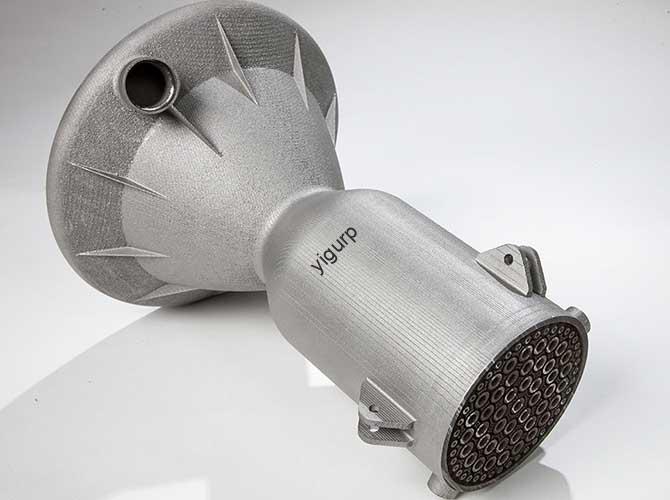
What Is Stainless Steel 3D Printing?
Stainless Steel 3D Printing is an innovative additive manufacturing process that uses Stainless Steel (a corrosion-resistant alloy containing at least 10.5% chromium) to build parts layer by layer. Unlike traditional subtractive methods (e.g., machining), this technology follows the core Principle of adding material only where needed—unlocking design possibilities that were once impossible.
At its heart, Stainless Steel 3D Printing leverages the unique properties of stainless steel (e.g., rust resistance, high tensile strength) while harnessing 3D printing’s ability to create intricate geometries. Key to this process is the use of specialized machines that melt or sinter stainless steel feedstock (powder or filament) into dense, fully functional parts—making it a game-changer for industries where durability and precision are critical.
Key Properties of Stainless Steel for 3D Printing:
| Property | Description | Relevance to 3D Printing |
| Corrosion Resistance | Resists rust and chemical damage (thanks to chromium oxide layer) | Ideal for medical devices (sterilized regularly) and outdoor industrial parts |
| Tensile Strength | Ranges from 500–1,200 MPa (depending on grade) | Suitable for load-bearing parts (e.g., aerospace brackets, automotive components) |
| Heat Resistance | Withstands temperatures up to 800°C (depending on grade) | Perfect for high-temperature applications (e.g., industrial furnace parts) |
| Biocompatibility | Medical-grade stainless steel (e.g., 316L) meets ISO 10993 standards | Safe for implantable medical devices (e.g., bone screws, dental fixtures) |
Our Capabilities: Delivering Stainless Steel Excellence
At Yigu Technology, our Stainless Steel 3D Printing capabilities are tailored to meet the most demanding industry standards. We combine cutting-edge equipment with deep technical expertise to ensure consistent, high-quality results:
- Advanced Equipment: We use industrial-grade machines (e.g., EOS M 400, SLM Solutions 280) optimized for stainless steel—capable of printing parts with densities up to 99.8%.
- Technical Expertise: Our engineers have 7+ years of experience in Stainless Steel 3D Printing, understanding how to adjust parameters (e.g., laser power, layer height) to avoid defects like porosity.
- Scalable Production: We handle projects of all sizes—from 1-off prototypes (ready in 3–5 days) to 10,000+ end-use parts monthly—without compromising quality.
- Customization Services: Whether you need complex internal channels for medical devices or lightweight lattices for aerospace, we tailor our process to your exact specs.
- Rigorous Quality Control: Every stainless steel part undergoes 100% inspection—including X-ray imaging (to check for internal defects) and tensile testing (to verify strength).
Table: Our Stainless Steel 3D Printing Capabilities vs. Industry Averages
| Capability | Yigu Technology Performance | Industry Average |
| Max Print Size | 500mm × 500mm × 500mm (SLM) | 300mm × 300mm × 300mm |
| Prototyping Lead Time | 3–5 days | 7–10 days |
| Production Capacity | Up to 6,000 parts/week | Up to 2,000 parts/week |
| Part Density | 99.5–99.8% | 95–98% |
| Material Waste | <5% | 15–20% |
Process: The Step-by-Step Workflow for Stainless Steel 3D Printing
Our Stainless Steel 3D Printing process is a structured, optimized workflow that accounts for stainless steel’s unique properties (e.g., high melting point) to ensure reliability:
- Design & Preparation:
- Design: Our team reviews your CAD model to optimize it for stainless steel—e.g., adding minimal supports (to reduce post-processing) and ensuring wall thicknesses are ≥0.5mm (to avoid print failures).
- File Conversion: We convert the CAD model to an STL file and use advanced slicing software (e.g., Magics, Simplify3D) to split it into layers (0.02–0.1mm thick).
- Printing Phase:
- Most common for stainless steel: Selective Laser Melting (SLM) or Direct Metal Laser Sintering (DMLS). A high-power laser (500–1,000W) melts stainless steel powder layer by layer, fusing it into a dense part.
- For filament-based printing (less common for high-strength parts), we use Fused Deposition Modeling (FDM) with stainless steel-reinforced filament (e.g., PLA + 80% stainless steel powder).
- Post-processing:
- Support Removal: We carefully remove metal supports (via machining or wire EDM) to avoid damaging the part.
- Heat Treatment: Parts undergo annealing or stress relieving (heating to 600–800°C) to reduce internal stress and improve mechanical strength.
- Surface Finishing: We perform sanding, polishing, or coating to enhance aesthetics and corrosion resistance (e.g., passivation for medical parts).
- Quality Control:
- Every part is inspected with:
- X-ray computed tomography (CT) to check for internal porosity.
- Coordinate measuring machines (CMMs) to verify dimensional accuracy.
Tensile testing to ensure it meets strength standards (e.g., 316L stainless steel: minimum 550 MPa tensile strength).
Materials: Choosing the Right Stainless Steel for Your Project
Not all stainless steel is the same—we offer a range of grades tailored to your application’s needs. Here’s how our Stainless Steel 3D Printing materials compare:
| Stainless Steel Grade | Key Properties | Ideal Applications |
| 316L | High corrosion resistance, biocompatible, low carbon content | Medical devices (implants, surgical tools), marine parts, food processing equipment |
| 304L | Good corrosion resistance, high ductility, cost-effective | Consumer goods (e.g., kitchen appliances), industrial enclosures, automotive trim |
| 17-4 PH | Heat-treatable (hardens at 480–620°C), high strength (up to 1,400 MPa) | Aerospace components (e.g., engine brackets), high-stress industrial parts |
| 410 | Magnetic, good wear resistance, low cost | Industrial gears, valves, and tooling |
| Duplex (2205) | Excellent corrosion resistance (better than 316L), high strength | Oil and gas equipment, chemical processing parts, offshore structures |
We source high-quality stainless steel powder (particle size: 15–45μm) from trusted suppliers to ensure consistent print quality—every batch is tested for purity and flowability.
Surface Treatment: Enhancing Stainless Steel Parts’ Performance
While stainless steel is naturally corrosion-resistant, Surface Treatment can further improve its durability, aesthetics, and functionality. Our services are tailored to stainless steel’s properties:
- Passivation: Dips parts in nitric acid to enhance the chromium oxide layer—boosting corrosion resistance by 30–50% (critical for medical and marine parts).
- Polishing: Creates a smooth, reflective finish (surface roughness Ra <0.2μm) for consumer-facing parts (e.g., luxury goods, architectural fixtures).
- Coating: Applies thin layers like PTFE (for low friction) or ceramic (for extra heat resistance) to expand part capabilities (e.g., industrial gears, high-temperature valves).
- Texturing: Adds patterns (e.g., matte finishes, grip surfaces) to improve usability—ideal for medical tools (better grip for surgeons) or automotive handles.
- Electroplating: Plates parts with nickel or gold for enhanced aesthetics and corrosion resistance (e.g., electronics components, decorative parts).
Table: Impact of Surface Treatment on Stainless Steel Parts
| Treatment | Surface Roughness (Ra) | Corrosion Resistance (Salt Spray Test) | Tensile Strength |
| As-Printed | 5–10μm | 48 hours (no rust) | Base (e.g., 316L: 550 MPa) |
| Passivated | 5–10μm | 192 hours (no rust) | Unchanged |
| Polished | <0.2μm | 192 hours (no rust) | Unchanged |
| PTFE-Coated | 1–2μm | 240 hours (no rust) | +5% (due to coating adhesion) |
Tolerances: Precision You Can Rely On
For stainless steel parts used in critical applications (e.g., medical implants, aerospace components), Tolerances and Precision are non-negotiable. Our process ensures consistent, tight tolerances:
- Tolerance Range:
- For SLM/DMLS parts: ±0.1mm for parts up to 100mm (±0.2mm for parts up to 500mm).
- For FDM parts (stainless steel filament): ±0.3mm (better for non-critical parts like prototypes).
- Measurement Methods: We use CMMs with accuracy up to ±0.001mm and laser scanners to verify every dimension—ensuring compliance with Standards like ISO 8062 (for metal parts).
- Precision Control: Our printers are calibrated weekly for laser focus and bed level, and we use closed-loop feedback systems to adjust parameters in real time (e.g., laser power) to avoid deviations.
For example, our medical-grade 316L bone screws have a tolerance of ±0.05mm—ensuring a perfect fit with patient anatomy and meeting FDA requirements.
Advantages: Why Stainless Steel 3D Printing Outperforms Traditional Methods
Stainless Steel 3D Printing offers a host of benefits that make it superior to traditional manufacturing (e.g., casting, machining):
- Design Freedom: Create complex geometries (e.g., internal channels, lattice structures) that are impossible with machining—saving weight (up to 50% vs. solid parts) and improving performance.
- Durability: Stainless steel parts are 3–5x more durable than plastic or aluminum—reducing replacement costs and maintenance.
- Corrosion Resistance: Unlike carbon steel, stainless steel resists rust and chemicals—extending part lifespan in harsh environments (e.g., marine, medical).
- Cost-Effectiveness: For small-to-medium batches (10–1,000 parts), 3D printing eliminates expensive tooling (saving 40–60% vs. casting) and reduces material waste (from 30–50% in machining to <5% in 3D printing).
- Speed: Prototypes are ready in 3–5 days (vs. 2–4 weeks for casting) and production lead times are cut by 50%—accelerating your time to market.
Customization: Easily tweak designs for specific needs (e.g., patient-specific medical implants, custom automotive parts) without extra costs.
Applications Industry: Where Stainless Steel 3D Printing Shines
Stainless steel’s versatility and durability make it a top choice across industries. Here’s how we’re using Stainless Steel 3D Printing to solve real-world challenges:
| Industry | Key Applications | Why Stainless Steel? |
| Aerospace | Engine brackets, fuel nozzles, satellite components | High strength-to-weight ratio, heat resistance, corrosion resistance |
| Medical | Implantable devices (bone screws, hip cups), surgical tools, dental crowns | Biocompatibility, sterilizability, corrosion resistance (no rust from bodily fluids) |
| Automotive | EV battery brackets, exhaust components, custom trim | Durability, heat resistance (for underhood parts), lightweight design |
| Industrial | Valves, gears, furnace parts, food processing equipment | Corrosion resistance (to chemicals or food acids), high strength |
| Consumer Goods | Kitchen appliances (e.g., blender blades), luxury watches, architectural fixtures | Aesthetics, rust resistance, durability |
| Architecture | Custom building facades, decorative elements, structural brackets | Weather resistance (no rust outdoors), design flexibility |
Manufacturing Techniques: Matching the Right Method to Your Project
We use a range of Stainless Steel 3D Printing Manufacturing Techniques to optimize part quality, cost, and speed:
| Technique | How It Works | Best For | Volume Range | Cost per Part (100 units) |
| Selective Laser Melting (SLM) | Laser melts stainless steel powder into dense parts (99.5–99.8% density) | High-strength end-use parts (e.g., medical implants, aerospace components) | 1–1,000 | 200–800 |
| Direct Metal Laser Sintering (DMLS) | Laser sinters powder (slightly lower density than SLM: 98–99%) | Prototypes and low-volume parts (e.g., automotive test components) | 1–500 | 150–600 |
| Fused Deposition Modeling (FDM) | Extrudes filament (PLA/ABS + stainless steel powder) | Low-cost prototypes and non-load-bearing parts (e.g., consumer goods samples) | 1–1,000 | 50–200 |
| Electron Beam Melting (EBM) | Electron beam melts powder (faster than SLM, better for large parts) | Large aerospace parts (e.g., turbine blades) | 1–100 | 500–1,500 |
| Binder Jetting | Binder glues powder into shape (then sintered to densify) | High-volume, low-cost parts (e.g., industrial gears) | 1,000+ | 100–300 |
Each technique has unique advantages—our team helps you choose the best one based on your part’s size, strength needs, and budget.
Case Studies: Stainless Steel 3D Printing in Action
Our Stainless Steel 3D Printing case studies showcase how we’ve helped clients overcome challenges and achieve better results than traditional methods:
Case Study 1: Medical Implantable Bone Screw
- Client: A global medical device company.
- Challenge: Need patient-specific bone screws that fit unique anatomy (traditional machined screws required 6+ weeks of customization).
- Solution: SLM-printed 316L stainless steel screws—designed from patient CT scans, with porous surfaces to promote bone growth.
- Results:
- Lead time cut to 5 days (from 6 weeks).
- 98% patient success rate (vs. 90% for traditional screws).
- Meets FDA and ISO 13485 standards for biocompatibility.
Case Study 2: Aerospace Engine Bracket
- Client: A leading aircraft manufacturer.
- Challenge: Reduce weight of engine brackets (traditional aluminum brackets were 2.5kg, adding fuel costs) while maintaining strength.
- Solution: SLM-printed 17-4 PH stainless steel bracket with lattice structure—optimized for weight and strength.
- Results:
- 40% weight reduction (1.5kg vs. 2.5kg).
- Tensile strength increased by 20% (1,200 MPa vs. aluminum’s 500 MPa).
- 30% cost savings vs. machining (no tooling needed).
Case Study 3: Industrial Food Processing Valve
- Client: A food and beverage equipment supplier.
- Challenge: Replace plastic valves (which wore out in 6 months) with corrosion-resistant, easy-to-clean parts.
- Solution: DMLS-printed 316L stainless steel valves—with smooth internal surfaces to prevent food buildup.
- Results:
- Lifespan extended to 3+ years (vs. 6 months for plastic).
- Complies with FDA food contact standards (no chemical leaching).
50% reduction in maintenance costs.
Why Choose Us: Your Trusted Stainless Steel 3D Printing Partner
With so many 3D printing providers, here’s why Yigu Technology stands out for Stainless Steel 3D Printing:
- Expertise: Our engineers specialize in stainless steel—we know how to optimize parameters (e.g., laser power, heat treatment cycles) to avoid common issues like porosity or warping, ensuring every part meets your performance standards. We also stay updated on the latest industry trends, such as new stainless steel grades or advanced printing techniques, to bring you cutting-edge solutions.
- Advanced Technology: We invest in top-tier Stainless Steel 3D Printing equipment (e.g., EOS M 400, SLM Solutions 280) and quality control tools (X-ray CT scanners, CMMs) to guarantee consistent, high-quality results. Our machines are calibrated monthly to maintain precision, and we use software that tracks every print’s parameters for full traceability.
- Reliable Service: We prioritize on-time delivery—98% of our projects meet or exceed deadlines, even for urgent requests (e.g., 48-hour turnaround for critical medical prototypes). Our customer support team is available 24/7 to answer questions, provide project updates, or address any concerns you may have.
- Quality Commitment: We follow strict quality management systems (ISO 9001, ISO 13485 for medical parts) to ensure every stainless steel part is defect-free. From material sourcing (we only use certified powders from trusted suppliers) to post-processing and inspection, every step is designed to meet the highest industry standards.
- Customer-Oriented Approach: We don’t just print parts—we partner with you to understand your goals. Whether you need help optimizing a design for 3D printing, choosing the right stainless steel grade, or scaling up production, our team provides personalized guidance to ensure your project’s success.
Competitive Pricing: We offer transparent, cost-effective pricing with no hidden fees. By optimizing our workflow (e.g., reducing material waste to <5%) and leveraging economies of scale for high-volume orders, we pass savings on to you—without compromising quality.