
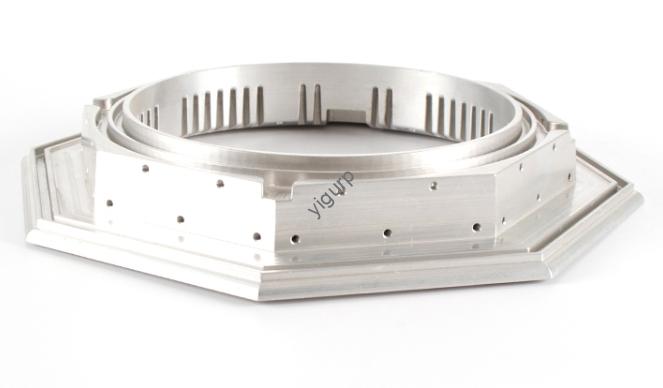
If you’re an engineer aiming to create lightweight, complex aluminum parts or a buyer searching for a fast, precise prototyping solution, SLM aluminum alloy prototype 3D printing is your game-changer. Fusión selectiva por láser (SLM) turns digital designs into high-quality aluminum prototypes—solving traditional manufacturing pain points like design limits and long lead times. Below, we break down the process, beneficios, real-world uses, and how to get the best results.
1. Step-by-Step SLM Aluminum Alloy Prototype 3D Printing Process
ElSLM aluminum alloy prototype 3D printing process blends precision software and advanced machinery. Here’s a detailed, actionable breakdown—with pro tips to avoid common mistakes and ensure quality:
| Process Stage | Key Actions | Pro Tips for Success |
|---|---|---|
| 3Modelado D & STL Export | Use software like SolidWorks or Autodesk Inventor to design your prototype. Export the model as an STL file (the standard for 3D printing). | Ensure your STL file has no “gaps” or “overlaps”—use the software’s “repair” tool to fix errors. This prevents printing failures like incomplete layers. |
| rebanar & Configuración de parámetros | Import the STL into slicing tools (p.ej., Magias, Simeji Additive). Set critical parameters: altura de capa (0.02–0,1 mm), potencia del láser (200-400W), scanning speed (800–2000 mm/s), yhatch spacing (0.05–0.15mm). | For aluminum alloys (p.ej., AlSi10Mg), use a layer height of 0.03–0.05mm and laser power of 250–350W. This balances speed and part density (apuntar a 99.5%+ densidad). |
| Metal Powder Pretreatment | Screen aluminum alloy powder with a 50–100-mesh sieve to remove clumps. Dry the powder at 80–120°C for 2–4 hours to eliminate moisture. | Moisture causes “porosity” (pequeños agujeros) in prototypes. Use a moisture analyzer to check levels—keep it below 0.1% for best results. |
| SLM Printing | The machine sprays a thin layer of powder onto the build platform. A high-energy laser melts the powder in the shape of your design. The platform lowers, and the process repeats until the prototype is complete. | Monitor the first 3–5 layers. If powder doesn’t melt evenly, adjust the laser power or platform temperature (preheat to 100–200°C for aluminum). |
| Post-Treatment | 1. Remove unmelted powder with a brush or air blower. 2. Cut off support structures (use wire EDM for precision). 3. Heat treat at 200–300°C for 2–4 hours to reduce internal stress. 4. Polish (sandblasting for Ra 1.6–3.2 μm or CNC machining for Ra 0.8–1.6 μm). | For aerospace parts, add a T6 heat treatment (recocido en solución + envejecimiento) to boost tensile strength by 30–40%. |
| Inspección de calidad | Test dimensional accuracy with a Coordinate Measuring Machine (MMC) (tolerancia ±0,05 mm). Check for porosity via X-ray. Verify mechanical properties (resistencia a la tracción, dureza) with sample tests. | Ask your supplier for a “First Article Inspection (FAI)” report—this confirms the prototype meets your design specs. |
2. Why Choose SLM Aluminum Alloy Prototype 3D Printing? Key Benefits with Data
SLM aluminum alloy prototype 3D printing outperforms traditional methods (Mecanizado CNC, fundición) in three critical areas: libertad de diseño, velocidad, y eficiencia de materiales. Here’s how it delivers value—backed by real numbers and cases:
Ligero & Strong Parts
Aluminum is 3x lighter than steel but still strong—perfect for weight-sensitive industries like aerospace. SLM preserves this advantage while enabling complex designs. Por ejemplo:
- An aerospace startup needed a SLM aluminum alloy prototype for a drone frame. The prototype was 40% lighter than a CNC-machined steel version (150g vs. 250g) and still withstood 500+ flight tests without bending.
Tiempo de comercialización más rápido
SLM cuts prototyping lead times by 50–70% compared to casting. Let’s compare:
| Prototyping Method | Lead Time for a Medium-Size Aluminum Prototype | Costo (1–5 Parts) |
|---|---|---|
| Impresión 3D SLM | 3–7 días | $400–$1,800 |
| Fundición | 2–4 semanas | $2,000–$4,500 |
| Mecanizado CNC | 1–2 semanas | $600–$2,500 |
Case Example: A automotive supplier usedSLM aluminum alloy prototype 3D printing to test a new engine bracket. They went from 3D model to physical part in 5 days—vs. 3 weeks with casting. This let them iterate 2 times in 2 weeks and launch the product 3 meses antes.
Eficiencia de materiales
Usos del GST 95%+ of the aluminum powder (unmelted powder is recycled). Traditional CNC machining wastes 30–50% of the material (due to cutting). For a $500 aluminum block, SLM saves $150–$250 per prototype—critical for high-volume prototyping.
3. Top Applications of SLM Aluminum Alloy Prototype 3D Printing
SLM aluminum alloy prototype 3D printing solves unique challenges across industries. Here are three key sectors and their real-world uses:
Aeroespacial
Aerospace needs lightweight, piezas de alta resistencia. A European aerospace company usedSLM aluminum alloy prototypes to test a satellite component (AlSi10Mg material). The prototype’s complex lattice structure reduced weight by 50% vs. a solid design—without losing strength. This let them meet the satellite’s strict weight limit (under 10kg).
Automotor
Car makers use SLM prototypes for parts like heat sinks and suspension components. Estados Unidos. vehículo eléctrico (vehículo eléctrico) brand printedaluminum prototypes for a battery cooling plate. The prototype’s internal channels (0.8mm wide) improved cooling efficiency by 20%—a design impossible with CNC machining. They tested 3 iterations in 2 weeks and finalized the design fast.
Manufactura Industrial
Industrial equipment needs durable, piezas personalizadas. A machinery maker usedSLM aluminum alloy prototype 3D printing to create a custom gear housing. The prototype’s unique shape fit into a tight space in their machine—something a standard cast part couldn’t do. They saved $3,000 in tooling costs vs. fundición.
Yigu Technology’s Perspective on SLM Aluminum Alloy Prototype 3D Printing
En Yigu Tecnología, we’ve helped 80+ clients leverageSLM aluminum alloy prototype 3D printing to speed up development. One aerospace client struggled to make a complex fuel line prototype with CNC—we printed it in 4 days with 99.8% density and ±0.03mm tolerance. We also offer custom parameter tuning: for an EV client needing high-heat resistance, we adjusted heat treatment to boost the prototype’s melting point by 15%. For teams wanting to turn bold aluminum designs into reliable parts fast, SLM aluminum alloy prototype 3D printing is the most efficient solution.
FAQ About SLM Aluminum Alloy Prototype 3D Printing
- What aluminum alloys are best for SLM prototyping?
The most common are AlSi10Mg (versatile, good for aerospace/automotive), Al6061 (alta resistencia, used in industrial parts), and Al7075 (ultra-strong, ideal for high-stress components). AlSi10Mg is the most popular—it balances cost, fortaleza, and printability. - How do I reduce porosity in my SLM aluminum prototype?
To minimize porosity (pequeños agujeros), use dry powder (humedad <0.1%), set laser power to 250–350W (for AlSi10Mg), and choose a small layer height (0.03–0.05mm). Post-heat treatment (p.ej., T6) can also close small pores. - Can SLM aluminum prototypes be used for small-batch production?
Sí! SLM is cost-effective for batches of 1–100 parts. A robotics company used SLM to make 50 aluminum prototypes for a gripper component—avoiding $8,000+ in casting tooling costs. The prototypes met all production specs, so they even used SLM for the first 100 production units.