
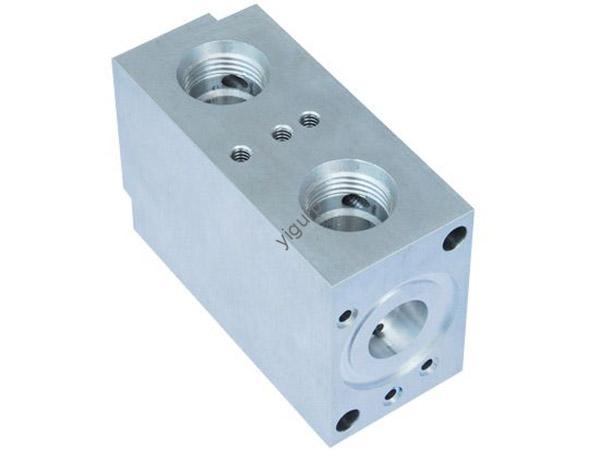
Si trabajas en forja en caliente, moldeo por inyección de plástico, o fabricación de componentes aeroespaciales, you need a tool steel that can handle high temperatures and heavy wear.SKD61 hot work tool steel is a top choice for these tough jobs—but what makes it so reliable? Esta guía desglosa sus propiedades clave., aplicaciones del mundo real, métodos de fabricación, y cómo se compara con otros materiales, with practical examples to help you make informed decisions.
1. Core Material Properties of SKD61 Hot Work Tool Steel
SKD61’s ability to perform under heat and stress starts with its carefully balanced composition and unique properties. Let’s explore the details.
Composición química
Every element in SKD61 plays a role in its performance. Here are the critical components and their industry-standard ranges:
- Carbon content (0.35 – 0.45%): Provides a foundation for hardness and strength without making the steel brittle.
- Chromium content (4.75 – 5.50%): Impulsa resistencia al desgaste and helps retain strength at high temperatures.
- Manganese content (0.20 – 0.60%): Improves hardenability and reduces brittleness during forming.
- Silicon content (0.15 – 0.35%): Enhances strength and heat resistance.
- Molybdenum content (1.10 – 1.75%): Further improves hot hardness (the ability to stay hard at high temps) y resistencia a la fatiga.
- Vanadium content (0.80 – 1.20%): Refines grain structure for better toughness and wear resistance.
- Phosphorus content (≤0.03%) y Sulfur content (≤0.03%): Kept low to avoid weak spots, especially in high-stress applications.
Físico & Propiedades mecánicas
To make it easy to assess, here’s a table of SKD61’s key physical and mechanical traits:
| Property Type | Specific Property | Valor típico |
|---|---|---|
| Physical Properties | Densidad | ~7.85 g/cm³ |
| Conductividad térmica | ~35 W/(m·K) | |
| Specific heat capacity | ~0.48 kJ/(kg·K) | |
| Thermal expansion coefficient | ~11 x 10⁻⁶/°C | |
| Magnetic properties | Ferromagnetic | |
| Propiedades mecánicas | Resistencia a la tracción | ~1800 – 2000 MPa |
| Yield strength | ~1400 – 1600 MPa | |
| Alargamiento | ~10 – 15% | |
| Rockwell Hardness (después del tratamiento térmico) | 58 – 62 CDH | |
| Fatigue strength | ~700 – 800 MPa | |
| Impact toughness | Moderate to high |
Other Key Traits
Beyond the numbers, SKD61 offers practical benefits for manufacturers:
- Excellent wear resistance: Handles repeated friction without quickly wearing down.
- High hot hardness: Retains its hardness even at temperatures up to 600°C (critical for hot working tools).
- Good toughness: Doesn’t crack easily under sudden impacts.
- maquinabilidad (good before heat treatment): Easy to shape into custom tool designs before hardening.
- Soldabilidad (with caution): Can be welded, but pre-heating and post-heating are needed to avoid cracking (due to high carbon content).
2. Real-World Applications of SKD61 Hot Work Tool Steel
SKD61’s heat resistance and durability make it essential across several industries. Here are its most common uses, with real case examples.
Hot Working Tools
This is SKD61’s primary use—tools that shape metal at high temperatures:
- Hot forging dies: Used to shape steel, aluminio, or brass parts (p.ej., automotive crankshafts).
- Hot extrusion dies: Press hot metal through openings to make rods, tubes, or profiles (p.ej., aluminum window frames).
- Hot stamping tools: Form high-strength steel for car bodies (p.ej., crash-resistant door beams).
Ejemplo de caso: A Japanese automotive supplier used SKD61 for hot forging dies to make engine connecting rods. The dies lasted 30% longer than those made from cheaper tool steels, cutting replacement costs by $20,000 per year.
Industria aeroespacial
Aerospace parts need to handle extreme heat and stress. SKD61 is used for:
- High-strength components: Tools to manufacture turbine blades or aircraft landing gear parts.
- Wear-resistant parts: Dies for shaping titanium or nickel-alloy components (which require high temperatures to form).
Industria automotriz
Beyond forging dies, SKD61 is used for:
- High-strength components: Molds for engine parts that withstand high temperatures (p.ej., culatas).
- Wear-resistant parts: Tooling for stamping high-strength steel body panels.
Ingeniería Mecánica
In general machinery, SKD61 is used for:
- Engranajes y ejes: Parts that need to resist wear and heat (p.ej., cajas de cambios industriales).
- Aspectos: Components that handle heavy loads and friction (p.ej., conveyor system bearings).
Moldeo por inyección de plástico
Even though it’s a “hot work” steel, SKD61 works well for plastic molds that run at moderate temperatures:
- Molds for plastic parts: Used for high-volume production (p.ej., plastic toy parts or electronic casings).
- Core and cavity components: The inner and outer parts of molds that give plastic its shape (resists wear from repeated injections).
3. Manufacturing Techniques for SKD61 Hot Work Tool Steel
Turning raw SKD61 into usable tools requires precise steps. Here’s a breakdown of the key processes.
1. Metallurgical Processes (Fusión & Refining)
- Electric Arc Furnace (EAF): The most common method. Scrap steel is melted at 1,600–1,800°C, and alloys (cromo, molibdeno, vanadium) are added to hit chemical targets.
- Basic Oxygen Furnace (BOF): Used for large-scale production (100+ ton batches) to reduce impurities like phosphorus.
2. Rolling Processes
Rolling shapes SKD61 into standard forms for further machining:
- laminación en caliente: Steel is heated to 900–1,100°C and pressed into bars, platos, o bloques (rápido, cost-effective for large tools).
- laminación en frío: Used for smaller, piezas precisas (p.ej., thin mold inserts). Steel is rolled at room temperature for smoother surfaces.
3. Tratamiento térmico
Heat treatment is critical to unlock SKD61’s full potential:
- Recocido: Heated to 800–850°C, held for 2–4 hours, then slowly cooled. This softens the steel for easy machining.
- Temple: Heated to 1,020–1,050°C, then quickly cooled in oil or air. This hardens the steel to 60+ CDH.
- Tempering: Heated to 500–600°C (depending on desired hardness), then cooled. This reduces brittleness while keeping high hardness (final hardness: 58–62 HRC).
- Stress relief annealing: Heated to 600–650°C after machining or welding to remove internal stress (prevents warping or cracking).
4. Tratamiento superficial
To boost performance, SKD61 tools often get surface treatments:
- Endurecimiento: Additional heat treatment to increase surface hardness (p.ej., flame hardening for die edges).
- Nitriding: A chemical process that adds nitrogen to the surface, increasing wear resistance (common for forging dies).
- Revestimiento (p.ej., PVD, CVD): Physical or chemical vapor deposition adds a thin, capa dura (p.ej., nitruro de titanio) para reducir la fricción y el desgaste (used for plastic injection molds).
5. Control de calidad
No SKD61 tool leaves the factory without strict testing:
- Hardness testing: Rockwell C tests to confirm 58–62 HRC after heat treatment.
- Microstructure analysis: Checks for uniform grain size and no defects (p.ej., cracks or inclusions).
- Dimensional inspection: Uses calipers, escáneres láser, or coordinate measuring machines (MMC) to ensure tools match design specs.
4. SKD61 vs. Other Materials: A Comparative Analysis
How does SKD61 stack up against other tool steels, stainless steels, o compuestos? Here’s a side-by-side comparison.
| Material | Costo (vs. SKD61) | Resistencia a la tracción | Hot Hardness (at 600°C) | Resistencia al desgaste | Mejor para |
|---|---|---|---|---|---|
| SKD61 | Base (100%) | 1800–2000 MPa | Alto (retiene 50+ CDH) | Excelente | Hot forging dies, extrusion dies |
| A2 tool steel | 70% | 1600–1800 MPa | Bajo (drops to 35 CDH) | Bien | Cold stamping dies |
| D2 tool steel | 90% | 1700–1900 MPa | Bajo (drops to 40 CDH) | Excelente | Cold cutting tools |
| H13 tool steel | 110% | 1800–2000 MPa | Alto (retiene 50+ CDH) | Excelente | Hot extrusion dies (similar to SKD61) |
| 440C stainless steel | 85% | 1700–1900 MPa | Bajo (drops to 30 CDH) | Bien | Corrosion-resistant cold tools |
| aleación de titanio (Ti-6Al-4V) | 500% | 900–1100 MPa | Moderado (retiene 35 CDH) | Bien | Piezas aeroespaciales ligeras (not tooling) |
| Carbon fiber composite | 800% | 2500+ MPa | Bajo (softens above 200°C) | Excelente | Ligero, low-heat tooling (p.ej., plastic molds) |
Key Takeaways:
- vs. Other tool steels: SKD61 outperforms A2 and D2 in hot hardness (critical for hot working). It’s similar to H13 but often cheaper, making it a better value.
- vs. Acero inoxidable (440do): SKD61 has better heat resistance and wear resistance—440C is only better for corrosion-prone cold applications.
- vs. Titanium/composites: Titanium and composites are lighter, but they lack SKD61’s hot hardness and durability. They’re better for parts, not tooling.
5. Expert View: Yigu Technology on SKD61 Hot Work Tool Steel
AtTecnología Yigu, we’ve supplied SKD61 tooling to 500+ clients in automotive, aeroespacial, y fabricación. What makes SKD61 irreplaceable? Its ability to balancehot hardness and toughness—most cheaper tool steels either wear out fast or crack under heat. We recommend it for hot forging and extrusion dies, where it cuts tool replacement costs by 25–30%. For clients needing extra corrosion resistance, we add a PVD coating to SKD61 molds, extending their life even more. For high-temperature tooling, SKD61 remains our top recommendation.
FAQ About SKD61 Hot Work Tool Steel
- Can SKD61 be used for cold working tools (p.ej., cold stamping dies)?
Sí, but it’s not the best choice. A2 or D2 tool steel are cheaper and have similar wear resistance for cold applications. SKD61’s strength is in handling high temperatures. - What’s the maximum temperature SKD61 can handle?
SKD61 retains its hardness (50+ CDH) up to ~600°C. It can tolerate short exposures to 700°C, but prolonged use above 600°C will reduce its lifespan. - Is SKD61 recyclable?
Sí! Like most tool steels, SKD61 can be melted down and reused in new tooling. This reduces waste and lowers environmental impact—many manufacturers (including Yigu Technology) offer recycling programs for old SKD61 tools.