
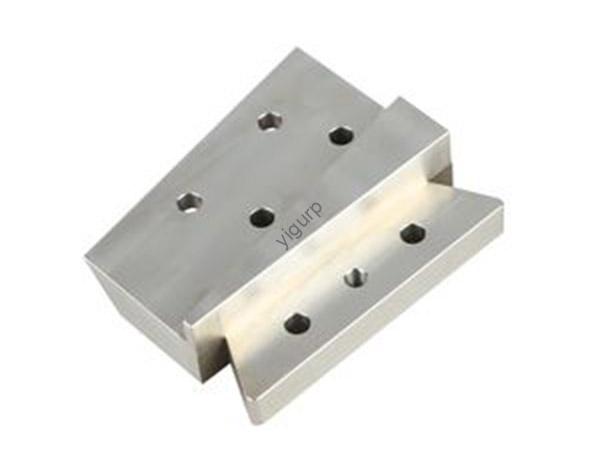
Si trabajas en automoción, construcción, o ingeniería mecánica, El acero estructural S420MC es un material que vale la pena conocer. es un laminado en caliente, Acero microaleado apreciado por su combinación de alta resistencia y conformabilidad, pero ¿cómo se adapta a su proyecto?? Esta guía desglosa sus características clave., aplicaciones del mundo real, pasos de fabricación, y cómo se compara con otros materiales, so you can make informed choices.
1. Material Properties of S420MC Steel
S420MC’s performance starts with its well-engineered properties. Let’s explore itschemical composition, physical properties, propiedades mecánicas, and other critical characteristics.
1.1 Composición química
The elements in S420MC (para ES 10149-2 estándares) shape its strength and workability. Below is the typical range:
| Element | Symbol | Maximum/Typical Content (%) | Key Role |
|---|---|---|---|
| Carbón (do) | do | 0.18 | Balances strength and formability |
| Manganeso (Minnesota) | Minnesota | 2.00 | Boosts tensile strength and ductility |
| Silicio (Y) | Y | 0.50 | Enhances heat resistance during rolling |
| Sulfur (S) | S | 0.030 | Minimized to avoid brittleness |
| Phosphorus (PAG) | PAG | 0.030 | Limited to prevent cold cracking |
| Cromo (cr) | cr | 0.30 | Improves mild corrosion resistance |
| Níquel (En) | En | 0.50 | Enhances low-temperature toughness |
| Molibdeno (Mes) | Mes | 0.10 | Increases high-temperature strength |
| Vanadio (V) | V | 0.12 | Refines grain structure for durability |
1.2 Propiedades físicas
These traits influence how S420MC behaves in different environments:
- Densidad: 7.85 gramos/cm³ (standard for structural steels, easy to calculate weight)
- Punto de fusión: 1430–1480°C (compatible with common manufacturing heat processes)
- Conductividad térmica: 48 con/(m·K) a 20ºC (effective for heat dissipation in machinery)
- Capacidad calorífica específica: 450 j/(kg·K) (handles temperature changes without damage)
- Coefficient of thermal expansion: 13.2 μm/(m·K) (low expansion, reducing warping in extreme temps)
1.3 Propiedades mecánicas
S420MC’s mechanical strength makes it ideal for load-bearing, formed parts. Key values include:
- Resistencia a la tracción: 500–650 MPa (handles pulling forces in automotive frames or industrial parts)
- Fuerza de producción: ≥420 MPa (resists permanent deformation—critical for structural safety)
- Alargamiento: ≥18% (flexible enough to bend into complex shapes like suspension components)
- Dureza: 145–190 Brinell (balances strength and ease of cutting/drilling)
- Dureza al impacto: ≥27 J at -40°C (tough in freezing weather, perfect for cold-region projects)
1.4 Otras propiedades
- Resistencia a la corrosión: Moderado (needs galvanizing or painting for outdoor use, like bridge parts)
- Soldabilidad: Excelente (works with MIG/TIG welding—minimal preheating needed for thin sheets)
- maquinabilidad: Bien (easily drilled, molido, or cut with standard tools)
- Propiedades magnéticas: Ferromagnético (responds to magnets, useful for industrial sorting)
- Ductilidad: Alto (can be formed into curved shapes without breaking, like vehicle body parts)
2. Applications of S420MC Structural Steel
S420MC’s mix of strength and formability makes it versatile across industries. Here are real-world examples:
2.1 Construcción
- Industrial buildings: The “GreenTech Factory” in Munich uses S420MC for its mezzanine floors—its high yield strength supports heavy equipment, while formability allows custom beam shapes.
- Puentes: Small pedestrian bridges in Norway use S420MC for railings—its -40°C impact toughness withstands harsh winters.
- Reinforcement bars: Supplementary reinforcement in precast concrete panels (p.ej., for high-rise apartments) uses S420MC—its strength boosts panel load capacity.
2.2 Automotor
- Vehicle frames: Ford F-Series pickup trucks use S420MC in their chassis—its formability allows complex bends for crash safety, while strength protects passengers.
- Suspension components: Audi Q7’s control arms use S420MC—its ductility absorbs road shocks, improving ride comfort.
- Transmission components: Volkswagen commercial van transmissions use S420MC gears—its wear resistance endures constant use.
2.3 Ingeniería Mecánica
- Machine parts: Conveyor belt frames in logistics hubs use S420MC—its strength carries heavy packages without bending.
- Ejes: Rotating shafts in industrial pumps use S420MC—its fatigue strength endures years of constant rotation.
- Aspectos: Bearing housings for wind turbines use S420MC—its stability keeps bearings aligned in windy conditions.
2.4 Other Applications
- Mining equipment: Small mining loaders use S420MC for their bucket frames—its toughness resists rock impacts.
- Agricultural machinery: John Deere tractor cabs use S420MC—its formability allows custom shapes, while corrosion resistance (with painting) stands up to soil.
- Sistemas de tuberías: Industrial water treatment pipes use S420MC—its strength handles high water pressure.
3. Manufacturing Techniques for S420MC Steel
Producing high-quality S420MC requires precise control. Here’s the step-by-step process:
3.1 Primary Production
- Electric arc furnace (EAF): Most common method—scrap steel is melted at 1600°C, luego elementos de aleación (Minnesota, V) are added to reach the right composition.
- Basic oxygen furnace (BOF): Used for large batches—iron ore is converted to steel, then oxygen is blown in to remove impurities before adding alloys.
- Continuous casting: Molten steel is poured into molds to form slabs or billets (the raw material for secondary processing).
3.2 Secondary Processing
- laminación en caliente: Slabs are heated to 1100–1200°C and rolled into sheets or bars—this improves strength and formability (key for S420MC’s performance).
- laminación en frío: For thin sheets (used in automotive parts), cold rolling increases surface smoothness and hardness.
- Tratamiento térmico: Recocido (heating to 850°C, luego enfriando lentamente) reduces stress in welded parts; temple (rapid cooling) is rarely needed—hot rolling already achieves desired strength.
- Tratamiento superficial: galvanizado (coating with zinc) protects against rust—used for outdoor parts like agricultural machinery frames.
3.3 Control de calidad
To meet EN 10149-2 estándares, every batch of S420MC is tested:
- Chemical analysis: Spectrometers check if element levels (like C, Minnesota) match requirements.
- Mechanical testing: Tensile tests measure strength; impact tests check toughness at -40°C.
- Non-destructive testing (END): Ultrasonic tests find internal cracks; radiographic tests check weld quality.
- Dimensional inspection: Lasers and calipers ensure sheets/bars are the correct size and thickness.
4. How S420MC Compares to Other Materials
Choosing S420MC depends on cost, fortaleza, and project needs. Here’s how it stacks up:
4.1 Comparison with Other Steels
| Material | Yield Strength (MPa) | Formabilidad | Costo versus. S420MC | Mejor para |
|---|---|---|---|---|
| S420MC Steel | ≥420 | Excelente | Base (100%) | Formed parts (p.ej., marcos automotrices) |
| Carbon steel (S235JR) | ≥235 | Bien | 75% | Low-load parts (p.ej., small beams) |
| High-strength steel (S690QL) | ≥690 | Pobre | 180% | Extreme-load parts (p.ej., plataformas marinas) |
| Acero inoxidable (304) | ≥205 | Bien | 300% | Corrosive environments (p.ej., chemical pipes) |
4.2 Comparison with Non-Ferrous Metals
- Aluminio (6061-T6): Aluminum is lighter (densidad 2.7 g/cm³ vs. 7.85 gramos/cm³) but weaker (yield strength 276 MPa frente a. 420 MPa)—use S420MC for load-bearing formed parts.
- Titanio: Titanium is corrosion-resistant but costs 10x more—S420MC (con revestimiento) is cheaper for most outdoor projects.
4.3 Comparison with Composite Materials
- Fiber-reinforced polymers (FRP): FRP is lighter but has lower tensile strength (300 MPa frente a. 500–650 MPa)—S420MC is more reliable for heavy-duty formed parts.
- Compuestos de fibra de carbono: Carbon fiber is stronger but costs 6x more—use it for aerospace; S420MC is better for automotive and industrial use.
5. Yigu Technology’s View on S420MC Structural Steel
En Yigu Tecnología, S420MC is our top pick for clients needing strong, formable steel. We use it for automotive chassis parts and industrial formed components—its ≥420 MPa yield strength ensures safety, while formability cuts manufacturing time. Para uso en exteriores, we pair it with our zinc-aluminum coating to boost corrosion resistance, extending part life by 30%. It balances performance and cost better than many alternatives, making it a versatile solution for diverse projects.
FAQ About S420MC Structural Steel
- Can S420MC be used in cold climates?
Sí. Its impact toughness (≥27 J at -40°C) means it stays strong in freezing weather—ideal for projects in Canada, Scandinavia, or northern China. - Is S420MC easy to form into complex shapes?
Absolutamente. It has excellent formability—can be bent, rolled, or stamped into curved parts (like automotive body panels) sin agrietarse, thanks to its high elongation (≥18%). - How does S420MC differ from S355MC?
S420MC has a higher yield strength (420 MPa frente a. 355 MPa) and costs ~15% more. Use S355MC for medium-load formed parts (p.ej., small machine frames) and S420MC for heavy-load formed parts (p.ej., pickup truck chassis).