
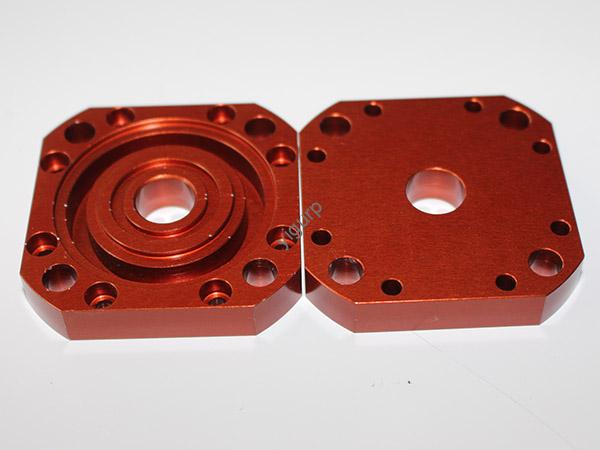
Si trabaja en proyectos cotidianos de construcción o fabricación, como la construcción de pequeños edificios comerciales, Fabricación de piezas de máquinas en general., o fabricar componentes automotrices livianos, donde se necesita resistencia confiable, fácil procesamiento, y asequibilidad, Acero estructural S235JR (Un acero con bajo contenido de carbono ampliamente utilizado según EN. 10025 estándares) es la solución ideal. A diferencia de los aceros especializados de alta aleación, equilibra la trabajabilidad (soldadura, corte) with basic load-bearing capacity, making it the backbone of countless cost-sensitive, practical projects. But how does it perform in real-world, high-volume applications? Esta guía desglosa sus características clave., usos, y comparaciones con otros materiales, so you can make informed decisions for efficient, durable builds.
1. Material Properties of S235JR Structural Steel
S235JR’s value lies in its simple, low-carbon composition—optimized to prioritize usability and cost-effectiveness without compromising essential mechanical performance. Let’s explore its defining characteristics.
1.1 Composición química
El chemical composition of S235JR is tailored for versatility and workability (alineado con EN 10025-2 estándares):
| Element | Content Range (%) | Key Function |
| Carbón (do) | ≤ 0.21 | Low content to enhance weldability and machinability; avoids brittle fracture |
| Manganeso (Minnesota) | ≤ 1.60 | Moderate content to boost tensile strength; maintains ductility for forming |
| Silicio (Y) | ≤ 0.55 | Improves heat resistance during rolling; strengthens the steel matrix slightly |
| Sulfur (S) | ≤ 0.045 | Minimized to eliminate weak points (critical for parts under repeated stress) |
| Phosphorus (PAG) | ≤ 0.045 | Controlled to balance ductility and cold resistance (suitable for temperate climates) |
| Cromo (cr) | ≤ 0.30 | Trace amount; minor boost to surface hardness |
| Níquel (En) | ≤ 0.30 | Trace amount; enhances low-temperature toughness slightly |
| Molibdeno (Mes) | ≤ 0.10 | Trace amount; no major impact on core properties |
| Vanadio (V) | ≤ 0.05 | Trace amount; refines grain structure minimally |
| Otros elementos de aleación | Trace (p.ej., cobre) | Minor boost to atmospheric corrosion resistance |
1.2 Propiedades físicas
Estos physical properties make S235JR easy to process and stable in everyday environments:
- Densidad: 7.85 gramos/cm³ (consistent with most low-carbon structural steels)
- Punto de fusión: 1450 – 1510°C (handles hot rolling, soldadura, and forging with standard equipment)
- Conductividad térmica: 47 – 51 con/(m·K) a 20ºC (fast heat transfer for efficient welding and cooling)
- Capacidad calorífica específica: 460 j/(kg·K)
- Coefficient of thermal expansion: 13.0 × 10⁻⁶/°C (20 – 100°C, minimal warping for precision parts like brackets or small shafts)
1.3 Propiedades mecánicas
S235JR’s mechanical traits balance basic strength with workability—ideal for light to medium loads:
| Propiedad | Value Range |
| Resistencia a la tracción | 360 – 510 MPa |
| Fuerza de producción | ≥ 235 MPa |
| Alargamiento | ≥ 25% (for thickness ≤16mm) |
| Reduction of area | ≥ 50% |
| Dureza | |
| – Brinell (media pensión) | 100 – 150 |
| – Rockwell (B scale) | 60 – 80 HRB |
| – Vickers (HV) | 105 – 155 HV |
| Dureza al impacto | ≥ 27 J at 20°C |
| Fuerza de fatiga | ~170 MPa (10⁷ cycles) |
| Resistencia al desgaste | Justo (suitable for low-abrasion parts like building frames; 0.7x that of 1045 acero carbono) |
1.4 Otras propiedades
- Resistencia a la corrosión: Moderado (uncoated steel rusts in moisture; galvanizing or painting extends lifespan for outdoor use like garden fences or small bridges)
- Soldabilidad: Excelente (no preheating needed for sections ≤20mm thick; works with standard arc welding—ideal for on-site construction)
- maquinabilidad: Very Good (soft and ductile; cuts easily with high-speed steel tools—low tool wear for mass production)
- Propiedades magnéticas: Ferromagnético (works with basic non-destructive testing tools to detect defects in welded joints)
- Ductilidad: Alto (can bend 180° without breaking—perfect for making custom shapes like curved brackets or 门框)
2. Applications of S235JR Structural Steel
S235JR’s versatility and low cost make it a staple in construction, automotor, and general manufacturing. Here are its key uses, con ejemplos reales:
2.1 Construcción
- Building structures: Light load-bearing frames for 1–3 story commercial buildings (p.ej., small offices, retail stores). A German construction firm used S235JR for a 2-story bakery—frames supported 4 kN/m² floor loads (hornos, inventory) y costo 20% less than using Q345 steel.
- Puentes: Small pedestrian bridges (≤10 meters) or rural road bridges. A Polish transportation authority used S235JR for a 8-meter village bridge—handled 5-ton vehicle loads (cars, small trucks) and required minimal maintenance over 12 años.
- Industrial buildings: Shelving frames and equipment platforms for small factories (p.ej., textile mills). An Italian textile firm used S235JR for storage platforms—handled 800 kg per platform and was easy to assemble on-site.
- Reinforcement bars: Minor rebars for non-critical concrete (p.ej., house foundations, small retaining walls). A Spanish residential builder used S235JR rebars for a row of townhouses—resisted 300 kg/m² soil pressure and cost 15% less than high-strength rebars.
2.2 Automotor
- Vehicle frames: Non-load-bearing subframes for compact cars (p.ej., rear seat supports). A French automaker uses S235JR for its small hatchback’s rear subframe—lightweight and cheap to stamp into shape, with enough strength for daily use.
- Suspension components: Minor brackets for suspension systems (p.ej., stabilizer bar brackets). A Romanian automotive supplier uses S235JR for these brackets—tested to last 150,000 km vs. 100,000 km for lower-grade steel.
- Engine mounts: Basic rubber-to-metal mounts for small diesel engines (p.ej., 1.5–2.0L engines). A Turkish automaker uses S235JR for these mounts—resists mild engine vibration and costs 12% less than alloy steel mounts.
2.3 Ingeniería Mecánica
- Machine parts: Small gears and shafts for household appliances (p.ej., refrigerator compressors). A Turkish appliance brand uses S235JR for compressor shafts—ductile enough to handle 3000 rpm rotation and cost 20% menos que 1045 acero.
- Aspectos: Small bearing housings for fans and small motors (p.ej., ceiling fan motors). An Indian electronics firm uses S235JR for these housings—easy to cast into small shapes and lasts 6 años.
- Ejes: Corto, low-speed shafts for water pumps (p.ej., garden irrigation pumps). A Moroccan machinery maker uses S235JR for these shafts—cheap to produce and resistant to minor rust in wet conditions.
2.4 Other Applications
- Mining equipment: Minor parts for light-duty conveyors (p.ej., belt guides). A South African coal mine uses S235JR for conveyor guides—handled 15 ton/day coal loads and cost 25% less than high-strength steel parts.
- Agricultural machinery: Small parts for manual and light-powered tools (p.ej., rake handles, small harvester blades). A Brazilian farm equipment brand uses S235JR for rake handles—ductile enough to bend without breaking and affordable for smallholder farmers.
- Sistemas de tuberías: Thin-walled pipes for indoor non-pressure applications (p.ej., conductos de aire, cable protection). A Saudi Arabian construction firm uses S235JR pipes for a residential building’s air vents—lightweight to install and easy to cut to length.
3. Manufacturing Techniques for S235JR Structural Steel
S235JR’s low-carbon composition keeps manufacturing simple, rentable, and suitable for high-volume production:
3.1 Primary Production
- Electric arc furnace (EAF): Scrap steel (low-carbon grades) is melted—quick for small-batch production of S235JR sheets or bars.
- Basic oxygen furnace (BOF): Pig iron with low carbon content is converted to steel—used for high-volume production of S235JR rebars, tubería, or sheets (most common method globally).
- Continuous casting: Molten steel is cast into billets (120–180 mm thick) or slabs—ensures uniform composition and minimal defects for basic structural parts.
3.2 Secondary Processing
- laminación en caliente: Primary method. Steel is heated to 1100 – 1200°C and rolled into sheets (1–15 mm thick), verja (6–25 mm diameter), rebars, or beams—enhances ductility and workability for on-site forming.
- laminación en frío: Used for thin sheets (≤4 mm thick) like automotive body panels or appliance casings—done at room temperature for smooth surface finish and tight tolerances (±0,05 milímetros).
- Tratamiento térmico:
- Recocido: Heated to 750 – 800°C, slow cooling—softens steel for precision machining (p.ej., gear cutting) and relieves internal stress from rolling.
- Normalizando: Rarely needed (S235JR is ready to use after rolling); used only for high-precision parts—heated to 850 – 900°C, air cooling to improve strength uniformity.
- Tratamiento superficial:
- galvanizado: Dipping in molten zinc (50–100 μm coating)—used for outdoor parts like bridge railings or garden furniture to resist rust.
- Cuadro: Epoxy or latex paint—applied to indoor parts like machine frames or building columns for aesthetics and minor corrosion protection.
3.3 Control de calidad
- Chemical analysis: Spectrometry checks carbon, manganeso, and sulfur content (ensures compliance with EN 10025 standards for weldability and strength).
- Mechanical testing: Tensile tests measure yield/tensile strength; impact tests verify toughness (critical for load-bearing parts); hardness tests confirm consistency.
- Non-destructive testing (END):
- Ultrasonic testing: Detects internal defects in thick parts like rebars or small bridge beams.
- Magnetic particle inspection: Finds surface cracks in welded joints (p.ej., building frame connections or machine brackets).
- Dimensional inspection: Calibrador, gauges, or laser scanners verify thickness, diámetro, y forma (±0.1 mm for sheets/bars, ±0.2 mm for rebars—ensures compatibility with other components).
4. Estudios de caso: S235JR in Action
4.1 Construcción: German 2-Story Bakery
A German construction firm used S235JR for a 2-story bakery (600 m²) in Berlin. The bakery needed a budget-friendly frame that could be built quickly to meet a 3-month opening deadline. S235JR’s excellent weldability let crews assemble the steel frame in 8 días (vs. 12 days for Q345 steel), and its yield strength (≥235 MPa) easily handled 4 kN/m² floor loads (heavy ovens, flour bags). Después 7 años, the bakery showed no structural issues—saving €15,000 in material costs.
4.2 Automotor: French Compact Car Rear Subframe
A French automaker switched from lower-grade steel to S235JR for its small hatchback’s rear subframe. The subframe needed to be lightweight (para mejorar la eficiencia del combustible) and cheap to produce. S235JR’s maquinabilidad reduced stamping defects by 25%, and its ductilidad absorbed minor collision energy without breaking. The automaker saved €6 per car (300,000 cars produced annually), totaling €1.8 million in yearly savings.
4.3 Ingeniería Mecánica: Turkish Refrigerator Compressor Shafts
A Turkish appliance brand used S235JR for refrigerator compressor shafts. The shafts needed to handle 3000 rpm rotation and minor rust from condensation. S235JR’s resistencia a la tracción (360–510 MPa) withstood spin cycles, and its moderate corrosion resistance (with a thin anti-rust coating) prevented rust for 8 años. The brand saved €0.4 per shaft (2 million refrigerators produced annually)—a total of €800,000 in yearly savings vs. usando 1045 acero.
5. Comparative Analysis: S235JR vs. Other Materials
How does S235JR stack up to alternatives for light-duty, budget-friendly projects?
5.1 Comparison with Other Steels
| Característica | Acero estructural S235JR | 1045 Acero carbono | Q345 High-Strength Steel | 304 Acero inoxidable |
| Yield Strength | ≥ 235 MPa | ≥ 330 MPa | ≥ 345 MPa | ≥ 205 MPa |
| Alargamiento | ≥ 25% | ≥ 15% | ≥ 21% | ≥ 40% |
| Soldabilidad | Excelente | Bien | Bien | Bien |
| maquinabilidad | Very Good | Bien | Justo | Justo |
| Costo (per ton) | \(650 – \)750 | \(800 – \)900 | \(1,000 – \)1,200 | \(4,000 – \)4,500 |
| Mejor para | Light structures, general parts | Piezas de alta resistencia | Medium-stress structures | Corrosion-prone parts |
5.2 Comparison with Non-Ferrous Metals
- Steel vs. Aluminio: S235JR has 1.7x higher yield strength than aluminum (6061-T6: ~138 MPa) and costs 65% menos. Aluminum is lighter but less stiff—unsuitable for load-bearing parts like building frames or compressor shafts.
- Steel vs. Cobre: S235JR is 3.2x stronger than copper and costs 85% menos. Copper excels in conductivity but is too soft and expensive for structural parts.
- Steel vs. Titanio: S235JR costs 95% less than titanium and has similar yield strength (titanio: ~240 MPa). Titanium is overkill for light-duty projects—only used for aerospace or extreme environments.
5.3 Comparison with Composite Materials
- Steel vs. Fiber-Reinforced Polymers (FRP): FRP is corrosion-resistant but has 55% lower tensile strength than S235JR and costs 3x more. FRP is better for outdoor decorative parts, not load-bearing frames or shafts.
- Steel vs. Compuestos de fibra de carbono: Carbon fiber is lighter but costs 12x more and is brittle. It’s used for high-end sports equipment, not mass-produced machine parts or building frames.
5.4 Comparison with Other Engineering Materials
- Steel vs. Cerámica: Ceramics are hard but brittle (dureza al impacto <10 J) and cost 5x more. They can’t bend—useless for parts like brackets or small shafts that need to absorb minor impacts.
- Steel vs. Plástica: Plastics are cheaper but have 18x lower strength than S235JR and melt at 100°C. They’re used for non-structural parts (p.ej., carcasas de electrodomésticos), not load-bearing components.