
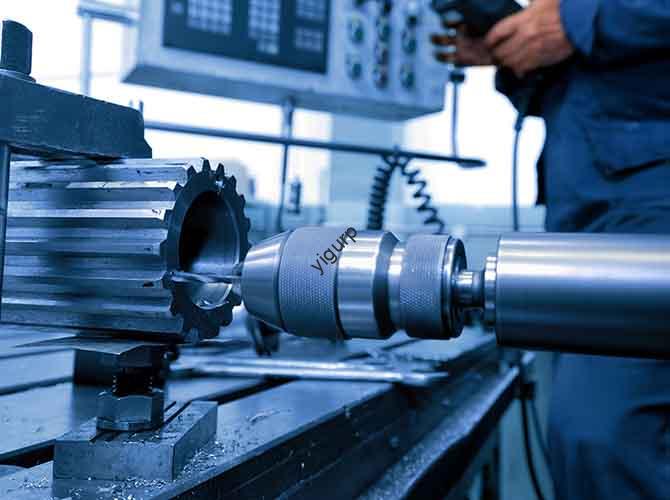
If you’re looking for a CNC manufacturer, the core question on your mind is likely: “Which one can deliver precise, on-time parts that match my specs—whether for a small prototype or large production run?” The answer lies in evaluating key factors like precision capabilities, service flexibility, material expertise, and industry experience. Not all CNC manufacturers are the same; the best ones tailor solutions to your unique needs, cut through production delays, and ensure consistent quality. Let’s break down everything you need to know to make the right choice.
Key Capabilities to Look for in CNC Manufacturers
When vetting CNC manufacturers, their core capabilities will make or break your project. Here’s what to prioritize, with real-world context to guide you:
Precision and Tolerance Control
Precision is non-negotiable in CNC machining—even a tiny deviation can ruin a part’s functionality. Top manufacturers offer tolerances down to ±0.005mm, which is critical for industries like aerospace or medical devices. Por ejemplo, a manufacturer working on aircraft engine components must hit these tight tolerances to ensure safety; a 0.01mm error could lead to catastrophic failure.
Look for proof of consistency, too. Many leading manufacturers boast a 99.8% precision match rate for custom parts, meaning nearly every component aligns perfectly with your design files. Avoid manufacturers that only quote “high precision” without specific numbers—tangible tolerances and match rates build trust.
Production Speed and Flexibility
Speed matters, but not at the cost of quality. The best CNC manufacturers balance efficiency with accuracy, often delivering 30% faster production times than industry averages. Por ejemplo, a automotive parts supplier might need 500 custom transmission components in 2 semanas; a manufacturer with optimized workflows (like one-stop processing) can meet this deadline without cutting corners.
Flexibility is equally important, especially for small-batch or prototype projects. Look for manufacturers with no minimum order quantity (Cantidad mínima de pedido). A startup developing a new medical device, Por ejemplo, might only need 10 prototype parts to test—an MOQ requirement of 100 would force them to overspend and delay testing.
Experiencia en materiales: What CNC Manufacturers Should Offer
Your project’s success depends on the manufacturer’s ability to work with your chosen material. The best CNC manufacturers handle a wide range of metals, plástica, y compuestos, with deep knowledge of how each material behaves during machining. Below is a breakdown of common materials and what to ask for:
| Tipo de material | Common Options | Key Uses | Manufacturer Expertise to Verify |
| Rieles | Acero inoxidable, Aluminio, Titanio, Latón | Dispositivos médicos, piezas aeroespaciales, componentes automotrices | Experience with corrosion-resistant metals (p.ej., stainless steel for food processing equipment) |
| Plástica | Acrílico (PMMA), OJEADA, policarbonato | Optical displays, medical tools, bienes de consumo | Ability to machine delicate plastics (p.ej., acrílico) sin agrietarse, and high-heat plastics (p.ej., OJEADA) for industrial use |
| compuestos | Fibra de carbono | Robótica, aeroespacial | Expertise in minimizing fiber fraying during machining—critical for strength in robotic arms |
If you have a specialized material (p.ej., a rare alloy for defense parts), ask the manufacturer if they can source and test it. The best ones will collaborate with you to find solutions, rather than turning you away.
Industry-Specific Solutions from CNC Manufacturers
Different industries have unique requirements—what works for automotive won’t cut it for medical devices. Top CNC manufacturers tailor their services to specific sectors, understanding the regulations and performance needs that matter. Here are examples of industry-specific expertise:
Aeroespacial
Aerospace parts need to withstand extreme temperatures and stress, so manufacturers must follow strict standards (p.ej., AS9100). Look for experience in machining lightweight yet strong metals like titanium for spacecraft components. Por ejemplo, a CNC manufacturer working with a rocket company might produce fuel line parts with ±0.003mm tolerance to prevent leaks.
Medical Equipment
Medical parts (p.ej., herramientas quirúrgicas, componentes del implante) require biocompatible materials and sterile machining processes. Manufacturers should adhere to ISO 13485 estándares. A good example: a manufacturer producing dental implants would use medical-grade stainless steel and conduct post-machining sterilization to meet FDA requirements.
Automotor
Automotive CNC parts (p.ej., engine valves, transmission gears) need to be durable and cost-effective for mass production. Manufacturers should offer high-volume machining with consistent quality—look for ones that can handle 10,000+ parts per order while maintaining ±0.005mm tolerance.
Robótica
Robotic components (p.ej., arm joints, sensores) need precision to ensure smooth movement. Manufacturers should specialize in machining small, complex parts with tight tolerances, often using composites like carbon fiber for weight reduction. Por ejemplo, a manufacturer making robotic grippers might use POM (Delrín) for its low friction and high wear resistance.
How to Evaluate CNC Manufacturers: A Step-by-Step Guide
Choosing a CNC manufacturer isn’t just about comparing prices—it’s about finding a partner. Follow these steps to narrow down your options:
- Request a Fast Quote: Top manufacturers offer quotes within 2 hours—this shows they’re responsive. A delayed quote (p.ej., 3+ días) might signal slow workflows.
- Check Certifications: Look for ISO 9001:2015 (quality management) and industry-specific certs (p.ej., AS9100 para el sector aeroespacial). Certifications prove they follow global standards.
- Ask for Case Studies: A manufacturer with experience in your industry should share examples (p.ej., “We made 5,000 medical-grade parts for X company”). Case studies show real-world success.
- Test Their Customer Service: Reach out with a technical question (p.ej., “Can you machine PEEK for a high-temperature application?”). The best manufacturers will explain their process clearly, not just say “yes.”
- Verify Delivery Options: If you’re based overseas, ensure they offer worldwide delivery with tracking. A manufacturer that partners with reliable logistics firms (p.ej., DHL, FedEx) will minimize shipping delays.
Yigu Technology’s View on CNC Manufacturers
CNC manufacturers play a pivotal role in turning design ideas into tangible, piezas de alta calidad. En Yigu Tecnología, we believe the best manufacturers don’t just “machine parts”—they act as extensions of their clients’ teams. In today’s fast-paced industries, speed and precision are table stakes; what sets a manufacturer apart is flexibility (no MOQs, custom material sourcing) and industry expertise. We’ve seen clients save weeks of production time by choosing manufacturers that understand their sector’s unique needs—like a medical startup that got prototype parts in 3 days instead of 2 semanas. Ultimately, the right CNC manufacturer should reduce your stress, not add to it, by delivering on time, on spec, and with clear communication.
FAQ About CNC Manufacturers
1. ¿Cuál es la cantidad mínima de pedido? (Cantidad mínima de pedido) for most CNC manufacturers?
Many top CNC manufacturers offer no MOQ, making them ideal for prototypes, small-batch projects, or large production runs. Avoid manufacturers with high MOQs (p.ej., 100+ regiones) if you only need a few components.
2. How long does it take for CNC manufacturers to deliver parts?
Delivery times vary by project size and complexity, but leading manufacturers offer 30% faster production than industry averages. Pequeños prototipos (p.ej., 10 regiones) might take 3–5 days, while large orders (p.ej., 10,000 regiones) could take 2–4 weeks. Worldwide shipping adds 3–7 days.
3. What materials can CNC manufacturers work with?
Most CNC manufacturers handle rieles (acero inoxidable, aluminio, titanio), plástica (acrílico, OJEADA, policarbonato), y compuestos (carbon fiber). If you need a specialized material (p.ej., a rare alloy), ask if they can source and test it—top manufacturers will collaborate with you.
4. How do I ensure a CNC manufacturer meets my precision needs?
Ask for specific tolerance numbers (p.ej., ±0,005 mm) and their precision match rate (p.ej., 99.8%). Also, request a sample part before placing a large order—this lets you verify quality firsthand. Look for manufacturers with experience in your industry (p.ej., médico, aeroespacial) since they understand sector-specific precision requirements.