
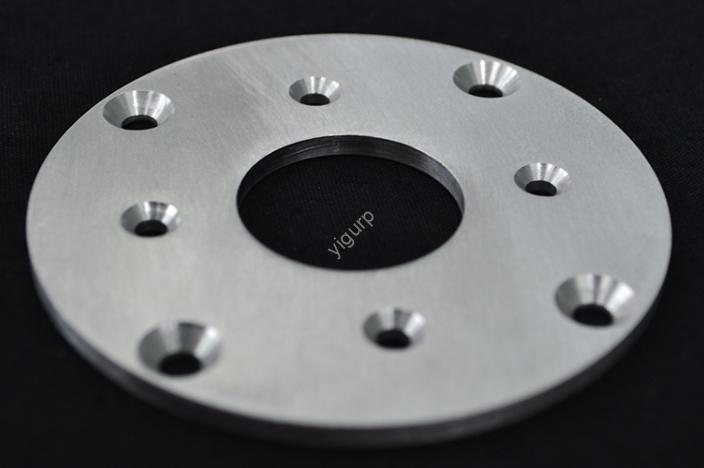
Cuando se trata de prototipos de metal CNC (también conocido como prototipo de metal CNC) mecanizado, lograr una alta calidad superficial y precisión es crucial. One key post-processing step that directly affects the final product’s performance and appearance is desbarbado. Rebabas: esas pequeñas, Proyecciones metálicas no deseadas formadas durante el corte., perforación, o fresado: puede causar problemas de ensamblaje, herramientas de daño, and even pose safety risks. En esta guía, we’ll break down the most effective deburring methods for CNC metal prototypes, help you choose the right one for your project, and share tips to minimize burrs from the start.
1. Common Deburring Methods for CNC Metal Prototypes
Not all deburring methods work for every prototype. The choice depends on factors like part complexity, material, tamaño del lote, y requisitos de precisión. Below is a detailed breakdown of the most widely used techniques, junto con sus profesionales, contras, y casos de uso ideales.
| Deburring Method | Core Working Principle | Ideal Use Case | Eficiencia (1-10) | Precisión (1-10) | Cost Level |
| Desbarbado manual | Using hand tools (files, papel de lija, scrapers) to grind away burrs | Complex-shaped prototypes, lotes pequeños (1-10 regiones) | 3 | 7 | Bajo |
| Punch Press Deburring | Using a custom mold with a punch press to shear off burrs | Simple flat-surface prototypes, lotes medianos (10-50 regiones) | 7 | 6 | Medio (mold cost included) |
| Grinding Deburring (Vibration, Arenado, Tumbling) | Using abrasive materials (p.ej., cuentas de ceramica, sand) to rub against parts and remove burrs | Grandes lotes (50+ regiones), parts with multiple small burrs | 8 | 5 | Medio |
| Desbarbado Mecánico | Using automated tools (brushes, grinding wheels, deburring robots) to remove burrs | Producción de alto volumen (100+ regiones), standard-shaped prototypes | 9 | 8 | Medio-alto |
| Chemical Deburring | Immersing parts in a chemical solution to dissolve burrs via chemical reaction | Prototypes made of specific metals (p.ej., aluminio, cobre), parts with hard-to-reach burrs | 6 | 7 | Medio (chemical cost) |
| Electrochemical Deburring | Using an electric current to electrolyze and dissolve burrs (works with conductive metals) | Precision prototypes (p.ej., médico, piezas aeroespaciales) | 5 | 10 | Alto |
| Heat Treatment Deburring | Heating the prototype to soften or break off burrs (p.ej., low-temperature annealing) | Prototypes with heat-resistant materials (p.ej., steel alloys) | 4 | 4 | Low-Medium |
| Laser Deburring | Using a high-precision laser beam to vaporize burrs without touching the part | Ultra-high-precision prototypes (tolerancia < 0.001milímetros) | 6 | 10 | Alto |
| Ultrasonic Deburring | Using high-frequency sound waves (20-40kHz) to agitate a liquid and abrasive mixture, which removes burrs | Pequeño, delicate prototypes (p.ej., microcomponentes) | 7 | 9 | Medio |
2. Key Factors to Choose the Right Deburring Method
Selecting the best deburring technique isn’t random. You need to consider 4 critical factors to balance quality, costo, y eficiencia:
- Prototype Material: Different metals react differently to deburring. Por ejemplo, aluminio is soft and works well with chemical or ultrasonic deburring, mientras acero inoxidable (harder material) may require laser or mechanical deburring.
- Part Complexity: Intricate prototypes with internal holes or narrow slots (p.ej., componentes aeroespaciales) are hard to reach with manual tools—opt for ultrasonic o electrochemical deburring en cambio.
- Production Batch: If you’re making 1-5 prototipos, manual deburring is cost-effective. Para 50+ regiones, grinding deburring (vibration/tumbling) o automated mechanical deburring will save time.
- Precision Requirements: Medical prototypes or high-end electronics often need tolerances under 0.005mm—láser o electrochemical deburring is the only way to avoid damaging the part while removing burrs.
3. How to Minimize Burrs During CNC Machining (Reduce Post-Processing Work)
The best way to handle burrs is to prevent them from forming in the first place. By optimizing your CNC machining process, you can cut down deburring time by 30-50%. Aquí están 3 practical tips:
- Choose Burr-Minimizing Cutting Tools: Use sharp, high-quality tools (p.ej., carbide end mills for steel) and avoid worn-out blades—dull tools tend to push metal instead of cutting it, creating larger burrs.
- Optimizar los parámetros de mecanizado: Adjust the velocidad de corte, tasa de avance, y profundidad de corte. Por ejemplo, increasing the feed rate slightly (within safe limits) can reduce burr formation on aluminum prototypes.
- Design for Deburring: When drafting the prototype’s 3D model, avoid sharp internal corners (use a minimum radius of 0.1mm) and leave extra space around hard-to-reach areas. This makes post-processing easier, even for manual deburring.
4. Yigu Technology’s Perspective on CNC Metal Prototype Deburring
En Yigu Tecnología, we believe deburring is not just a “fix” but a critical part of delivering high-quality CNC metal prototypes. Our team combines method selection con optimización de procesos: for small-batch, prototipos complejos, we use manual deburring with precision files to ensure no detail is missed; para alto volumen, piezas estándar, we rely on automated mechanical deburring to boost efficiency. We also prioritize pre-machining planning—by adjusting cutting parameters and tool choices, we’ve helped clients reduce deburring costs by up to 40%. The goal is always to balance speed, costo, and precision to meet each client’s unique needs.
FAQ About CNC Metal Prototype Deburring
Q1: Can I skip deburring for my CNC metal prototype?
No. Even small burrs can cause problems: they may scratch mating parts during assembly, interfere with measurements (affecting precision), or pose safety risks (p.ej., sharp edges can cut hands). Deburring ensures the prototype functions as intended and meets quality standards.
Q2: Which deburring method is the cheapest for small-batch prototypes?
Manual deburring is the most cost-effective for small batches (1-10 regiones). It requires no expensive equipment—only basic hand tools like files and sandpaper. Sin embargo, it’s labor-intensive, so it’s not ideal for large batches.
Q3: Is laser deburring suitable for all metal materials?
No. Laser deburring works best with metals that absorb laser energy well, such as steel, titanio, y aluminio. It’s less effective for highly reflective metals (p.ej., copper or gold), as the laser may bounce off the surface instead of vaporizing burrs. For reflective metals, electrochemical deburring is a better choice.