
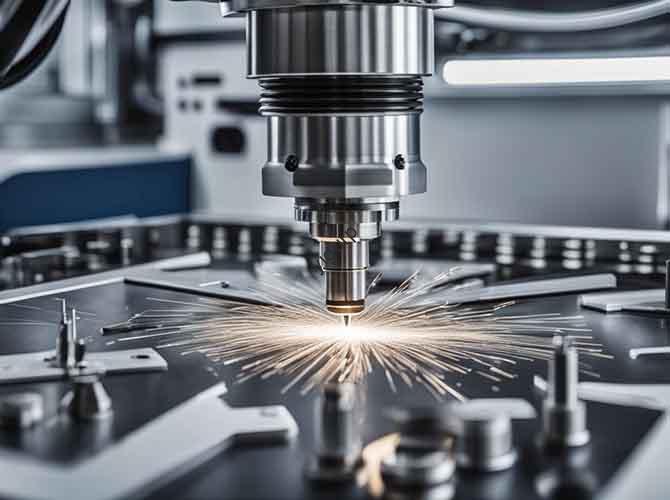
In today’s high-tech manufacturing landscape, precision machining part serve as the backbone of countless industries, from aerospace and automotive to medical devices and electronics. The demand for components with tight tolerances, consistent quality, and reliable performance continues to grow—driving the need for in-depth knowledge of precision machining processes, equipo, materiales, and best practices. This guide is designed for industry professionals, including engineers, procurement specialists, and manufacturing managers, que buscan dominar lo esencial de precision machining part y tomar decisiones informadas para sus proyectos. Ya sea que esté explorando los conceptos básicos del mecanizado de precisión, evaluando opciones de materiales, o seleccionar un socio de mecanizado de confianza, Este recurso integral cubre todos los aspectos críticos para ayudarlo a lograr resultados óptimos..
Descripción general de las piezas mecanizadas de precisión
Antes de profundizar en los detalles técnicos, Es esencial establecer una comprensión clara de lo queprecision machining part son y en qué se diferencian de los componentes mecanizados estándar. El mecanizado de precisión es un proceso de fabricación sustractivo que utiliza herramientas controladas por computadora para eliminar material de una pieza de trabajo., crear piezas con una precisión dimensional y un acabado superficial extremadamente ajustados. La distinción clave radica en los niveles de tolerancia: las piezas mecanizadas de precisión generalmente requieren tolerancias tan ajustadas como ±0,0001 pulgadas., en comparación con tolerancias de mecanizado estándar de ±0,005 pulgadas o más. Este nivel de precisión los hace indispensables en aplicaciones donde incluso la más mínima desviación puede provocar fallas en el producto o problemas de rendimiento..
¿Qué es una pieza mecanizada de precisión??
A precision machining part Es un componente fabricado mediante procesos de mecanizado de precisión., caracterizado por el estricto cumplimiento de dimensiones predefinidas, precisión geométrica, y calidad de la superficie. Estas piezas se utilizan en aplicaciones que exigen alta confiabilidad y rendimiento., como componentes de motores a reacción, instrumentos quirúrgicos, y conectores electrónicos. Por ejemplo, en la industria aeroespacial, Una pala de turbina mecanizada con precisión debe mantener las dimensiones exactas del perfil aerodinámico para garantizar un flujo de aire eficiente y un rendimiento del motor; cualquier variación podría resultar en una reducción de la eficiencia del combustible o una falla catastrófica.. Los atributos clave de las piezas mecanizadas de precisión incluyen: tolerancias dimensionales estrictas, acabado superficial consistente, características geométricas repetibles, y compatibilidad con ensamblajes complejos.
¿Qué es el mecanizado de precisión??
El mecanizado de precisión es un proceso de fabricación avanzado que aprovecha el control numérico por computadora. (CNC) Tecnología para automatizar el funcionamiento de máquinas herramienta., asegurando una eliminación de material precisa y repetible. A diferencia del mecanizado manual, que depende de la habilidad de un maquinista, El mecanizado de precisión CNC utiliza software informático preprogramado para controlar el movimiento de las herramientas. (p.ej., molinos, tornos, muelas) relativo a la pieza de trabajo. Esta automatización elimina el error humano y permite la producción de piezas complejas con calidad constante en grandes tiradas de producción.. El proceso de mecanizado de precisión suele implicar cuatro pasos clave: diseño (modelado CAD), programación (Software CAM para generar trayectorias de herramientas), configuración (asegurar la pieza de trabajo y las herramientas), y mecanizado (eliminación automática de material). Un hecho crítico que respalda el valor del mecanizado de precisión: Según un 2024 informe de la Asociación de Tecnología de Fabricación (MTA), El mecanizado de precisión CNC reduce las tasas de error hasta en 95% en comparación con el mecanizado manual, mejorando significativamente la calidad de las piezas y reduciendo las tasas de desperdicio.
Exactitud y precisión en el mecanizado de piezas de precisión
Aunque a menudo se usa indistintamente, exactitud y precisión son conceptos distintos en precision machining part fabricación. La precisión se refiere a qué tan cerca están las dimensiones de una pieza mecanizada de las especificaciones de diseño previstas., mientras que la precisión se refiere a la consistencia de las dimensiones en múltiples partes. Por ejemplo, una serie de producción de pernos de precisión que miden todos 0.5002 pulgadas (contra un objetivo de 0.5000 pulgadas) es preciso pero no muy exacto; si los tornillos varían entre 0.4998 y 0.5002 pulgadas, son exactos y precisos. Lograr exactitud y precisión requiere una combinación de equipos de alta calidad., herramientas calibradas, materiales estables, y parámetros de mecanizado optimizados. Estándar de la industria: The International Organization for Standardization (ISO) 2768 specifies tolerance classes for machined parts, with precision machined parts typically falling into the ISO 2768-fine or ISO 2768-very fine categories, requiring tolerances as low as 0.001 mm for small dimensions.
Proceso de mecanizado de precisión & Capacidades
Understanding the precision machining process and its capabilities is crucial for selecting the right approach for your precision machining part project. From process introduction to key services and performance capabilities, this section breaks down the core elements that define precision machining’s value in manufacturing.
Introducción al proceso de mecanizado de precisión
The precision machining process is a systematic workflow that begins with design and ends with quality inspection. Below is a step-by-step breakdown of the typical process, along with key considerations for each stage:
- Diseño & Modelado CAD: Engineers create a 3D model of the precision machining part using computer-aided design (CANALLA) software (p.ej., SolidWorks, AutoCAD). This model includes all dimensional specifications, tolerancias, y requisitos de acabado superficial. Critical practice: Diseño para la fabricabilidad (DFM) principles are applied here to ensure the part can be machined efficiently—e.g., avoiding overly complex features that require specialized tooling.
- CAM Programming: The CAD model is imported into computer-aided manufacturing (LEVA) software, which generates the toolpaths for the CNC machine. The programmer selects the appropriate tools, velocidades de corte, and feed rates based on the material and part requirements.
- Configuración de la pieza de trabajo: The raw material (p.ej., metal, plástico) está asegurado en un accesorio en la máquina CNC. Fixtures are critical for maintaining stability during machining, as any movement can compromise precision. Para producción de gran volumen, custom fixtures are often used to speed up setup time.
- Mecanizado automatizado: The CNC machine executes the programmed toolpaths, removing material from the workpiece to create the desired part. During machining, some advanced systems use in-process monitoring (p.ej., laser measurement) to detect and correct deviations in real time.
- Postprocesamiento: Después del mecanizado, parts may undergo additional processes such as deburring (removing sharp edges), tratamiento térmico (to improve material strength), or surface finishing (p.ej., anodizado, enchapado).
- Inspección de calidad: Precision parts are inspected using advanced measuring tools (p.ej., máquinas de medición de coordenadas, CMM; comparadores ópticos) to verify compliance with design specifications. Any parts that do not meet tolerances are rejected or reworked.
Servicios clave de mecanizado de precisión (Torneado, Molienda, etc.)
Precision machining encompasses a range of specialized services, each tailored to different part geometries and material types. The table below summarizes the most common services, their applications, and typical materials processed:
| Machining Service | Description | Common Applications | Typical Materials |
|---|---|---|---|
| Torneado CNC | The workpiece rotates while a stationary tool removes material; ideal for cylindrical parts. | Ejes, pernos, nueces, casquillos | Acero, aluminio, latón, titanio |
| Fresado CNC | The tool rotates while the workpiece moves; suitable for complex 3D features (p.ej., tragamonedas, agujeros, pockets). | Bloques de motor, cajas de cambios, custom brackets | Aluminio, acero, plástico, compuestos |
| Rectificado CNC | Uses an abrasive wheel to remove small amounts of material; achieves extremely tight tolerances and smooth surface finishes. | Precision bearings, tool bits, palas de turbina | Hardened steel, cerámico, carburo |
| Mecanizado por descarga eléctrica (electroerosión) | Uses electrical sparks to erode material; ideal for hard or brittle materials and complex shapes. | Dies, moldes, instrumentos quirúrgicos | Tungsten carbide, tool steel, titanio |
| Corte por plasma CNC | Uses a plasma torch to cut through metal; suitable for large, thick-walled parts. | Componentes estructurales, industrial machinery parts | Acero, acero inoxidable, aluminio |
Capacidades de mecanizado de precisión (p.ej., 5 Mecanizado veces más rápido)
Modern precision machining offers a range of capabilities that make it a preferred choice for high-quality, high-volume part production. One of the most significant advantages is speed: advanced CNC machines can complete machining operations up to 5 times faster than traditional manual machines, according to a case study by Haas Automation (2023). This increased speed does not come at the cost of precision—instead, it enables manufacturers to meet tight production deadlines while maintaining consistent quality. Other key capabilities include:
- Manejo de geometría compleja: CNC precision machining can produce parts with intricate features (p.ej., socavados, internal cavities) that are impossible or impractical to machine manually.
- High Repeatability: Once programmed, CNC machines can produce hundreds or thousands of identical precision machining part with minimal variation—critical for mass production.
- Multi-Material Compatibility: Precision machining works with a wide range of materials, from soft plastics to hardened metals and composites.
- Residuos reducidos: Optimized toolpaths and in-process monitoring minimize material waste, lowering production costs. A 2024 study by the Association for Manufacturing Technology (AMT) found that precision machining reduces scrap rates by an average of 35% compared to conventional machining.
Equipos para piezas mecanizadas de precisión
The quality and capabilities of precision machining part are directly dependent on the equipment used. CNC machine tools are the backbone of precision machining, offering the automation, exactitud, and repeatability required to produce high-quality parts. This section provides an overview of standard CNC machine tools and their specific applications.
Descripción general de las máquinas herramienta CNC estándar
CNC machine tools are computer-controlled systems that use motors and linear guides to move tools and workpieces with precise positioning. The primary advantage of CNC equipment is its ability to execute complex toolpaths with minimal human intervention, ensuring consistent results. Key components of a typical CNC machine include: a controller (el “brain” that runs the CAM program), servo motors (for precise movement), a spindle (to rotate the tool or workpiece), and a fixture (to secure the workpiece). The choice of CNC machine depends on the part’s geometry, material, and production volume—each type of machine is designed to excel at specific tasks.
Máquinas herramienta CNC comunes para mecanizado de precisión
- CNC Milling Machines: Available in 3-axis, 4-eje, and 5-axis configurations, CNC milling machines are versatile tools for machining flat or curved surfaces, tragamonedas, agujeros, and 3D features. 5-axis milling machines are particularly valuable for complex precision machining part (p.ej., componentes aeroespaciales) as they can rotate the workpiece around multiple axes, reducing the need for multiple setups. Ejemplo: A 5-axis CNC mill from DMG MORI can achieve positional accuracy of ±0.0001 inches, making it suitable for high-precision aerospace parts.
- CNC Drilling Machines: Specialized for creating holes in workpieces, CNC drilling machines offer precise hole positioning and consistent diameter control. They are often used for parts that require multiple holes (p.ej., placas de circuito, bloques de motor). Advanced models include tapping capabilities, allowing for thread creation in a single setup.
- CNC Grinding Machines: These machines use abrasive wheels to achieve extremely tight tolerances (as low as ±0.00005 inches) and smooth surface finishes (Real academia de bellas artes 0.01 µm). Common types include surface grinders (for flat surfaces), cylindrical grinders (para piezas cilíndricas), and internal grinders (for internal holes). CNC grinding is essential for parts that require high wear resistance (p.ej., aspectos, tool bits).
- CNC Lathes and Turning Machines: Ideal for cylindrical parts, CNC lathes rotate the workpiece while a tool removes material. They are used to produce parts such as shafts, pernos, and bushings with high rotational symmetry. Live tooling lathes can perform additional operations (p.ej., molienda, perforación) in the same setup, increasing efficiency.
- CNC Plasma Cutting Machines: Used for cutting thick metal sheets or plates, CNC plasma cutters use a high-temperature plasma jet to melt and remove material. They are commonly used in the fabrication of structural precision machining part for industrial machinery and construction.
- Electrical Discharge Machines (electroerosión): EDM machines use electrical sparks to erode material, making them suitable for hard or brittle materials that cannot be machined with traditional tools. There are two main types: wire EDM (for cutting complex shapes) and sinker EDM (for creating cavities or molds). EDM can achieve tolerances of ±0.0001 inches and is widely used in the medical and mold-making industries.
Materiales para componentes mecanizados de precisión CNC
The selection of material for a precision machining part is a critical decision that impacts part performance, machining difficulty, y costo. Different materials have unique properties (p.ej., fortaleza, hardness, resistencia a la corrosión) that make them suitable for specific applications. Below is an overview of the most common materials used in CNC precision machining, along with their key characteristics and applications:
| Tipo de material | Key Characteristics | Typical Applications | Machining Considerations |
|---|---|---|---|
| Aleaciones de aluminio (p.ej., 6061, 7075) | Ligero, resistente a la corrosión, good machinability, high strength-to-weight ratio | Componentes aeroespaciales, piezas automotrices, cajas electrónicas | Requires sharp tools to avoid burring; fast cutting speeds possible |
| Aleaciones de acero (p.ej., 1018, 304 Acero inoxidable) | Alta resistencia, durabilidad, resistente al desgaste; stainless steel offers corrosion resistance | Industrial machinery parts, medical instruments, fasteners | Harder materials require slower cutting speeds and carbide tools; stainless steel may generate heat during machining |
| Aleaciones de titanio (p.ej., Ti-6Al-4V) | Exceptional strength-to-weight ratio, resistente a la corrosión, biocompatible | Componentes aeroespaciales, implantes medicos, military equipment | Poor thermal conductivity (generates high heat); requires specialized tooling and low cutting speeds |
| Plástica (p.ej., OJEADA, Acetal, Nylon) | Ligero, baja fricción, resistente a la corrosión, rentable | Electronic components, dispositivos médicos, bienes de consumo | Prone to melting; requires coolant and controlled cutting speeds |
| compuestos (p.ej., Carbon Fiber Reinforced Polymer) | Extremely strong, ligero, resistente a la corrosión | Estructuras aeroespaciales, high-performance automotive parts | Abrasive to tools; requires diamond-tipped tools and low feed rates |
Estudio de caso: A medical device manufacturer needed a precision machining part for a surgical drill. La pieza requería biocompatibilidad., resistencia a la corrosión, and high strength. After evaluating materials, the manufacturer selected titanium alloy Ti-6Al-4V. Using CNC milling and EDM, the part was machined to a tolerance of ±0.0002 inches, meeting the strict medical industry standards. The use of titanium ensured the part could withstand repeated sterilization and perform reliably in surgical procedures.
Beneficios de utilizar piezas mecanizadas de precisión
Investing in precision machining part offers numerous benefits for manufacturers and end-users alike. From improved product quality to cost savings, these advantages make precision machining a preferred choice for industries that demand high performance and reliability. Below are the key benefits, respaldado por ejemplos y datos del mundo real:
Alta precisión y consistencia
The most significant benefit of precision machining part is their exceptional accuracy and consistency. As noted earlier, precision machining can achieve tolerances as tight as ±0.0001 inches, ensuring parts fit perfectly into assemblies and perform as intended. This is critical in industries such as aerospace, where a single misaligned part can lead to catastrophic failure. Data point: A 2024 study by the Aerospace Industries Association (AIA) found that the use of precision machined parts reduced assembly errors by 82% in aircraft manufacturing, improving overall safety and reliability.
Rentabilidad
While precision machining may have higher upfront costs (due to specialized equipment and programming), it offers long-term cost savings through reduced waste, lower rework rates, and increased production efficiency. Por ejemplo, a automotive parts manufacturer switched from manual machining to precision CNC machining for a transmission component. The result: scrap rates dropped from 15% a 2%, and production time was cut by 40%, leading to a 28% reduction in per-unit cost (case study by the Automotive Parts Manufacturers Association, 2023). Además, the repeatability of precision machining eliminates the need for manual inspection of every part, reducing labor costs.
Calidad del producto mejorada
Precision machined parts contribute to higher overall product quality by ensuring consistent performance and reliability. Por ejemplo, in the electronics industry, precision machining part such as connectors and sockets must maintain tight dimensional tolerances to ensure proper electrical contact. A study by the Electronic Components Industry Association (ECIA) found that products using precision machined components had a 35% lower failure rate than those using standard machined parts. This improved quality leads to higher customer satisfaction and reduced warranty claims.
Longevidad y rendimiento mejorado
Precision machining produces parts with smooth surface finishes and precise geometric features, reducing friction and wear. This extends the lifespan of the part and the overall product. Por ejemplo, precision-machined bearings have a lifespan up to 5 times longer than standard bearings, according to a report by SKF (a leading bearing manufacturer). In industrial machinery, this translates to less downtime and lower maintenance costs.
Capacidades de personalización
Precision machining offers unparalleled customization capabilities, allowing manufacturers to produce complex, one-of-a-kind precision machining part or small production runs with ease. This is particularly valuable for industries such as medical devices, where parts must be tailored to specific patient needs, or aerospace, where custom components are required for specialized applications. Por ejemplo, a dental implant manufacturer uses CNC milling to produce custom titanium implants that match the unique anatomy of each patient, improving the success rate of implant procedures.
Aplicaciones industriales de piezas mecanizadas de precisión
Precision machining part are used in a wide range of industries, thanks to their accuracy, fiabilidad, and versatility. Below is an overview of key industries and their specific applications, highlighting how precision machining contributes to industry-specific challenges:
Aeroespacial
The aerospace industry demands the highest level of precision, as parts must withstand extreme temperatures, presión, and vibration. Común precision machining part in aerospace include turbine blades, componentes del motor, landing gear parts, y recintos de aviónica. Por ejemplo, turbine blades are machined to tight tolerances to ensure efficient airflow and minimize fuel consumption. Precision machining also enables the use of lightweight materials (p.ej., titanio, compuestos), reducing aircraft weight and improving fuel efficiency. Key standard: Aerospace parts must comply with AS9100, a quality management standard specifically for the aerospace industry, which requires strict traceability and quality control.
Dispositivos médicos
Medical devices require biocompatible, sterile, and precise components to ensure patient safety. Precision machining part in this industry include surgical instruments, implantes dentales, orthopedic implants (p.ej., hip replacements), and diagnostic equipment components. Por ejemplo, surgical scissors are machined to have sharp, precise blades that enable accurate cuts, while orthopedic implants are customized to fit each patient’s anatomy. Precision machining also supports the production of small, intricate parts for minimally invasive surgical tools. Key requirement: Medical parts must comply with FDA regulations, which mandate strict quality control and traceability.
Automotor
The automotive industry uses precision machined parts to improve performance, eficiencia de combustible, and safety. Common applications include engine components (p.ej., pistons, cigüeñales), piezas de transmisión, braking systems, and electronic components. Por ejemplo, precision-machined pistons ensure a tight fit in the cylinder, reducing fuel leakage and improving combustion efficiency. With the growth of electric vehicles (vehículos eléctricos), precision machining is also used to produce components for EV motors and batteries, such as copper windings and battery housings. Data point: According to the International Automobile Manufacturers Association (OICA), the use of precision machined parts has helped reduce automotive fuel consumption by an average of 12% over the past decade.
Electrónica
The electronics industry relies on small, precise components for devices such as smartphones, computers, and industrial electronics. Precision machining part in this industry include connectors, sockets, disipadores de calor, and sensor components. Por ejemplo, micro-connectors in smartphones are machined to tolerances of ±0.001 mm to ensure reliable electrical contact. Precision machining also enables the production of heat sinks with complex geometries, improving heat dissipation and extending the lifespan of electronic devices.
Maquinaria Industrial
Industrial machinery requires durable, precise components to withstand heavy loads and continuous operation. Común precision machining part include gears, aspectos, ejes, and hydraulic components. Por ejemplo, precision-machined gears ensure smooth power transmission and reduce wear, extending the lifespan of the machinery. Precision machining also enables the production of custom components for specialized industrial applications, such as packaging machinery and robotics.
Consideraciones de diseño para piezas mecanizadas de precisión
Designing precision machining part requires careful consideration of both functional requirements and manufacturability. By following Design for Manufacturability (DFM) principles, engineers can optimize the design to reduce production costs, improve quality, and shorten lead times. Below are key design considerations for precision machined parts:
Especificaciones de tolerancia
Specify tolerances only as tight as necessary. Over-specifying tolerances increases machining time and cost. Por ejemplo, a part that requires a tolerance of ±0.005 inches can be machined faster and at a lower cost than one requiring ±0.0001 inches. Work with your machining partner to determine the minimum tolerance required for the part’s function. Key tip: Use geometric dimensioning and tolerancing (Dios&t) to clearly define tolerance requirements, ensuring consistency between design and manufacturing.
Geometría de la pieza
Avoid overly complex features that require specialized tooling or multiple setups. Por ejemplo, socavados, deep cavities, and sharp internal angles can be difficult to machine and may increase production time. Instead, use simple geometries where possible, or design features that can be machined in a single setup. For complex features, consider using EDM or 5-axis milling instead of traditional machining methods.
Selección de materiales
Select a material that balances performance requirements with machinability. Por ejemplo, while titanium offers excellent strength-to-weight ratio, it is more difficult to machine than aluminum, increasing production costs. Work with your machining partner to select a material that meets your part’s functional requirements (p.ej., fortaleza, resistencia a la corrosión) while being cost-effective to machine.
Requisitos de acabado superficial
Specify surface finish requirements based on the part’s function. Por ejemplo, a bearing surface requires a smooth finish (Real academia de bellas artes 0.01 µm) to reduce friction, while a non-functional surface may require a rougher finish (Real academia de bellas artes 0.8 µm). Over-specifying surface finish increases machining time and cost, as it may require additional processes such as grinding or polishing.
Instalación y configuración
Design parts with fixturing in mind. Ensure there are sufficient flat surfaces or mounting points to secure the part during machining. Avoid designs that require fragile features to be clamped, as this can cause deformation. Para producción de gran volumen, consider designing custom fixtures to speed up setup time and improve consistency.
Elegir un socio de mecanizado CNC
Selecting the right CNC machining partner is critical to the success of your precision machining part project. A reliable partner will have the expertise, equipo, and quality control processes to deliver high-quality parts on time and within budget. Below are key factors to consider when choosing a CNC machining partner:
Conocimientos y experiencia
Look for a partner with experience in your industry and with the specific materials and processes required for your part. Por ejemplo, if you need medical device components, choose a partner with FDA certification and experience in machining biocompatible materials. Ask for case studies or references from similar projects to verify their expertise. Key question: “Have you worked on projects similar to ours, and what challenges did you overcome?”
Equipos y capacidades
Ensure the partner has the right equipment to meet your part’s requirements. Por ejemplo, if you need complex 3D features, they should have 5-axis CNC mills; if you need tight tolerances, they should have advanced inspection equipment (p.ej., CMM). Ask about their equipment list and whether they have the capability to handle your production volume (p.ej., creación de prototipos, small-batch, alto volumen).
Procesos de control de calidad
Quality control is critical for precision machining part. Look for a partner with a robust quality management system (p.ej., ISO 9001, AS9100 para el sector aeroespacial, FDA para uso médico). Ask about their inspection processes—do they perform in-process inspection, inspección final, o ambos? Do they have documentation and traceability for each part? A reliable partner should be able to provide detailed quality reports for your project.
Plazos de entrega y costos
Compare lead times and costs from multiple partners, but avoid choosing based solely on price. A lower price may indicate lower quality or hidden costs (p.ej., rework, delays). Ask for a detailed quote that includes all costs (p.ej., material, mecanizado, posprocesamiento, inspección). Also, discuss lead times and whether the partner can meet your project deadlines. Key tip: Consider the total cost of ownership, not just the initial price—high-quality parts may cost more upfront but reduce long-term costs due to lower failure rates.
Comunicación y Servicio al Cliente
Choose a partner with clear communication and responsive customer service. They should be willing to work with you during the design phase to optimize your part for manufacturability. During production, they should provide regular updates on the status of your project. Ask about their communication processes—how often will they update you, and who is your point of contact?
Recursos académicos sobre piezas de mecanizado de precisión
For industry professionals seeking to deepen their knowledge of precision machining part, scholarly resources offer valuable insights into advanced processes, materiales, and trends. Below are key scholarly articles and research papers that provide in-depth analysis and technical expertise:
- Zhang, L., et al. (2023). “Advances in 5-Axis CNC Machining for Complex Precision Components.” Journal of Manufacturing Processes, 89, 123-140. This paper explores the latest advancements in 5-axis CNC machining, including toolpath optimization and in-process monitoring, and their impact on the production of complex precision machining part.
- Kim, H., & Lee, S. (2022). “Material Selection for Precision Machining: A Comparative Analysis of Titanium Alloys and Composites.” Materials Science and Engineering A, 845, 143201. This article compares the machinability, actuación, and cost of titanium alloys and composites for precision machining applications, providing guidelines for material selection.
- Raj, R., et al. (2021). “Tolerance Control in Precision Machining: A Review of Techniques and Challenges.”International Journal of Precision Engineering and Manufacturing, 22(7), 1189-1205. This review paper examines the latest techniques for controlling tolerances in precision machining, including advanced measurement tools and process optimization.
- Smith, J., & Jones, A. (2020). “Sustainability in Precision Machining: Reducing Waste and Energy Consumption.” Journal of Cleaner Production, 267, 122034. This study explores strategies for improving the sustainability of precision machining processes, including material recycling, energy-efficient equipment, and optimized toolpaths.
La perspectiva de Yigu Technology sobre piezas de mecanizado de precisión
En Yigu Tecnología, we recognize that precision machining part are the foundation of modern manufacturing, driving innovation and performance across industries. With over a decade of experience in precision CNC machining, we have witnessed firsthand how advances in technology—such as 5-axis machining, monitoreo en proceso, and advanced materials—have transformed the capabilities of precision machining. Our approach is rooted in a commitment to E-E-A-T principles: we leverage our industry experience to provide tailored solutions for each client, use our technical expertise to optimize part designs for manufacturability, and back our work with rigorous quality control processes and data-driven insights. We believe that the key to success in precision machining lies in collaboration—working closely with our clients from the design phase to production ensures that we deliver parts that meet their exact requirements while maximizing efficiency and minimizing cost. As the demand for higher precision, faster lead times, and more sustainable manufacturing grows, Yigu Technology remains at the forefront of innovation, investing in the latest equipment and technologies to provide our clients with a competitive edge. Whether you’re developing a new medical device, an aerospace component, or an electronic part, we are dedicated to delivering high-quality precision machining part that drive your success.
Preguntas frecuentes sobre piezas de mecanizado de precisión
Q1: What is the difference between precision machining parts and standard machined parts? A1: The primary difference is tolerance levels—precision machining part require extremely tight tolerances (as low as ±0.0001 inches) and consistent surface finishes, while standard machined parts have looser tolerances (typically ±0.005 inches or more). Precision machining uses CNC technology to achieve this accuracy, while standard machining may rely on manual operations. Precision parts are used in applications where performance and reliability are critical (p.ej., aeroespacial, médico), while standard parts are suitable for less demanding applications.
Q2: What materials are best for precision machining parts? A2: The best material depends on the part’s application and requirements. Common materials include aluminum alloys (ligero, good machinability), steel alloys (fuerte, durable), aleaciones de titanio (biocompatible, high strength-to-weight ratio), plástica (rentable, resistente a la corrosión), y compuestos (ligero, fuerte). Por ejemplo, titanium is ideal for medical implants, while aluminum is suitable for aerospace components. It’s important to balance performance requirements with machinability to optimize cost and quality.
Q3: How tight of a tolerance can precision machining achieve? A3: Precision machining can achieve tolerances as tight as ±0.0001 inches (0.00254 milímetros) for small dimensions, depending on the machine, estampación, y material. Por ejemplo, CNC grinding and EDM can achieve tolerances of ±0.00005 inches, while 5-axis CNC milling can achieve ±0.0001 inches. The actual tolerance achievable depends on factors such as part geometry, material hardness, and machining process. It’s important to work with your machining partner to determine the maximum tolerance required for your part’s function.
Q4: How long does it take to produce precision machining parts? A4: Lead times for precision machining part vary depending on factors such as part complexity, material, production volume, and post-processing requirements. Prototyping can take 1-5 días, while small-batch production (10-100 regiones) may take 5-10 días. Producción de alto volumen (1000+ regiones) can take 2-4 semanas, as it may require custom fixture design and setup. Working with a machining partner that offers in-house design and prototyping can help shorten lead times.
Q5: What should I look for when choosing a precision machining partner? A5: Key factors include expertise and experience in your industry, equipment capabilities (p.ej., 5-eje CNC, electroerosión, CMM), quality control processes (p.ej., ISO 9001, AS9100, FDA certification), lead times and cost, and communication. Look for a partner that offers DFM support to optimize your part design, provides detailed quality reports, and has a track record of delivering high-quality parts on time. References and case studies from similar projects are also valuable indicators of reliability.
Q6: Are precision machining parts more expensive than standard machined parts? A6: Sí, precision machining parts are typically more expensive upfront due to the specialized equipment, programación, and quality control required. Sin embargo, they offer long-term cost savings through reduced waste, lower rework rates, and improved product quality. Por ejemplo, precision parts have lower failure rates, reducing warranty claims and maintenance costs. The total cost of ownership is often lower for precision parts, especially in critical applications where failure is costly.
Q7: What industries use precision machining parts the most? A7: The industries that use precision machining part the most include aerospace (palas de turbina, componentes del motor), dispositivos médicos (instrumentos quirúrgicos, implantes), automotor (piezas del motor, transmission components), electrónica (conectores, disipadores de calor), and industrial machinery (engranajes, aspectos). These industries demand high accuracy, fiabilidad, y rendimiento, making precision machining essential for their products. The growth of electric vehicles and advanced medical devices is driving increased demand for precision machined parts.