
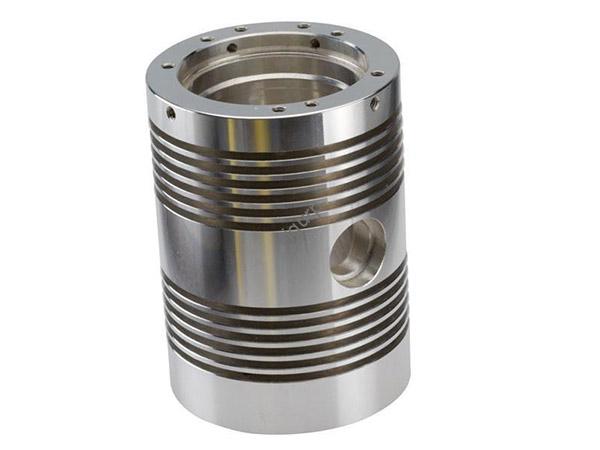
Precipitación endurecida (PH) El acero inoxidable es una clase única de aleación que combina alta resistencia., buena resistencia a la corrosión, y excelente formabilidad, todo gracias a su proceso de tratamiento térmico especializado.. A diferencia de otros aceros inoxidables, it achieves strength through age hardening (no sólo trabajo en frío o enfriamiento), haciéndolo ideal para industrias exigentes como la aeroespacial y la médica.. En esta guía, desglosaremos sus rasgos clave, usos del mundo real, como se hace, y cómo se compara con otros materiales, helping you select it for high-performance projects.
1. Key Material Properties of Precipitation Hardened Stainless Steel
The standout performance of PH stainless steel starts with its tailored chemical composition, which enables its unique propiedades mecánicas and reliable physical properties.
Composición química
PH stainless steel’s formula is engineered to support precipitation hardening, with key elements including:
- Chromium content: 15-17% (forms a protective oxide layer for corrosion resistance)
- Nickel content: 3-7% (stabilizes the austenitic structure and aids in precipitation)
- Molybdenum content: 2-3% (boosts pitting resistance and high-temperature strength)
- Copper content: 1-4% (critical for precipitation—forms hard copper-rich particles during aging)
- Titanium content: 0.1-0.5% (o aluminio, ~0.1-0.3%)—forms intermetallic precipitates to increase hardness
- Carbon content: ≤0.07% (low carbon minimizes intergranular corrosion risk)
- Manganese content: ≤1.0% (improves machinability)
- Silicon content: ≤1.0% (aids in deoxidation during manufacturing)
- Phosphorus content: ≤0.04% (controlled to avoid brittleness)
- Sulfur content: ≤0.03% (reduced to maintain corrosion resistance)
Propiedades físicas
| Propiedad | Valor típico (17-4 PH Grade) |
| Densidad | 7.8 gramos/cm³ |
| Conductividad térmica | 15 con/(m·K) (a 20ºC) |
| Specific Heat Capacity | 0.46 j/(g·K) (a 20ºC) |
| Coeficiente de expansión térmica | 11.2 × 10⁻⁶/°C (20-500°C) |
| Propiedades magnéticas | Slightly magnetic (varía según el grado; 17-4 PH is magnetic after aging) |
Propiedades mecánicas
PH stainless steel’s strength comes from age hardening, which creates tiny precipitates that block dislocation movement. Key properties (para 17-4 PH, the most common grade):
- Alta resistencia a la tracción: 1,000-1,300 MPa (2x higher than 304 acero inoxidable)
- Fuerza de producción: 900-1,200 MPa (3x higher than 316 acero inoxidable)
- Alargamiento: 10-15% (en 50 mm—retains enough ductility for forming)
- Dureza: 30-45 Rockwell C (CDH), 300-450 Vickers, 290-430 Brinell (varies by aging temperature)
- Fuerza de fatiga: 450-550 MPa (at 10⁷ cycles—excellent for parts under repeated stress, like aircraft fasteners)
- Dureza al impacto: 30-60 J (at room temperature—higher than martensitic stainless steels)
Other Critical Properties
- Resistencia a la corrosión: Very good—similar to 304 acero inoxidable; resists fresh water, ácidos suaves, and industrial chemicals.
- Pitting resistance: Good—molybdenum additions (in grades like 17-4 PH) improve resistance to chloride environments.
- Stress corrosion cracking resistance: Moderate—better than martensitic grades but avoid prolonged exposure to high-chloride, high-temperature settings.
- Resistencia al desgaste: Good—harder than austenitic grades, making it suitable for parts like pump shafts.
- maquinabilidad: Moderate—easiest to machine in the “solution annealed” (suave) estado; harder after aging.
- Soldabilidad: Fair—welding can reduce strength in heat-affected zones; post-weld aging is often needed to restore properties.
2. Real-World Applications of Precipitation Hardened Stainless Steel
PH stainless steel’s mix of alta resistencia a la tracción and corrosion resistance makes it a top choice for industries where weight and durability matter. Here are its most common uses:
Industria aeroespacial
- Aircraft components: largueros de ala, landing gear parts, and engine brackets use 17-4 PH—its strength-to-weight ratio reduces aircraft weight while withstanding flight stresses.
- sujetadores: Bolts and screws secure critical components; their high fatigue strength prevents failure from vibration.
- Tren de aterrizaje: Handles heavy loads and harsh weather (p.ej., lluvia, snow) without rusting or deforming.
Ejemplo de caso: A major aerospace manufacturer switched from titanium to 17-4 PH for aircraft landing gear brackets. The switch cut material costs by 40% while maintaining the required strength—saving $2 million per aircraft.
Industria automotriz
- Componentes del motor: Turbocharger housings and valve springs use PH stainless steel—they withstand high temperatures (hasta 600°C) and engine vibration.
- Transmission components: Gears and shafts rely on its wear resistance to last through hundreds of thousands of miles.
- Suspension components: High-performance cars use PH stainless steel for control arms—its strength improves handling.
Procesamiento químico & Industria Marina
- Chemical processing: Storage tanks and piping for mild chemicals use PH grades—their corrosion resistance prevents leaks and contamination.
- Marine industry: Seawater pumps and ship hull fasteners (grades like 17-4 PH) resist saltwater corrosion better than martensitic stainless steels.
Industria médica
- Instrumentos quirúrgicos: Scalpels and forceps (calificación 17-4 PH) are strong, fácil de esterilizar, and won’t rust from autoclaving.
- Implantes: Hip and knee implants use biocompatible PH grades—they’re strong enough to support body weight and resist corrosion from bodily fluids.
Equipos industriales
- Pumps and valves: Pump shafts and valve stems handle high pressure and corrosive fluids without degrading.
- Palas de turbina: Small gas turbine blades use PH stainless steel—its high-temperature strength retains performance under heat.
3. Manufacturing Techniques for Precipitation Hardened Stainless Steel
Producing PH stainless steel requires precise steps to ensure the alloy can undergo age hardening and achieve its full strength. Here’s the process:
1. Metallurgical Processes
- Horno de arco eléctrico (EAF): The primary method—scrap steel, cromo, níquel, cobre, and molybdenum are melted at 1,600-1,700°C. Elements like titanium or aluminum are added to enable precipitation.
- Horno de oxígeno básico (BOF): Used for large-scale production—oxygen is blown to remove impurities, then alloying elements are added to adjust composition.
2. Rolling Processes
- laminación en caliente: The molten alloy is cast into slabs, heated to 1,100-1,200°C, and rolled into thick shapes (verja, platos) for industrial parts.
- laminación en frío: Cold-rolled to make thin sheets (for small components like fasteners) with a smooth surface; improves dimensional accuracy.
3. Tratamiento térmico (Critical for Strength)
- Solution annealing: Heated to 1,020-1,060°C and held for 30-60 minutos, then water-quenched. This dissolves all precipitates, creating a soft, uniform structure (easy to machine or form).
- Age hardening: Reheated to 480-620°C for 1-4 horas (temperature varies by grade). Tiny copper-rich or titanium-aluminum precipitates form, hardening the alloy without losing ductility.
- Temple: Sometimes used after solution annealing to lock in the soft structure before aging (not needed for all grades).
- Templado: Rarely used—age hardening replaces tempering as the primary strength-enhancing step.
4. Forming and Surface Treatment
- Forming methods:
- Press forming: Uses hydraulic presses to shape parts like landing gear brackets (done in the solution-annealed state for ease).
- Doblar: Creates angles for piping or structural parts—maintains strength after forming if not overworked.
- Mecanizado: Taladros, molinos, or turns parts to precise sizes—best done in the soft, solution-annealed state; carbide tools are recommended for post-aging machining.
- Tratamiento superficial:
- Pickling: Dipped in acid to remove scale from hot rolling.
- Pasivación: Treated with nitric acid to enhance the chromium oxide layer, boosting corrosion resistance.
- electropulido: Crea una suave, sanitizable surface (for medical instruments or food-processing parts) and removes surface impurities.
5. Control de calidad
- Ultrasonic testing: Checks for internal defects (p.ej., grietas) in thick parts like turbine blades.
- Radiographic testing: Inspects welds for flaws (p.ej., porosidad) to ensure structural integrity.
- Pruebas de tracción: Verifies alta resistencia a la tracción (1,000-1,300 MPa for 17-4 PH) and yield strength.
- Microstructure analysis: Examines the alloy under a microscope to confirm precipitate formation after aging—critical for ensuring strength.
4. Estudio de caso: PH Stainless Steel in Medical Hip Implants
A medical device company wanted to improve its hip implants, which previously used titanium alloy. The titanium implants were strong but expensive, and some patients reported minor corrosion over time. They switched to 17-4 PH precipitation hardened stainless steel, with the following results:
- Actuación: El 17-4 PH implants supported body weight (up to 2x the patient’s weight) without bending—matching titanium’s strength.
- Resistencia a la corrosión: Después 5 years of patient use, no corrosion was detected (thanks to its chromium and molybdenum content).
- Ahorro de costos: Material costs dropped by 35%, and manufacturing time was reduced (easier to machine than titanium)—lowering implant prices for patients.
5. Precipitation Hardened Stainless Steel vs. Other Materials
How does PH stainless steel compare to other popular alloys? Let’s break it down with a detailed table:
| Material | Costo (vs. 17-4 PH) | Resistencia a la tracción | Yield Strength | Resistencia a la corrosión | Soldabilidad |
| 17-4 PH (PH Stainless Steel) | Base (100%) | 1,000-1,300 MPa | 900-1,200 MPa | Very Good | Justo |
| 304 Acero inoxidable | 60% | 515 MPa | 205 MPa | Very Good | Excelente |
| 410 Acero inoxidable (Martensitic) | 70% | 700-900 MPa | 500-700 MPa | Bien | Bien |
| Dúplex 2205 | 120% | 620-800 MPa | 450 MPa | Excelente | Bien |
| Aleación de titanio (Ti-6Al-4V) | 300% | 860 MPa | 795 MPa | Excelente | Moderado |
Application Suitability
- Aerospace Fasteners: PH stainless steel is better than 304 (más fuerte) and cheaper than titanium.
- Implantes Médicos: Superior to martensitic grades (more corrosion-resistant) and more cost-effective than titanium.
- Automotive Turbochargers: Outperforms 304 (handles higher temperatures) and is easier to machine than duplex 2205.
- Chemical Tanks: Better than martensitic grades (more corrosion-resistant) but less ideal than duplex 2205 for extreme chemicals.
Yigu Technology’s View on Precipitation Hardened Stainless Steel
En Yigu Tecnología, we see PH stainless steel as a high-value solution for strength-critical applications. Its unique age-hardening process delivers exceptional strength without sacrificing corrosion resistance, making it ideal for our aerospace, automotor, and medical clients. We often recommend 17-4 PH for parts like landing gear brackets and surgical instruments—where it balances performance and cost better than titanium or martensitic steels. Its machinability in the soft state also simplifies manufacturing, aligning with our goal of delivering efficient, sustainable materials.
Preguntas frecuentes
1. What makes precipitation hardened stainless steel different from other stainless steels?
PH stainless steel uses age hardening (heating to form tiny precipitates) to gain strength, unlike austenitic grades (which rely on cold working) or martensitic grades (which use quenching and tempering). This lets it keep corrosion resistance while achieving higher strength.
2. Can precipitation hardened stainless steel be welded?
Sí, but with caution. Welding can soften the heat-affected zone (by dissolving precipitates). Post-weld aging is often needed to restore strength. It’s also best to use low-heat welding methods (p.ej., TIG) to minimize damage to the alloy’s structure.
3. Is precipitation hardened stainless steel suitable for food processing?
Sí, grades like 17-4 PH are safe for food processing. They resist corrosion from food acids (p.ej., tomato sauce), meet FDA standards, and their smooth surface (after electropolishing) is easy to sanitize—preventing bacteria buildup.