
Our Polyvinyl Chloride PVC Injection Molding Services
Elevate your production with Yigu Technology’s premium Polyvinyl Chloride (PVC) Injection Molding services—where cutting-edge technology, precision craftsmanship, and custom solutions converge. Whether you need high-volume construction components, flame-retardant electrical parts, or durable consumer products, we deliver cost-effective, chemically resistant PVC parts tailored to your industry’s unique demands.
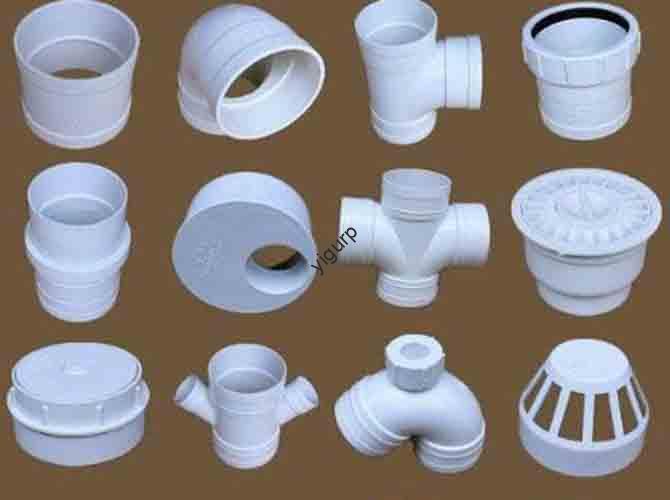
What Is Polyvinyl Chloride (PVC) Injection Molding?
Polyvinyl Chloride (PVC) is one of the world’s most widely used thermoplastics, composed of vinyl chloride monomers. It stands out for its adaptability—easily modified with additives to suit diverse applications. Injection molding is a manufacturing process that melts plastic pellets, injects the molten material into a custom mold, and cools it to form a finished part. Together, PVC injection molding creates consistent, high-performance components for sectors ranging from construction to medical devices.
Key Definitions & Process Description
| Term | Definition |
| Polyvinyl Chloride (PVC) | A versatile thermoplastic that can be rigid or flexible, depending on additives; known for durability and flame resistance. |
| Injection Molding | A cyclic process: PVC pellets → melted → injected into mold cavity → cooled → ejected (repeats for mass production). |
| Mold Cavity | The hollow space in a mold that shapes the final PVC part; can have 1–64 cavities for efficient high-volume production. |
Material Characteristics of PVC
PVC’s unique traits make it ideal for injection molding:
- Dual Form: Can be rigid (used for pipes, window frames) or flexible (used for hoses, medical tubing) with plasticizers.
- Flame Retardancy: Naturally resistant to fire (requires no extra additives for basic flame protection).
- Chemical Resistance: Unaffected by most acids, alkalis, and solvents (critical for industrial and medical use).
Cost-Efficiency: Raw PVC is affordable, making it a budget-friendly choice for large-scale projects.
Our Capabilities: Delivering Excellence in PVC Injection Molding
At Yigu Technology, our PVC injection molding expertise is built on advanced equipment, skilled engineering, and a focus on solving client challenges—from small-batch custom parts to large-scale production runs.
Core Capabilities Overview
| Capability | Details | Benefits for You |
| Advanced Technology | 25+ CNC injection molding machines (clamping force: 100–800 tons) with smart monitoring systems. | Real-time quality control; 20% faster production than standard machines. |
| Custom Tooling | In-house mold design and fabrication (steel molds for rigid PVC, aluminum for flexible PVC prototypes). | Molds tailored to your part’s geometry; lead times as short as 2–3 weeks. |
| Precision Molding | Molding tolerance of ±0.005mm; in-line laser measurement for dimensional accuracy. | Ideal for intricate parts (e.g., electrical connectors, medical device components). |
| High-Volume Production | Automated assembly lines and 24/7 operation; capacity for 600,000+ PVC parts/month. | Lower unit costs for bulk orders; on-time delivery even for large projects. |
The PVC Injection Molding Process: Step-by-Step Precision
PVC’s unique melting properties (it decomposes at high temperatures) require a carefully optimized process. Our workflow ensures consistent quality while protecting PVC’s integrity.
Step 1: Material Preparation
- Pellet Selection: Choose between rigid PVC (no plasticizers) or flexible PVC (with 10–40% plasticizers like phthalates).
- Additive Blending: Mix PVC pellets with additives (stabilizers to prevent decomposition, UV inhibitors for outdoor use, colorants).
- Drying: PVC absorbs minimal moisture, but we dry pellets at 60–70°C for 1–2 hours to avoid surface defects (e.g., pinholes).
Step 2: Mold Design
- Material Compatibility: Molds for rigid PVC use cooling channels to prevent warping; molds for flexible PVC have smoother surfaces to avoid sticking.
- Prototype Testing: We 3D-print mold prototypes first to validate design—reducing costly revisions later.
Step 3: Injection Parameters (Critical for PVC)
PVC is sensitive to heat, so precise parameters are non-negotiable. Below are our standard settings for rigid PVC:
| Parameter | Ideal Range | Purpose |
| Barrel Temperature | 160–190°C | Melts PVC without decomposition (higher temps cause toxic fumes). |
| Injection Pressure | 80–150 MPa | Fills mold cavities completely (critical for thin-walled parts like electrical casings). |
| Cooling Time | 20–50 seconds | Prevents warping; longer for thick rigid PVC parts. |
Step 4: Post-Molding Operations
After ejection, parts undergo:
- Trimming: Removing excess plastic (flash) with automated tools.
- Deburring: Smoothing sharp edges (critical for consumer products and medical devices).
Inspection: Final checks for dimensional accuracy and surface quality.
Materials: Choosing the Right PVC for Your Project
PVC’s versatility comes from its ability to be modified into different grades. Selecting the right type ensures your parts meet performance, safety, and cost goals.
Types of PVC for Injection Molding
| PVC Type | Key Properties | Common Applications |
| Rigid PVC (RPVC) | Stiff, high tensile strength (50 MPa), excellent impact resistance. | Construction (window frames, pipes), automotive trim, electrical casings. |
| Flexible PVC (FPVC) | Bendable, elastic (elongation up to 300%), resistant to cracking. | Medical devices (tubing, syringes), consumer goods (toys, hoses), automotive gaskets. |
| Foamed PVC | Lightweight (density: 0.6–0.8 g/cm³), sound-absorbent. | Interior design (wall panels), packaging (protective inserts). |
| Recycled PVC (rPVC) | 75–85% of the strength of virgin PVC; eco-friendly and cost-effective. | Construction (fencing, decking), non-critical consumer goods (storage bins). |
Key Material Properties of PVC
| Property | Rigid PVC | Flexible PVC |
| Density (g/cm³) | 1.3–1.45 | 1.1–1.3 |
| Melting Range (°C) | 160–190 | 140–170 |
| Flame Retardancy | Excellent (UL94 V0 rating) | Good (UL94 V2 rating with additives) |
| Chemical Resistance | High (resists acids, oils, solvents) | High (resists water, mild chemicals) |
Surface Treatment: Enhancing PVC Parts’ Function and Aesthetics
PVC’s natural surface is smooth but can be modified to improve grip, durability, or branding. We offer five proven surface finishing techniques for PVC parts:
| Treatment | Process | Benefits |
| Texturing | Adding patterns (matte, ribbed, or sandblasted) to the mold surface. | Enhances grip (e.g., tool handles), hides scratches (e.g., consumer goods). |
| Coating | Applying a thin layer (e.g., polyurethane, acrylic) to the part surface. | Boosts UV resistance (for outdoor parts like window frames) or chemical resistance. |
| Painting | Spray-painting with PVC-compatible primers (to ensure adhesion). | Custom colors for branding (e.g., automotive trim, toys). |
| Printing | Digital or screen printing for logos, labels, or instructions. | Clear, durable markings (e.g., medical devices, electrical components). |
| Polishing | Buffing the surface to a high gloss. | Creates a premium look (e.g., high-end consumer goods, decorative parts). |
Advantages: Why Choose PVC Injection Molding?
PVC injection molding offers a unique mix of performance, cost savings, and versatility—making it a top choice for manufacturers across industries.
Key Advantages of PVC Injection Molding
- Durability: PVC parts last 10–50 years (rigid PVC) or 5–15 years (flexible PVC) in harsh environments (e.g., outdoor construction, industrial settings).
- Chemical Resistance: PVC resists acids, alkalis, and solvents—ideal for medical devices (sterilizable) and industrial parts (exposed to chemicals).
- Customizability: Easily modified with additives to be rigid/flexible, flame-retardant, or UV-resistant; molds can create complex shapes (e.g., electrical connectors).
- Cost-Effectiveness: Raw PVC costs 1.00–1.80/kg (20% cheaper than PP), and injection molding drives unit costs down to 0.10–0.50 per part for high volumes.
- Flame Retardancy: Naturally resistant to fire (meets UL94 V0 standards without extra additives)—critical for electrical components and building materials.
PVC vs. Other Common Injection Molding Plastics
| Material | Cost (per kg) | Flame Resistance | Chemical Resistance | Best For |
| PVC | 1.00–1.80 | Excellent (UL94 V0) | High | Flame-retardant, chemical-resistant parts. |
| PP | 1.20–2.00 | Poor (needs additives) | High | Lightweight, cost-sensitive parts. |
| ABS | 2.50–3.50 | Fair (needs additives) | Moderate | Rigid, high-gloss parts. |
Applications Industry: Where PVC Injection Molding Excels
PVC’s adaptability (rigid/flexible, flame-retardant, chemical-resistant) makes it indispensable in five key industries.
Industry-Specific Applications & Our Solutions
| Industry | Common PVC Parts | Our Tailored Solutions |
| Construction | Window frames, pipe fittings, door handles, fencing. | Rigid PVC molding; UV-resistant additives; compliance with building codes (e.g., ASTM D1784). |
| Automotive | Dashboard trim, wire insulation, door gaskets, floor mats. | Flexible PVC for gaskets; rigid PVC for trim; flame-retardant grades (meets ISO 3795). |
| Consumer Products | Toy parts, tool handles, shower curtains, storage bins. | BPA-free flexible PVC (toys); textured rigid PVC (tool handles); custom colors. |
| Medical Devices | IV tubing, syringe barrels, oxygen masks, surgical instrument handles. | Sterilizable flexible PVC; ISO 10993-certified processes (biocompatibility). |
| Electrical Components | Cable insulation, switch casings, circuit board holders, junction boxes. | Flame-retardant rigid PVC; high dielectric strength (meets IEC 60695). |
Case Studies: Our PVC Injection Molding Success Stories
We’ve helped clients across industries overcome unique challenges with our PVC injection molding services. Below are three standout projects:
Case Study 1: Rigid PVC Window Frames for a Construction Company
- Challenge: A builder needed 50,000 window frames that were durable, UV-resistant, and cost-effective (to replace aluminum frames).
- Solution: We used rigid PVC with UV stabilizers and custom tooling to match the builder’s design. Molds included drainage channels to prevent water damage.
- Results: Frames lasted 30+ years (vs. 15 years for aluminum); 25% lower cost than aluminum; 100% compliance with local building codes.
Case Study 2: Flexible PVC IV Tubing for a Medical Device Maker
- Challenge: A medical company needed 200,000 IV tubings that were flexible, sterilizable (via autoclaving), and BPA-free.
- Solution: We used phthalate-free flexible PVC with a smooth inner surface (to prevent clogs) and molded tubings with precise diameter (±0.1mm).
- Results: Tubings met ISO 10993 biocompatibility standards; 0 defects in 3 years of production; 15% faster delivery than the client’s previous supplier.
Case Study 3: Flame-Retardant PVC Switch Casings for an Electrical Brand
- Challenge: An electrical brand needed switch casings that passed UL94 V0 flame tests and fit standard electrical boxes.
- Solution: We used rigid PVC with no extra flame retardants (PVC’s natural trait) and custom molds to match the box dimensions.
Results: Casings passed all safety tests; 30% lower material cost than ABS alternatives; on-time delivery rate of 99.8%.
Why Choose Us for Your PVC Injection Molding Needs?
With so many PVC injection molding suppliers, Yigu Technology stands out for our expertise, quality, and commitment to client success:
- Expertise: 10+ years specializing in PVC injection molding—our engineers know how to avoid PVC’s common pitfalls (e.g., decomposition, warping).
- Quality Assurance: ISO 9001 and ISO 13485 certifications; 99.6% defect-free rate; 100% inspection of critical parts (e.g., medical devices).
- Customer Service: Dedicated account managers; 24/7 support; free design consultations (to optimize your part for PVC molding).
- Innovation: We invest 6% of revenue in R&D—recent breakthroughs include bio-based PVC (made from plant-based vinyl chloride) and plasticizer-free flexible PVC.
Sustainability: 35% of our materials are recycled PVC (rPVC); our factories use energy-efficient machines (reducing carbon emissions by 22%); we offer recycling programs for old PVC parts.