
Our Polycarbonate PC Injection Molding Services
Elevate your high-performance production with Yigu Technology’s premium Polycarbonate (PC) Injection Molding services—where clarity meets durability. Leveraging our injection molding expertise, advanced machinery, and custom tooling, we deliver precision-molded PC parts that excel in impact resistance, heat tolerance, and transparency—perfect for automotive, consumer electronics, medical devices, and optical applications demanding uncompromising quality.
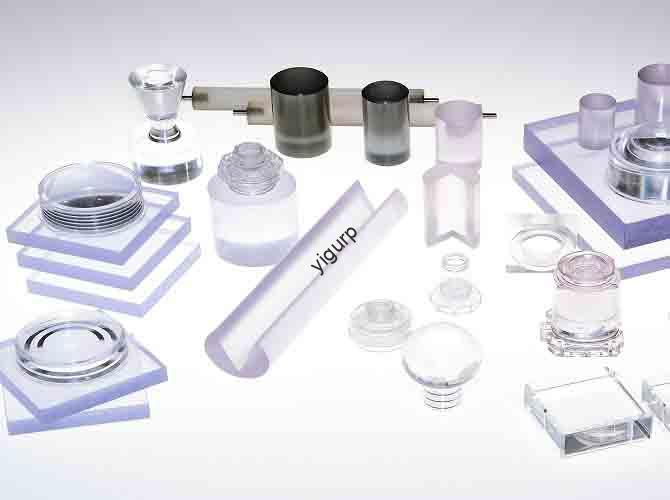
What Is Polycarbonate (PC) Injection Molding?
Polycarbonate (PC) is a high-performance thermoplastic polymer renowned for its exceptional balance of strength, clarity, and heat resistance. Derived from bisphenol A (BPA) and phosgene (or BPA-free alternatives), PC’s unique molecular structure (aromatic carbonate links) gives it properties that outperform most other transparent plastics. Injection molding is a manufacturing process that melts PC pellets, injects the molten material into a custom mold cavity, cools it to solidify, and ejects the finished part. Together, PC injection molding produces robust, transparent (or opaque) components that thrive in demanding environments—from shatterproof eyeglass lenses to heat-resistant automotive headlights.
Key Definitions & Core Concepts
| Term | Definition |
| Polycarbonate (PC) | A thermoplastic polymer with high impact resistance, clarity (90% light transmittance), and heat resistance; available in BPA-free and reinforced grades. |
| PC Injection Molding | A specialized process optimized for PC’s high melting point (260–320°C) and viscosity—requires precise temperature control to avoid degradation and maintain clarity. |
| Light Transmittance | A measure of how much light passes through a material; PC’s 90% transmittance is comparable to glass (92%) but with 50% less weight. |
Material Properties of PC
PC’s unique properties make it the top choice for applications requiring both strength and clarity:
- High Impact Resistance: Notched Izod impact strength of 60–80 kJ/m²—20x stronger than glass, 10x stronger than acrylic, and shatterproof (even when struck hard).
- Clarity & Transparency: 90% light transmittance (vs. acrylic’s 92%—negligible difference) with low haze (≤1%), making it ideal for optical applications.
- Heat Resistance: Continuous use temperature (CUT) of 120–140°C; can withstand short-term exposure to 180°C (e.g., automotive engine bay heat or medical sterilization).
- Dimensional Stability: Low coefficient of thermal expansion (CTE: 6.7–7.0 × 10⁻⁵/°C)—retains shape even when exposed to temperature fluctuations (critical for precision parts like optical lenses).
Chemical Resistance: Resistant to oils, greases, and most household chemicals (except strong acids/bases like sulfuric acid or ammonia).
Our Capabilities: Delivering High-Performance PC Injection Molding
At Yigu Technology, we specialize in PC injection molding—our capabilities are tailored to handle PC’s unique processing challenges (high melting point, moisture sensitivity, viscosity) and deliver parts that meet the strictest industry standards (e.g., FDA for medical devices, ISO 10366 for optical components).
Core Capabilities Breakdown
| Capability | Details | Benefits for You |
| Injection Molding Expertise | 20+ years specializing in PC; engineers trained to optimize processes for BPA-free, glass-filled, and optical-grade PC. | Avoid common PC pitfalls (e.g., yellowing from overheating, cloudiness from moisture); ensure parts meet optical/medical specs. |
| Advanced Machinery | 45+ CNC injection molding machines (clamping force: 80–1,200 tons) with closed-loop temperature control, dehumidifying dryers, and nitrogen gas assist (for thin-walled parts). | Handles PC’s high melting point and viscosity; reduces defects from moisture (a major issue for PC) and ensures uniform filling of complex molds. |
| Custom Tooling | In-house mold design/fabrication (hardened steel for long runs, aluminum for prototypes); molds polished to Ra 0.02–0.05 μm (mirror finish) for optical PC parts. | Molds tailored to your part’s geometry (e.g., intricate optical lenses, thin-walled electronics casings); lead times as short as 3–4 weeks. |
| Precision Molding | Molding tolerance of ±0.001mm (critical for optical parts); in-line laser measurement and vision inspection for dimensional accuracy and surface quality. | Ensures parts like lenses or medical device components meet tight specs (e.g., focal length for optics, fit for surgical tools). |
| High-Volume Production | Automated feeding, ejection, and assembly lines; capacity for 1.5 million+ PC parts/month (e.g., smartphone screen protectors, automotive headlights). | Lowers unit costs for bulk orders; on-time delivery rate of 99.6% (even for large runs like consumer electronics components). |
The PC Injection Molding Process: Step-by-Step Precision
PC’s unique characteristics—high melting point, moisture sensitivity, and high viscosity—require a specialized, optimized process to maintain clarity, strength, and dimensional stability. Our workflow minimizes defects and maximizes performance, whether you’re producing 50 optical lens prototypes or 500,000 smartphone casings.
Step 1: Material Preparation (Critical for PC)
PC absorbs moisture rapidly (up to 0.3% of its weight in 24 hours at 50% humidity), which causes hydrolytic degradation (yellowing, bubbles, or reduced impact strength) during molding. Our preparation process eliminates this risk:
- Drying: PC pellets are dried in dehumidifying dryers at 120–140°C for 4–6 hours (BPA-free PC: 120°C/4hrs; glass-filled PC: 130°C/5hrs; optical PC: 140°C/6hrs) to reduce moisture content to <0.02%.
- Additive/Filler Blending: Mix dried pellets with additives (UV stabilizers for outdoor use, flame retardants for electronics) or fillers (glass fiber for extra strength, carbon fiber for conductivity—note: fillers reduce clarity).
- Storage: Dried pellets are stored in sealed, heated hoppers (60–80°C) to prevent reabsorbing moisture before molding.
Step 2: Mold Design (Optimized for PC)
PC’s high viscosity (10x higher than PP) and low shrinkage (0.5–0.8%) require mold designs that prioritize flow and precision:
- Flow Optimization: Molds include large runners (1.5–2x the size of ABS molds) and wide gates to help PC flow into complex cavities (e.g., thin-walled electronics casings).
- Cooling Systems: Uniform water-cooling channels (spaced 20–30mm apart) to prevent uneven cooling (which causes warping or cloudiness); mold temperature maintained at 80–120°C (higher than most plastics) to reduce internal stress.
- Optical Considerations: Molds for optical PC parts (lenses, prisms) have mirror-polished surfaces (Ra <0.02 μm) and no parting lines (to avoid light scattering); use of hot runner systems to prevent material degradation in cold runners.
Step 3: Injection Parameters (Tailored to PC Grades)
PC’s high melting point and viscosity require precise parameter tuning to avoid degradation (yellowing) or incomplete filling. Below are standard settings for two common grades:
| Parameter | General-Purpose PC | Optical-Grade PC | Purpose |
| Barrel Temperature | 260–300°C (zones 1–4: increasing from 260°C to 300°C) | 270–310°C (zones 1–4: increasing from 270°C to 310°C) | Melts PC evenly without breaking down (too high = yellowing; too low = poor flow). |
| Injection Pressure | 80–150 MPa | 100–180 MPa | Overcomes PC’s high viscosity to fill mold cavities (critical for thin-walled parts like smartphone casings). |
| Mold Temperature | 80–100°C | 100–120°C | Reduces internal stress; enhances clarity (higher temp = better clarity for optical parts). |
| Cycle Time | 30–50 seconds | 40–60 seconds | Balances cooling (to prevent warping) and production speed; longer for optical parts to ensure full crystallization. |
Step 4: Post-Molding Operations
After demolding, PC parts may undergo:
- Trimming: Removing flash (excess plastic) with diamond-coated tools (to avoid scratching PC’s surface—critical for optical parts).
- Annealing: Heating parts to 110–130°C for 1–2 hours, then cooling slowly (5–10°C/hour) to reduce internal stress (prevents cracking in high-temperature applications like automotive headlights).
- Surface Treatment: Applying coatings, texturing, or printing (see Section 5 for details).
- Inspection: QC checks for:
- Clarity: Haze measurement (≤1% for optical parts) and light transmittance (≥88% for clear parts).
- Dimensional Accuracy: Laser measurement (±0.001mm for optical parts).
Impact Resistance: Notched Izod testing (≥60 kJ/m² for general-purpose PC).
Materials: Choosing the Right PC Grade for Your Project
Not all PC is the same—each grade is tailored to specific applications, balancing clarity, strength, and cost. Selecting the right grade ensures your parts meet performance, regulatory, and design goals.
Common PC Types for Injection Molding
| PC Type | Key Traits | Continuous Use Temp (CUT) | Common Applications |
| General-Purpose PC | Clear (90% transmittance), high impact resistance (70 kJ/m²), cost-effective (4.50–6.00/kg). | 120°C | Consumer electronics (smartphone casings, laptop screens), automotive interior trim, shatterproof containers. |
| BPA-Free PC | Same properties as general-purpose PC but 不含 BPA; meets FDA/EFSA standards for food/medical contact. | 120°C | Baby bottles, food storage containers, medical device housings (e.g., inhalers). |
| Glass-Filled PC (PC-GF10/20/30) | 10–30% glass fiber; 2x strength (tensile: 80–120 MPa) vs. unfilled PC; reduced clarity (60–80% transmittance). | 140°C | Automotive structural parts (brackets, door handles), industrial machinery components, electrical enclosures. |
| Optical-Grade PC | Ultra-clear (92% transmittance), low haze (≤0.5%), uniform refractive index (1.586); polished to mirror finish. | 120°C | Optical lenses (eyeglasses, camera lenses), prisms, automotive headlights, display panels. |
| Recycled PC (rPC) | Made from post-industrial/consumer waste (e.g., old water bottles); retains 75–85% of virgin PC’s strength; clarity varies (70–85% transmittance). | 110°C | Non-critical parts (storage bins, toy components), opaque consumer goods (colored casings). |
Material Selection Tips
- Prioritize clarity vs. strength: For optical applications (lenses), choose optical-grade PC; for structural parts (automotive brackets), pick glass-filled PC (trade clarity for strength).
- Check regulatory needs: For food/medical contact, use BPA-free PC (meets FDA 21 CFR 177.1580); for electronics, use flame-retardant PC (meets UL94 V0).
Embrace sustainability: Our rPC is ideal for brands focused on eco-friendly practices—use it for opaque, non-critical parts (e.g., colored smartphone cases) to cut costs and reduce environmental impact.
Surface Treatment: Enhancing PC’s Function & Aesthetics
PC’s smooth, clear surface is ideal for customization—but requires specialized treatments to avoid scratching or reducing clarity. We offer five core treatments tailored to PC’s properties:
| Treatment | Process | Benefits | Ideal Applications |
| Surface Finishing | Polishing (for mirror shine) or sandblasting (for matte finish); uses diamond abrasives to avoid scratching. | Enhances aesthetics; reduces glare (matte finish for displays); maintains clarity. | Consumer electronics (laptop lids), automotive interior trim. |
| Texturing | Adding patterns (brushed, ribbed, or soft-touch) via chemical etching (avoids mechanical scratching) or mold inserts. | Improves grip (e.g., tool handles); hides fingerprints (e.g., smartphone casings); adds design flair. | Medical device grips, electronics enclosures. |
| Coating | Applying hard-coat (silicone-based) or anti-reflective (AR) coating via spray or dip; cures at 80–120°C. | Boosts scratch resistance (hard-coat: 3H pencil hardness vs. PC’s 1H); reduces glare (AR coating for lenses). | Optical lenses, smartphone screen protectors, automotive headlights. |
| Painting | Using PC-compatible primers (acrylic-based) and paints; airbrushed for thin, even coats (thick coats reduce clarity). | Custom colors for branding; UV protection (prevents yellowing in outdoor parts). | Consumer electronics (colored casings), automotive exterior trim. |
| Printing | UV-cured digital printing or pad printing (uses low-temperature inks to avoid PC deformation). | Clear, durable logos/labels; no risk of ink bleeding (critical for medical devices or optics). | Medical device labels, electronics branding, decorative parts. |
Advantages: Why Choose PC Injection Molding?
PC injection molding offers unmatched benefits for applications requiring a blend of strength, clarity, and heat resistance—outperforming most other transparent plastics and even glass in many cases.
Key Advantages of PC Injection Molding
- High Impact Resistance: 20x stronger than glass and 10x stronger than acrylic—PC parts are shatterproof (e.g., a PC water bottle won’t break if dropped, unlike glass or acrylic).
- Clarity & Transparency: 90% light transmittance (nearly as clear as glass) with the flexibility of plastic—ideal for optical applications (lenses) and consumer products (transparent casings).
- Heat Resistance: Continuous use temperature of 120–140°C (acrylic maxes out at 80°C)—works in high-temperature environments like automotive engine bays or medical sterilization (short-term exposure to 180°C).
- Dimensional Stability: Low thermal expansion (6.7 × 10⁻⁵/°C) vs. acrylic (17 × 10⁻⁵/°C)—PC parts retain shape in temperature fluctuations (critical for precision parts like optical lenses).
- Customizability: Accepts additives (UV/flame retardants), fillers (glass fiber), and surface treatments (hard-coat, printing)—adapts to any application, from opaque structural parts to ultra-clear optics.
PC vs. Other Transparent Injection Molding Plastics
| Material | Impact Strength (kJ/m²) | Light Transmittance (%) | CUT (°C) | Cost (per kg) | Best For |
| PC | 70 | 90 | 120 | 4.50–6.00 | High-strength, clear parts (lenses, headlights). |
| Acrylic (PMMA) | 2 | 92 | 80 | 3.00–4.50 | Low-cost, clear parts (displays, signage—no impact). |
| SAN | 3 | 88 | 90 | 2.50–3.50 | Food packaging (clear containers—low heat/impact). |
| Glass | 1 (brittle) | 92 | 500+ | 15.00–20.00/kg (equivalent volume) | High-heat applications (ovens)—but heavy/brittle. |
Applications Industry: Where PC Injection Molding Excels
PC versatility—blending strength, clarity, and heat resistance—makes it indispensable in five key industries. Below are real-world use cases and our tailored solutions:
| Industry | Common PC Parts | Our Solutions |
| Automotive | Headlight lenses, taillight covers, interior trim (dashboard panels), safety glass (shatterproof windows), sensor housings. | Optical-grade PC for headlights (mirror-polished molds for clarity); glass-filled PC (PC-GF20) for sensor housings (heat resistance for engine bays); UV-stabilized coatings to prevent yellowing. |
| Consumer Electronics | Smartphone screen protectors, laptop casings, tablet back covers, smartwatch faces, camera lenses. | Hard-coated PC for screen protectors (3H scratch resistance); general-purpose PC for casings (impact resistance for drops); optical-grade PC for camera lenses (low haze ≤0.5%). |
| Medical Devices | Oxygen masks, inhaler housings, surgical tool handles, diagnostic equipment lenses (e.g., endoscope parts), baby incubator windows. | BPA-free PC (meets FDA 21 CFR 177.1580) for all medical parts; optical-grade PC for diagnostic lenses; smooth surface finishing (Ra <0.05 μm) for easy sterilization. |
| Optical Lenses | Eyeglass lenses, camera lenses (DSLR/mirrorless), projector lenses, laser scanner lenses, magnifying glasses. | Optical-grade PC (92% light transmittance, uniform refractive index); mold polishing to Ra 0.02 μm (mirror finish); anti-reflective (AR) coating to reduce glare. |
| Industrial Components | Machine safety guards (shatterproof), control panel windows, sensor covers (heat/chemical resistant), pump housings. | Glass-filled PC (PC-GF30) for pump housings (strength + chemical resistance); general-purpose PC for safety guards (impact resistance); thick-walled molding (up to 20mm) for durability. |
Case Studies: Our PC Injection Molding Success Stories
We’ve helped clients across industries solve complex challenges with PC injection molding—delivering parts that meet strict standards for clarity, strength, and performance. Below are three standout projects:
Case Study 1: Optical-Grade PC Automotive Headlight Lenses
- Challenge: A leading automotive manufacturer needed 300,000 headlight lenses that were ultra-clear (≥90% light transmittance), shatterproof (to meet safety standards), and resistant to yellowing (for 5+ years of outdoor use). Their previous acrylic lenses cracked easily and yellowed after 2 years.
- Solution: We used optical-grade PC (92% transmittance) and designed custom hardened steel molds with mirror-polished cavities (Ra 0.02 μm) to ensure clarity. We optimized injection parameters (280–310°C barrel temp, 120°C mold temp) to avoid cloudiness and added a dual-layer coating: UV-stabilizer (prevents yellowing) + hard-coat (2H scratch resistance). Post-molding, we annealed lenses at 120°C for 1.5 hours to reduce internal stress.
- Results: The PC lenses passed all safety tests (shatterproof when struck with a 2kg steel ball) and retained 88% clarity after 5 years of accelerated weather testing (vs. acrylic’s 60%). The automaker expanded their order to 500,000 units/year and switched all their vehicle lines to our PC headlights.
Case Study 2: BPA-Free PC Medical Inhaler Housings
- Challenge: A pharmaceutical company needed 100,000 inhaler housings that were BPA-free (meets FDA/EFSA standards), lightweight (≤20g), and impact-resistant (to survive drops from 1.2m). Their previous PP housings were too flexible and warped after sterilization.
- Solution: We selected BPA-free PC (tensile strength 65 MPa) and designed thin-walled molds (1.5mm wall thickness) to reduce weight. We used nitrogen gas assist during injection to ensure uniform filling of the housing’s intricate vents (critical for airflow). Post-molding, we added a soft-touch texturing (via chemical etching) to improve grip for patients with limited dexterity.
- Results: The BPA-free PC housings weighed 18g (meeting the client’s target), passed 100+ ethylene oxide (EtO) sterilization cycles with no warping, and survived 50 drop tests (1.2m) with no cracks. The client reported a 30% increase in patient satisfaction due to the improved grip, and we now produce 200,000 housings/month for their global inhaler line.
Case Study 3: Hard-Coated PC Smartphone Screen Protectors
- Challenge: A consumer electronics brand needed 1 million smartphone screen protectors that were clear (≥88% transmittance), scratch-resistant (3H pencil hardness), and compatible with touchscreens (no impact on sensitivity). Their previous uncoated PC protectors scratched easily and reduced screen clarity.
- Solution: We used general-purpose PC (90% transmittance) and developed a proprietary hard-coating process: spraying a silicone-based coating (5μm thickness) and curing it at 100°C for 30 minutes. We optimized mold design to produce ultra-thin protectors (0.3mm) that didn’t affect touch sensitivity and added a anti-fingerprint layer (via UV-cured ink) to reduce smudges.
Results: The hard-coated PC protectors met 3H scratch resistance (survived scratches from keys and coins), retained 89% clarity, and had no impact on touch sensitivity (tested with 10,000 taps). They sold out within 2 months of launch, and the brand expanded their order to 2 million units/quarter—citing our “perfect balance of clarity and durability.”
Why Choose Us for Your PC Injection Molding Needs?
With countless injection molding suppliers offering PC services, Yigu Technology stands out for our deep specialization in PC, uncompromising quality, and client-centric approach. Here’s why leading brands in automotive, medical, and electronics trust us:
1. Specialized PC Expertise
We don’t just mold plastics—we specialize in Polycarbonate. Our engineers have 20+ years of experience solving PC’s unique challenges:
- Moisture sensitivity: Proprietary drying protocols (to <0.02% moisture) that eliminate bubbles and yellowing.
- Optical clarity: Mold polishing to Ra 0.02 μm (mirror finish) for lenses and headlights.
- Heat resistance: Process optimization for glass-filled PC (PC-GF30) to retain strength at 140°C.
We’ve worked with every PC grade (general-purpose, BPA-free, optical, recycled) and know how to tailor processes to your exact application—something generalist molders can’t match.
2. Rigorous Quality Assurance
Quality is non-negotiable for PC parts (especially optical and medical). We hold ISO 9001 (general manufacturing) and ISO 13485 (medical device manufacturing) certifications, with a 99.7% defect-free rate for PC components. Our quality checks include:
- Pre-molding: Moisture testing (Karl Fischer titration) to ensure PC pellets are dry (<0.02%).
- In-molding: Real-time laser measurement (±0.001mm tolerance) and vision inspection for surface defects (scratches, cloudiness).
- Post-molding:
- Clarity testing (haze meter for optical parts: ≤0.5% haze).
- Impact testing (Notched Izod: ≥60 kJ/m² for general-purpose PC).
- Regulatory compliance (FDA 21 CFR 177.1580 for BPA-free PC; UL94 V0 for flame-retardant PC).
3. Customer-Focused Service
We treat your project as if it’s our own. From day one, you’ll work with a dedicated account manager who:
- Provides free material/design consultations (e.g., helping you choose between optical-grade PC and hard-coated PC for lenses).
- Shares 3D mold designs and sample parts (within 5 days) for approval before full production.
- Offers flexible lead times: 4–6 days for prototypes (aluminum molds), 3–5 weeks for high-volume runs (steel molds).
- Provides 24/7 support for urgent issues (e.g., expediting orders for product launches).
4. Innovative Solutions
We invest 10% of our annual revenue in R&D to push the boundaries of PC injection molding. Recent innovations include:
- Ultra-Clear rPC: A recycled PC grade (rPC) with 85% light transmittance (vs. standard rPC’s 70–80%)—ideal for semi-optical parts like smartphone casings.
- Fast-Cure Hard-Coat: A coating that cures in 15 minutes (vs. 30 minutes) without reducing scratch resistance—cuts production time for screen protectors by 20%.
- Low-Temp Molding for BPA-Free PC: A process that reduces barrel temperature by 10°C (to 250–290°C) for BPA-free PC—prevents thermal degradation and improves part consistency.
5. Sustainable Practices
We’re committed to reducing our environmental impact while delivering top-tier PC parts:
- Recycled PC (rPC): We source 45% of our PC materials from post-industrial waste (e.g., PC scrap from electronics manufacturing) and offer rPC grades that cost 15–25% less than virgin PC.
- Waste Reduction: We recycle 97% of production scrap (flash, defective parts) back into the molding process—sending only 3% to landfills.
Energy Efficiency: Our injection molding machines use heat recovery systems to reuse 30% of the heat from barrel heating—reducing energy consumption by 25% vs. standard machines.