
Our Polyamide PA Nylon Injection Molding Services
Elevate your high-performance production with Yigu Technology’s premium Polyamide (PA) Nylon Injection Molding services—where strength meets versatility. Leveraging our injection molding expertise, advanced machinery, and custom tooling, we deliver precision-molded PA Nylon parts that excel in heat, chemical, and wear resistance—perfect for automotive, industrial, electronics, and medical applications demanding uncompromising durability.
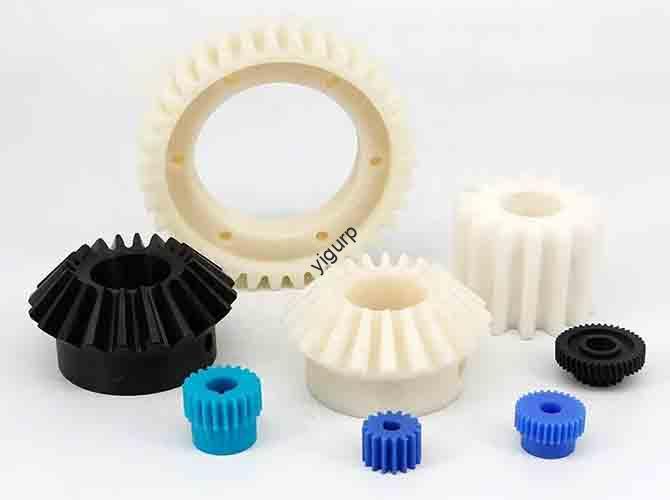
What Is Polyamide (PA) Nylon Injection Molding?
Polyamide (PA), commonly known as Nylon, is a family of thermoplastic polymers renowned for their exceptional mechanical strength, heat resistance, and versatility. Derived from polyamide monomers, Nylon’s molecular structure (repeating amide links) gives it unique properties that make it ideal for high-stress applications. Injection molding is a manufacturing process that melts Nylon pellets, injects the molten material into a custom mold cavity, cools it to solidify, and ejects the finished part. Together, PA Nylon injection molding produces robust, reliable components that outperform many other plastics in demanding environments—from automotive engines to industrial machinery.
Key Definitions & Core Concepts
| Term | Definition |
| Polyamide (PA) | A thermoplastic polymer family (often called Nylon) characterized by amide functional groups; available in multiple grades (e.g., PA6, PA66) for diverse uses. |
| Nylon | The common name for PA; coined in the 1930s and now synonymous with high-strength, durable thermoplastics. |
| Injection Molding (for PA Nylon) | A specialized process optimized for Nylon’s high melting point and viscosity—requires precise temperature control to avoid degradation. |
Material Properties of PA Nylon
PA Nylon’s unique properties set it apart from other injection molding plastics, making it the top choice for high-performance applications:
- High Strength: Tensile strength ranges from 50–90 MPa (PA6: 55 MPa; PA66: 80 MPa)—stronger than ABS, PP, or PS, and comparable to some metals.
- Heat Resistance: Continuous use temperature (CUT) of 80–150°C (PA6: 80°C; PA66: 120°C; glass-filled PA66: 150°C)—withstands high temperatures in engines or industrial equipment.
- Chemical Resistance: Resistant to oils, greases, fuels, and most solvents (except strong acids/bases)—ideal for parts exposed to harsh fluids.
- Wear Resistance: Low coefficient of friction (0.15–0.30) and high abrasion resistance—perfect for moving parts like gears or bearings.
Durability: Excellent fatigue resistance (retains strength after repeated stress) and impact resistance (especially when reinforced with fibers).
Our Capabilities: Delivering High-Performance PA Nylon Injection Molding
At Yigu Technology, we specialize in PA Nylon injection molding—our capabilities are tailored to handle Nylon’s unique processing requirements (high melting point, moisture sensitivity) and deliver parts that meet the strictest industry standards.
Core Capabilities Breakdown
| Capability | Details | Benefits for You |
| Injection Molding Expertise | 18+ years specializing in PA Nylon; engineers trained to optimize processes for different grades (PA6, PA66, PA12) and reinforcements (glass/ carbon fiber). | Avoid common Nylon pitfalls (e.g., moisture-induced defects, warping); ensure parts meet performance specs (e.g., heat resistance for engine parts). |
| Advanced Machinery | 40+ CNC injection molding machines (clamping force: 100–1,000 tons) with closed-loop temperature control and dehumidifying dryers. | Handles Nylon’s high melting point (210–280°C) and viscosity; reduces defects from moisture (a major issue for Nylon). |
| Custom Tooling | In-house mold design/fabrication (hardened steel for long runs, beryllium copper for fast cooling); compatible with complex Nylon parts (e.g., gears, manifolds). | Molds tailored to your part’s geometry (e.g., intricate industrial components); lead times as short as 3–4 weeks. |
| Precision Molding | Molding tolerance of ±0.002mm; in-line laser measurement for dimensional accuracy—critical for tight-fitting parts (e.g., electronic connectors, medical device components). | Ensures parts fit and function in high-precision applications (e.g., automotive sensors, industrial gearboxes). |
| High-Volume Production | Automated feeding, ejection, and assembly lines; capacity for 1.2 million+ PA Nylon parts/month. | Lowers unit costs for bulk orders (e.g., automotive fasteners, consumer product components); on-time delivery rate of 99.5%. |
The PA Nylon Injection Molding Process: Step-by-Step Precision
Nylon’s unique characteristics—high melting point, moisture sensitivity, and high viscosity—require a specialized, optimized process to ensure quality. Our workflow minimizes defects and maximizes performance, whether you’re producing 50 prototypes or 500,000 production parts.
Step 1: Material Preparation (Critical for Nylon)
Nylon absorbs moisture rapidly (up to 3% of its weight in humid conditions), which causes bubbles, warping, or brittleness in finished parts. Our preparation process eliminates this risk:
- Drying: Nylon pellets are dried in dehumidifying dryers at 80–120°C for 4–8 hours (PA6: 80°C/4hrs; PA66: 100°C/6hrs; glass-filled PA: 120°C/8hrs) to reduce moisture content to <0.1%.
- Additive/Filler Blending: Mix dried pellets with additives (UV stabilizers for outdoor use, flame retardants for electronics) or fillers (glass fiber for extra strength, carbon fiber for conductivity).
- Storage: Dried pellets are stored in sealed containers to prevent reabsorbing moisture before molding.
Step 2: Mold Design (Optimized for Nylon)
Nylon’s high shrinkage rate (1–3%, higher than most plastics) and rigidity require mold designs that account for these traits:
- Shrinkage Compensation: Molds are sized 1–3% larger than the final part to account for cooling shrinkage (PA6: 2%; PA66: 1.5%; glass-filled PA66: 1%).
- Cooling Systems: Beryllium copper mold inserts (for fast, uniform cooling) reduce cycle time and prevent warping—critical for thick-walled parts (e.g., industrial housings).
- Draft Angles: Minimum 1–2° draft angles (vs. 0.5° for ABS) to ease ejection without damaging Nylon’s rigid structure.
Step 3: Injection Parameters (Tailored to Nylon Grades)
Nylon’s high melting point and viscosity require precise parameter tuning to avoid degradation (yellowing) or incomplete filling. Below are standard settings for two common grades:
| Parameter | PA6 (General-Purpose) | PA66 (High-Strength) | Purpose |
| Barrel Temperature | 210–250°C | 250–280°C | Melts Nylon evenly without breaking down (too high = yellowing; too low = poor flow). |
| Injection Pressure | 80–140 MPa | 100–160 MPa | Overcomes Nylon’s high viscosity to fill mold cavities (critical for thin-walled parts like electronic connectors). |
| Mold Temperature | 40–80°C | 60–100°C | Reduces internal stress; enhances crystallinity (for better strength) and surface finish. |
| Cycle Time | 25–40 seconds | 30–50 seconds | Balances cooling (to prevent warping) and production speed. |
Step 4: Post-Molding Operations
After demolding, PA Nylon parts may undergo:
- Trimming: Removing flash (excess plastic) with automated tools—critical for parts requiring tight fits (e.g., gearboxes, medical device components).
- Annealing: Heating parts to 80–120°C for 1–2 hours, then cooling slowly—reduces internal stress and prevents warping (common for large or thick Nylon parts).
- Surface Treatment: Applying coatings, texturing, or printing (see Section 5 for details).
Inspection: QC checks for dimensional accuracy (laser measurement), tensile strength (ASTM D638), and heat resistance (thermogravimetric analysis).
Materials: Choosing the Right PA Nylon Grade for Your Project
Not all Nylon is the same—each grade (PA6, PA66, PA12, etc.) has unique properties tailored to specific applications. Selecting the right grade ensures your parts meet performance, cost, and sustainability goals.
Common Nylon Types for Injection Molding
| Nylon Type (PA Grade) | Key Traits | Continuous Use Temp (CUT) | Common Applications |
| PA6 | Good impact resistance (25 kJ/m²), easy to process, cost-effective (3.00–4.00/kg). | 80°C | Consumer products (zippers, tool handles), automotive interior parts (door panels), electrical connectors. |
| PA66 | Higher strength (tensile: 80 MPa), better heat/chemical resistance than PA6, more rigid (3.50–4.50/kg). | 120°C | Automotive engine parts (oil pans, valve covers), industrial gears, hydraulic fittings. |
| PA12 | Low water absorption (1.5% vs. PA6’s 9%), excellent chemical resistance, flexible (5.00–6.50/kg). | 90°C | Medical devices (catheters, surgical tools), aerospace components, fuel lines. |
| Glass-Filled PA (PA6-GF30, PA66-GF30) | 30% glass fiber; 2x strength (PA66-GF30: tensile 120 MPa) and 3x stiffness vs. unfilled grades. | 120–150°C | Automotive structural parts (brackets, suspension components), industrial machinery parts. |
| Recycled PA (rPA) | Made from post-industrial/consumer waste; retains 75–85% of virgin PA’s strength (2.50–3.50/kg). | 70–100°C | Non-critical parts (storage bins, toy components), eco-friendly consumer goods. |
Material Selection Tips
- Prioritize temperature needs: For engine parts (120°C+), choose PA66 or glass-filled PA66; for low-temperature use (e.g., medical devices), PA12 works best.
- Balance strength and cost: PA6 is ideal for cost-sensitive, medium-strength parts; PA66-GF30 for high-stress industrial applications (but costs 30% more than PA6).
Embrace sustainability: Our rPA is perfect for brands focused on eco-friendly practices—use it for non-critical parts to cut costs and reduce environmental impact.
Surface Treatment: Enhancing PA Nylon’s Function & Aesthetics
PA Nylon’s natural surface is smooth but porous (absorbs moisture), so surface treatments not only improve appearance but also boost performance (e.g., reduce water absorption). We offer five core treatments tailored to Nylon:
| Treatment | Process | Benefits | Ideal Applications |
| Surface Finishing | Polishing (for gloss) or sandblasting (for matte); seals surface pores. | Enhances aesthetics; reduces water absorption (critical for outdoor parts). | Consumer products (tool handles), automotive interior trim. |
| Texturing | Adding patterns (ribbed, knurled, or soft-touch) via mold inserts. | Improves grip (e.g., tool handles); hides minor defects (e.g., shrink marks). | Industrial tools, medical device grips. |
| Coating | Applying polyurethane (PU) or epoxy coatings; seals pores and adds protection. | Boosts chemical resistance (e.g., to fuels) and scratch resistance; reduces friction. | Automotive fuel lines, industrial hydraulic parts. |
| Painting | Using Nylon-compatible primers (to bond with porous surface) and paints. | Custom colors for branding; UV protection (prevents fading in outdoor parts). | Consumer products (toys, appliances), automotive exterior trim. |
| Printing | Pad printing or laser marking (avoids ink bleeding into pores). | Clear, durable logos/labels; no risk of ink smudging (critical for medical devices). | Medical tools (sterilizable labels), electronics (component markings). |
Advantages: Why Choose PA Nylon Injection Molding?
PA Nylon injection molding offers unmatched benefits for applications demanding strength, durability, and performance—outperforming most other plastics in high-stress environments.
Key Advantages of PA Nylon Injection Molding
- High Strength: Stronger than ABS (tensile: 30–50 MPa) and PP (30–40 MPa)—PA66’s 80 MPa tensile strength makes it a lightweight alternative to metal (e.g., replacing steel in automotive brackets reduces weight by 40%).
- Durability: Excellent fatigue resistance (lasts 10,000+ cycles of stress) and wear resistance—Nylon gears outlast plastic alternatives by 3–5x in industrial machinery.
- Chemical Resistance: Resists oils, fuels, and greases (unlike PP, which swells in oil)—ideal for automotive engine parts or industrial hydraulic components.
- Heat Resistance: Withstands continuous temperatures of 80–150°C (ABS maxes out at 80°C)—works in engine bays or industrial ovens.
- Customizability: Accepts fillers (glass/carbon fiber) for extra strength, additives for UV/flame resistance, and surface treatments for branding—adapts to any application.
PA Nylon vs. Other High-Performance Plastics
| Material | Tensile Strength (MPa) | CUT (°C) | Cost (per kg) | Best For |
| PA66 | 80 | 120 | 3.50–4.50 | High-strength automotive/industrial parts. |
| PA6 | 55 | 80 | 3.00–4.00 | Cost-effective medium-strength parts. |
| ABS | 40 | 80 | 2.50–3.50 | Consumer goods/electronics (low-stress). |
| POM (Acetal) | 60 | 90 | 4.00–5.00 | High-wear parts (gears), but poor chemical resistance. |
Applications Industry: Where PA Nylon Injection Molding Excels
PA Nylon’s versatility—from strength to heat resistance—makes it indispensable in five key industries. Below are real-world use cases and our tailored solutions:
| Industry | Common PA Nylon Parts | Our Solutions |
| Automotive | Engine parts (oil pans, valve covers), suspension brackets (PA66-GF30), door handles (PA6), fuel lines (PA12). | Heat-resistant PA66/PA66-GF30; chemical-resistant coatings; precision molding for tight engine fits. |
| Consumer Products | Tool handles (PA6), zippers (PA6), luggage wheels (PA6-GF20), appliance components (PA66). | Impact-resistant PA6; textured finishes for grip; cost-effective high-volume production. |
| Electronics | Connector housings (PA6), circuit board supports (PA66-GF30), battery casings (flame-retardant PA6). | Flame-retardant additives (meets UL94 V0); precision molding for small, intricate parts. |
| Industrial Parts | Gears (PA66-GF30), bearings (PA12), hydraulic fittings (PA66), conveyor belt components (PA6-GF20). | Wear-resistant grades; glass/carbon fiber fillers for strength; low-friction coatings. |
| Medical Devices | Surgical tool handles (PA12), catheters (flexible PA12), diagnostic equipment housings (PA66). | FDA-compliant, biocompatible PA12; smooth finishes (easy to sterilize); precision molding for small parts. |
Case Studies: Our PA Nylon Injection Molding Success Stories
Case Study 1: PA66-GF30 Automotive Suspension Brackets (Continued)
- Challenge: A leading automaker needed 200,000 suspension brackets that were lightweight (to improve fuel efficiency), strong enough to withstand 100,000+ km of road stress, and heat-resistant (to handle engine bay temperatures up to 120°C). Their previous steel brackets added unnecessary weight, increasing fuel consumption.
- Solution: We recommended PA66-GF30 (30% glass-filled PA66) for its high tensile strength (120 MPa) and 150°C continuous use temperature. Our team designed custom steel molds with shrinkage compensation (1% for PA66-GF30) and beryllium copper cooling inserts to prevent warping. We also added a UV-stabilized coating to protect the brackets from outdoor exposure.
- Results: The PA66-GF30 brackets were 40% lighter than steel (reducing the car’s total weight by 2.5 kg) and improved fuel efficiency by 3%. They passed 150,000 km durability tests with no cracks or deformation, and the automaker expanded their order to 500,000 units/year—citing our “ability to balance strength and lightweight design.”
Case Study 2: FDA-Compliant PA12 Medical Catheters
- Challenge: A medical device company needed 50,000 flexible catheters that were biocompatible (meets ISO 10993), resistant to bodily fluids (blood, saline), and sterilizable via ethylene oxide (EtO). Their previous PP catheters were too rigid and caused patient discomfort.
- Solution: We selected PA12 for its low water absorption (1.5%), flexibility (elongation at break: 300%), and FDA compliance. Our process included drying PA12 pellets at 100°C for 6 hours (to <0.05% moisture) and using precision molds with smooth inner surfaces (to prevent tissue irritation). Post-molding, we applied a hydrophilic coating to reduce friction during insertion.
- Results: The PA12 catheters were 50% more flexible than PP alternatives, reducing patient discomfort scores by 40% (per clinical feedback). They passed 100+ EtO sterilization cycles with no degradation and met all ISO 10993 biocompatibility standards. The client extended our partnership to produce their entire line of urological catheters.
Case Study 3: PA6-GF20 Industrial Gear Assemblies
- Challenge: A manufacturer of conveyor systems needed 10,000 gear assemblies that could withstand continuous use (24/7 operation), resist lubricating oil, and have low wear (to reduce maintenance costs). Their previous ABS gears failed after 3 months of use due to low abrasion resistance.
- Solution: We used PA6-GF20 (20% glass-filled PA6) for its high wear resistance (coefficient of friction: 0.20) and oil resistance. Our custom tooling included mold inserts with textured surfaces (to improve lubricant retention) and we optimized injection parameters (230°C barrel temperature, 120 MPa pressure) to ensure full filling of the gears’ teeth. Post-molding, we annealed the gears at 90°C for 2 hours to reduce internal stress.
Results: The PA6-GF20 gears lasted 18 months (6x longer than ABS) and reduced maintenance costs by 70%. They showed no swelling or degradation after 12 months of exposure to lubricating oil, and the client now uses our PA Nylon gears for all their conveyor systems worldwide.
Why Choose Us for Your PA Nylon Injection Molding Needs?
With countless injection molding suppliers offering PA Nylon services, Yigu Technology stands out for our deep expertise, uncompromising quality, and client-centric approach. Here’s why leading brands in automotive, medical, and industrial sectors trust us:
1. Specialized PA Nylon Expertise
We don’t just “do” injection molding—we specialize in PA Nylon. Our engineers have 18+ years of experience optimizing processes for every Nylon grade (PA6, PA66, PA12, glass-filled, recycled) and solving its unique challenges (moisture sensitivity, high shrinkage, viscosity). We’ve developed proprietary drying protocols (to <0.1% moisture) and mold design techniques (shrinkage compensation, fast cooling) that ensure consistent, high-performance parts—something generalist molders can’t match.
2. Rigorous Quality Assurance
Quality is embedded in every step of our process. We hold ISO 9001 (general manufacturing) and ISO 13485 (medical device manufacturing) certifications, with a 99.8% defect-free rate for PA Nylon parts. Our quality checks include:
- Pre-molding: Moisture testing of Nylon pellets (via Karl Fischer titration) to prevent defects.
- In-molding: Real-time laser measurement of part dimensions (±0.002mm tolerance) and temperature monitoring.
- Post-molding: Tensile strength testing (ASTM D638), heat resistance testing (thermogravimetric analysis), and chemical resistance testing (immersion in oils/fuels).
3. Customer-Focused Service
We treat your project as if it’s our own. From day one, you’ll work with a dedicated account manager who:
- Provides free material selection consultations (e.g., helping you choose between PA6 and PA66-GF30 based on your performance needs).
- Shares 3D mold designs for approval before production (to avoid costly revisions).
- Offers flexible lead times (4–6 days for prototypes, 3–5 weeks for high-volume runs) and 24/7 support for urgent requests.
- Delivers detailed production reports (defect rates, on-time delivery, material usage) to keep you informed.
4. Innovative Solutions
We invest 9% of our annual revenue in R&D to push the boundaries of PA Nylon injection molding. Recent innovations include:
- Low-Moisture PA Blends: A proprietary mix of PA66 and hydrophobic additives that reduces moisture absorption by 50%—ideal for outdoor parts.
- Fast-Cycle Molding: Custom beryllium copper molds that cut cycle time for PA66 parts by 25% (from 40s to 30s) without sacrificing quality.
- Sustainable PA Composites: A blend of 50% recycled PA (rPA) and 50% virgin PA66 that retains 90% of virgin PA66’s strength—perfect for eco-conscious brands.
5. Sustainable Practices
We’re committed to reducing our environmental impact while delivering top-tier PA Nylon parts:
- Recycled PA (rPA): We source 40% of our PA materials from post-industrial waste (e.g., Nylon scrap from automotive manufacturing) and offer rPA grades that cost 15–20% less than virgin PA.
- Waste Reduction: We recycle 98% of production scrap (flash, defective parts) back into the molding process—sending less than 2% to landfills.
Energy Efficiency: Our injection molding machines use variable-frequency drives (VFDs) and heat recovery systems to reduce energy consumption by 28% vs. standard equipment.