
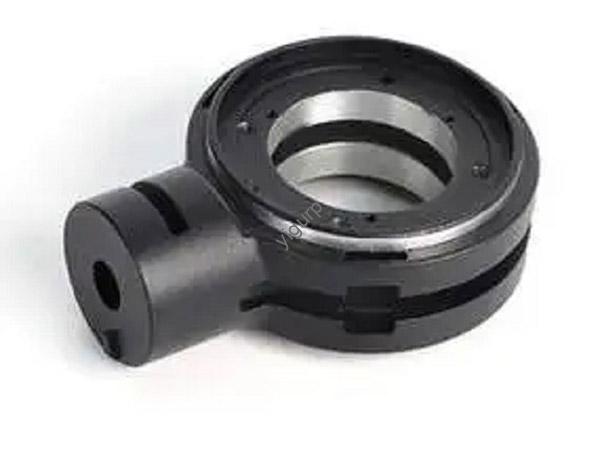
Nitrónico 40 El acero inoxidable es una aleación austenítica de alto rendimiento celebrada por su resistencia excepcional., resistencia a la corrosión, y durabilidad. A diferencia de los aceros inoxidables estándar, su composición única, rica en nitrógeno, lo hace ideal para ambientes hostiles, desde agua de mar hasta tanques de procesamiento químico. En esta guía, desglosaremos sus rasgos clave, usos del mundo real, procesos de fabricación, y cómo se compara con otros materiales, helping you choose it for your high-demand projects.
1. Key Material Properties of Nitronic 40 Acero inoxidable
The standout performance of Nitronic 40 starts with its carefully balanced chemical composition, which shapes its reliable physical properties, robust propiedades mecánicas, and other critical characteristics.
Composición química
Nitronic 40’s formula is engineered for strength and corrosion resistance, with key elements including:
- Chromium content: 21-23% (forms a protective oxide layer for corrosion resistance)
- Nickel content: 11-13% (stabilizes the austenitic structure for ductility)
- Manganese content: 4.5-6.5% (works with nitrogen to boost strength)
- Carbon content: ≤0,08% (reduces the risk of intergranular corrosion)
- Silicon content: ≤1.0% (aids in deoxidation during manufacturing)
- Phosphorus content: ≤0.045% (controlled to avoid brittleness)
- Sulfur content: ≤0.03% (minimized for better corrosion resistance)
- Nitrogen content: 0.15-0.30% (a key additive—enhances tensile strength and pitting resistance without reducing ductility)
Propiedades físicas
| Propiedad | Valor típico |
| Densidad | 7.8 gramos/cm³ |
| Conductividad térmica | 15 con/(m·K) (a 20ºC) |
| Specific Heat Capacity | 0.5 j/(g·K) (a 20ºC) |
| Coeficiente de expansión térmica | 17 × 10⁻⁶/°C (20-500°C) |
| Propiedades magnéticas | No magnético (even after cold working) |
Propiedades mecánicas
Nitrónico 40 delivers impressive strength, even at room temperature, thanks to its nitrogen addition:
- Resistencia a la tracción: 700-900 MPa (higher than standard austenitic grades like 304)
- Fuerza de producción: 400-550 MPa (2x higher than 304 acero inoxidable)
- Alargamiento: 30-40% (en 50 mm—maintains ductility despite high strength)
- Dureza: 180-220 Brinell, 80-90 Rockwell B., 190-230 Vickers
- Fuerza de fatiga: 300-350 MPa (at 10⁷ cycles—excellent for parts under repeated stress)
- Dureza al impacto: 100-150 J (at room temperature—resists cracking from sudden impacts)
Other Critical Properties
- Resistencia a la corrosión: Excellent—resists fresh water, ácidos suaves, and industrial chemicals; outperforms 304 en ambientes hostiles.
- Pitting resistance: Superior—nitrogen and chromium work together to prevent pitting in chloride-rich settings (p.ej., seawater).
- Stress corrosion cracking resistance: Very good—handles tensile stress in corrosive environments better than 304 o 316.
- Resistencia al desgaste: Good—harder than 304, making it suitable for parts that rub against other materials (p.ej., ejes de bomba).
- maquinabilidad: Moderate—requires sharp tools and proper cooling; slower speeds than 304 but faster than duplex stainless steels.
- Soldabilidad: Excellent—can be welded using standard methods (MIG, TIG) without preheating; maintains strength and corrosion resistance in welds.
2. Real-World Applications of Nitronic 40 Acero inoxidable
Nitronic 40’s blend of strength and corrosion resistance makes it a top choice for industries where materials face tough conditions. Here are its most common uses:
Equipos industriales
- Zapatillas: Pump shafts and impellers use Nitronic 40—its wear and corrosion resistance prevents premature failure in chemical or wastewater systems.
- válvulas: Valve bodies and stems handle high pressure and corrosive fluids (p.ej., oil refineries) without rusting or deforming.
- Palas de turbina: Small gas turbine blades rely on its high-temperature strength (retains properties up to 600°C).
Ejemplo de caso: A manufacturing plant replaced 304 stainless steel pump shafts with Nitronic 40. The new shafts lasted 3x longer (de 6 meses para 18 meses) y costos de mantenimiento reducidos $50,000 anualmente.
Procesamiento químico
- Storage tanks: Tanks holding acids (p.ej., ácido sulfúrico) or solvents use Nitronic 40—its corrosion resistance prevents leaks and contamination.
- Sistemas de tuberías: Pipes transporting chemicals avoid rust buildup, ensuring consistent flow and reducing downtime.
- Reactors: Reaction vessels handle high temperatures and corrosive reactants without degrading.
Aerospace and Automotive Industries
- Aeroespacial: Aircraft fasteners and engine components (p.ej., paréntesis) use its high strength-to-weight ratio and resistance to jet fuel corrosion.
- Automotor: High-performance engine parts (p.ej., exhaust manifolds) and racing car components withstand high heat and vibration.
Industria Marina
- Seawater systems: Heat exchangers and seawater intake pipes resist pitting and corrosion from saltwater—outperforming 316 acero inoxidable.
- Ship components: Ship hull fasteners and propeller shafts avoid rust in marine environments, reducing maintenance needs.
3. Manufacturing Techniques for Nitronic 40 Acero inoxidable
Producing Nitronic 40 requires precise steps to preserve its nitrogen content and ensure uniform properties. Here’s the process:
1. Metallurgical Processes
- Horno de arco eléctrico (EAF): The primary method—scrap steel, cromo, níquel, and manganese are melted at 1,600-1,700°C. Nitrogen is injected into the molten alloy to reach the target 0.15-0.30% contenido.
- Horno de oxígeno básico (BOF): Used for large-scale production—oxygen is blown to remove impurities, then nitrogen and other alloys are added to adjust composition.
2. Rolling Processes
- laminación en caliente: The molten alloy is cast into slabs, then heated to 1,100-1,200°C and rolled into thick shapes (verja, platos) for industrial parts.
- laminación en frío: Cold-rolled to make thin sheets (for piping or small components) with a smooth surface; increases hardness slightly but maintains ductility.
3. Tratamiento térmico
- Solution annealing: Heated to 1,050-1,150°C and held for 30-60 minutos, then water-quenched. This dissolves any precipitated carbides, restoring corrosion resistance and ductility.
- Stress relief annealing: Heated to 800-900°C for 1-2 horas, luego se enfrió lentamente. Reduces internal stress from welding or forming without lowering strength.
4. Forming and Surface Treatment
- Forming methods:
- Press forming: Uses hydraulic presses to shape parts like valve bodies or pump housings.
- Doblar: Creates angles for piping or structural brackets (maintains strength after bending).
- Mecanizado: Taladros, molinos, or turns parts to precise sizes—uses high-speed steel (HSS) or carbide tools with cutting fluids to prevent overheating.
- Tratamiento superficial:
- Pickling: Dipped in acid to remove scale or rust from hot rolling.
- Pasivación: Treated with nitric acid to enhance the chromium oxide layer, boosting corrosion resistance.
- electropulido: Crea una suave, superficie brillante (for aerospace components or food-grade parts) and removes surface impurities.
5. Control de calidad
- Ultrasonic testing: Checks for internal defects (p.ej., grietas) in thick parts like turbine blades.
- Radiographic testing: Inspects welds for flaws (p.ej., porosidad) to ensure structural integrity.
- Pruebas de tracción: Verifies tensile and yield strength meet 700-900 MPa and 400-550 MPa, respectivamente.
- Microstructure analysis: Examines the alloy under a microscope to confirm a uniform austenitic structure and proper nitrogen distribution.
4. Estudio de caso: Nitrónico 40 in Marine Seawater Heat Exchangers
A shipbuilding company struggled with frequent failures of 316 stainless steel heat exchangers in its cargo ships. El 316 exchangers developed pitting corrosion after 12 months in seawater, leading to leaks and costly repairs. They switched to Nitronic 40, and the results were dramatic:
- Resistencia a la corrosión: Después 24 meses, the Nitronic 40 heat exchangers showed no pitting or rust—double the lifespan of 316.
- Actuación: Heat transfer efficiency remained 95% (vs. 80% para 316 después 12 meses), reducing fuel consumption for cooling systems.
- Ahorro de costos: The company saved $200,000 per ship annually by eliminating frequent exchanger replacements and downtime.
5. Nitrónico 40 Stainless Steel vs. Other Materials
How does Nitronic 40 compare to other popular stainless steels and metals? Let’s break it down:
| Material | Costo (vs. Nitrónico 40) | Resistencia a la tracción | Yield Strength | Resistencia a la corrosión (Seawater) | Soldabilidad |
| Nitrónico 40 | Base (100%) | 700-900 MPa | 400-550 MPa | Excelente | Excelente |
| 304 Acero inoxidable | 60% | 515 MPa | 205 MPa | Pobre | Excelente |
| 316 Acero inoxidable | 80% | 515 MPa | 205 MPa | Bien | Excelente |
| Dúplex 2205 | 120% | 620-800 MPa | 450 MPa | Excelente | Bien |
| Aleación de titanio (Ti-6Al-4V) | 400% | 860 MPa | 795 MPa | Excelente | Moderado |
Application Suitability
- Industrial Pumps: Nitrónico 40 is better than 304/316 (vida útil más larga, less maintenance) and cheaper than duplex 2205.
- Marine Systems: Outperforms 316 in seawater; more cost-effective than titanium.
- Procesamiento químico: Superior to 304 in corrosive chemicals; easier to weld than duplex 2205.
- Aerospace Fasteners: Balances strength and weight better than 304; cheaper than titanium.
Yigu Technology’s View on Nitronic 40 Acero inoxidable
En Yigu Tecnología, we consider Nitronic 40 a top-tier solution for high-stress, ambientes corrosivos. Its nitrogen-enhanced strength and corrosion resistance make it ideal for our clients in marine, químico, y sectores industriales. We often recommend it for pump shafts, valvulas, and heat exchangers—where it cuts maintenance costs and extends part lifespans. While it costs more than 304/316, its long-term durability delivers better value, aligning with our goal of providing sustainable, cost-effective materials.
Preguntas frecuentes
1. Is Nitronic 40 stainless steel magnetic?
No, Nitrónico 40 is non-magnetic. Its austenitic structure (stabilized by nickel and nitrogen) remains non-magnetic even after cold working, unlike ferritic or martensitic stainless steels.
2. Can Nitronic 40 be used in seawater?
Sí, Nitrónico 40 is excellent for seawater applications. Its nitrogen and chromium content prevent pitting and corrosion, making it a better choice than 304 o 316 stainless steel for marine parts like heat exchangers or fasteners.
3. How does Nitronic 40 compare to 316 stainless steel in strength?
Nitrónico 40 is much stronger than 316. Its tensile strength (700-900 MPa) es 36-75% higher than 316’s (515 MPa), and its yield strength (400-550 MPa) is double that of 316. It also maintains better corrosion resistance in harsh environments.