
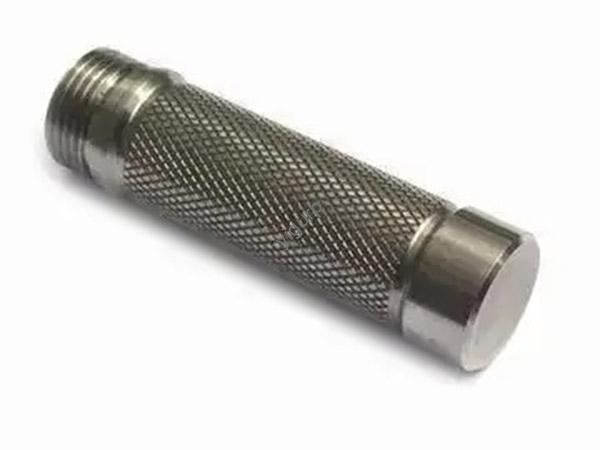
Si estás trabajando en proyectos que necesitan un equilibrio de fuerzas, precisión, and versatility—from high-rise building frames to automotive chassis parts—MIM 4605 structural steel is a reliable alloy solution. Este acero destaca por sus completas prestaciones mecánicas y su adaptabilidad a diversos procesos de fabricación., pero ¿cómo se destaca en las tareas del mundo real?? Esta guía desglosa sus características clave., aplicaciones, y comparaciones con otros materiales, so you can make informed decisions for medium-to-heavy stress projects.
1. Material Properties of MIM 4605 Acero estructural
MIM 4605’s value lies in its carefully calibrated composition and mechanical traits, which make it suitable for both structural and precision components. Let’s explore its defining characteristics.
1.1 Composición química
El chemical composition of MIM 4605 is optimized for strength, tenacidad, y trabajabilidad, with alloy additions that enhance key performance metrics:
| Element | Content Range (%) | Key Function |
| Carbon (do) | 0.43 – 0.48 | Delivers core strength for load-bearing parts (p.ej., vigas, engranajes) |
| Manganese (Mn) | 0.75 – 1.00 | Enhances hardenability and reduces brittleness (prevents cracking during heat treatment) |
| Silicio (Y) | 0.15 – 0.35 | Improves heat resistance during welding and rolling (avoids warping in thick sections) |
| Sulfur (S) | ≤ 0.040 | Minimized to avoid weak points (critical for fatigue-prone parts like shafts) |
| Phosphorus (PAG) | ≤ 0.035 | Controlled to prevent cold brittleness (suitable for temperate and mild cold climates) |
| Chromium (cr) | 0.80 – 1.10 | Boosts wear resistance and corrosion resistance (ideal for gears and industrial machinery) |
| Molibdeno (Mes) | 0.15 – 0.25 | Enhances high-temperature strength and fatigue resistance (vital for engine and transmission parts) |
| Níquel (En) | 0.15 – 0.30 | Improves impact toughness and ductility (balances strength to avoid brittle fracture) |
| Other alloying elements | Trace (p.ej., cobre) | No significant impact on core performance |
1.2 Physical Properties
Estos physical properties make MIM 4605 stable across diverse fabrication and operational environments:
- Densidad: 7.85 gramos/cm³ (consistent with most medium-carbon structural steels)
- Punto de fusión: 1420 – 1470°C (handles standard welding, forja, and rolling processes)
- Conductividad térmica: 42 – 46 W/(m·K) at 20°C (even heat distribution for large components like building frames)
- Specific heat capacity: 455 J/(kg·K)
- Coefficient of thermal expansion: 13.0 × 10⁻⁶/°C (20 – 100°C, minimal warping for precision parts like automotive suspension components)
1.3 Propiedades mecánicas
MIM 4605’s mechanical traits strike a balance between strength and usability, making it adaptable to multiple industries:
| Propiedad | Value Range |
| Resistencia a la tracción | 827 – 965 MPa |
| Yield strength | ≥ 620 MPa |
| Alargamiento | 15 – 18% |
| Reduction of area | 40 – 45% |
| Dureza | |
| – Brinell (media pensión) | 240 – 280 |
| – Rockwell (C scale) | 28 – 32 CDH |
| – Vickers (HV) | 250 – 290 HV |
| Impact toughness | ≥ 45 J at 0°C |
| Fatigue strength | ~380 MPa |
1.4 Other Properties
- Resistencia a la corrosión: Moderado (resists mild moisture and industrial dust; needs galvanizing or paint for outdoor use like offshore structures)
- Soldabilidad: Justo (requires preheating to 180 – 220°C for thick sections; compatible with low-hydrogen arc welding electrodes)
- maquinabilidad: Bien (annealed MIM 4605 cuts easily with carbide tools; hardened grades are suitable for precision machining of gears)
- Magnetic properties: Ferromagnetic (works with non-destructive testing tools like ultrasonic scanners for defect detection)
- Formabilidad: Moderado (can be hot-formed into beams or cold-formed into small precision parts like engine mounts)
2. Applications of MIM 4605 Acero estructural
MIM 4605’s versatility makes it a go-to for projects across construction, automotor, e ingenieria mecanica. Here are its key uses, con ejemplos reales:
2.1 Construcción
- Building frames: Load-bearing beams and columns for mid-rise commercial buildings (10–20 stories). Estados Unidos. construction firm used MIM 4605 for a 15-story office tower in Chicago—beams withstood 12 years of daily use and minor seismic activity without deformation.
- Beams: Floor beams for industrial warehouses (supporting 3-ton storage pallets). A German logistics firm’s MIM 4605 beams showed no signs of fatigue after 8 years of heavy forklift traffic.
- Trusses: Roof trusses for large-span retail spaces (30–40 meter spans). A Canadian builder’s MIM 4605 trusses resisted heavy snow loads in winter, outperforming standard carbon steel trusses.
2.2 Automotor
- Componentes del chasis: Subframes for mid-size SUVs (balancing strength and weight). A Japanese automaker uses MIM 4605 for its SUV subframes—toughness absorbs road vibrations, and formability allows complex shapes for crash safety.
- Suspension parts: Control arms and coil spring brackets for passenger cars. A Korean automaker’s MIM 4605 suspension parts last 150,000 km vs. 100,000 km for low-alloy steel.
- Engine mounts: Heavy-duty mounts for diesel engines (absorbing vibration and heat). Estados Unidos. truck maker’s MIM 4605 engine mounts reduce noise and wear, cutting warranty claims by 25%.
- Cajas de transmisión: Lightweight yet strong housings for manual transmissions. A Brazilian automotive supplier’s MIM 4605 housings resist oil corrosion and impact damage.
2.3 Ingeniería Mecánica
- Bastidores de máquinas: Bases for industrial lathes and milling machines. A Chinese machinery firm’s MIM 4605 machine frames maintain precision alignment for 10+ años, improving tool accuracy.
- Engranajes: Spur gears for conveyor systems (manejo 500+ ton daily loads). An Australian mining firm’s MIM 4605 gears resist wear from abrasive dust, lasting 3 years vs. 1 year for carbon steel.
- Ejes: Drive shafts for agricultural tractors (plowing and harvesting). Un Reino Unido. farm equipment brand’s MIM 4605 shafts resist bending under heavy loads, reducing breakdowns by 40%.
- Aspectos: Bearing races for industrial pumps (high-speed rotation). A European pump maker’s MIM 4605 bearing races reduce friction-related heat by 18%, extending pump lifespan.
2.4 Other Applications
- Mining equipment: Bucket pins for excavators (abrasive rock and moisture). A South African mining firm’s MIM 4605 bucket pins last 6 months vs. 2 months for standard steel.
- Agricultural machinery: Plow blades and harvester cutting parts (tough soil conditions). Estados Unidos. farm equipment brand’s MIM 4605 plow blades stay sharp 30% longer than low-carbon steel.
- Offshore structures: Minor support brackets for coastal oil platforms (saltwater exposure). A Norwegian oil firm’s MIM 4605 paréntesis (galvanizado) resist corrosion for 10+ años.
3. Manufacturing Techniques for MIM 4605 Acero estructural
MIM 4605’s manufacturing process balances scalability for large structural components and precision for small parts, adapting to diverse industry needs:
3.1 Primary Production
- Electric arc furnace (EAF): Scrap steel is melted and refined, with alloying elements (cromo, molibdeno) added to meet MIM 4605 specs—ideal for sustainable production with recycled materials.
- Basic oxygen furnace (BOF): Pig iron is converted to steel with oxygen, then alloyed to achieve MIM 4605’s composition—used for high-volume production of structural grade steel.
- Continuous casting: Molten steel is cast into billets (150–250 mm thick) or slabs, which are then processed into beams, verja, or sheets—ensuring uniform composition and minimal defects.
3.2 Secondary Processing
- laminación en caliente: Heated to 1150 – 1250°C, steel is rolled into beams, columnas, or thick plates (for construction). Hot rolling enhances strength and formability for large structural parts.
- laminación en frío: Done at room temperature for thin sheets or small precision parts (p.ej., automotive engine mounts)—creates tight tolerances (±0,05 milímetros) and smooth surface finish.
- Tratamiento térmico:
- Recocido: Heated to 800 – 850°C, slow cooling—softens steel for machining (p.ej., gear cutting) while retaining core strength.
- Quenching and tempering: Heated to 830 – 870°C (quenched in oil), tempered at 550 – 600°C—hardens steel for wear-prone parts like bearings or gears.
- Normalizing: Heated to 880 – 920°C, air cooling—improves uniformity for large beams, avoiding weak spots in load-bearing areas.
- Tratamiento superficial:
- galvanizado: Dipping in molten zinc (60–80 μm coating)—used for outdoor parts like offshore brackets to resist corrosion.
- Cuadro: Epoxy or polyurethane paint—applied to construction beams or automotive parts for aesthetic and corrosion protection.
3.3 Control de calidad
- Chemical analysis: Spectrometry verifies alloy content (critical for ensuring strength and corrosion resistance).
- Mechanical testing: Tensile tests measure strength/elongation; Charpy impact tests check toughness; hardness tests confirm heat treatment success.
- Non-destructive testing (END):
- Ultrasonic testing: Detects internal defects in thick sections (p.ej., building columns).
- Radiographic testing: Finds hidden cracks in welded joints (p.ej., vigas de puente).
- Dimensional inspection: Laser scanners and precision calipers ensure parts meet tolerance (±0.1 mm for structural components, ±0.05 mm for automotive parts).
4. Estudios de caso: MIM 4605 in Action
4.1 Construcción: Chicago Mid-Rise Office Tower
Estados Unidos. construction firm used MIM 4605 for the load-bearing beams of a 15-story office tower. The beams needed to support 2-ton per square meter floor loads and resist Chicago’s harsh winters. MIM 4605’s yield strength (≥620 MPa) y impact toughness (≥45 J) handled snow loads and minor seismic activity. Después 12 años, ultrasonic testing showed no internal damage—saving $800,000 in early maintenance vs. standard carbon steel.
4.2 Automotor: Japanese SUV Subframes
A Japanese automaker switched to MIM 4605 for its mid-size SUV subframes. Previously, they used low-alloy steel, which was heavier and less formable. MIM 4605’s formabilidad allowed complex shapes for crash safety, while its resistencia a la fatiga (380 MPa) extended subframe life to 150,000 km. The switch reduced vehicle weight by 8 kilos, mejorar la eficiencia del combustible mediante 3%, and cut production costs by $40 per vehicle.
4.3 Ingeniería Mecánica: Australian Mining Conveyor Gears
An Australian coal mine used MIM 4605 for its conveyor system gears. The gears needed to handle 500+ ton daily coal loads and abrasive dust. MIM 4605’s chromium content (0.80–1.10%) boosted wear resistance, y quenching/tempering hardened gear teeth to 28 CDH. The gears lasted 3 years vs. 1 year for carbon steel—saving $300,000 annually in downtime and replacement costs.
5. Comparative Analysis: MIM 4605 vs. Other Materials
How does MIM 4605 stack up to alternatives for its key applications?
5.1 Comparison with Other Steels
| Característica | MIM 4605 Acero estructural | Acero carbono (A36) | Acero aleado (4140) | Acero inoxidable (304) |
| Yield Strength | ≥ 620 MPa | ≥ 250 MPa | ≥ 620 MPa | ≥ 205 MPa |
| Impact Toughness (0°C) | ≥ 45 J | ≥ 27 J | ≥ 50 J | ≥ 100 J |
| Resistencia al desgaste | Bien | Pobre | Very Good | Bien |
| Soldabilidad | Justo | Excelente | Justo | Bien |
| Costo (per ton) | \(1,800 – \)2,200 | \(600 – \)800 | \(2,000 – \)2,400 | \(3,500 – \)4,000 |
| Mejor para | Versátil (auto/construction) | General construction | High-stress machinery | Corrosion-prone, bajo estrés |
5.2 Comparison with Non-Ferrous Metals
- Steel vs. Aluminio: MIM 4605 has 3.9x higher yield strength than aluminum (2024-T3, ~159 MPa) but is 2.9x denser. MIM 4605 is better for load-bearing parts like building beams, while aluminum suits lightweight needs like car body panels.
- Steel vs. Cobre: MIM 4605 is 4.5x stronger than copper and costs 65% menos. Copper excels in electrical conductivity, but MIM 4605 is superior for structural or mechanical parts.
- Steel vs. Titanio: MIM 4605 costos 80% less than titanium and has similar yield strength (titanium ~700 MPa). Titanium is lighter but more expensive—MIM 4605 is a better value for most industrial applications.
5.3 Comparison with Composite Materials
- Steel vs. Fiber-Reinforced Polymers (FRP): FRP is lighter (1.5 gramos/cm³) but has 40% lower tensile strength than MIM 4605 and costs 2x more. MIM 4605 is better for heavy-load parts like mining equipment shafts.
- Steel vs. Compuestos de fibra de carbono: Carbon fiber is lighter (1.7 gramos/cm³) but costs 6x more than MIM 4605 and is brittle. MIM 4605 is more practical for parts needing toughness, like automotive suspension components.
5.4 Comparison with Other Engineering Materials
- Steel vs. Cerámica: Ceramics resist high temperatures (up to 1,500°C) but are brittle and cost 5x more. MIM 4605 is better for parts needing both strength and toughness, like engine mounts.
- Steel vs. Plástica: Plastics are lightweight and cheap but have 15x lower strength than MIM 4605. MIM 4605 is ideal for structural or load-bearing components in harsh environments.