
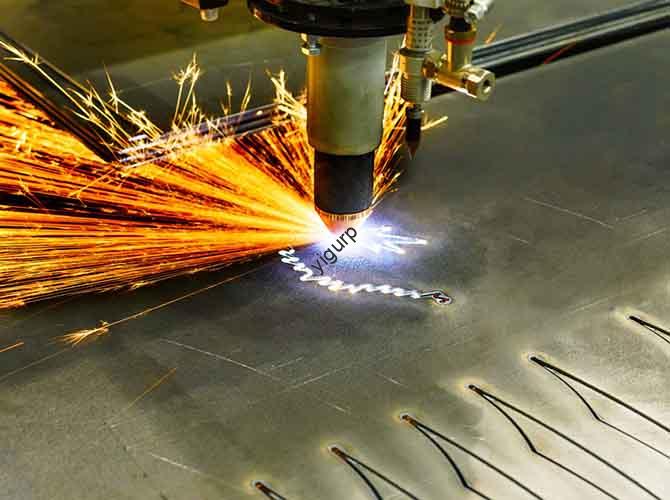
When manufacturing parts that demand ultra-smooth, espejo-like surfaces—such as optical lenses, adornos automotrices, o componentes de dispositivos médicos: ¿cómo se elige la técnica adecuada para equilibrar la precisión?, eficiencia, y costo? Methods CNC mirror processing offer two core pathways: métodos de eliminación de material y sin corte, cada uno con fortalezas únicas para diferentes aplicaciones. This guide breaks down every key method, compares their pros and cons, and helps you solve common challenges to achieve flawless mirror finishes.
1. What Is CNC Mirror Processing?
CNC mirror processing refers to computer-controlled machining techniques designed to create surfaces with extreme smoothness (typically a surface roughness value, Real academia de bellas artes, of ≤ 0.02 µm)—so smooth they reflect light like a traditional mirror. A diferencia del pulido manual (which relies on human skill and is inconsistent), CNC mirror processing uses preprogrammed instructions to ensure every part meets the same high standards.
Think of it like polishing a car: a hand buffer might leave swirl marks, but a CNC machine acts like a professional detailer with a precision tool—uniformly removing tiny imperfections until the surface shines. Por ejemplo, a CNC-machined aluminum automotive bumper cover with a mirror finish not only looks sleek but also resists corrosion better than a rough surface.
2. Core Methods CNC Mirror Processing: Material Removal vs. No-Cutting
CNC mirror processing falls into two main categories, each suited to different materials and part requirements. The table below breaks down their key differences, with detailed method explanations to follow:
| Category | Métodos clave | Best For Materials | Core Advantage | Typical Surface Roughness (Real academia de bellas artes) |
| Material Removal Methods | Molienda, Micro-Grinding, Pulido, electroerosión | Rieles (aluminio, acero, titanio), hard plastics | Achieves the highest gloss; ideal for parts needing strict flatness. | ≤ 0.01 µm |
| No-Cutting Methods | Laminación, Extrusión | Ductile metals (cobre, latón, soft steel) | Improves material strength; no waste from cutting. | ≤ 0.02 µm |
2.1 Material Removal Methods: Shaping Surfaces by Removing Imperfections
These methods work by precisely stripping away tiny layers of material to eliminate scratches, marcas de herramientas, and unevenness. They’re the most common choice for parts that need 极致 smoothness.
Método 1: Molienda
- Cómo funciona: A high-speed rotating grinding wheel (coated with abrasive particles like diamond or aluminum oxide) removes material from the workpiece surface. The CNC system controls the wheel’s speed (1,500–3000 rpm) and pressure to ensure uniform removal.
- Mejor para: Initial smoothing of rough surfaces (p.ej., a steel mold with tool marks). It’s the first step in the mirror processing workflow—creating a flat, even base for finer methods.
- Ejemplo del mundo real: A manufacturer uses CNC grinding to prepare a stainless steel medical instrument housing. The process reduces surface roughness from Ra 0.8 µm (after milling) to Ra 0.1 µm, ready for polishing.
Método 2: Micro-Grinding
- Cómo funciona: A smaller, more precise abrasive tool (often a diamond-tipped micro-wheel) targets microscopic imperfections left by grinding. The CNC machine operates at slower speeds (500–1,000 RPM) with lighter pressure to avoid damaging the surface.
- Mejor para: Hard materials like titanium or ceramic (p.ej., optical lens molds). It’s critical for parts where even tiny scratches would ruin performance.
- Para propina: Pair micro-grinding with coolant (p.ej., mineral oil) to prevent heat buildup—heat can warp the workpiece and undo smoothness.
Método 3: Pulido
- Cómo funciona: A soft polishing tool (p.ej., a felt pad) paired with a polishing agent (p.ej., cerium oxide paste) gently buffs the surface. The CNC system adjusts the pad’s rotation (800–1,200 RPM) and movement to create a uniform gloss.
- Mejor para: Final mirror finish on metals (p.ej., aluminum automotive trim) o plásticos (p.ej., acrylic display cases). It’s the last step in material removal—turning a smooth surface into a reflective one.
- Estudio de caso: A luxury electronics brand uses CNC polishing to finish aluminum smartphone frames. The process takes 15 minutes per frame and achieves Ra 0.008 μm—so smooth the frames reflect the brand logo clearly.
Método 4: electroerosión (Mecanizado por descarga eléctrica)
- Cómo funciona: A CNC-controlled electrode creates small electrical sparks (up to 10,000°C) that melt and evaporate tiny bits of metal from the workpiece. The process is slow but extremely precise—no physical tool touches the surface, so there’s no risk of scratching.
- Mejor para: Formas complejas (p.ej., a turbine blade with curved surfaces) o zonas de difícil acceso (p.ej., internal cavities of a mold). It’s ideal for metals that are too hard for grinding (p.ej., tungsteno).
- Key Note: EDM leaves a thin “recast layer” on the surface—this must be removed with a quick polish to achieve a true mirror finish.
2.2 No-Cutting Methods: Smoothing Surfaces Without Removing Material
These methods reshape the workpiece surface by pressing or rolling it—no material is wasted, and the process actually strengthens the material. They’re perfect for ductile metals that can withstand pressure.
Método 1: Laminación
- Cómo funciona: A specialized CNC rolling tool (with a smooth, hardened surface) presses against the rotating workpiece. The pressure flattens microscopic peaks and fills valleys in the surface, creating a smooth finish.
- Mejor para: Piezas cilíndricas (p.ej., copper pipes, steel shafts) or flat components (p.ej., brass plates). It also corrects minor shape flaws like ovality (p.ej., a slightly out-of-round shaft becomes perfectly circular).
- Material Benefit: Rolling increases surface hardness by 15–30% (via work hardening)—a copper pipe treated with rolling is 25% more resistant to bending than an untreated one.
Método 2: Extrusión
- Cómo funciona: The workpiece is pushed through a CNC-controlled die (a metal block with a smooth internal surface) under high pressure (50–200 MPa). The die’s smoothness transfers to the workpiece, creating a mirror finish in one step.
- Mejor para: Largo, uniform parts (p.ej., aluminum rods for furniture, brass strips for decorative trim). It’s a high-volume method—one extrusion press can produce 100+ mirror-finish rods per hour.
- Ejemplo: A construction company uses CNC extrusion to make aluminum trim for high-end buildings. The extruded trim has a Ra 0.015 μm finish and requires no additional polishing—saving 30% on production time.
3. How to Choose the Right CNC Mirror Processing Method
Con tantas opciones, use this 3-step checklist to pick the best method for your project:
- What Material Are You Using?
- Hard metals (acero, titanio) or ceramics: Choose grinding + polishing or EDM.
- Ductile metals (cobre, latón): Opt for rolling or extrusion (they boost strength too).
- Plástica (acrílico, policarbonato): Stick to polishing (grinding can melt plastic).
- What’s Your Production Volume?
- Low volume (1–10 partes, p.ej., custom molds): Use grinding + pulido (flexible for small batches).
- Alto volumen (100+ regiones, p.ej., adornos automotrices): Go with extrusion or rolling (fast and cost-effective).
- What’s Your Surface Goal?
– 极致 gloss (Ra ≤ 0.01 µm, p.ej., lentes opticos): Use EDM + micro-polishing.
- Good gloss + added strength (p.ej., load-bearing shafts): Choose rolling.
4. Common Challenges in CNC Mirror Processing (and How to Fix Them)
Even with CNC precision, issues can arise. Here are the top problems and solutions:
| Desafío | Cause | Solución |
| Uneven Mirror Finish | Grinding wheel worn unevenly or polishing pad pressure inconsistent. | Replace grinding wheels every 50 regiones; use CNC pressure sensors to ensure uniform pad pressure (Yigu Technology’s custom sensors reduce unevenness by 80%). |
| Material Warping | Heat buildup during grinding or EDM (common with thin parts). | Use coolant during grinding (keep temperature below 50°C); slow EDM spark frequency by 20% for thin workpieces. |
| Low Production Speed | Polishing takes too long for high-volume orders. | Combine extrusion (fast initial finish) with a quick polish (1–2 minutes per part) instead of full grinding + pulido. |
5. Yigu Technology’s Perspective on Methods CNC Mirror Processing
En Yigu Tecnología, we’ve helped 180+ clients—from automotive suppliers to medical device makers—choose and optimize methods CNC mirror processing. The biggest mistake we see? Overusing grinding for ductile metals—rolling is faster and strengthens the material, but many clients don’t realize its benefits.
Our pro tip: For clients making cylindrical parts (p.ej., válvulas de latón), we recommend a “rolling + light polishing” combo—it cuts production time by 40% vs. molienda. We also offer custom CNC programs for EDM that reduce the recast layer by 50%, eliminating extra polishing steps. As materials like carbon fiber composites gain popularity, we’re developing new mirror processing methods to keep up with industry demands.
Preguntas frecuentes: Your Top Methods CNC Mirror Processing Questions Answered
Q1: Can CNC mirror processing be used on plastic parts?
A1: Sí, but only with polishing (material removal methods like grinding can melt plastic). Use a soft felt pad and a plastic-safe polishing agent (p.ej., polyurethane paste) at low speeds (500–800 RPM). Por ejemplo, we’ve achieved Ra 0.015 μm on acrylic display cases using this method.
Q2: How long does CNC mirror processing take for a single part?
A2: It depends on the method and part size. A small aluminum part (5cm x 5cm) takes 10–15 minutes with grinding + pulido, 5–8 minutes with rolling, and 20–25 minutes with EDM. Partes más grandes (p.ej., 30cm steel plates) can take 1–2 hours with grinding + pulido.
Q3: Is CNC mirror processing more expensive than manual polishing?
A3: Inicialmente, yes—CNC machines have higher setup costs. But for batches of 10+ regiones, CNC is cheaper: manual polishing takes 2–3x longer (increasing labor costs) and has a 15–20% defect rate, while CNC has a <2% tasa de defectos. For a batch of 100 steel parts, CNC saves 30–40% on total costs.