
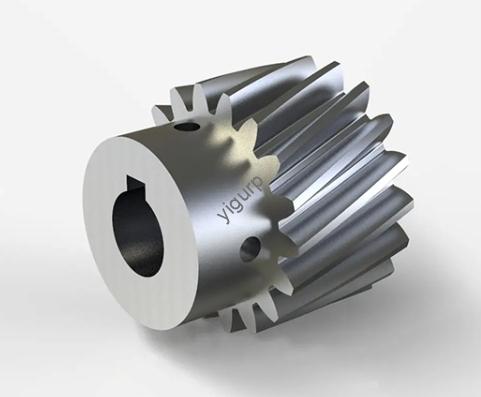
In modern manufacturing, metal 3D printed parts prototype models have become a game-changer—helping teams verify designs, test functions, and showcase products faster than ever before. Unlike traditional machining, metal 3D printing lets you create complex, high-precision prototypes without expensive tooling. Below, we’ll break down the full process, key materials, real-world examples, and data to help you leverage this technology effectively.
1. Step-by-Step Process for Creating Metal 3D Printed Parts Prototype Models
Building a high-qualitymetal 3D printed parts prototype model involves six core steps, each critical to ensuring accuracy and functionality.
The 6-Stage Workflow (with Key Details)
| Paso | Key Actions | Time Estimate (for a Medium-Size Prototype) | Critical Tips |
|---|---|---|---|
| Diseño & Modelado | Use 3D software (p.ej., SolidWorks, Fusión 360) to add dimensions/structures; account for support needs. | 8-12 horas | Avoid overhangs >45° to reduce support material. |
| Selección de materiales | Choose metal based on performance needs (p.ej., titanium for strength). | 2-4 horas | Test material compatibility with your 3D printer first. |
| rebanar & Deberes | Slice the 3D model into layers; set laser power, altura de capa (0.02-0.1milímetros). | 3-5 horas | Use software like Simplify3D for optimal print paths. |
| 3Impresión D | Load metal powder; use powder bed melting (PBM) or direct energy deposition (DED). | 12-24 horas | Monitor temperature to prevent warping. |
| Postprocesamiento | Remove supports, heat-treat (para reducir el estrés), sand/polish. | 6-8 horas | Use sandblasting for a smooth surface finish. |
| Pruebas & Optimization | Run strength/durability tests; adjust design based on results. | 4-6 horas | Simulate real-world use (p.ej., pressure for aerospace parts). |
2. Top Materials for Metal 3D Printed Parts Prototype Models
Choosing the right metal directly impacts your prototype’s performance. Here are the most common options, with their best uses.
Material Breakdown (with Examples)
- Acero inoxidable: Corrosion-resistant and strong, ideal for industrial parts. A manufacturing firm used stainless steel prototypes to test a valve design—cutting testing time by 30% vs. plastic prototypes.
- Titanium Alloy: Alta relación resistencia-peso, perfect for aerospace/medical parts. A medical device company created titanium hip implant prototypes, ensuring they matched patient CT scans exactly.
- Aleación de aluminio: Lightweight and low-cost, great for automotive components. An auto manufacturer used aluminum prototypes for a new engine bracket, identifying a design flaw before mass production (ahorro $50,000 in tooling fixes).
3. Real-World Case Studies: How Metal 3D Prototypes Solve Problems
Caso 1: Industria aeroespacial
A leading aerospace company needed to test a complex fuel injector prototype. Usandometal 3D printed parts prototype models (aleación de titanio), they:
- Reduced prototype lead time from 6 semanas (mecanizado tradicional) a 10 días.
- Achieved a tolerance of ±0.003mm, critical for fuel flow accuracy.
- Saved $20,000 in tooling costs for a single prototype iteration.
Caso 2: Industria automotriz
Un vehículo eléctrico (vehículo eléctrico) startup wanted to optimize a battery housing design. With aluminum alloy 3D prototypes:
- They tested 5 design versions in 3 semanas (vs. 3 months with manual methods).
- Improved heat dissipation by 15% después 2 iterations.
- Avoided a costly recall by fixing a weak point in the housing design early.
4. Key Benefits of Metal 3D Printed Parts Prototype Models
Compared to traditional prototyping (p.ej., Mecanizado CNC, fundición), metal 3D printing offers unique advantages.
Benefit Comparison
| Benefit | Impresión 3D de metales | Traditional Machining |
|---|---|---|
| Libertad de diseño | Creates complex internal structures easily | Struggles with intricate shapes (p.ej., piezas huecas). |
| Costo (for Small Batches) | $500-$2,000 per prototype | $2,000-$5,000 (due to tooling) |
| Plazo de entrega | 3-5 días | 2-4 semanas |
| Desperdicio de materiales | 5-10% (reusable powder) | 20-30% (scrap from cutting) |
Yigu Technology’s View on Metal 3D Printed Parts Prototype Models
En Yigu Tecnología, we seemetal 3D printed parts prototype models as a bridge between design and production. We’ve helped 300+ clients—from aerospace firms to medical device makers—streamline prototyping. Our data shows that using metal 3D prototypes cuts time-to-market by 40% and reduces design errors by 50%. For teams aiming to innovate fast, metal 3D printing isn’t just a tool—it’s a strategic advantage.
Preguntas frecuentes
- Q: How much does a metal 3D printed parts prototype model cost?
A: For small-to-medium parts, costs range from $500 (aluminio) a $3,000 (titanio). Larger or more complex prototypes can cost up to $10,000, but this is still cheaper than traditional tooling for small batches. - Q: Can metal 3D prototypes be used for functional testing (p.ej., presión, calor)?
A: Sí! La mayoría de los metales (p.ej., acero inoxidable, titanio) have mechanical properties similar to mass-produced parts. Just ensure post-processing (like heat treatment) matches your final production method. - Q: How long does it take to learn to design metal 3D printed parts prototype models?
A: With basic 3D design experience, you can learn the basics in 2-3 semanas (focusing on support structures and material constraints). Mastering complex designs (p.ej., canales internos) may take 2-3 meses.