
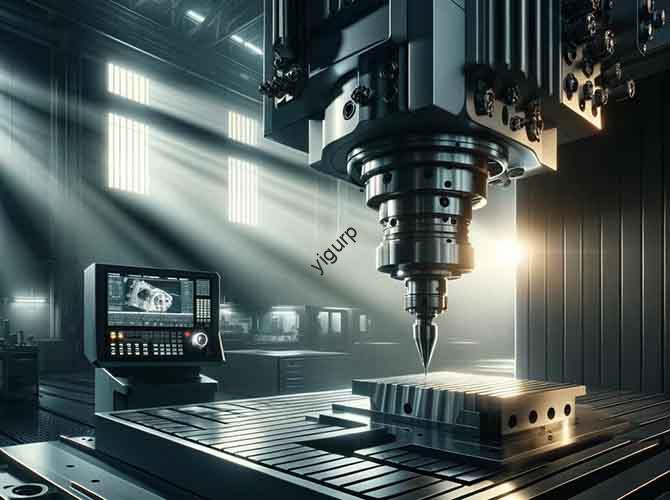
In the realm of manufacturing and precision engineering, machining burr is an unavoidable yet critical challenge that impacts product quality, actuación, and production efficiency. Whether you’re a CNC machinist, production manager, or product engineer, understanding the nuances of machining burrs—from their formation mechanisms to effective removal and prevention strategies—can significantly reduce costs, improve part reliability, and enhance workplace safety. This guide is designed to provide you with in-depth, practical insights into every aspect of machining burrs, drawing on industry experience, estudios de casos del mundo real, and verified technical data to help you address burr-related issues comprehensively.
1. What Exactly Is a Machining Burr?
A machining burr refers to a small, unwanted protrusion of material that forms on the edges or surfaces of a workpiece during machining processes such as milling, torneado, perforación, or grinding. These protrusions are created when the cutting tool interacts with the workpiece material, causing plastic deformation or tearing of the material rather than clean, precise cutting. Unlike intentional features, burrs are defects that can compromise the functionality and aesthetics of machined parts.
Key Distinction: It’s important to differentiate machining burrs from other edge features, such as chamfers or fillets, which are intentionally designed to improve part assembly and safety. Burrs are irregular, unpredictable, and often vary in size and shape depending on the machining process, material, and tooling used.
Contexto de la industria: Según un 2024 report by the Precision Machining Association (PMA), burr-related issues account for approximately 15-20% of post-processing costs in high-precision manufacturing sectors, including aerospace and medical device production. This highlights the financial impact of unmanaged machining burrs.
2. Types of Machining Burrs
Machining burrs can be classified into distinct categories based on their formation mechanism and the location/processing method. Understanding these classifications is essential for selecting the right removal and prevention strategies, as different burr types require targeted approaches.
2.1 Classification by Formation Mechanism
The formation mechanism determines the structure and properties of the burr, such as its thickness, hardness, and adhesion to the workpiece. Below are the most common types:
- Tear Burrs: Formed when the cutting tool tears the workpiece material rather than shearing it cleanly. Common in ductile materials like aluminum and copper. Tear burrs are typically soft, irregularly shaped, and easily bent. Estudio de caso: In a 2023 project at a automotive component manufacturer, tear burrs on aluminum engine brackets caused interference during assembly, leading to a 5% increase in rework time. The issue was traced to a dull end mill that could not generate sufficient shear force.
- Cutting Burrs: Result from the shearing action of the cutting tool, where a thin layer of material is pushed ahead of the tool and forms a burr. These are common in milling and turning operations with sharp tools. Cutting burrs are often thinner and harder than tear burrs, making them more difficult to remove.
- Crush Burrs: Occur when the cutting tool compresses the workpiece material, causing it to bulge and form a burr. This is typical in brittle materials like cast iron or when using high feed rates. Crush burrs are usually small but can be hard and abrasive.
- Roll Burrs: Form when the material is rolled over the edge of the workpiece by the cutting tool. Common in sheet metal machining and drilling operations. Roll burrs are often cylindrical or curved and can be difficult to detect visually.
2.2 Classification by Location & Proceso
Burrs also vary based on where they form on the workpiece and the specific machining process used. The following table summarizes common location/process-based burr types and their characteristics:
| Burr Type | Associated Machining Process | Typical Location | Key Characteristics |
|---|---|---|---|
| Edge Burr | Milling, Torneado, Molienda | External edges of the workpiece | Most common type; varies in size based on tool sharpness and feed rate |
| Hole Burr | Perforación, Reaming | Entry and exit points of drilled holes | Exit burrs are often larger; can block fluid flow in hydraulic components |
| Thread Burr | Tapping, Thread Milling | Threads of bolts, nueces, or threaded holes | Can cause cross-threading during assembly; critical in aerospace applications |
| Slot Burr | Slot Milling | Edges of slots and grooves | Hard to reach; often requires specialized deburring tools |
3. Burr Formation in Different Materials
The type and severity of machining burr formation are heavily influenced by the workpiece material’s properties, such as ductility, hardness, and tensile strength. Ductile materials tend to form larger, softer burrs, while brittle materials produce smaller, harder burrs. Below is a detailed analysis of burr formation in common machining materials:
3.1 Rieles
- Aluminio (dúctiles): Prone to large tear and roll burrs due to its high ductility. Machining aluminum at high cutting speeds can reduce burr size, but requires sharp tools to minimize material tearing. Data Point: A study by the University of Michigan found that increasing the cutting speed of aluminum milling from 100 m/min to 300 m/min reduced burr height by 40%.
- Acero (Medium Ductility): Forms cutting and crush burrs depending on the grade (mild steel vs. acero inoxidable). Acero inoxidable, with its high toughness, produces harder burrs that are more difficult to remove. Estudio de caso: A medical device manufacturer producing stainless steel surgical instruments faced challenges with burrs on instrument edges. Switching to a carbide cutting tool with a specialized rake angle reduced burr formation by 65%.
- Cast Iron (Brittle): Produces small, fragmented crush burrs that are often easier to remove. Sin embargo, these burrs can be abrasive and cause wear on subsequent assembly tools.
3.2 Plástica
Plástica, especially thermoplastics like ABS and PVC, form burrs due to melting and deformation during machining. Unlike metal burrs, plastic burrs are often soft and can be melted or trimmed. Key factors influencing plastic burr formation include cutting temperature (high temperatures cause more melting) and tool geometry. Practical Tip: Using a low-heat cutting tool and reducing feed rate can minimize burr formation in plastic machining.
3.3 compuestos
Materiales compuestos (p.ej., carbon fiber-reinforced polymer, CFRP) present unique burr formation challenges due to their heterogeneous structure (fiber + matrix). Burrs in composites often involve fiber fraying and matrix delamination, which are more complex to address than metal burrs. Industry Insight: In aerospace composite machining, burr-related delamination can reduce part strength by up to 25%, making precise burr control critical. Specialized diamond tools and low-energy machining processes are commonly used to minimize composite burrs.
4. The Necessity of Machining Burr Removal
Ignoring machining burr can lead to a range of negative impacts on product quality, production efficiency, and workplace safety. Below is a detailed breakdown of the key consequences of unmanaged burrs:
4.1 Impact on Assembly & Fit
Burrs can cause dimensional inaccuracies, leading to poor part fit during assembly. Por ejemplo, a small burr on a gear tooth can prevent proper meshing with other gears, resulting in noise, vibración, and premature wear. In precision applications like automotive transmissions, burr-related assembly issues can lead to warranty claims and product recalls. Estudio de caso: A 2022 recall of 50,000 automotive transmissions was traced to burrs on shift forks, which caused incorrect gear engagement. The recall cost the manufacturer over $20 million.
4.2 Influence on Performance & Fatigue
Burrs act as stress concentrators, reducing the fatigue life of machined parts. When a part is subjected to cyclic loads (p.ej., componentes del motor, aircraft parts), cracks can initiate at burr locations and propagate over time, leading to catastrophic failure. Data Point: Research by the American Society of Mechanical Engineers (ASME) shows that parts with unremoved burrs have a 30-50% shorter fatigue life compared to deburred parts.
4.3 Effects on Finish, Lubrication & Corrosion
Burrs can disrupt the smooth surface finish of parts, trapping dirt, debris, y humedad. This impairs lubrication in moving components (p.ej., aspectos, ejes) and accelerates corrosion. In marine and offshore applications, burr-related corrosion can reduce part lifespan by up to 40%.
4.4 Cost and Lead Time Implications
Burrs increase production costs by requiring additional post-processing steps (desbarbado), rework, e inspección. A 2024 survey of precision manufacturers found that deburring accounts for 8-12% of total production time for complex parts. Además, burr-related delays can extend lead times, leading to lost customer trust and business opportunities.
4.5 Safety & Handling Concerns
Sharp burrs pose a safety risk to workers during part handling, asamblea, and maintenance. According to the Occupational Safety and Health Administration (OSHA), encima 2,000 workplace injuries annually are caused by contact with sharp burrs, resulting in cuts, lacerations, and infections.
5. Common Methods and Tools for Deburring
Selecting the right deburring method depends on factors such as burr type, material, part complexity, production volume, and cost constraints. Below are the most common deburring methods, along with their advantages, disadvantages, and applications:
5.1 Manual Deburring
Manual deburring involves using hand tools (p.ej., files, scrapers, sandpaper, deburring knives) to remove burrs. It is suitable for low-volume production, complex parts with hard-to-reach areas, and small burrs.
| Ventajas | Disadvantages | Typical Applications |
|---|---|---|
| Low initial investment; flexible for complex parts; suitable for small batches | Labor-intensive; inconsistent results; dependent on operator skill; slow for high volume | Custom machined parts; prototype production; aerospace components with complex geometries |
Practical Tip: For manual deburring of aluminum parts, use a rubber deburring tool to avoid scratching the surface. For steel parts, a carbide-tipped scraper provides better efficiency.
5.2 Mechanical Deburring
Mechanical deburring uses machines and tools (p.ej., grinding wheels, brushes, tumblers, vibratory finishers) to remove burrs automatically or semi-automatically. It is ideal for medium to high-volume production.
- Molienda & Pulido: Effective for removing hard burrs on flat or cylindrical surfaces. Common in automotive and industrial part production.
- Tumbling & Vibratory Finishing: Uses abrasive media (p.ej., ceramic beads, steel shot) to deburr multiple parts simultaneously. Suitable for small, simple parts like fasteners.
- Brush Deburring: Uses rotating brushes to remove burrs from edges and holes. Can be integrated into CNC machines for in-process deburring.
Estudio de caso: A fastener manufacturer increased production volume by 30% after switching from manual to vibratory deburring. The vibratory finisher processed 5,000 fasteners per hour, en comparación con 500 per hour with manual deburring, while improving consistency.
5.3 Advanced Deburring Methods
For high-precision, complejo, or hard-to-deburr parts, advanced methods are required. These methods offer higher accuracy, consistencia, y eficiencia, but often have higher initial costs.
| Method | Working Principle | Ventajas | Aplicaciones |
|---|---|---|---|
| Electrochemical Deburring (ECD) | Uses electrolysis to dissolve burrs; a cathode is placed near the burr, and an electric current causes metal removal | No mechanical contact; precise; suitable for hard materials and complex geometries | Componentes aeroespaciales; dispositivos médicos; válvulas hidráulicas |
| Thermal Energy Deburring (TED) | Uses a high-temperature explosion (fuel-oxygen mixture) to vaporize burrs | Rápido; removes burrs in hard-to-reach areas; suitable for high-volume production | Piezas automotrices; electronic components; engranajes |
| Ultrasonic Deburring | Uses high-frequency ultrasonic waves to agitate abrasive media, which removes burrs | Gentle on delicate parts; precise; suitable for small, partes complejas | Electronic connectors; implantes medicos; plastic components |
5.4 How to Choose the Right Deburring Method
Use the following decision framework to select the optimal deburring method for your application:
- Assess Burr Characteristics: Dureza, tamaño, and location (p.ej., hard burrs require grinding or ECD; small, hard-to-reach burrs need TED or ultrasonic).
- Consider Workpiece Material: Ductile materials (aluminio) can use manual or brush deburring; hard materials (acero inoxidable) need ECD or grinding; composites require specialized methods.
- Evaluate Production Volume: Low volume → manual; medium volume → mechanical; high volume → advanced automated methods.
- Check Precision Requirements: Piezas de alta precisión (médico, aeroespacial) need ECD or ultrasonic; general industrial parts can use grinding or tumbling.
- Calculate Cost: Balance initial investment (advanced methods have higher upfront costs) with long-term efficiency (reduced labor, rework).
6. Strategies for Controlling and Preventing Machining Burrs
While deburring is essential for managing existing burrs, preventing burr formation at the source is more cost-effective and efficient. Below are proven strategies to minimize or eliminate machining burr during the machining process:
6.1 Rational Structural Design (DFM Principles)
Diseño para la fabricabilidad (DFM) principles can significantly reduce burr formation by optimizing part geometry. Key design considerations include:
- Add Chamfers or Fillets: Intentionally designed chamfers (45° edges) or fillets (rounded edges) provide a buffer zone, reducing the likelihood of burr formation at critical edges.
- Avoid Sharp Internal Corners: Sharp internal corners increase tool contact pressure, leading to burr formation. Use rounded corners or undercuts to reduce pressure.
- Optimize Hole Placement: Place holes away from edges to minimize burr propagation. For through-holes, use exit supports to reduce exit burrs.
Estudio de caso: A consumer electronics manufacturer redesigned a smartphone frame to include 0.5mm chamfers on all external edges. This reduced burr formation by 70%, eliminating the need for post-processing deburring and cutting production time by 15%.
6.2 Optimize Machining Process Parameters
Adjusting machining parameters can minimize burr formation by improving the cutting action and reducing material deformation. Key parameters to optimize include:
- Cutting Speed: For ductile materials (aluminio), increase cutting speed to improve shearing and reduce tear burrs. For brittle materials (cast iron), moderate cutting speed prevents crush burrs.
- Feed Rate: Reduce feed rate to minimize tool pressure and material deformation. Sin embargo, excessively low feed rates can increase cutting time and cost, so balance is key.
- Depth of Cut: Use shallow depths of cut for finishing passes to reduce burr size. Multiple shallow passes are more effective than a single deep pass for burr control.
Data Point: A study on CNC milling of stainless steel found that reducing the feed rate from 0.2 mm/rev to 0.1 mm/rev reduced burr height by 55%, with only a 10% increase in cutting time.
6.3 Select Suitable Tooling and Geometry
The right cutting tool and tool geometry are critical for minimizing burr formation. Key tooling considerations include:
- Tool Material: Use sharp, high-quality tools (p.ej., carburo, diamond-coated) that maintain their cutting edge. Dull tools cause material tearing and burr formation.
- Rake Angle: Positive rake angles improve shearing action, reducing burr formation. For ductile materials, a rake angle of 10-15° is optimal; for brittle materials, 5-10° is preferred.
- Tool Nose Radius: A smaller tool nose radius reduces the contact area, minimizing material deformation and burr size. Sin embargo, too small a radius can reduce tool life.
6.4 Correct Processing Sequence and Tool Path
Optimizing the processing sequence and tool path can reduce burr formation by minimizing tool contact with critical edges. Key strategies include:
- Finish Critical Edges Last: Machine non-critical features first, then finish critical edges (p.ej., dientes de engranaje, bearing surfaces) with a sharp tool to minimize burrs.
- Avoid Tool Withdrawal from Critical Edges: Plan tool paths to exit the workpiece at non-critical locations, reducing exit burrs. Por ejemplo, in drilling, exit the hole at a non-functional surface.
- Use Climb Milling: Climb milling (tool rotates in the same direction as the feed) reduces tool pressure and burr formation compared to conventional milling.
7. Burr Issues in Specific Materials and Processing Types
Certain materials and processing types present unique machining burr challenges that require specialized solutions. Below are targeted insights for common high-challenge scenarios:
7.1 High-Strength Steel Machining
High-strength steel (p.ej., Aermet 100, Inconel) is used in aerospace and defense applications but produces hard, persistent burrs. Solutions include:
- Using carbide or cubic boron nitride (CBN) tools with positive rake angles.
- Implementing in-process ECD deburring to remove burrs immediately after machining.
- Optimizing cutting parameters for low tool wear (p.ej., moderate cutting speed, low feed rate).
7.2 Composite Material Machining
Como se mencionó anteriormente, composites like CFRP form burrs due to fiber fraying and matrix delamination. Specialized solutions include:
- Using diamond-coated or PCD (polycrystalline diamond) tools to cut fibers cleanly.
- Applying back support during drilling to prevent exit delamination and burrs.
- Using low-energy machining processes (p.ej., ultrasonic-assisted machining) to minimize fiber damage.
7.3 Micro-Machining
Micro-machining (parts with features smaller than 1mm) produces tiny but critical burrs that can render parts non-functional. Solutions include:
- Using micro-tools with ultra-sharp edges (edge radius < 1µm).
- Implementing laser deburring, which can target tiny burrs with high precision.
- Optimizing cutting parameters for minimal material deformation (p.ej., very low feed rates, high cutting speeds).
8. FAQ About Machining Burr
Q1: Can machining burrs be completely eliminated? While it’s challenging to completely eliminate machining burrs in most processes, they can be minimized to negligible levels through proper design, estampación, y optimización de procesos. For high-precision applications (p.ej., implantes medicos), advanced in-process deburring methods can achieve burr-free parts.
Q2: What is the difference between a burr and a chamfer? A burr is an unwanted, irregular protrusion formed during machining. A chamfer is an intentional, angled edge designed to improve assembly and safety. Chamfers are added during design or machining, while burrs are defects that require removal.
Q3: How do I measure machining burrs accurately? Common methods for measuring burrs include optical microscopy (for small burrs), digital calipers (for larger burrs), and 3D scanning (para geometrías complejas). Industry standards like ISO 13715 provide guidelines for burr measurement and classification.
Q4: Is manual deburring still relevant in modern manufacturing? Sí, manual deburring is still relevant for low-volume production, complex parts with hard-to-reach areas, and prototype development. Sin embargo, for high-volume, high-precision production, automated methods are more efficient and consistent.
Q5: How does machining burr affect the cost of a product? Machining burrs increase costs by requiring additional deburring steps, rework, inspección, and potential warranty claims. According to industry data, burr-related costs can account for 15-20% of post-processing expenses in precision manufacturing.
Discuta las necesidades de sus proyectos con Yigu
At Tecnología Yigu, we understand that machining burrs are a critical challenge that can impact the quality, eficiencia, and cost of your manufacturing projects. With over 15 years of experience in precision machining and deburring solutions, we specialize in helping clients across aerospace, médico, automotor, and consumer electronics industries address burr-related issues comprehensively.
Our team of product engineers and machining experts works closely with you to: (1) Optimize part design using DFM principles to minimize burr formation; (2) Select the right tooling, process parameters, and deburring methods for your specific material and application; (3) Integrate automated deburring solutions to improve efficiency and consistency; (4) Provide on-site training and support to ensure long-term burr control.
Whether you’re struggling with persistent burrs in high-strength steel components, need to optimize deburring for high-volume plastic parts, or require specialized solutions for composite machining, Yigu Technology has the expertise and technology to meet your needs. We prioritize E-E-A-T principles in every solution we deliver—drawing on our extensive industry experience, experiencia técnica, and verified data to provide reliable, effective results.
Contact us today to discuss your project requirements, and let our team help you achieve burr-free parts, reduce production costs, y mejorar la calidad del producto.