
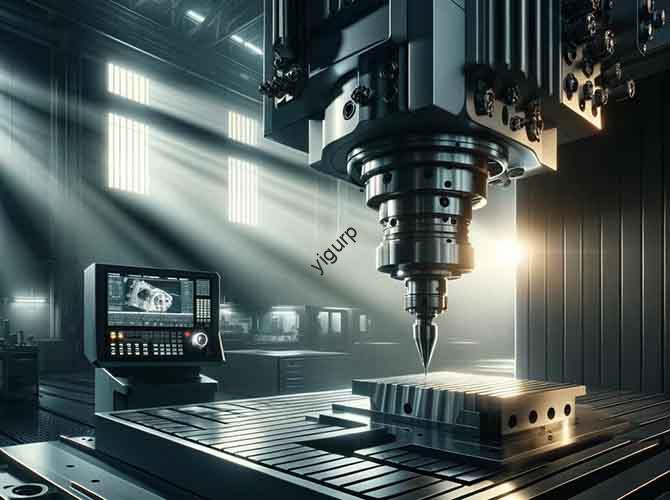
Introduction: Why Your Choice of Machined Parts Manufacturer Matters
Whether you’re building aerospace components or medical devices, the rightmachined parts manufacturer can make or break your project. A great partner delivers parts that meet tight tolerances, adhere to industry standards, and arrive on schedule—while a poor fit can lead to costly rework, delays, or even product failures. In this guide, we’ll walk you through everything you need to know: from understanding core capabilities to evaluating quality, and from selecting materials to optimizing your manufacturing process.
1. Core Manufacturing Capabilities: What Do Manufacturers Actually Do?
At the heart of every reputable manufacturer are their production capabilities. Let’s break down the key processes and when to use them.
Common Machining Processes Explained
Not all machining is the same—each technique serves a unique purpose. Here’s a quick reference:
- Mecanizado CNC: The backbone of modern manufacturing, using computer-controlled tools for precision. Ideal for most metal and plastic parts.
- Fresado CNC: Uses rotating cutters to shape materials (p.ej., aluminum blocks into housing parts). Best for complex 3D geometries.
- Torneado CNC: Spins material against a stationary tool (p.ej., creating bolts or shafts). Perfecto para piezas cilíndricas.
- Swiss-Type Machining: Especializado para pequeños, piezas de alta precisión (down to 0.1mm tolerances). Used heavily in medical and semiconductor industries.
- electroerosión (Mecanizado por descarga eléctrica): Cuts hard materials (like titanium) using electrical sparks. Great for intricate shapes that traditional tools can’t handle.
A Real-World Example
A medical device company needed tiny, hollow titanium needles with a 0.5mm inner diameter. A manufacturer usingSwiss-Type Machining yRectificado de precisión delivered parts with consistent tolerances, while a shop relying solely on standardTorneado CNC struggled with dimensional variation. The difference? Swiss-type machines hold material more securely during machining, critical for micro-parts.
2. Materiales & Industrias: Matching Expertise to Your Needs
Manufacturers specialize in different materials and industries—and that specialization matters. Choosing a partner familiar with your sector ensures they understand unique requirements (p.ej., biocompatibility for medical parts).
Materiales: Ventajas, Contras, and Common Uses
| Material | Key Benefit | Ideal Industry | Limitation |
|---|---|---|---|
| Aluminio | Ligero, rentable | Automotor, Industrial | Low strength vs. acero |
| Acero inoxidable | Resistente a la corrosión | Médico, Procesamiento de alimentos | Heavier and harder to machine |
| Titanio | Alta relación resistencia-peso | Aeroespacial, Defensa | Expensive, slow to machine |
| Exotic Alloys | Resistencia a temperaturas extremas | Aeroespacial, Aceite & Gas | Limited supplier availability |
| Plástica | Resistencia química, low weight | Semiconductor, Médico | Less durable than metals |
Industry-Specific Expertise
- Aeroespacial: RequiresAS9100 certification and experience withtitanio and exotic alloys. Parts must meet strict weight and durability standards.
- Médico: NeedsISO 13485 certification and biocompatible materials (p.ej., surgical-grade stainless steel).
- Automotor: Focuses on high-volume production and cost efficiency (often usingaluminio ylatón).
3. Calidad & Certificaciones: Non-Negotiable Checks
Quality isn’t optional—it’s a requirement. Certifications and inspection processes prove a manufacturer can deliver consistent results.
Must-Have Certifications by Industry
| Industria | Critical Certifications | Why It Matters |
|---|---|---|
| General | ISO 9001 | Ensures a documented quality management system |
| Aeroespacial | AS9100, NADCAP | Meets aerospace safety standards |
| Médico | ISO 13485 | Complies with medical device regulations |
| Defensa | ITAR Registered | Allows handling of defense-related projects |
Quality Control Processes You Should Demand
- First Article Inspection (FAI): Verifies the first part matches your design (required for aerospace/defense).
- Inspección de MMC: Uses coordinate measuring machines to check tolerances (accuracy down to 0.001mm).
- Control estadístico de procesos (proceso estadístico): Monitors production in real time to catch variations before they become defects.
Ejemplo: How Quality Saves Money
An aerospace client once skipped FAI to speed up production. The manufacturer used the wrong tooling, producing 500 faulty parts. The fix cost $20,000 and delayed the project by 3 semanas. A proper FAI would have caught the issue immediately—costing $500 y 1 day.
4. Business & Service Models: Finding the Right Fit
Manufacturers offer different service models—choosing the one aligned with your project needs saves time and money.
Service Models Compared
| Model | Mejor para | Key Benefits |
|---|---|---|
| Job Shop | Low-volume, piezas personalizadas | Flexible, handles unique designs |
| Contract Manufacturing | Alto volumen, long-term projects | Calidad constante, lower costs |
| Prototype to Production | Startups / 新产品开发 | Seamless transition from sample to mass production |
| Low-Volume High-Mix | Multiple custom parts (lotes pequeños) | Efficiently manages varied orders |
Pro Tip: Ask About DFM
Diseño para la fabricabilidad (DFM) is a service where manufacturers review your design to make it easier (and cheaper) to machine. A good DFM review can reduce costs by 15–30%. Por ejemplo, a client’s original design had sharp internal corners—adjusting to rounded corners eliminated the need forelectroerosión (ahorro $2 por parte).
5. Secondary & Finishing Services: The Final Touch
Raw machined parts rarely meet end-use requirements—finishing adds durability, funcionalidad, o estética.
Common Finishing Services & Their Uses
| Servicio | Purpose | Ideal For |
|---|---|---|
| Anodizado | Adds corrosion resistance (aluminio) | Piezas automotrices, equipo al aire libre |
| Pasivación | Prevents rust (acero inoxidable) | Medical instruments, food tools |
| Recubrimiento en polvo | Durable color finish | Maquinaria industrial, bienes de consumo |
| Marcado láser | Adds part numbers/logos | Traceability in aerospace/medical |
La perspectiva de la tecnología Yigu
Choosing amachined parts manufacturer is about partnership, not just procurement. En Yigu Tecnología, we’ve seen too many projects fail due to misaligned expertise—like a startup using a high-volume automotive shop for low-mix medical parts. The best results come from matching three factors: the manufacturer’s core capabilities (e.g.,Swiss-Type Machining for micros), industry experience (e.g.,ISO 13485 para médico), and service model (e.g.,Prototype to Production for new products). Always prioritize transparency—ask for FAI reports, material certifications, and case studies. It’s the only way to ensure your parts meet your standards, on time and on budget.
Preguntas frecuentes: Answers to Common Questions
Q1: How do I verify a manufacturer’s certifications?
Ask for a copy of their certification (p.ej., ISO 13485) and cross-check it with the issuing body’s database. ParaITAR oNADCAP, you can verify registration online through official portals.
Q2: What’s the difference between a job shop and contract manufacturer?
Ajob shop handles small, custom orders (p.ej., 10 piezas prototipo). Acontract manufacturer focuses on large-volume, repeatable production (p.ej., 10,000 automotive components monthly).
Q3: How tight of tolerances can machined parts manufacturers achieve?
It depends on the process: Fresado CNC typically hits ±0.01mm, mientrasSwiss-Type Machining can reach ±0.001mm. Discuss tolerance needs upfront—tighter tolerances increase cost and lead time.
Q4: Do I need to provide 3D models, or can manufacturers work from drawings?
Most manufacturers prefer 3D models (p.ej., STEP files) for accuracy, but they can work from 2D drawings. For best results, include both and note critical dimensions.