
Our Low Volume Vacuum Casting Services
Looking for a cost-effective and precision-driven solution for low-volume production? Yigu Technology’s Low Volume Vacuum Casting services deliver custom, high-quality parts using advanced casting technology. Whether you’re in automotive, aerospace, or medical industries, our expertise in vacuum casting processes, strict quality control, and tailored custom solutions ensure your project meets exact specifications—fast and within budget.
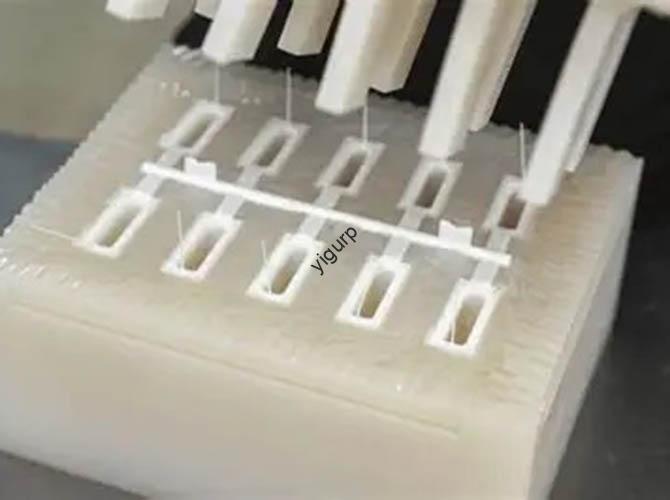
What is Low Volume Vacuum Casting?
Low Volume Vacuum Casting is a specialized manufacturing technique designed to produce small batches of parts (typically 1–500 units) using a flexible silicone mold and vacuum pressure. Unlike high-volume methods like injection molding (which requires costly metal tooling), this process leverages silicone tooling to replicate intricate details, making it ideal for pre-production runs, market testing, or replacement parts that don’t require mass manufacturing.
At its core, the vacuum casting process uses a vacuum chamber to eliminate air bubbles from the mold, ensuring parts have smooth surfaces and consistent dimensions. This technology balances precision with cost-efficiency, filling a critical gap for businesses that need quality parts without the expense of large-scale production setups.
Key Elements of Low Volume Vacuum Casting
| Element | Purpose |
| Silicone Mold | Captures fine design details and enables repeated use (20–50 cycles). |
| Vacuum Chamber | Removes air to prevent defects like bubbles or voids in the final part. |
| Polyurethane Resins | The most common material—mimics the properties of thermoplastics. |
| Master Pattern | A 3D-printed or CNC-machined model used to create the silicone mold. |
Yigu Technology’s Low Volume Vacuum Casting Capabilities
At Yigu Technology, our vacuum casting capabilities are designed to meet the unique needs of low-volume production across industries. We combine decades of manufacturing expertise with state-of-the-art equipment to deliver parts that exceed expectations.
Our core capabilities include:
- Custom Solutions: Tailored to your design, material, and tolerance requirements—no two projects are the same.
- Quality Control: Rigorous testing at every stage (dimensional checks, material durability) to ensure compliance with industry standards.
- Precision Manufacturing: Parts with tight tolerance levels (see Section 6) and consistent quality, even for complex geometries.
- Material Flexibility: Expertise in working with polyurethane, silicone, thermoplastics, and composites (see Section 4 for details).
The table below showcases our performance metrics, demonstrating why we stand out in low volume vacuum casting services:
| Capability Metric | Our Performance | Industry Average |
| Lead Time for 50-Part Batch | 5–7 business days | 10–14 business days |
| Quality Pass Rate | 99.2% | 95.5% |
| Maximum Part Size | 1200mm × 800mm × 600mm | 800mm × 600mm × 400mm |
| Custom Material Options | 20+ types | 10–15 types |
Step-by-Step Low Volume Vacuum Casting Process
The vacuum casting process at Yigu Technology follows 6 clear steps, optimized for low volume efficiency and precision. Each step is managed by our skilled engineers to ensure consistency:
- Master Pattern Preparation: We start with a high-detail master pattern (typically 3D-printed using durable thermoplastics). This pattern defines the final part’s shape and details.
- Silicone Mold Creation: The master pattern is placed in a mold frame, and liquid silicone is poured around it. After curing (4–8 hours), the mold is split to remove the pattern—resulting in a reusable silicone mold.
- Material Preparation: We select the right material (e.g., polyurethane, thermosetting resin) based on your needs (flexibility, heat resistance, color). The material is mixed and degassed to remove air.
- Vacuum Casting: The silicone mold is placed in a vacuum chamber, and the prepared material is injected into the mold. The vacuum eliminates air bubbles, ensuring the material fills every detail of the mold.
- Curing: The mold is heated (or left at room temperature, depending on the material) to cure the part. Curing time ranges from 1–4 hours, depending on the material and part thickness.
Demolding & Finishing: The cured part is removed from the mold, and excess material (flash) is trimmed. We then apply surface treatments (e.g., painting, polishing) as needed (see Section 5).
Materials Used in Low Volume Vacuum Casting
Choosing the right material is critical for vacuum casting success—Yigu Technology offers a wide range of materials to match your part’s performance requirements. Below is a breakdown of our most popular vacuum casting materials and their uses:
| Material Type | Key Properties | Ideal Applications |
| Polyurethane (PU) | High strength, flexibility, resistance to impact and chemicals | Automotive parts (gaskets), consumer electronics (cases) |
| Silicone | Heat resistance (-60°C to 230°C), biocompatibility | Medical devices (seals), kitchen tools |
| Thermoplastics (e.g., ABS, PC) | Rigidity, durability, easy to color | Prototypes (enclosures), aerospace components |
| Thermosetting Resins | High heat resistance, dimensional stability | Industrial parts (gears), electrical insulators |
| Composites (e.g., carbon fiber-reinforced) | Lightweight, high strength | Aerospace parts (structural components), sports equipment |
We also offer custom material blends for unique needs—just share your requirements, and our team will recommend the best option for your low-volume production project.
Surface Treatment for Low Volume Vacuum Casting Parts
Surface treatment enhances the appearance, durability, and functionality of vacuum casting parts. Yigu Technology provides a full range of finishing options to meet industry standards and your aesthetic preferences:
- Painting: Custom colors (matched to Pantone or RAL standards) for a professional look—ideal for consumer products.
- Coating: Protective coatings (e.g., UV-resistant, anti-scratch) to extend part lifespan, perfect for outdoor or high-wear applications.
- Polishing: Achieves a glossy or matte finish (Ra 0.2–0.8 μm) for parts requiring a smooth surface (e.g., medical devices, optical components).
- Texturing: Adds patterns (e.g., leather grain, matte) for grip or aesthetic appeal—common in automotive interiors.
- Anodizing: Creates a corrosion-resistant layer on metal-coated parts (e.g., aluminum-infused polyurethane) for aerospace or marine applications.
- Plating: Adds metal layers (e.g., chrome, nickel) for conductivity or a premium look—used in electronics (connectors) and luxury goods.
Our surface treatment processes are tested to ensure they don’t compromise the part’s tolerances or material properties.
Tolerances & Precision in Low Volume Vacuum Casting
Precision is non-negotiable in low volume vacuum casting—Yigu Technology guarantees tight tolerances to ensure your parts fit and function as intended. Our tolerance capabilities depend on part size and material, but we consistently meet or exceed industry standards.
Below is a table of our typical tolerance levels for common part sizes:
| Part Size (Length × Width) | Typical Tolerance | Material Example |
| Small (≤100mm × 100mm) | ±0.1mm | Polyurethane, Silicone |
| Medium (101mm × 101mm to 500mm × 500mm) | ±0.2mm | Thermoplastics (ABS) |
| Large (>500mm × 500mm) | ±0.3mm | Composites, Thermosetting Resins |
We use advanced measuring tools (e.g., coordinate measuring machines, CMMs) to verify dimensions at every stage, ensuring accuracy for even the most complex parts.
Advantages of Low Volume Vacuum Casting
Low Volume Vacuum Casting offers unique benefits over other manufacturing techniques (e.g., injection molding, 3D printing), making it ideal for small-batch production and prototyping:
- Cost-Effective: No expensive metal tooling—silicone molds are affordable and reusable (up to 50 times for most materials), reducing upfront costs for low-volume production.
- High Precision: The vacuum process eliminates air bubbles, resulting in smooth, defect-free parts with tight tolerances—critical for industries like medical and aerospace.
- Fast Lead Times: Silicone molds are ready in days (not weeks), and parts can be produced in as little as 24 hours after mold creation—perfect for rapid prototyping or urgent projects.
- Material Flexibility: Works with a wide range of materials (see Section 4), including those that mimic mass-produced parts (e.g., flexible PU for rubber-like components).
Customization: Easy to adjust designs or materials between batches—no need to retool, making it ideal for iterative prototyping or custom parts.
Low Volume Vacuum Casting Applications by Industry
Low Volume Vacuum Casting is used across industries for prototyping, small-batch production, and custom parts. Below are key applications by sector:
| Industry | Common Applications | Key Requirements Met |
| Automotive | Prototypes (dashboard components, gaskets), small-batch replacement parts | Heat resistance, impact resistance, precision fit |
| Aerospace | Lightweight structural parts, sensor housings | High strength, dimensional stability, tight tolerances |
| Medical | Biocompatible parts (seals, surgical tools), device enclosures | Biocompatibility, easy sterilization, smooth surfaces |
| Electronics | Custom enclosures, connector housings, heat sinks | Electrical insulation, heat resistance, precision |
| Consumer Goods | Prototypes (toys, kitchen tools), limited-edition products | Aesthetic appeal, durability, cost-effectiveness |
Yigu Technology has experience in all these industries—our team understands sector-specific standards (e.g., ISO 13485 for medical, AS9100 for aerospace) and ensures parts comply with regulations.
Manufacturing Techniques: How Vacuum Casting Compares
While vacuum casting is a top choice for low-volume production, it’s important to understand how it compares to other manufacturing techniques. The table below highlights key differences:
| Manufacturing Technique | Best For | Cost (Low-Volume) | Lead Time | Precision |
| Low Volume Vacuum Casting | 10–1,000 parts, prototyping | Low (no metal tooling) | Fast (5–7 days) | High (±0.1mm for small parts) |
| Injection Molding | 10,000+ parts | High (expensive metal tooling) | Slow (2–4 weeks) | Very High (±0.05mm) |
| 3D Printing | 1–10 parts, complex prototypes | Medium (per-part cost high) | Very Fast (1–2 days) | Medium (±0.3mm) |
| CNC Machining | 1–50 parts, metal or rigid plastics | High (per-part cost) | Medium (3–5 days) | High (±0.05mm) |
For low-volume production (10–1,000 parts), vacuum casting strikes the best balance of cost, speed, and precision.
Case Studies: Yigu Technology’s Success Stories
Our low volume vacuum casting services have helped clients across industries solve production challenges. Here are two key examples:
Case Study 1: Medical Device Prototyping
A leading medical device company needed 50 biocompatible enclosures for a new surgical tool. Requirements included:
- Biocompatible material (silicone)
- Smooth surface (for easy sterilization)
- Lead time: 10 days
Solution: We used a 3D-printed master pattern to create a silicone mold, then cast parts using medical-grade silicone. We applied a polishing surface treatment to meet smoothness requirements.
Result: Parts delivered in 7 days (3 days ahead of schedule), passed biocompatibility testing (ISO 10993), and met all dimensional specs. The client used the parts for clinical trials and later ordered 200 more for small-batch production.
Case Study 2: Automotive Prototype
An automotive manufacturer needed 100 prototype dashboard components to test fit and function. Requirements included:
- Material matching mass-produced ABS (rigidity, color)
- Tolerance: ±0.2mm
- Lead time: 2 weeks
Solution: We used ABS-like polyurethane to cast parts, matching the client’s color with custom painting. We verified tolerances with CMMs.
Result: Parts delivered in 10 days, fit perfectly with existing components, and the client approved the design for mass production. The cost-effective solution saved them $15,000 compared to injection molding tooling.
Why Choose Yigu Technology for Low Volume Vacuum Casting?
When you choose Yigu Technology for low volume vacuum casting, you get more than just parts—you get a partner dedicated to your success. Here’s why clients trust us:
- Expertise: 15+ years of experience in vacuum casting and low-volume production, with a team of engineers specializing in custom solutions.
- Quality Control: Strict testing processes (from material inspection to final dimension checks) ensure parts meet or exceed industry standards.
- Speed: Faster lead times than competitors (5–7 days for most projects) without compromising quality.
- Customization: Tailored solutions for your design, material, and surface finish needs—we don’t offer “one-size-fits-all” services.
- Transparency: Regular updates on your project, with clear pricing and no hidden fees.
We’ve served over 500 clients worldwide, from startups to Fortune 500 companies, and we’re committed to delivering results that help you succeed.