
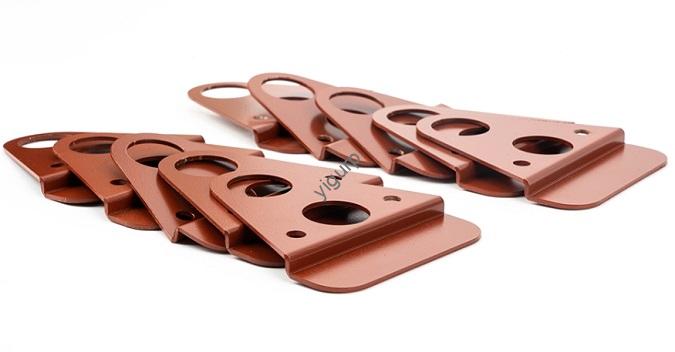
En campos de fabricación de alta gama como el aeroespacial, automotor, y dispositivos médicos, la demanda de rapidez, El desarrollo preciso de prototipos es cada vez mayor.. Laser CNC machining prototype modeling stands out as a game-changing solution, Combinando la precisión de la tecnología láser con el control automatizado del CNC para convertir conceptos de diseño en piezas físicas de manera eficiente.. Este artículo desglosa todo el proceso., highlights key technical points, shares real industry cases, and addresses common challenges—helping engineers, product developers, and procurement teams make informed decisions.
1. Diseño & Programación: Lay the Foundation for Precision
The first step in laser CNC machining prototype modeling is to translate product ideas into actionable digital plans. This phase directly impacts the final prototype’s accuracy and functionality, so attention to detail is critical.
Key Actions:
- 3D Model Creation: Use CAD (Diseño asistido por computadora) software (p.ej., SolidWorks, autocad) to build a detailed 3D model based on the product’s intended use. Por ejemplo, if designing a medical device component like a surgical instrument handle, the model must include specifications for grip texture, weight distribution, and compatibility with other parts.
- CNC Program Development: Convert the 3D model into a machine-readable G-code program. This program dictates the laser’s path, power, velocidad, and depth—ensuring the CNC machine follows exact design parameters. For complex parts like aerospace turbine blades, the program may include thousands of code lines to account for curved surfaces and thin walls.
Pro Tip for Engineers:
Always validate the 3D model for manufacturability (DFM, Diseño para la fabricabilidad) before programming. Por ejemplo, avoid overly sharp corners if using plastic materials—they can crack during laser cutting. This step reduces rework rates by up to 30%, according to a 2024 survey by the Manufacturing Technology Association (MTA).
2. Equipment Selection & Preparación: Choose Tools for Success
Selecting the right laser CNC equipment and ensuring it’s in top condition is vital to avoid machining errors. The choice depends on material type, prototype size, y requisitos de precisión.
Common Laser CNC Equipment Types & Usos
| Equipment Type | Materiales ideales | Aplicaciones típicas | Nivel de precisión |
| Laser Cutting Machines | Metal (aluminio, acero inoxidable), plástico, madera | Paneles de carrocería para automóviles, soportes aeroespaciales | ±0,02 milímetros |
| Laser Engraving Machines | Vaso, cuero, acrílico | Medical device logos, electronic part markings | ±0,01mm |
| Laser Drilling Machines | Titanio, fibra de carbono | Engine fuel injector holes, circuit board vias | ±0,005 mm |
Preparation Steps:
- Calibration: Use laser alignment tools to ensure the laser beam is centered and perpendicular to the worktable. Even a 0.1° misalignment can cause a 0.5 mm error on a 100 mm part.
- Maintenance Check: Inspect the laser tube (replace if power output drops below 90% of rated capacity) and clean the lens to remove dust—dirty lenses reduce cutting efficiency by 20-30%.
3. Preparación de materiales & Fixation: Secure Quality from the Start
The right material and proper fixation prevent shifting or deformation during machining, which is essential for consistent results.
Top Materials for Laser CNC Prototype Modeling
| Categoría de material | Ejemplos | Ventajas clave | Industry Use Cases |
| Rieles | aleación de aluminio 6061, 304 acero inoxidable | Alta resistencia, resistencia a la corrosión | Palas de turbina aeroespacial, componentes automotrices |
| Plástica | ABS, ordenador personal (policarbonato) | Ligero, fácil de mecanizar, bajo costo | Carcasas para dispositivos médicos, electrónica de consumo |
| compuestos | Plástico reforzado con fibra de carbono (CFRP) | Alta relación resistencia-peso | Racing car chassis, marcos de drones |
Fixation Methods:
- Mechanical Clamps: Best for rigid materials like aluminum—ensure clamps don’t block the laser path.
- Vacuum Tables: Ideal for thin or flexible materials like plastic sheets—they distribute pressure evenly to avoid warping.
- Double-Sided Tape: Suitable for small parts (bajo 50 milímetros) like electronic connectors—quick to apply and remove.
4. Roughing & Refinamiento: From Blank to Precision Part
These two steps transform raw materials into finished prototypes, balancing efficiency (roughing) and accuracy (refinamiento).
Paso 4.1: Laser Roughing
- Meta: Remove excess material quickly to shape the part’s basic form. Por ejemplo, if making a 100 mmx 50 mm automotive interior bracket, roughing will cut the blank from a 150 mmx 100 mm aluminum sheet.
- Parameters: Use high laser power (80-90% of maximum) and fast speed (100-200 mm/s) to prioritize efficiency.
- Resultado: A near-net-shape part with a surface roughness of Ra 12.5-25 µm (suitable for pre-finishing).
Paso 4.2: Laser Finishing
- Meta: Refine dimensions and improve surface quality to meet design specs. For a medical device component like a syringe plunger, finishing will smooth the outer surface to ensure a tight seal with the barrel.
- Parameters: Lower laser power (30-50% of maximum) and slower speed (20-50 mm/s) to reduce heat-affected zones (ZAT)—critical for materials like titanium, where HAZ can weaken the part.
- Resultado: A prototype with precise dimensions (±0.02 mm or better) and surface roughness of Ra 0.8-3.2 µm.
5. Post-Treatment & Inspección de calidad: Ensure Compliance
Post-treatment enhances performance and aesthetics, while quality inspection verifies the prototype meets design standards.
Common Post-Treatment Methods
| Método | Objetivo | Materiales ideales |
| Arenado | Create a matte surface, remove burrs | Aluminio, acero inoxidable |
| Anodizado | Improve corrosion resistance, add color | Aluminio |
| Cuadro | Mejorar la estética, protect against wear | Plástico, metal |
| Pulido | Achieve a glossy surface (Real academia de bellas artes < 0.4 µm) | Acero inoxidable, latón |
Quality Inspection Checklist
- Precisión dimensional: Use a coordinate measuring machine (MMC) to check key dimensions—e.g., a turbine blade’s airfoil thickness must match the 3D model within ±0.03 mm.
- Calidad de la superficie: Inspect for scratches, rebabas, or HAZ using a digital microscope (100x magnification).
- Pruebas funcionales: For moving parts like automotive hinges, test durability by opening/closing 10,000 times—no deformation or looseness allowed.
Real-World Industry Cases
Caso 1: Aerospace – Turbine Blade Prototyping
A leading aerospace manufacturer needed a prototype of a titanium turbine blade (complex curved surfaces, 0.5 mm paredes delgadas) for engine testing. Using a laser CNC cutting machine (precision ±0.02 mm) and titanium alloy Ti-6Al-4V, the team completed the prototype in 48 horas (vs. 7 days with traditional machining). Post-treatment included anodizing to improve heat resistance, and quality inspection confirmed all dimensions met ISO 9001 estándares.
Caso 2: Medical Devices – Surgical Instrument Handle
A medical tech company developed a new surgical forceps handle (Plástico ABS, ergonomic grip). They used a laser engraving machine to add anti-slip texture and a laser cutting machine to shape the handle. The prototype passed biocompatibility tests (ISO 10993) and was ready for clinical trials in 3 days—cutting development time by 50%.
Technical Advantages & Challenges of Laser CNC Machining Prototype Modeling
Ventajas
- Alta precisión: Achieves ±0.005 mm accuracy, ideal for micro-parts like electronic sensors.
- Respuesta Rápida: Prototypes can be completed in 24-72 horas, vs. 1-2 weeks with CNC milling.
- Versatilidad de materiales: Funciona con metales, plástica, and composites—no need for multiple machines.
Desafíos
- High Equipment Cost: A industrial-grade laser CNC machine costs \(50,000-\)200,000, which may be a barrier for small businesses.
- Skilled Labor Requirement: Operators need training in CAD/CAM software and laser safety—certified technicians earn 20-30% more than general machinists.
La perspectiva de la tecnología Yigu
En Yigu Tecnología, we believe laser CNC machining prototype modeling is the backbone of rapid innovation in high-end manufacturing. Our team integrates advanced laser systems with AI-driven programming to reduce setup time by 40% and improve precision to ±0.01 mm. We’ve supported aerospace clients in developing turbine blades and automotive firms in testing new interior designs—helping them cut time-to-market by 30-50%. For procurement teams, we offer customized material and equipment packages to balance cost and quality, ensuring every prototype meets industry standards.
Preguntas frecuentes
- q: How long does it take to make a laser CNC prototype?
A: It depends on part complexity and size. Piezas simples (p.ej., plastic brackets) llevar 24-48 horas, while complex parts (p.ej., palas de turbina de titanio) llevar 48-72 horas.
- q: What’s the maximum material thickness laser CNC machines can handle?
A: For metals, arriba a 25 milímetros (acero inoxidable) o 50 milímetros (aluminio). para plasticos, arriba a 100 milímetros (ABS). Thicker materials may require multiple passes.
- q: Is laser CNC machining prototype modeling more expensive than traditional machining?
A: Para prototipos de lotes pequeños (1-10 regiones), laser CNC is 10-20% more cost-effective because it requires less setup time. Para lotes grandes (100+ regiones), mecanizado tradicional (p.ej., molienda) may be cheaper.