
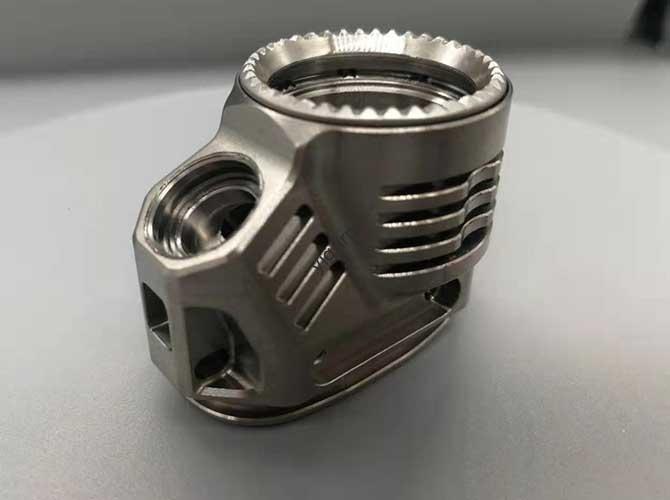
La fundición de precisión y la fundición a presión son dos procesos fundamentales de conformación de metales., cada uno adaptado a distintas necesidades de fabricación; sin embargo, sus diferencias a menudo se malinterpretan, lo que lleva a una costosa selección errónea del proceso. La fundición de precisión sobresale en la creación de alta complejidad., piezas de bajo volumen con precisión excepcional, mientras que la fundición a presión domina la producción de gran volumen de materiales ligeros., componentes de paredes delgadas. Para los fabricantes que deciden entre los dos, understanding their core distinctions in principles, flujos de trabajo, and applications is critical to avoiding defects, reduciendo costos, and meeting project goals. This article systematically breaks down their differences, supported by data, mesas, and real-world examples, para ayudarle a tomar decisiones informadas.
1. Core Principles: How They Work (Fundamental Differences)
The most critical distinction between precision casting and fundición a presión lies in their core working mechanisms—specifically, how molten metal is shaped and solidified. This section uses a contrast structure to highlight their unique principles, with key terms emphasized for clarity.
1.1 Fundición de precisión (Lost Wax Casting)
Fundición de precisión, a menudo llamado “investment casting,” relies on replica wax patterns y refractory shells to achieve near-net shaping. Its core principle is:
- Create a wax pattern identical to the final part (using a metal die or 3D printing).
- Coat the wax pattern with multiple layers of refractory material (p.ej., silica sol, zircon sand) to form a rigid shell.
- Melt and drain the wax (el “lost wax” paso), leaving a hollow cavity in the shell.
- Roast the shell to strengthen it and remove residual wax.
- Pour molten metal (p.ej., acero inoxidable, aleación de titanio) into the hot shell—gravity drives filling, no external pressure is applied.
- Cool, break the shell, and finish the part (tratamiento térmico, pulido).
Its defining trait is precision through replication: the wax pattern captures every detail, and the shell ensures the metal retains that detail during solidification. No high pressure is used, making it ideal for parts with intricate features (p.ej., turbine blades with 0.1mm-thin airfoils).
1.2 fundición a presión
Die casting uses high pressure and high speed to force molten metal into a precision metal mold (morir). Its core principle is:
- Clamp two halves of a metal die (typically H13 steel) shut to form a cavity matching the part’s shape.
- Heat non-ferrous metal (p.ej., aluminio, zinc) to a liquid state (600-700°C for aluminum).
- Inject the molten metal into the die cavity at high pressure (10-175 MPa) y velocidad (3-50 EM) via a hydraulic punch.
- Hold pressure while the metal solidifies quickly (5-30 artículos de segunda clase) to eliminate porosity and ensure dimensional stability.
- Open the die, eject the part, and trim excess material (corredores, destello).
Its key advantage is efficiency through pressure: high pressure ensures fast filling and uniform solidification, making it perfect for mass-produced parts like smartphone frames or automotive housings.
2. Workflow Comparison: Step-by-Step Process Differences
The workflow of each process further highlights their suitability for different production scenarios. Below is a side-by-side table of their key steps, with focus areas and timeframes:
| Stage | Fundición de precisión (Lost Wax) | fundición a presión | Key Difference |
| Pattern/Mold Preparation | – Make wax pattern (1-2 hours per pattern)- Coat with 5-8 refractory layers (24-48 hours total)- Dewax and roast shell (8-12 horas) | – Machine metal die (1-3 months for complex dies)- Preheat die to 180-250°C (10-15 minutes per cycle)- Apply release agent (10-20 seconds per cycle) | Precision casting has longer prep time per batch; die casting has high upfront die costs but fast per-cycle prep. |
| Fusión de metales & Filling | – Melt metal (p.ej., titanium at 1668°C) in a crucible furnace (30-60 minutos)- Pour metal into shell via gravity (no pressure; 1-5 minutes per shell) | – Melt aluminum/zinc in a holding furnace (continuous, no per-cycle delay)- Inject metal at 10-175 MPa (0.5-2 seconds per cycle) | Die casting filling is 100x faster; precision casting handles high-melting metals die casting can’t. |
| Solidificación & Desmoldeo | – Cool metal in shell (1-4 horas, dependiendo del tamaño de la pieza)- Break shell manually or with vibration (10-30 minutos por parte) | – Solidify under pressure (5-30 artículos de segunda clase)- Eject part with pins (10-20 seconds per cycle) | Die casting cycle time (60-120 seconds/part) is exponentially faster than precision casting (hours/part). |
| Postprocesamiento | – Remove gating (molienda, 5-10 minutos por parte)- Heat treat (p.ej., titanium alloy annealing, 2-4 horas)- Polish to Ra 0.8-3.2 µm (15-30 minutos por parte) | – Trim flash with a press (5-10 segundos por parte)- Minimal machining (only for critical features, 1-5 minutos por parte)- Surface coating (p.ej., anodizado, 30-60 minutes per batch) | Precision casting needs more post-processing; die casting requires minimal finishing due to high die accuracy. |
3. Key Performance & Application Differences
Beyond principles and workflows, precision casting and die casting differ sharply in performance metrics and ideal use cases. The following sections use tables and examples to clarify these distinctions.
3.1 Performance Metrics Comparison
| Metric | Fundición de precisión | fundición a presión |
| Precisión dimensional | ±0.1-0.2 mm for parts ≤300mm; ideal for tight tolerances | ±0.05-0.1 mm for small parts; slightly lower for large parts (>500milímetros: ±0.2-0.3 mm) |
| Acabado superficial | Real academia de bellas artes 0.8-3.2 µm (can reach Ra 0.4 μm with polishing) | Real academia de bellas artes 1.6-6.3 µm (better for aluminum/zinc; rougher for magnesium) |
| Compatibilidad de materiales | todos los metales: acero inoxidable, titanio, acero carbono, nickel superalloys | Limited to non-ferrous metals: aluminio (60% of die casts), zinc (25%), magnesio (15%) |
| Part Complexity | Handles extreme complexity: cavidades internas, paredes delgadas (0.5milímetros), socavados | Best for external complexity; internal features need removable cores (add cost/defect risk) |
| Porosity | Bajo (<1%)—gravity filling minimizes air entrainment | Más alto (2-5% for standard die casting); reduced to <1% with vacuum die casting |
| Resistencia mecánica | Higher strength after heat treatment (p.ej., titanium alloy σb=900-1200 MPa) | Moderate strength (aluminum ADC12 σb=300-350 MPa); limited heat treatment due to porosity |
3.2 Ideal Application Scenarios
3.2.1 Fundición de precisión: High-Value, Low-Volume Parts
Precision casting shines in industries where complexity, rendimiento de los materiales, and accuracy are prioritized over speed:
- Aeroespacial: Palas de turbina (aleación de titanio, complex airfoils), engine combustion chambers (nickel superalloys, resistencia a altas temperaturas). Ejemplo: GE uses precision casting for jet engine blades that withstand 1200°C and 50,000 RPM.
- Dispositivos médicos: Instrumentos quirúrgicos (acero inoxidable, biocompatibilidad), implantes de cadera (aleación de titanio, bone-like strength). Ejemplo: Stryker’s hip implants use precision casting to achieve 0.1mm accuracy for bone fitting.
- Aceite & Gas: Valve cores (super duplex stainless steel, resistencia a la corrosión), wellhead components (acero carbono, high pressure tolerance). Ejemplo: Schlumberger uses precision cast valve cores for offshore drilling (30,000 psi pressure rating).
3.2.2 fundición a presión: High-Volume, Piezas ligeras
Die casting dominates industries where speed, costo, and lightweighting are key:
- Automotor: Marcos de baterías para vehículos eléctricos (aluminio, 500,000+ unidades/año), carcasas de transmision (zinc, 1M+ units/year). Ejemplo: Tesla’s Model 3 uses die cast aluminum battery frames to reduce weight by 30%.
- Electrónica de Consumo: Smartphone middle frames (magnesio, 10M+ units/year), laptop palm rests (aluminio, 5M+ units/year). Ejemplo: Apple uses die cast aluminum for MacBook housings (1.5mm paredes delgadas, 100,000 units/day).
- Electrodomésticos: Air conditioner compressor shells (aluminio, 2M+ units/year), washing machine motor brackets (zinc, 1.5M+ units/year). Ejemplo: Haier uses die cast zinc brackets for washing machines (bajo costo, 20-second cycle time).
4. Comparación de costos: When to Choose Which for ROI
Cost is a decisive factor, and the two processes have vastly different cost structures. The table below breaks down costs for a 10,000-unit production run of a 500g part:
| Cost Category | Fundición de precisión (Stainless Steel Part) | fundición a presión (Aluminum Part) |
| Upfront Costs | – Wax die: \(5,000<br>- Shell materials: \)2,000 | – Metal die: \(50,000<br>- Die casting machine setup: \)10,000 |
| Per-Part Costs | – Wax pattern: \(5<br>- Refractory materials: \)3- Labor (shell making, pouring): \(12<br>- Postprocesamiento: \)8 | – Metal: \(1.5<br>- Labor (automatizado): \)0.5- Postprocesamiento: $1 |
| Total 10k-Unit Cost | \(280,000 (\)28/part) | \(85,000 (\)8.5/part) |
Key Cost Takeaways:
- Fundición de precisión: Lower upfront costs make it economical for small batches (<5,000 unidades). Per-part costs stay high due to manual labor.
- fundición a presión: High upfront costs (morir + máquina) are offset by low per-part costs for large batches (>10,000 unidades). Para 100,000 unidades, die casting’s total cost drops to \(115,000 (\)1.15/part), while precision casting remains at $280,000.
5. Yigu Technology’s Perspective on Process Selection
En Yigu Tecnología, we believe process selection should be driven by “fit for purpose”—not trends. Many clients mistakenly choose die casting for low-volume, high-complexity parts (p.ej., 1,000 soportes aeroespaciales), wasting $50k+ on dies that are never fully utilized. Others use precision casting for high-volume consumer parts (p.ej., 100,000 fundas de móvil), doubling production costs.
We recommend a 3-step decision framework: 1. Define non-negotiables (volumen, material, complejidad). 2. Calculate total cost of ownership (not just per-part cost). 3. Test with small batches (p.ej., 100 precision cast prototypes vs. 100 die cast samples) to validate performance.
For hybrid needs (p.ej., high complexity + medium volume), we advocate combining processes: use precision casting for critical components (p.ej., medical implant heads) and die casting for non-critical housings. By aligning process capabilities with project goals, manufacturers can cut costs by 30-50% while improving quality.
6. Preguntas frecuentes: Common Questions About Precision Casting vs. fundición a presión
Q1: Can die casting produce parts with the same complexity as precision casting (p.ej., internal undercuts)?
Technically yes, but it’s costly and risky. Die casting requires removable metal cores to create internal undercuts—each core adds \(10k-\)20k to die costs and increases defect risk (cores can get stuck or misaligned). Fundición de precisión, by contrast, creates undercuts easily via wax patterns—no extra cost or risk. For complex internal features, precision casting is far more practical.
Q2: Is precision casting always more expensive than die casting?
No—only for large batches. For small runs (<5,000 unidades), precision casting is cheaper. Por ejemplo, 1,000 stainless steel parts cost \(53,000 with precision casting vs. \)61,000 with die casting (due to $50k die costs). Die casting becomes cheaper only when volume exceeds ~8,000 units, where low per-part costs offset upfront investments.
Q3: Can die casting parts be heat treated to match precision casting’s strength?
Rarely. Die casting parts have inherent porosity—heat treatment (p.ej., T6 for aluminum) causes pores to expand, leading to cracking or deformation. Precision casting parts, con baja porosidad, can undergo full heat treatment (p.ej., recocido, temple) to reach high strength (p.ej., titanium alloy σb=1200 MPa). For high-strength applications (p.ej., piezas estructurales aeroespaciales), precision casting is the only viable option.