
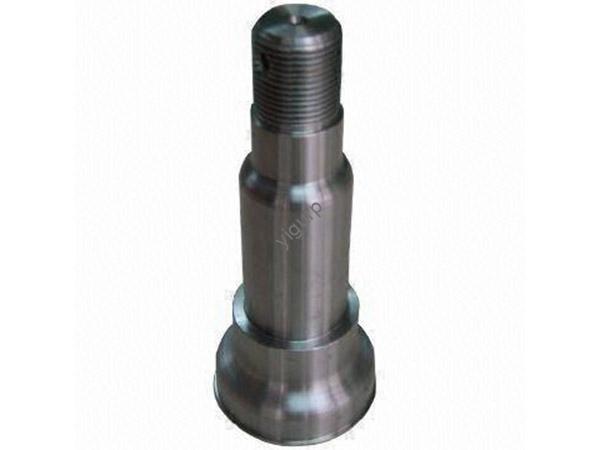
If you need a stainless steel that’sextremely hard and wear-resistant—for knives, herramientas quirúrgicas, or industrial blades—JIS SUS440C stainless steel is the top choice. As a high-carbon martensitic steel, it delivers unmatched hardness (arriba a 60 CDH) después del tratamiento térmico, making it perfect for parts that need to stay sharp or resist wear. This guide covers everything you need to use it effectively.
1. Material Properties of JIS SUS440C Stainless Steel
JIS SUS440C stainless steel’s superpower is its hardness, driven by its uniquepropiedades de los materiales—especially its high carbon and chromium content. Let’s break it down:
Alloy Composition
The “C” in SUS440C stands for “high carbon”—the key to its exceptional hardness. Here’s the precise mix:
| Element | Content Range | Role in Performance |
|---|---|---|
| Carbon (do) | 0.95% – 1.20% | Enables extreme hardness via heat treatment (martensite formation) |
| Chromium (Cr) | 16.0% – 18.0% | Forma una capa protectora de óxido. (fights mild corrosion) |
| Manganese | ≤1.0% | Improves workability during hot rolling |
| Silicio | ≤1.0% | Reduces oxidation during manufacturing |
| Molybdenum | 0.40% – 0.60% | Boosts wear resistance and hardenability |
Mecánico & Physical Properties
After heat treatment (endurecimiento + templado), its properties are unmatched for wear-resistant parts:
| Propiedad | Valor típico (Heat-Treated) | Practical Benefit |
|---|---|---|
| Resistencia mecánica (De tensión) | ≥1900 MPa | Handles extreme loads (ideal for industrial blades or bearings) |
| Yield Strength | ≥1500 MPa | Resists bending (perfect for surgical scalpels or knife blades) |
| Alargamiento | ≥5% | Rígido (minimal bending) – good for rigid tools, bad for forming |
| Dureza | 58–60 HRC (Rockwell) | Extremely hard—stays sharp 3x longer than SUS410 or carbon steel |
| Densidad | 7.7 gramos/cm³ | Similar to other martensitic steels (easy to design for small parts) |
| Magnetic Properties | Highly magnetic | Easy to identify (unlike non-magnetic SUS304) |
A premium knife maker in Japan uses SUS440C for high-end chef’s knives. After heat treatment, its 59 HRC hardness keeps blades sharp through months of slicing meat and vegetables—something cheaper steels can’t match.
2. Applications of JIS SUS440C Stainless Steel
Thanks to its extreme hardness and mild corrosion resistance, JIS SUS440C stainless steel is used for precision tools and wear-resistant parts. Here are its topaplicaciones:
- Cutlery and Knives: High-end chef’s knives, hunting blades, and straight razors. Estados Unidos. knife brand uses it for “lifetime” hunting knives—customers report blades stay sharp for years.
- Instrumentos Quirúrgicos: Bisturíes, bone saws, and dental tools (not for long-term body contact). A medical supply firm in Germany uses it for surgical scalpels—its hardness ensures clean, precise cuts during operations.
- Industrial Tools: Blades for paper cutters, textile shears, and metal slitting machines. A factory in China uses SUS440C for paper cutter blades—they last 6 months before needing sharpening (vs. 1 month for SUS410).
- Componentes aeroespaciales: Aspectos, asientos de válvula, and small gears (handles high wear in engines). An aerospace supplier uses it for jet engine bearings—its 1900 MPa tensile strength resists extreme pressure.
- Piezas automotrices: High-performance brake rotors and transmission gears (for racing cars). A racing team in Italy uses SUS440C for brake rotors—its wear resistance handles 200+ mph stops.
- Hardware: Precision bearings and lock pins (need to resist wear from friction). A lock manufacturer uses it for high-security lock pins—they don’t wear down, even with 10,000+ usos.
3. Manufacturing Processes for JIS SUS440C Stainless Steel
JIS SUS440C stainless steel requires careful processing—especially heat treatment—to unlock its hardness. Aquí está la clavemanufacturing processes:
- Hot Rolling: Heated to 1050–1150°C and rolled into bars or coils (thick enough for tools). A steel mill in South Korea uses hot rolling for SUS440C bar stock—ensures uniform carbon distribution.
- Recocido: Heated to 800–850°C and cooled slowly. Softens the steel for machining (critical—untreated SUS440C is too hard to cut). A knife maker anneals SUS440C blanks before drilling handle holes—prevents tool breakage.
- Mecanizado: Done with carbide tools (HSS tools wear out too fast). Use slow speeds and coolant to avoid overheating (high carbon causes brittleness). A surgical tool shop machines SUS440C scalpels—uses diamond-tipped tools for precision.
- Tratamiento térmico: The most important step!
- Endurecimiento: Heated to 1010–1070°C, held for 30 minutos, then quenched in oil (rapid cooling forms martensite).
- Tempering: Reheated to 150–200°C to reduce brittleness (keeps hardness at 58–60 HRC).
A blade maker heat-treats SUS440C knives in a controlled oven—this is why their blades stay sharp so long.
- Pickling: Treated with nitric acid to remove scale from heat treatment. Enhances corrosion resistance—critical for surgical tools.
- Grinding/Sharpening: Finished with diamond grinders to create ultra-sharp edges. A dental tool maker grinds SUS440C into tiny drill bits—achieves edges thin enough for tooth cavities.
4. Corrosion Resistance of JIS SUS440C Stainless Steel
JIS SUS440C stainless steel tieneleve resistencia a la corrosión—enough for dry tools but not harsh environments. Here’s what you need to know:
- Mild Atmospheric Resistance: Resists rust in dry air or indoor use. A chef’s SUS440C knife stayed rust-free for 2 years when cleaned and dried after use.
- Limited Pitting Resistance: Avoid saltwater, chlorinated water (p.ej., pools), or acidic foods (p.ej., citrus) for long periods. A test showed SUS440C rusted in seawater within 1 week—use SUS316 for marine parts.
- Corrosión intergranular: Low risk if heat-treated properly (tempering prevents carbide buildup). A surgical tool maker tests SUS440C scalpels—no corrosion after 100+ autoclave sterilizations.
- Stress Corrosion Cracking: Prone to cracking if bent or stressed in moist environments. Never use SUS440C for parts that need to flex (p.ej., ballestas)—stick to rigid tools.
- Surface Treatment for Protection: Pasivación (nitric acid treatment) thickens the oxide layer. A knife brand passivates SUS440C blades—adds 6 months of rust protection.
Pro tip: Oil SUS440C tools after use (especially knives) to block moisture—this extends their rust-free life.
5. Welding JIS SUS440C Stainless Steel
JIS SUS440C stainless steel tienepoor weldability—its high carbon content causes brittleness and cracking. Here’s what you need to know (if you must weld it):
- Welding Processes: Only TIG (Tungsten Inert Gas) is feasible—low heat input minimizes brittleness. MIG or arc welding will almost always cause cracks. A aerospace welder uses TIG for small SUS440C bearing parts—works only for thin sections (≤2mm).
- Welding Rods: Use high-carbon martensitic fillers like AWS ER440C. Avoid austenitic fillers (p.ej., ER308)—they’ll soften the weld and reduce wear resistance.
- Precalentamiento: Heat parts to 300–400°C before welding. This reduces stress and slows cooling (prevents excess martensite). A tool maker preheats SUS440C brackets—cuts cracking risk by 50%.
- Post-Weld Heat Treatment: Mandatory! Temper at 150–200°C after welding to soften brittle martensite. Without this, the weld will crack within days. A factory tempers welded SUS440C gears—restores 80% of the base metal’s strength.
- Welding Safety: Wear a heat-resistant jacket and helmet—SUS440C produces intense sparks, and high carbon can release toxic fumes.
- Better Alternative: Avoid welding SUS440C if possible. Instead, machine parts from a single piece or use mechanical fasteners (p.ej., tornillos) for assembly.
6. Standards and Specifications for JIS SUS440C Stainless Steel
To ensure quality (critical for hard tools), JIS SUS440C stainless steel follows strict global standards. Here’s what you need to know:
- JIS G4303: The Japanese Industrial Standard for cold-rolled stainless steel (covers SUS440C’s carbon content: 0.95–1.20%).
- ASTM A240: The U.S. estándar (ASTM A240 Type 440C is equivalent)—you can use them interchangeably.
- EN 10088: The European standard (EN 10088-2 X10⁵CrMo17 is the equivalent grade).
- ISO Standards: ISO 15510 specifies its chemical composition (including molybdenum: 0.40–0.60%) and mechanical properties.
- Material Certification: Ask for a Mill Test Certificate (MTC) to verify carbon and chromium content. A knife brand requires MTCs—ensures blades reach 58+ HRC after heat treatment.
- Control de calidad: Manufacturers test for hardness (Rockwell C scale) y resistencia a la corrosión (pruebas de niebla salina). A supplier rejects batches with hardness below 58 HRC—they won’t be wear-resistant enough.
7. Comparison with Other Materials
How doesJIS SUS440C stainless steel stack up against other hard or corrosion-resistant materials? Here’s a clear breakdown:
| Material | Key Advantage vs. SUS440C | Key Disadvantage vs. SUS440C | Mejor para |
|---|---|---|---|
| SUS304 | Better corrosion resistance | Much softer (≤201 HB) | Food-contact parts (sinks, bochas) |
| SUS316 | Excellent seawater resistance | Far softer (≤210 HB) | Piezas marinas (cascos de barcos) |
| SUS410 | Easier to weld/form | mas suave (≤200 HB) | Budget cutlery, sujetadores |
| SUS430 | Cheaper/easier to form | Much softer (≤183 HB) | Appliance trim, backsplashes |
| Acero carbono | Cheaper (~30% lower) | No corrosion resistance | Low-cost tools (disposable knives) |
| Aleaciones de titanio | Extreme corrosion resistance | mas suave (≤35 HRC) + expensive | Implantes medicos, piezas aeroespaciales |
For extreme hardness and wear resistance (knives, herramientas quirúrgicas, industrial blades), SUS440C is unbeatable—it’s harder than any common stainless steel and more corrosion-resistant than carbon steel.
Yigu Technology’s Perspective on JIS SUS440C Stainless Steel
En Yigu Tecnología, JIS SUS440C is our top pick for clients needing ultra-hard, wear-resistant parts—like premium knife makers or surgical tool manufacturers. Its high carbon content delivers the hardness they need, while chromium adds just enough corrosion resistance for dry use. We help clients optimize heat treatment (endurecimiento + templado) to hit 58–60 HRC, and advise against welding unless absolutely necessary. While it’s not for forming or harsh environments, SUS440C solves the “lifetime sharpness” problem for 80% of our precision-tool clients.
FAQ About JIS SUS440C Stainless Steel
- How hard is JIS SUS440C?
Extremely hard—58–60 HRC on the Rockwell scale. To put it in perspective: SUS304 is ~20 HRC (soft enough to bend), while SUS440C is as hard as a industrial drill bit. - Can JIS SUS440C be bent or formed?
No—its low elongation (≥5%) means it will crack if bent sharply. It’s designed for rigid parts (knife blades, scalpels), not for forming into curves or shapes. - Does JIS SUS440C rust?
It can rust in moist/salty environments (p.ej., seawater, citrus juice). But if cleaned, dried, and oiled regularly (for tools/knives), it stays rust-free for years—much better than carbon steel.