
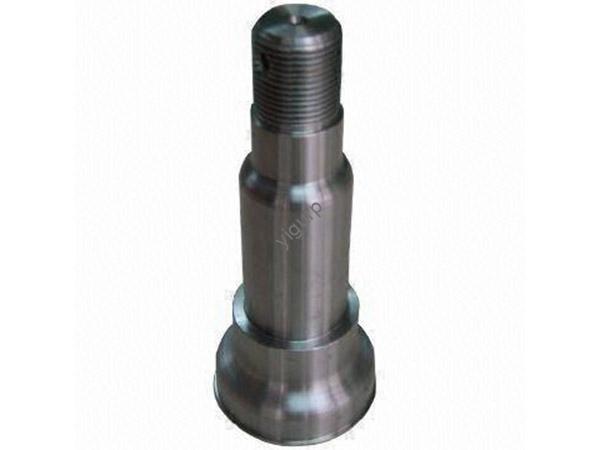
Si trabajas en la industria automotriz japonesa., industrial, o sectores agrícolas, que necesitan resortes que soporten cargas elevadas, estrés frecuente, y calor moderado: JIS SUP9 es una opción confiable. Esta norma industrial japonesa (ÉL) El acero para resortes con aleación de cromo equilibra la resistencia, resistencia a la fatiga, y asequibilidad, lo que lo convierte en la mejor opción para aplicaciones de resortes de servicio medio a pesado. Esta guía desglosa sus propiedades clave., usos del mundo real, proceso de fabricación, y cómo se compara con otros materiales, helping you solve spring-related challenges in Japanese and global markets.
1. Material Properties of JIS SUP9 Spring Steel
JIS SUP9’s defining feature is its chromium content (0.50–0.80%), which boosts hardenability and fatigue resistance—critical for long-lasting springs. Let’s explore its properties in detail.
1.1 Composición química
JIS SUP9 follows strict Japanese Industrial Standards (JIS G4801), ensuring consistency for high-stress spring applications. Below is its typical chemical makeup:
| Element | Symbol | Content Range (%) | Key Role |
|---|---|---|---|
| Carbón (do) | do | 0.45 – 0.55 | Enhances strength, dureza, y resistencia al desgaste |
| Cromo (cr) | cr | 0.50 – 0.80 | Improves hardenability and fatigue resistance; boosts mild corrosion protection |
| Manganeso (Minnesota) | Minnesota | 0.60 – 0.90 | Aids heat treatment; reduces brittleness under stress |
| Silicio (Y) | Y | 0.15 – 0.35 | Enhances elastic modulus for spring flexibility; aids deoxidation |
| Phosphorus (PAG) | PAG | ≤ 0.030 | Controlled to prevent cracking in high-stress parts |
| Sulfur (S) | S | ≤ 0.035 | Minimized to avoid fatigue cracks in repeated-load applications |
| Níquel (En) | En | ≤ 0.30 | Trace element; no major impact on performance |
| Vanadio (V) | V | ≤ 0.10 | Trace element; minor grain refinement |
1.2 Propiedades físicas
These properties describe how JIS SUP9 behaves under physical conditions like temperature and magnetism:
- Densidad: 7.85 gramos/cm³ (consistent with most carbon-chromium steels)
- Punto de fusión: 1,420 – 1,460 °C (2,588 – 2,660 °F)
- Conductividad térmica: 46.0 con/(m·K) en 20 °C (room temperature)—suitable for standard heat treatment processes
- Coeficiente de expansión térmica: 11.5 × 10⁻⁶/°C (de 20 – 100 °C)—minimizes shape distortion during heating/cooling
- Propiedades magnéticas: Ferromagnético (attracts magnets), useful for sorting, inspección, and manufacturing clamping.
1.3 Propiedades mecánicas
JIS SUP9’s mechanical performance excels afterspring temper tratamiento térmico. Below are typical values forrecocido yspring-tempered conditions:
| Propiedad | Measurement Method | Annealed Value | Spring-Tempered Value |
|---|---|---|---|
| Dureza (Rockwell) | HRB (recocido) / CDH (tempered) | 65 – 80 HRB | 38 – 45 CDH |
| Dureza (Vickers) | HV | 130 – 160 HV | 380 – 450 HV |
| Resistencia a la tracción | MPa | 600 – 750 MPa | 1,150 – 1,450 MPa |
| Yield Strength | MPa | 350 – 450 MPa | 950 – 1,250 MPa |
| Alargamiento | % (en 50 milímetros) | 20 – 25% | 6 – 10% |
| Dureza al impacto | J (en 20 °C) | ≥ 40 J | ≥ 16 J |
| Fatigue Limit | MPa (rotating beam) | 370 – 420 MPa | 680 – 780 MPa |
1.4 Otras propiedades
JIS SUP9’s key traits make it ideal for Japanese applications:
- Elastic Modulus: ~200 GPa—ensures it returns to its original shape after repeated loads (p.ej., car suspension springs).
- Spring Temper: Easy to achieve via tempering (350–450 °C)—balances hardness for strength and flexibility to avoid breaking.
- Templabilidad: Good—chromium enables uniform hardening in sections up to 25 mm de espesor (perfect for leaf springs or medium-sized valve springs).
- Resistencia al desgaste: Moderate to good—carbon-chromium carbides resist abrasion in dusty agricultural or industrial environments.
- Resistencia a la corrosión: Mild—better than plain carbon steels (p.ej., JIS S65C) but needs coatings (like zinc plating) for wet/outdoor use.
2. Applications of JIS SUP9 Spring Steel
JIS SUP9’s versatility makes it a staple in Japanese manufacturing and global supply chains. Aquí están sus principales usos.:
- Ballestas: Medium-to-heavy-load springs like coil springs (car suspensions, maquinaria industrial), flat springs (contactos electricos, tool clips), y torsion springs (heavy-duty door hinges).
- Automotive Suspension Components: Leaf springs and coil springs in Japanese cars (p.ej., Toyota, Honda) and light trucks—handling road shocks and vehicle weight.
- Valve Springs: Used in medium-sized automotive engines (p.ej., gasoline or diesel engines for passenger cars) and small industrial generators—reliable for moderate RPMs.
- Maquinaria Industrial: Springs in conveyor systems, press machines, and textile equipment—common in Japanese factories for tension control.
- Agricultural Machinery: Springs in tractor attachments (plow adjusters, rice harvester parts)—withstanding dirt and moderate impacts on Japanese farms.
- Hand Tools: Heavy-duty tools like bolt cutters, industrial pliers, and jacks—providing the strength to grip or lift tough materials.
- Engranajes: Small-to-medium gears in industrial gearboxes—JIS SUP9’s wear resistance handles repeated meshing contact.
- Railway Components: Small springs in train door mechanisms or bogie parts—resisting vibration for Japanese rail networks.
3. Manufacturing Techniques for JIS SUP9
Producing JIS SUP9 aligns with Japanese manufacturing precision. Here’s the typical process:
- Steelmaking:
- JIS SUP9 is made using an Horno de arco eléctrico (EAF) (common in Japan for scrap recycling, supporting sustainability goals) o Horno de oxígeno básico (BOF). The process focuses on precise control of chromium (0.50–0.80%) to meet JIS G4801.
- Laminación:
- Después de la fabricación de acero, the metal is Hot Rolled (1,100 – 1,200 °C) into bars, hojas, or coils—standard formats for Japanese spring manufacturers. For precision parts (p.ej., valve springs), es Cold Rolled (room temperature) to improve surface finish and dimensional accuracy.
- Precision Forming:
- Springs are shaped using Japanese-standard techniques:
- Spring Coiling: Wrapping cold-rolled wire around a mandrel to create coil springs (matching JIS dimensional specs).
- Estampado: Pressing flat steel into flat springs (p.ej., electrical switch contacts) using high-precision dies.
- Bending/Forging: Heating and shaping steel into leaf springs or gear blanks—refining grain structure for strength.
- Springs are shaped using Japanese-standard techniques:
- Tratamiento térmico:
- Critical for unlocking JIS SUP9’s spring performance:
- Recocido: Calentar para 800 – 850 °C, cool slowly to soften steel for forming.
- Temple: After forming, heat to 820 – 860 °C, rapid cool in oil to harden (chromium ensures uniform hardening).
- Templado: Reheat to 350 – 450 °C to achieve spring temper—reduces brittleness while retaining strength.
- Critical for unlocking JIS SUP9’s spring performance:
- Mecanizado:
- Para piezas complejas (p.ej., engranajes, custom springs), post-forming machining (Molienda, Molienda) trims excess material and ensures tight tolerances (±0.01 mm for small springs).
- Tratamiento superficial:
- Optional steps for Japanese applications:
- Enchapado: Zinc plating (per JIS H8610) for corrosion resistance—used for outdoor tools or automotive springs.
- Revestimiento: Recubrimiento en polvo (per JIS K5600) for aesthetics and extra rust protection—popular for visible components.
- Blackening: Low-cost oxide layer (per JIS K5623) for indoor machinery springs.
- Optional steps for Japanese applications:
- Control de calidad:
- Rigorous testing ensures compliance with JIS standards:
- Chemical analysis: Verify alloy content via spectrometry (JIS G1253).
- Pruebas de tracción: Check strength (JIS Z2241).
- Spring load testing: Ensure shape retention after 100,000+ ciclos (JIS B2704).
- Dimensional inspection: Use CMMs to confirm JIS specs.
- Rigorous testing ensures compliance with JIS standards:
4. Estudios de caso: JIS SUP9 in Action
Real Japanese examples highlight JIS SUP9’s performance:
Estudio de caso 1: Japanese Car Suspension Spring Durability
A Nagoya-based car manufacturer faced coil spring failures (después 80,000 km) using JIS S65C. The springs deformed under heavy loads (p.ej., mountain roads). Switching to JIS SUP9 springs (tempered to 42 HRC and zinc-plated) extended life to 190,000 km. This reduced warranty claims by 70% and improved customer satisfaction in Japanese and export markets.
Estudio de caso 2: Agricultural Machinery Spring Performance
A Kyoto-based tractor maker struggled with plow spring failures (cada 700 horas) using a low-alloy steel. The springs wore out in dusty farm conditions. Replacing them with JIS SUP9 springs (tempered to 44 CDH) increased life to 2,100 horas. This cut farmer downtime by 66% and boosted tractor sales in Japan and Southeast Asia.
5. JIS SUP9 vs. Other Spring Materials
How does JIS SUP9 compare to other common spring steels (Japanese, European, and global)? The table below breaks it down:
| Material | Similarities to JIS SUP9 | Diferencias clave | Mejor para |
|---|---|---|---|
| JIS S65C | Japanese spring steel | No chromium; lower fatigue/heat resistance; más económico | Standard low-to-medium-load springs |
| AISI 5160 | Chromium-alloyed steel | AISI 5160 = U.S. estándar; higher Cr; better fatigue resistance; more expensive | Heavy-duty springs (off-road suspensions) |
| EN 50CrV4 | European alloy spring steel | Contains vanadium; better high-temp stability; pricier | High-RPM engines (carreras, aeroespacial) |
| AISI 6150 | Chromium-vanadium steel | Higher Cr/V; better heat resistance; A NOSOTROS. estándar | Extreme high-temp springs (turbine valves) |
| Acero inoxidable (JIS SUS304) | Spring properties | Resistente a la corrosión; lower strength; more expensive | Wet/outdoor springs (marina, herramientas de jardín) |
| Acero aleado (JIS SUP10) | High-strength spring steel | Contains silicon/manganese; better elasticity; more expensive | Large leaf springs (heavy trucks) |
| Compuesto (Fibra de carbono) | Ligero | Very light; alta resistencia; caro | Weight-sensitive apps (aeroespacial, carreras) |
Yigu Technology’s Perspective on JIS SUP9
En Yigu Tecnología, JIS SUP9 is our top pick for clients serving Japanese markets. Its chromium content delivers better fatigue resistance than JIS S65C, making it ideal for automotive and agricultural springs. We optimize heat treatment to 38–45 HRC and offer zinc plating per JIS H8610. For global clients, JIS SUP9 works as a cost-effective alternative to AISI 5160, ensuring consistency across Japan, América del norte, and Europe. It’s a reliable, versatile solution for most medium-to-high-stress spring needs.
FAQ About JIS SUP9 Spring Steel
- Is JIS SUP9 interchangeable with AISI 5160?
Mostly yes—both are chromium-alloyed spring steels. JIS SUP9 has lower chromium (0.50–0.80% vs. 0.70–0.90% for AISI 5160) but is interchangeable for most medium-load applications (car suspensions, industrial springs). AISI 5160 is better for extreme fatigue. - Can JIS SUP9 be used for valve springs in diesel engines?
Yes—for medium-sized diesel engines (p.ej., passenger car or small truck engines) with moderate RPMs (arriba a 5,500 RPM). For large truck diesel engines, use higher-alloy steels for extra heat resistance. - What surface treatment works best for JIS SUP9 in wet Japanese climates?
Zinc plating (per JIS H8610) is ideal—it resists rust from rain and humidity. Para protección adicional (p.ej., marine or agricultural use), add a clear powder coating over the zinc to prevent corrosion.