
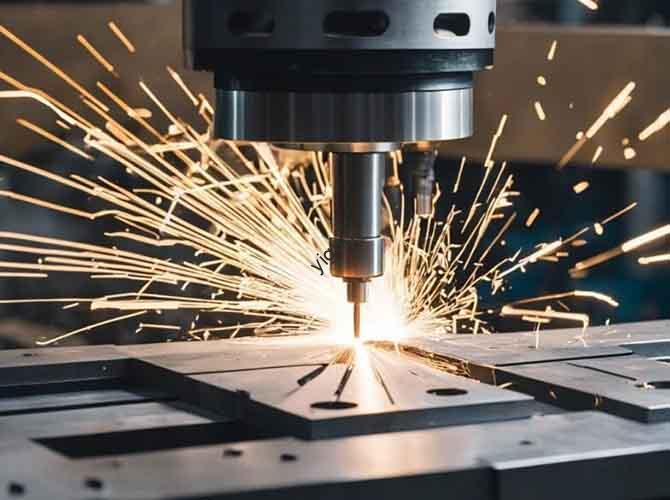
Hardware shrapnel prototypes are critical components in electronic devices, piezas automotrices, and industrial equipment—their elasticity, precisión, and durability directly affect product performance. From material selection to testing validation, every link in the production process requires careful planning to meet functional and cost goals. This article systematically breaks down the core requirements, production processes, cost optimization, and supplier selection for hardware shrapnel prototypes, with practical tables and examples to guide engineers and businesses.
1. Core Requirements for Hardware Shrapnel Prototypes
Before starting production, clarify key requirements to avoid rework. These requirements determine material choices, processing methods, and testing standards.
1.1 Requirement Breakdown with Impact Analysis
| Requirement Category | Key Details | Impact on Production | Ejemplo práctico |
| Functional Performance | – Elasticidad: Rebound force (p.ej., 5-10N recovery force after 5mm compression) and resilience (≥90% shape recovery).- Fatigue Life: Number of repeated uses without performance degradation (p.ej., 10,000+ compression cycles for electronic shrapnel).- Special Functions: Conductividad (for contact shrapnel), resistencia a la corrosión (for outdoor equipment). | Determines material selection (p.ej., phosphor bronze for conductivity) and heat treatment processes (p.ej., tempering for fatigue resistance). | A battery contact shrapnel needs both elasticity (8N rebound force) and high conductivity—phosphor bronze (C5191) is the best choice. |
| Precision Standards | – Tolerancia dimensional: Typically ±0.05mm to ±0.1mm (p.ej., ±0.05mm for hole positions in high-precision connectors).- Shape Accuracy: No deformation (p.ej., bending angle deviation ≤1°) or burrs (edge roughness ≤0.01mm). | Influences processing method (p.ej., wire EDM for ±0.005mm tolerance) and inspection tools (p.ej., CMM for dimensional checks). | An automotive relay shrapnel requires ±0.08mm tolerance for thickness—CNC machining is suitable, while stamping may not meet precision needs. |
| Batch & Timeline | – Prototype Quantity: Generalmente 1-10 piezas (for design verification) o 10-50 piezas (for small-batch testing).- Delivery Time: 3-7 days for urgent projects (p.ej., new product launch prototypes). | Affects processing method (p.ej., CNC for 1-5 piezas, stamping for ≥50 pieces) and supplier selection (p.ej., nearby suppliers for fast delivery). | A startup needs 5 shrapnel prototypes in 4 days—CNC machining (no mold needed) is faster than stamping (requires mold opening). |
2. Production Process for Hardware Shrapnel Prototypes
The production process includes four key links: selección de materiales, processing technology, tratamiento superficial, and testing validation. Each link must align with core requirements.
2.1 Selección de materiales: Match Properties to Needs
Choosing the right material is the foundation of a high-quality prototype. Common materials have distinct properties and cost differences.
Material Comparison Table
| Tipo de material | Propiedades clave | Cost Level (CNY/kg) | Applicable Scenarios | Processing Notes |
| Acero inoxidable (SUS301, SUS304) | – High elasticity (elastic modulus ~190 GPa)- Buena resistencia a la corrosión- Moderate hardness (HV 200-250) | 80-120 | General-purpose shrapnel (p.ej., switch contacts, battery holders) in indoor equipment. | Easy to machine with CNC; thin materials (<0.5milímetros) need jig fixing to avoid deformation. |
| Bronce fosforado (C5191, C5210) | – Alta conductividad (electrical resistivity ~0.018 Ω·mm²/m)- Excellent elasticity (resilience ≥95%)- Good solderability | 60-90 | Electronic contact shrapnel (p.ej., USB connectors, circuit board contacts). | Suitable for wire EDM or etching; avoid overheating during processing to maintain conductivity. |
| Spring Steel (65Mn, SK5) | – Alta dureza (CDH 45-50 después del tratamiento térmico)- Superior fatigue life (50,000+ ciclos)- Bajo costo | 50-80 | High-load shrapnel (p.ej., automotive door latches, industrial springs). | Requires tempering after machining to improve toughness; hard materials need special CNC tools. |
| Cobre berilio (QBe2) | – Resistencia ultraalta (tensile strength ~1,200 MPa)- High conductivity and corrosion resistance- Good dimensional stability | 500-800 | Precision electronic shrapnel (p.ej., aerospace connectors, high-frequency switches). | Expensive; only use for high-end scenarios; etching is better than stamping for thin materials. |
2.2 Processing Technology: Choose Based on Complexity & Precisión
Different processing methods excel at specific scenarios—balance precision, costo, and batch size to select the best option.
Processing Method Comparison
| Processing Method | Ventajas clave | Applicable Scenarios | Rango de costos (Per Piece) | Notes |
| Mecanizado CNC | – Alta precisión (±0,01 mm)- Suitable for complex shapes (doblando, concave-convex structures)- No mold needed (ideal for 1-10 piezas) | Small-batch, complex shrapnel (p.ej., curved battery contacts with holes). | 200-500 CNY (acero inoxidable) | Thin materials (<0.5milímetros) need vacuum suction fixtures; hard materials (spring steel) require carbide tools. |
| Electroerosión por hilo (Slow/Fast Wire) | – Precisión ultraalta (slow wire: ±0,005 mm)- No burrs; no subsequent processing needed- Good for ultra-thin materials (≥0.05mm) | Alta precisión, ultra-thin shrapnel (p.ej., 0.1mm thick connector shrapnel). | Fast wire: 300-600 CNYSlow wire: 800-1,500 CNY | Fast wire is cheaper but less precise (±0,01 mm); slow wire is for precision-critical parts. |
| Estampado | – Low unit cost (for large batches)- Alta eficiencia (100+ pieces per hour)- Suitable for simple shapes (square, round) | ≥50 pieces, standardized shrapnel (p.ej., flat switch shrapnel). | 50-150 CNY/piece (including mold fee: 2,000-5,000 CNY) | Not cost-effective for 1-10 piezas (mold fee dominates); simple structures only. |
| Etching (Chemical Machining) | – Can process ultra-thin materials (≥0.02mm)- Ideal for fine patterns (hollowouts, grids)- No mechanical stress (no deformation) | Ultra-thin, complex-pattern shrapnel (p.ej., 0.03mm thick sensor shrapnel with grid holes). | 100-300 CNY/piece (beryllium copper: 500-800 CNY) | Edges may be rough; subsequent polishing is needed for high-precision parts. |
2.3 Tratamiento superficial: Enhance Performance & Durabilidad
Surface treatment improves corrosion resistance, conductividad, and appearance—choose based on functional needs.
Surface Treatment Options
| Treatment Type | Objetivo | Costo (Per Piece) | Applicable Materials |
| Cleaning & Degreasing | Remove machining oil, coolant, or dust (prevents surface contamination). | 20-50 CNY | All materials |
| galvanoplastia (Nickel/Gold) | – Níquel: Improve corrosion resistance and wear resistance.- Oro: Mejorar la conductividad (for contact shrapnel) y estética. | Níquel: 50-100 CNYGold: 200-500 CNY | Phosphor bronze, beryllium copper (conductive shrapnel) |
| Pasivación | Form a protective film on stainless steel surfaces (enhance corrosion resistance). | 30-80 CNY | Acero inoxidable (SUS301, SUS304) |
| Tratamiento térmico | – Tempering: Reduce brittleness and improve fatigue life (for spring steel).- Aging: Enhance strength and hardness (for beryllium copper). | 50-150 CNY | Spring steel, beryllium copper |
| Spraying/Electrophoresis | Insulate or protect against corrosion (p.ej., epoxy resin spraying for non-conductive shrapnel). | 80-200 CNY | All materials (except conductive shrapnel) |
2.4 Pruebas & Validation: Ensure Performance
Rigorous testing identifies defects early—use the right tools and standards for each performance 指标.
Testing Checklist
| Test Item | Testing Method | Pass Standard | Tools Required |
| Elasticity Test | Compress the shrapnel to a specified depth (p.ej., 5milímetros) and measure rebound force. | Rebound force within ±10% of design value (p.ej., 8N ±0.8N). | Tensile gauge, elasticity tester |
| Fatigue Test | Simulate repeated compression (p.ej., 10,000 cycles at 1Hz frequency). | No deformation, grietas, or rebound force drop >15%. | Fatigue testing machine |
| Dimensional Inspection | Measure critical dimensions (espesor, hole position, bending angle). | Tolerance meets ±0.05mm to ±0.1mm (per design requirements). | Caliper, projector, MMC (Máquina de medición de coordenadas) |
| Conductivity Test | Measure resistance between contact points (for conductive shrapnel). | Resistance ≤0.1Ω (p.ej., battery contact shrapnel). | Multimeter, resistance tester |
| Corrosion Resistance Test | Place the shrapnel in a salt spray chamber (5% NaCl solution, 48 horas). | No rust, discoloration, or surface peeling. | Salt spray test chamber |
3. Cost Optimization for Hardware Shrapnel Prototypes
While ensuring quality, use these strategies to reduce costs without compromising performance.
3.1 Practical Cost-Saving Tips
- Simplify Design: Avoid overly complex features like tiny holes (<0.2milímetros) or ultra-thin walls (<0.1milímetros)—these increase processing time by 50-100%. Por ejemplo, changing a 0.15mm hole to 0.3mm cuts CNC machining cost by 30%.
- Material Substitution: Use cheaper alternatives with similar properties. Por ejemplo:
- Replace beryllium copper (500 CNY/kg) with phosphor bronze (80 CNY/kg) if high strength is not required—saves 84% on material cost.
- Use stainless steel (100 CNY/kg) instead of spring steel (80 CNY/kg) for low-load shrapnel—similar performance at a small cost difference.
- Batch Combination: If you need multiple types of shrapnel (p.ej., 3 different designs), order them from the same supplier in one batch. Suppliers often offer 10-15% discounts for combined orders.
- Choose the Right Process: Match processing method to batch size:
- 1-5 piezas: Mecanizado CNC (no mold fee) is cheaper than stamping (mold fee 2,000+ CNY).
- 50+ piezas: Stamping becomes cost-effective (unit cost drops to 1/3 of CNC).
3.2 Cost Comparison by Process & Material
| Prototype Scenario | Proceso + Material | Single Piece Cost (CNY) | 10-Piece Cost (CNY) | Cost-Saving Tip |
| Simple electronic shrapnel (1 piece, ±0.1mm tolerance) | CNC + Acero inoxidable (SUS304) | 300 | – | N / A (small batch) |
| Same shrapnel (10 piezas) | CNC + Acero inoxidable (SUS304) | – | 2,500 (250/piece) | Combine with other prototypes for a 10% discount (total 2,250 CNY). |
| Same shrapnel (50 piezas) | Estampado + Acero inoxidable (SUS304) | – | 4,000 (80/piece, including mold fee 2,000 CNY) | Switch to stamping—saves 68% vs. CNC (10 piezas: 2,500 CNY; 50 piezas: 4,000 CNY). |
| High-precision contact shrapnel (1 piece) | Electroerosión por hilo + Bronce fosforado | 800 | – | Use fast wire (600 CNY/piece) instead of slow wire (1,500 CNY/piece) if ±0.01mm tolerance is acceptable. |
4. Supplier Selection & Precautions
Choosing a reliable supplier ensures quality and on-time delivery. Focus on these factors when evaluating candidates.
4.1 Supplier Recommendation by Region
| Región | Specialization | Suitable Prototype Types | Ventaja |
| Shenzhen/Dongguan | Electronic shrapnel prototypes (mecanizado de precisión, galvanoplastia). | High-conductivity contact shrapnel, small electronic shrapnel. | Mature supply chain, fast delivery (3-5 días), competitive prices. |
| Suzhou | High-precision shrapnel (wire EDM, Mecanizado CNC). | Ultra-thin shrapnel (<0.1milímetros), high-tolerance parts (±0,005 mm). | Advanced equipment (slow wire EDM), estricto control de calidad. |
| Shanghai | Automotive and industrial shrapnel (high-strength, resistente a la corrosión). | Spring steel shrapnel for automotive relays, stainless steel shrapnel for industrial equipment. | Experience in automotive standards (IATF 16949), good at large-size shrapnel. |
4.2 Key Precautions When Cooperating with Suppliers
- Verify Material Authenticity: Ask for material certificates (p.ej., ROHS, material composition report) to avoid fake or recycled materials. Por ejemplo, some suppliers may use low-quality stainless steel instead of SUS304—leading to poor corrosion resistance.
- Clarify Hidden Fees: Ensure the quote includes all costs: material, tratamiento, tratamiento superficial, pruebas, taxes, and shipping. Some suppliers exclude surface treatment (p.ej., galvanoplastia) from the initial quote, agregando 200-500 CNY extra later.
- Confirm Delivery Time: Thin materials (<0.1milímetros) or complex processes (wire EDM) may extend delivery time. Communicate expedited fees in advance (generalmente 30-50% of the total cost for 1-2 days early delivery).
Yigu Technology’s Viewpoint
For hardware shrapnel prototypes, material-process-performance alignment is the core of success. Yigu Technology suggests prioritizing functional requirements over excessive precision—for example, using CNC machining (Tolerancia de ±0,08 mm) instead of wire EDM (±0,005 mm) for non-critical shrapnel saves 60% on cost. Material selection should balance properties and budget: phosphor bronze is the best choice for conductive shrapnel, while stainless steel works for general-purpose scenarios. When choosing suppliers, Shenzhen/Dongguan manufacturers offer the best balance of cost and speed for electronic shrapnel, while Suzhou is ideal for high-precision parts. Finalmente, don’t skip testing—even a small defect in elasticity or precision can lead to product failure, making early testing a cost-effective investment.
Preguntas frecuentes
- Which material is best for a conductive hardware shrapnel prototype (p.ej., battery contact)?
Phosphor bronze (C5191 or C5210) is the best choice. It has high conductivity (resistance ≤0.1Ω), excellent elasticity (resilience ≥95%), and good solderability—perfect for battery contacts or USB connectors. It’s also cheaper than beryllium copper, making it cost-effective for prototypes.
- When should I choose stamping instead of CNC machining for hardware shrapnel prototypes?
Choose stamping when the prototype quantity is ≥50 pieces. Stamping requires a mold (2,000-5,000 CNY), but the unit cost drops significantly (p.ej., 80 CNY/piece for 50 pieces vs. 250 CNY/piece for CNC). Para 1-10 piezas, CNC is cheaper (no mold fee) and faster (3-5 days vs. 7-10 days for stamping mold production).
- How to verify if a hardware shrapnel prototype meets fatigue life requirements?
Use a fatigue testing machine to simulate repeated compression. Por ejemplo, if the design requires 10,000 ciclos:
- Set the machine to compress the shrapnel to the specified depth (p.ej.,