
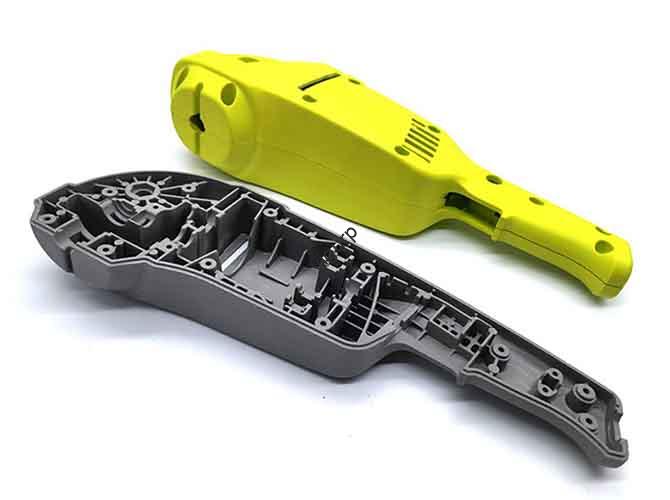
A high-performance CNC machining wall breaker prototype is a cornerstone of product development—it validates structural rationality, prueba las funciones principales (como trituración a alta velocidad y estanqueidad), y minimiza los riesgos antes de la producción en masa.. Este artículo desglosa sistemáticamente todo el proceso de desarrollo., Del diseño a las pruebas., usando comparaciones basadas en datos, pautas paso a paso, y soluciones prácticas para abordar desafíos clave.
1. Preparación preliminar: Lay the Groundwork for Prototype Precision
Preliminary preparation directly impacts the prototype’s accuracy and functionality. It focuses on two critical tasks: 3modelado D & structural optimization y selección de materiales, both tailored to the unique demands of wall breakers (p.ej., high-speed rotation, seguridad alimentaria).
1.1 3Modelado D & Structural Optimization
Use professional CAD software (p.ej., SolidWorks, UG) to create a detailed 3D model of the wall breaker. The model must cover all components and prioritize structural optimization to avoid machining errors:
- Component Breakdown: Split the machine into parts like the cup body, conjunto de cuchillas, motor base, control panel, y sealing ring for easier machining and assembly.
- Key Optimization Focus Areas:
- Blade Layout: Design blade angles (15–20°) and distribution to ensure efficient crushing of hard ingredients (p.ej., nueces, bones).
- Sealing Structure: Precisely design the groove for the silicone sealing ring (tolerancia: ±0,05 mm) to prevent liquid leakage during high-speed rotation.
- Assembly Compatibility: Mark positions of buckles, screw holes, and positioning grooves to ensure components fit securely (p.ej., cup body locks tightly to the base).
Why optimize these structures? Poor blade layout can reduce crushing efficiency by 30%, while a flawed sealing design may cause leakage—leading to rework that adds 2–3 days to the timeline.
1.2 Selección de materiales: Match Materials to Component Functions
Different components of the wall breaker require materials with specific properties (p.ej., wear resistance for blades, transparency for cup bodies). The table below compares the most suitable materials:
| Tipo de material | Ventajas clave | Ideal Components | Rango de costos (por kilogramo) | maquinabilidad |
| ABS/PC Plastic | Easy to cut, bajo costo, simulates injection molding texture | Cup body, body shell, handle (non-load-bearing parts) | \(2–)5 | Excelente (fast cutting, low tool wear) |
| Aleación de aluminio | Alta resistencia, good heat dissipation, durable | Motor base, blade brackets (load-bearing/heat-generating parts) | \(7–)12 | Bien (requires anodizing for rust resistance) |
| Acero inoxidable (304/316) | Alta dureza, resistente a la corrosión, seguro para los alimentos | Blades, high-wear components (contacts food/ingredients) | \(15–)20 | Moderado (needs EDM for sharp edges) |
| Resin Compound | Bajo costo, fast reproduction of complex shapes | Small-batch replica parts (paired with CNC-machined molds) | \(10–)14 | Moderado (not suitable for standalone structural parts) |
Ejemplo: The cup body, which needs transparency for ingredient observation, usos PC plastic. Blades, requiring wear resistance and food safety, are made of 304 acero inoxidable.
2. Proceso de mecanizado CNC: Turn Design into Physical Components
The CNC machining phase follows a linear workflow—model slicing & programming → billet preparation → rough machining → finishing—with special attention to wall breaker-specific structures (p.ej., curved cup inner walls, sharp blades).
2.1 Model Slicing & Programación
Import the 3D model into CAM software (p.ej., cámara maestra, PowerMill) to generate toolpaths and G-code. Key steps include:
- Cutting Parameter Setting (by Material):
- Plástico ABS: Cutting speed = 1800–2200 rpm; Feed rate = 600–800 mm/min.
- Aleación de aluminio: Cutting speed = 1000–1500 rpm; Feed rate = 400–600 mm/min (use coolant to prevent sticking).
- Acero inoxidable: Cutting speed = 800–1000 rpm; Feed rate = 200–300 mm/min (slower speed for hardness).
- Selección de herramientas:
- For curved surfaces (cup inner wall): Usar ball end mills (Φ3–5mm) to ensure smoothness.
- For blades: Usar carbide tools or wire EDM to achieve sharp edges (tolerancia: ±0,05 mm).
- For heat dissipation holes: Usar hollow tools or EDM for complex hole shapes (ensures uniform heat flow).
- Multi-Axis Linkage: Use a five-axis machine tool for complex components (p.ej., blade brackets) to avoid tool interference and ensure precision.
2.2 Ejecución de mecanizado: Pasos clave & Precautions
Proper execution ensures component accuracy. Follow this sequence:
- Billet Preparation: Cut raw materials into billets matching component sizes (p.ej., ABS blocks for cup bodies, aluminum sheets for motor bases) and reserve 0.5–1mm machining allowance.
- Clamping: Secure billets to the machine table—use vacuum adsorption for plastic parts (prevents deformation) and three-jaw chucks for metal parts (ensures stability).
- Mecanizado en desbaste: Use large-diameter tools (Φ8–10mm) to remove 80–90% of excess material quickly (guarda 30% of machining time).
- Refinamiento: Use small-diameter tools (Φ0.5–2mm) to refine details (p.ej., blade edges, agujeros roscados) and achieve surface roughness Ra <0.8μm for visible parts.
Critical Precaution: Replace worn tools immediately—dull tools can increase dimensional error by 0.2mm, ruining blade sharpness or sealing groove precision.
3. Postprocesamiento: Enhance Appearance & Funcionalidad
Post-processing removes machining flaws and prepares components for assembly. It includes tratamiento superficial, serigrafía, y pre-assembly checks.
3.1 Tratamiento superficial: Improve Durability & Estética
Choose treatment methods based on material and component function:
- Plastic Parts (Cup Body, Shell):
- Lijado (200–800 grit sandpaper) to remove tool marks.
- Sandblasting to simulate injection molding texture.
- Spraying food-grade paint (p.ej., matte UV paint) para resistencia al rayado.
- Metal Parts (Motor Base, Blades):
- aleación de aluminio: Anodizado (matte/silver finish) to prevent rust.
- Acero inoxidable: Polishing to achieve a smooth, food-safe surface.
3.2 Silk Screen Printing & Pre-Assembly Checks
- Silk Screen Printing: Print brand logos, operation instructions (p.ej., “High Speed,” “Smoothie,” “Limpio”), and safety warnings (p.ej., “Do Not Touch Blades”) using high-temperature, wear-resistant ink.
- Pre-Assembly Checks:
- Verify dimensions with calipers (p.ej., cup body capacity, sealing groove size).
- Test blade sharpness (use a sample ingredient to check crushing fineness).
- Inspect surface quality (sin rayones, paint chips, or ink smudges).
4. Asamblea & Pruebas: Validate Prototype Performance
Assembly and testing confirm the prototype meets design standards for functionality, seguridad, y durabilidad.
4.1 Step-by-Step Assembly
- Attach the motor base (aleación de aluminio) to the body shell using M3 screws (esfuerzo de torsión: 1.5–2.0 N·m).
- Install the conjunto de cuchillas into the motor base (ensure it rotates freely without jitter).
- Fit the silicone sealing ring into the cup body’s groove (press firmly to secure).
- Mount the control panel onto the body shell (align buttons with internal circuits).
- Lock the cup body to the base (test the buckle for secure attachment).
4.2 Testing Checklist: Ensure Reliability
Test the prototype in three key areas:
| Test Category | Tools/Methods | Pass Criteria |
| Functional Test | Speed meter, water test | – Blades rotate at 20,000–30,000 rpm (meets crushing requirements).- No water leakage during 5-minute high-speed operation.- Buttons respond correctly (p.ej., “Stop” halts rotation immediately). |
| Structural Test | Pull test, temperature monitor | – Handle resists 5kg pull force without loosening.- Motor base temperature <60°C after 30-minute operation (good heat dissipation). |
| Appearance Test | Inspección visual, gloss meter | – No scratches, paint defects, or smudged logos.- Consistent color (no visible aberration between components). |
La perspectiva de la tecnología Yigu
En Yigu Tecnología, we view CNC machining wall breaker prototypes as a “design validator”—they bridge ideas and mass production while cutting risks. Our team prioritizes two core aspects: precision and safety. For critical parts like blades, usamos 304 stainless steel and EDM to ensure sharpness and food safety. For sealing structures, we control tolerance to ±0.03mm (tighter than industry standards) to eliminate leakage. We also integrate 3D scanning post-machining to verify dimensional accuracy. By focusing on these details, we help clients reduce post-production defects by 25–30% and accelerate time-to-market by 1–2 weeks. Whether you need an appearance prototype for exhibitions or a functional one for testing, we tailor solutions to your goals.
Preguntas frecuentes
- q: How long does it take to produce a CNC machining wall breaker prototype?
A: Typically 8–10 days. This includes 1–2 days for 3D modeling, 2–3 days for CNC machining, 1–2 days for post-processing, and 2–3 days for assembly and testing.
- q: Can I use resin instead of ABS/PC plastic for the cup body?
A: Resin is not ideal. While it’s cheap and easy to cast, it has low impact resistance—high-speed rotation vibrations may cause it to crack. ABS/PC plastic is better for its durability and machinability.
- q: What should I do if the prototype leaks during the water test?
A: Primero, check the silicone sealing ring (replace if damaged). If the ring is intact, verify the sealing groove size (tolerance should be ±0.05mm). If the groove is too large, add a thin food-grade silicone pad to the cup body—this fix takes 1–2 hours and resolves most leakage issues.