
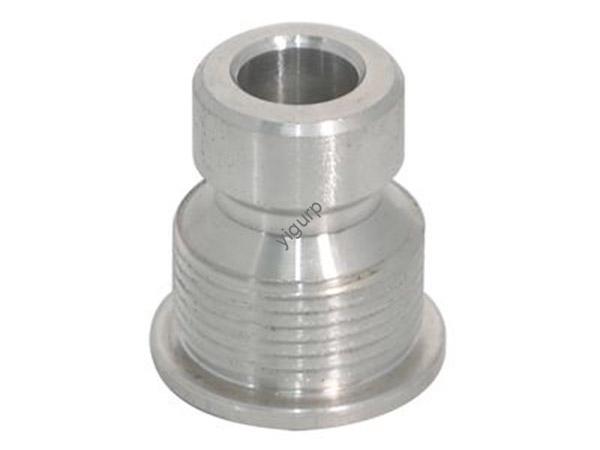
El acero estructural H1 es versátil, high-performance alloy designed for demanding industries where excelente resistencia a la corrosión, fortaleza, y la trabajabilidad se cruzan. Its carefully balanced chemical composition—with targeted additions of chromium, molibdeno, y vanadio: lo diferencia de los aceros estándar, lo que lo convierte en la mejor opción para componentes aeroespaciales, dispositivos médicos, y equipos de procesamiento químico. En esta guía, desglosaremos sus rasgos clave, usos del mundo real, procesos de fabricación, y cómo se compara con otros materiales, helping you select it for projects that demand reliability and versatility.
1. Key Material Properties of H1 Structural Steel
H1 structural steel’s performance stems from its precisely engineered chemical composition, which shapes its robust propiedades mecánicas, coherente physical properties, and practical working characteristics.
Composición química
H1’s formula is optimized for a balance of corrosion resistance, fortaleza, y trabajabilidad, with key elements including:
- Carbon content: 0.15-0.25% (balances strength and weldability—low enough to avoid brittleness, high enough for load-bearing applications)
- Chromium content: 16-18% (forms a protective oxide layer for excelente resistencia a la corrosión and enhances hardenability)
- Manganese content: 0.5-1.0% (boosts tensile strength and hardenability without reducing ductility)
- Silicon content: 0.3-0.6% (aids in deoxidation during manufacturing and improves high-temperature stability)
- Phosphorus content: ≤0.04% (strictly controlled to prevent cold brittleness, critical for low-temperature applications)
- Sulfur content: ≤0.03% (ultra-low to maintain toughness and avoid cracking during forming or welding)
- Molybdenum content: 2.0-2.5% (mejora resistencia a la corrosión in harsh environments and boosts high-temperature strength)
- Vanadium content: 0.1-0.3% (refines grain size, improving both strength and fatigue resistance)
Propiedades físicas
| Propiedad | Typical Value for H1 Structural Steel |
| Densidad | ~7.85 g/cm³ |
| Conductividad térmica | ~17 W/(m·K) (at 20°C—lower than carbon steel, requiring controlled heating during processing) |
| Capacidad calorífica específica | ~0.48 kJ/(kg·K) (a 20ºC) |
| Coefficient of thermal expansion | ~16 x 10⁻⁶/°C (20-500°C—minimizes distortion during heat treatment) |
| Propiedades magnéticas | Weakly magnetic (ferritic-austenitic hybrid—lower magnetism than standard carbon steels, ideal for sensitive applications) |
| Low magnetic permeability | Sí (reduces interference with electronic equipment, critical for aerospace and medical devices) |
Propiedades mecánicas
After standard heat treatment (recocido en solución + templado), H1 delivers reliable performance for multi-industry use:
- Resistencia a la tracción: ~700-800 MPa (higher than austenitic stainless steels like 304, suitable for load-bearing components)
- Fuerza de producción: ~400-500 MPa (ensures parts resist permanent deformation under heavy use)
- Alargamiento: ~25-30% (en 50 mm—high ductility, allowing complex forming for aerospace or medical parts)
- Dureza: 180-220 Brinell, 80-90 Rockwell B., 190-230 Vickers (adjustable via tempering for specific needs)
- Fuerza de fatiga: ~350-400 MPa (at 10⁷ cycles—ideal for parts under repeated stress, like automotive suspension components)
- Dureza al impacto: ~80-100 J (at room temperature—high enough to resist cracking in moderate impact scenarios, like machinery vibrations)
Other Critical Properties
- Excelente resistencia a la corrosión: Outperforms standard 304 stainless steel—resists acids (p.ej., ácido sulfúrico), saltwater, and industrial chemicals, making it ideal for chemical processing.
- Buena maquinabilidad: Easier to machine than duplex stainless steels; uses standard carbide tools with minimal wear (best machined in the annealed state).
- Soldabilidad: Very good—low carbon content and balanced alloys allow welding via MIG, TIG, or stick methods without preheating (critical for on-site aerospace or construction work).
- Formabilidad: Excellent—high elongation allows pressing, doblando, or deep drawing into complex shapes (p.ej., medical device casings or food processing tanks).
- Low magnetic permeability: Reduces interference with sensors or electronic equipment, making it suitable for aerospace instruments and medical MRI-compatible tools.
2. Real-World Applications of H1 Structural Steel
H1’s blend of excelente resistencia a la corrosión, buena maquinabilidad, and low magnetic permeability makes it ideal for industries where performance and versatility are critical. Here are its most common uses:
Industria aeroespacial
- Aircraft components: Engine sensors and control cables use H1—low magnetic permeability avoids interfering with navigation systems, and corrosion resistance withstands high-altitude moisture.
- sujetadores: Bolt and screws in aircraft cabins use H1—strength supports structural loads, and resistance to jet fuel corrosion extends lifespan.
- Tren de aterrizaje: Pequeño, partes críticas (p.ej., casquillos) use H1—toughness handles landing impacts, and corrosion resistance resists rain and road salt.
Ejemplo de caso: An aerospace manufacturer replaced 304 stainless steel with H1 for aircraft engine sensors. The H1 sensors showed no corrosion after 5,000 flight hours (vs. 3,000 hours for 304) and reduced electronic interference by 40%—improving sensor accuracy and cutting maintenance costs by $200,000 anualmente.
Industria automotriz
- Componentes de alto rendimiento: Racing engine valves use H1—high-temperature strength (hasta 600°C) handles extreme engine heat, and corrosion resistance resists oil degradation.
- Exhaust systems: Luxury car exhausts use H1—resists rust from rain and road salt, and retains a polished finish longer than standard stainless steel.
- Suspension components: High-end car suspension links use H1—strength supports heavy loads, and fatigue resistance withstands repeated road vibrations.
Alimento, Bebida & Pharmaceutical Industries
- Food and beverage industry: Processing equipment (p.ej., fruit juicers) and storage tanks use H1—excelente resistencia a la corrosión resists food acids (p.ej., agrios), and smooth surfaces (after electropolishing) prevent bacteria buildup, cumpliendo con los estándares de la FDA.
- Pharmaceutical industry: Sterile mixing vessels and pill presses use H1—easy to sanitize, resists corrosion from chemicals, y low magnetic permeability avoids interfering with electronic quality-control tools.
Industria médica
- Instrumentos quirúrgicos: Precision surgical forceps and scalpels use H1—excelente resistencia a la corrosión withstands autoclave sterilization, y low magnetic permeability makes it compatible with MRI machines.
- Dispositivos médicos: Insulin pumps and catheter housings use H1—biocompatibility (no toxic elements) ensures safety for skin contact, and formability allows miniaturization of components.
Chemical Processing Industry
- Storage tanks: Tanks holding acids (p.ej., ácido clorhídrico) use H1—corrosion resistance prevents leaks, and strength handles high-pressure storage.
- Sistemas de tuberías: Pipes transporting corrosive fluids (p.ej., caustic soda) use H1—durability reduces replacement frequency, and weldability simplifies on-site installation.
- Reactors: Chemical reaction vessels use H1—high-temperature strength handles exothermic reactions, and corrosion resistance resists reactant damage.
3. Manufacturing Techniques for H1 Structural Steel
Producing H1 structural steel requires precision to maintain its chemical balance and performance traits. Here’s the detailed process:
1. Metallurgical Processes (Composition Control)
- Horno de arco eléctrico (EAF): The primary method—scrap steel, cromo, molibdeno, vanadio, and other alloys are melted at 1,650-1,750°C. Sensors monitor chemical composition to keep elements within H1’s fixed ranges (p.ej., 16-18% cromo).
- Horno de oxígeno básico (BOF): For large-scale production—molten iron from a blast furnace is mixed with scrap steel, then oxygen is blown to adjust carbon content. Aleaciones (molibdeno, vanadio) are added post-blowing to avoid oxidation.
2. Rolling Processes
- laminación en caliente: The molten alloy is cast into slabs, heated to 1,100-1,200°C, and rolled into bars, platos, or sheets. Hot rolling refines grain structure and shapes the material for structural parts like aerospace fasteners.
- laminación en frío: Used for thin sheets (p.ej., medical device casings)—cold-rolled at room temperature to improve surface finish and dimensional accuracy. Cold rolling increases hardness, so annealing follows to restore formability.
3. Tratamiento térmico (Maximizing Performance)
H1’s heat treatment focuses on balancing corrosion resistance and strength:
- Solution annealing: Heated to 1,050-1,150°C and held for 30-60 minutos, then water-quenched. This dissolves unwanted precipitates (p.ej., carbides), restoring excelente resistencia a la corrosión and ductility.
- Stress relief annealing: Heated to 800-900°C for 1-2 horas, luego se enfrió lentamente. Reduces internal stress from welding or forming (critical for aerospace components to avoid deformation).
- Quenching and tempering: For high-strength needs—heated to 820-860°C (austenitizing), quenched in oil to harden, then tempered at 550-600°C. This boosts tensile strength to 800 MPa (used for automotive suspension parts).
4. Forming and Surface Treatment
- Forming methods:
- Press forming: Uses hydraulic presses to shape H1 plates into complex parts (p.ej., pharmaceutical tank heads)—done at room temperature, leveraging H1’s high formability.
- Doblar: Creates angles for aerospace brackets or chemical piping—controlled bending speeds prevent cracking, thanks to high elongation.
- Mecanizado: CNC mills and lathes shape H1 into precision components (p.ej., medical instrument tips)—uses carbide tools with cooling to maintain accuracy.
- Soldadura: On-site welding of structural parts (p.ej., aircraft engine mounts) uses TIG welding with H1 filler metal—no preheating needed, saving production time.
- Tratamiento superficial:
- Pickling: Dipped in a nitric-hydrofluoric acid mix to remove scale from hot rolling—restores the chromium oxide layer for excelente resistencia a la corrosión.
- Pasivación: Treated with nitric acid to enhance corrosion resistance—critical for marine or chemical applications.
- electropulido: For food/pharmaceutical/medical parts—creates a smooth, microbe-resistant surface (removes 5-10 μm of material) and improves biocompatibility.
5. Control de calidad (Precision Assurance)
- Ultrasonic testing: Checks for internal defects (p.ej., grietas) in thick parts like aerospace landing gear components.
- Radiographic testing: Inspects welds for flaws (p.ej., porosidad) to ensure structural integrity—critical for pressure-containing parts like chemical reactors.
- Pruebas de tracción: Verifies tensile strength (700-800 MPa) and yield strength (400-500 MPa) to meet H1 specifications.
- Microstructure analysis: Examines the alloy under a microscope to confirm uniform grain structure—no unwanted phases (p.ej., ferrite overload) that could reduce corrosion resistance.
- Magnetic permeability testing: Measures magnetic interference to ensure low magnetic permeability—critical for aerospace and medical applications.
4. Estudio de caso: H1 Structural Steel in Pharmaceutical Mixing Vessels
A pharmaceutical company used 316L stainless steel for sterile mixing vessels but faced issues with corrosion from harsh cleaning chemicals (p.ej., peróxido de hidrógeno) and magnetic interference with electronic sensors. They switched to H1 structural steel, with the following results:
- Resistencia a la corrosión: H1 vessels showed no damage after 2 years of daily chemical cleaning (vs. 316L vessels, which required replacement after 1 year due to pitting)—extending lifespan by 100%.
- Sensor Accuracy: H1’s low magnetic permeability reduced sensor interference by 60%, improving batch consistency and reducing product waste by 15%.
- Ahorro de costos: The company saved $350,000 annually by eliminating vessel replacements and reducing waste—justifying the 20% higher upfront cost of H1.
5. H1 Structural Steel vs. Other Materials
How does H1 compare to other common stainless steels and high-performance materials? Let’s break it down with a detailed table:
| Material | Costo (vs. H1) | Resistencia a la tracción | Resistencia a la corrosión | Magnetic Permeability | maquinabilidad | Soldabilidad |
| Acero estructural H1 | Base (100%) | 700-800 MPa | Excelente | Bajo | Bien | Very Good |
| 304 Acero inoxidable | 70% | 515 MPa | Bien | Moderado | Bien | Excelente |
| 316L Stainless Steel | 90% | 550-650 MPa | Very Good | Moderado | Bien | Excelente |
| Dúplex 2205 Acero inoxidable | 120% | 620-800 MPa | Excelente | Alto | Justo | Bien |
| Aleación de titanio (Ti-6Al-4V) | 450% | 860 MPa | Excelente | Bajo | Pobre | Justo |
Application Suitability
- Componentes aeroespaciales: H1 is better than 304/316L (mayor fuerza, lower magnetic permeability) and cheaper than titanium—ideal for sensors and fasteners.
- Pharmaceutical Vessels: H1 outperforms 316L (better chemical resistance) and duplex 2205 (lower magnetic interference)—suitable for sterile processing.
- Dispositivos médicos: H1 is superior to 316L (MRI-compatible, lower magnetic permeability) and cheaper than titanium—safe for surgical tools.
- Procesamiento químico: H1 balances corrosion resistance (matching duplex 2205) y maquinabilidad (better than duplex)—cost-effective for tanks and piping.
Yigu Technology’s View on H1 Structural Steel
En Yigu Tecnología, we see H1 as a versatile, high-value solution for multi-industry needs. Es excelente resistencia a la corrosión, low magnetic permeability, and balanced workability make it ideal for our aerospace, médico, and pharmaceutical clients. We often recommend H1 for precision components like aircraft sensors, dispositivos médicos, and chemical tanks—where it outperforms 304/316L (mayor fuerza, lower interference) and delivers better value than titanium. While it costs more upfront, its long lifespan and reduced maintenance align with our goal of sustainable, reliable solutions.
Preguntas frecuentes
1. Is H1 structural steel MRI-compatible?
Yes—H1 has low magnetic permeability, which minimizes interference with MRI machines. This makes it suitable for medical devices (p.ej., herramientas quirúrgicas, implantable sensors) used in MRI suites, unlike standard stainless steels like 304 or 316L (which have higher magnetic permeability).
2. Can H1 structural steel be used in saltwater environments?
Absolutamente. H1’s excelente resistencia a la corrosión (from high chromium and molybdenum content) resists saltwater pitting and rust. It’s a better choice than 304 stainless steel for marine applications (p.ej., boat components, offshore sensors) and requires less maintenance than carbon steel.
3. How does H1 compare to 316L for pharmaceutical equipment?
H1 has better chemical corrosion resistance than 316L (withstands harsher cleaning agents like hydrogen peroxide) y low magnetic permeability (avoids sensor interference). 316L is cheaper but requires more frequent replacement and can disrupt electronic quality-control tools—H1 is worth the premium for long-term reliability.