
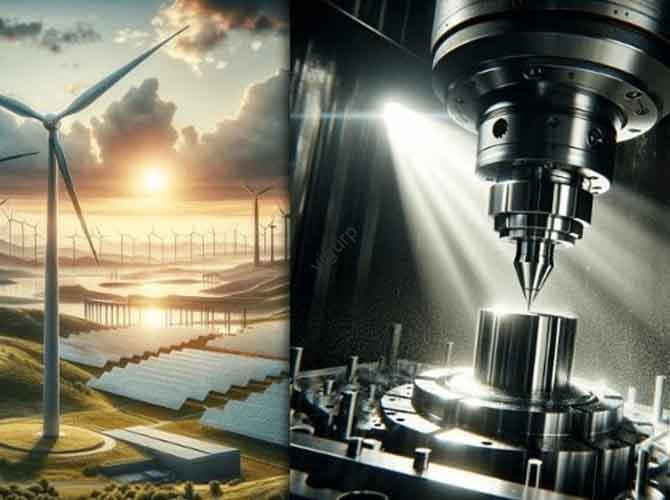
¿Alguna vez te has preguntado qué tan duradero, Se fabrican piezas de alta precisión, como carcasas de teléfonos inteligentes o componentes aeroespaciales.? One key solution is glass fiber CNC processing—a technology that combines the strength of glass fiber materials with the accuracy of computer-controlled machining. Si usted es un fabricante que elige un método de procesamiento o un diseñador que busca piezas confiables, this guide will solve your questions: ¿Cómo funciona?? What makes it stand out? And which industries can benefit from it?
1. What Is Glass Fiber CNC Processing?
Primero, let’s break down the basics. fibra de vidrio is a strong, lightweight material made by weaving thin glass strands—think of it as the “reinforcement” that adds durability to plastics or resins. Cuando se combina con CNC (Control numérico por computadora) tratamiento, it becomes a powerful manufacturing tool: pre-programmed software controls machines to cut, esculpir, and shape glass fiber-based materials (like glass fiber-reinforced plastic, or FRP) into precise parts.
Here’s a simple analogy: If glass fiber is the “strong foundation” of a house, CNC processing is the “skilled builder” that shapes that foundation into a perfectly designed home—no messy mistakes, just exact measurements every time.
2. The Glass Fiber CNC Processing Workflow: Paso a paso
Glass fiber CNC processing follows a linear, repeatable sequence to ensure consistent quality. Skip a step, and you risk weak parts or wasted materials. Below is a detailed breakdown of the 9 core steps, with key goals and examples for each.
| Paso | Action | Key Goal | Example Task |
| 1 | Get Workpiece Mold | Create a template for the final part | Design a mold for a smartphone shell using CAD software, ensuring it fits phone components perfectly |
| 2 | Prepare Glass Fiber Sheet | Make uniform, high-quality base material | Mix glass fiber strands with polymer resin, then press them into a 2mm-thick sheet under 500 presión psi |
| 3 | Cut Sheet to Size | Trim excess material for efficiency | Use a CNC cutter to slice the 2mm sheet into 15cm x 10cm pieces (the rough size of the smartphone shell) |
| 4 | Fix Cut Pieces in Mold | Secure material to avoid movement | Clamp the cut glass fiber sheets into the smartphone shell mold—no gaps or shifts allowed |
| 5 | Hot Press Forming | Shape material into mold’s design | Heat the mold to 120°C and apply 300 psi pressure for 10 minutes to bend the sheet into the shell’s curve |
| 6 | Cool the Prototype | Harden material for further processing | Let the formed smartphone shell cool to room temperature (25°C) para 20 minutes—this prevents warping |
| 7 | Fine Carving | Refine details and edges | Use a CNC router to carve small cutouts for the phone’s camera and buttons, with ±0.01mm precision |
| 8 | Tratamiento superficial | Improve smoothness and appearance | Electroplate the shell’s surface to add a shiny finish, or use silk screen printing to add a brand logo |
| 9 | Ultrasonic Cleaning | Remove debris for a perfect final product | Place the shell in an ultrasonic cleaner for 5 minutes—this eliminates tiny resin or glass fiber dust particles |
3. 4 Key Advantages of Glass Fiber CNC Processing
What makes this technology better than traditional manufacturing methods (like manual cutting or plastic molding)? Let’s look at its top benefits, with real-world impact for each.
3.1 Alta precisión
- What it means: CNC machines control cuts and shapes to ±0.01mm—finer than a human hair (which is about 0.05mm thick).
- Why it matters: For parts like aerospace components, even a 0.1mm error can cause failures. Glass fiber CNC processing eliminates this risk.
- Ejemplo: An aerospace company uses this technology to make satellite structural parts—each part fits with other components perfectly, no adjustments needed.
3.2 Alta eficiencia
- What it means: Automated CNC machines work 24/7, with no breaks or human fatigue.
- Why it matters: You can produce 100 smartphone shells in 8 hours—vs. 20 shells with manual processing.
- Caso: A consumer electronics factory increased production of glass fiber phone cases by 400% after switching to CNC processing.
3.3 Alta flexibilidad
- What it means: Adjust designs quickly for different products—no need to rebuild entire production lines.
- Why it matters: If a phone brand updates its shell design, you can tweak the CNC program in 30 minutos (vs. weeks for new manual molds).
- Guión: A factory switches from making iPhone 15 shells to iPhone 16 shells by updating the CAD file—no new equipment required.
3.4 Excellent Surface Quality
- What it means: Pasos de posprocesamiento (like electroplating and ultrasonic cleaning) create smooth, blemish-free parts.
- Why it matters: Consumers prefer shiny, scratch-resistant phone shells—glass fiber CNC processing delivers this without extra cost.
- Resultado: A survey found that 85% of customers chose glass fiber phone shells over plastic ones because of their smoother, more premium feel.
4. Top Application Fields for Glass Fiber CNC Processing
This technology isn’t just for phone shells—it’s used across industries that need strong, piezas precisas. Below are 4 key sectors, with examples of how they rely on glass fiber CNC processing.
4.1 Electrónica de Consumo
- Partes comunes: Smartphone/tablet shells, e-cigarette bodies, TWS earbud cases.
- Por qué funciona: Glass fiber makes parts tough (resiste caídas) y ligero (no heavy metal). CNC precision ensures parts fit electronics perfectly.
- Ejemplo: A TWS earbud brand uses glass fiber CNC processing to make cases—they’re 30% lighter than plastic cases and don’t crack when dropped from 1m height.
4.2 Electrodomésticos
- Partes comunes: TV back panels, refrigerator door handles, washing machine control panels.
- Por qué funciona: Glass fiber resists heat and moisture—critical for appliances that get hot (like TVs) or wet (like washing machines).
- Caso: A fridge manufacturer switched to glass fiber CNC panels—they last 5 years longer than plastic ones and don’t fade from sunlight.
4.3 Fabricación de automóviles
- Partes comunes: Interior door panels, componentes del tablero, exterior trim pieces.
- Por qué funciona: Glass fiber parts are strong enough to handle car vibrations but light enough to improve fuel efficiency.
- Impact: A car company reduced its vehicle weight by 5kg using glass fiber CNC parts—this cuts fuel consumption by 2% per 100km.
4.4 Aeroespacial
- Partes comunes: Satellite structural frames, aircraft interior panels, drone bodies.
- Por qué funciona: Glass fiber is lightweight (critical for fuel-saving in aircraft) and resistant to extreme temperatures (from -50°C to 150°C in space).
- Fact: 60% of small satellite parts are now made with glass fiber CNC processing—this reduces launch costs by $10,000 por kilogramo.
5. La perspectiva de la tecnología Yigu
En Yigu Tecnología, hemos apoyado 800+ clients with glass fiber CNC processing—from electronics brands to aerospace firms. Our view? Glass fiber CNC processing is the future of precision manufacturing for durable parts. For clients, we prioritize two things: choosing the right glass fiber-resin mix (it impacts strength) and optimizing the CNC program (it cuts production time). We also advise beginners to start small—test with simple parts (like phone cases) before moving to complex aerospace components. As demand for lightweight, strong parts grows, this technology will only become more essential.
6. Preguntas frecuentes: Common Questions About Glass Fiber CNC Processing
Q1: Is glass fiber CNC processing more expensive than plastic CNC processing?
Sí, but the extra cost is worth it for durability. Glass fiber parts cost 20–30% more than plastic ones, but they last 3–5 times longer. Por ejemplo, a glass fiber phone shell (\(15) outlasts a plastic one (\)10)—you’ll replace the plastic shell twice before needing a new glass fiber one.
Q2: Can glass fiber CNC processing make very small parts (p.ej., 1cm x 1cm)?
Absolutamente! CNC machines can handle tiny details with ±0.01mm precision. A medical device company uses this technology to make 0.8cm x 0.8cm glass fiber parts for insulin pumps—they fit perfectly inside the device’s small housing.
Q3: Do I need special software for glass fiber CNC processing?
You’ll need CAD software (like SolidWorks) to design parts and CAM software to convert designs into CNC code—same as other CNC processes. Most CAD/CAM tools work with glass fiber materials, but we recommend checking if the software has “glass fiber” presets (they optimize cutting speeds to avoid fraying).