
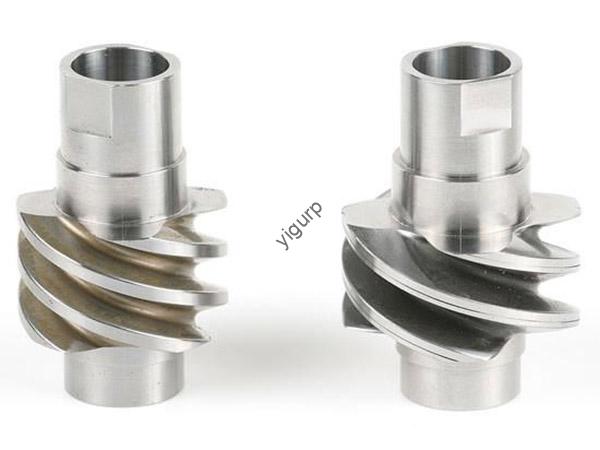
Si está buscando una opción rentable, Acero aleado de alto rendimiento para maquinaria o piezas de automóviles., GB 40Cr alloy steel es una de las mejores opciones. Como aleación estándar china ampliamente utilizada, equilibra la fuerza, tenacidad, y maquinabilidad, lo que lo hace perfecto para piezas como engranajes, ejes, y pernos. Esta guía le guiará a través de todo lo que necesita saber., desde su composición química hasta usos en el mundo real, to help you make smart decisions for your projects.
1. Material Properties of GB 40Cr Alloy Steel
GB 40Cr’s performance comes from its well-balanced properties, all following China’sGB/T 3077 estándar (the official rule for this alloy). Let’s break them down clearly.
1.1 Composición química
The elements in GB 40Cr work together to boost its strength and durability. Here’s the standard range of each component:
| Element | Symbol | Composition Range (%) | Key Role in the Alloy |
|---|---|---|---|
| Carbon (do) | do | 0.37 – 0.44 | Increasesresistencia a la tracción and surface hardness, which is vital for wear-resistant parts |
| Chromium (cr) | cr | 0.80 – 1.10 | Mejoratemplabilidad yresistencia a la corrosión, and prevents rust in mild environments |
| Manganese (Mn) | Mn | 0.50 – 0.80 | Enhancesmaquinabilidad and helps refine the metal’s grain, reducing brittleness |
| Silicio (Y) | Y | 0.17 – 0.37 | Acts as a deoxidizer during steelmaking, making the alloy stronger without losing flexibility |
| Sulfur (S) | S | ≤ 0.035 | Kept low to avoid cracking and brittleness in parts under stress |
| Phosphorus (PAG) | PAG | ≤ 0.035 | Limited to prevent the alloy from breaking easily in cold temperatures |
1.2 Physical Properties
These traits show how GB 40Cr behaves in different conditions, like temperature changes or magnetic fields:
- Densidad: 7.85 gramos/cm³ (same as most steel alloys, so it’s easy to replace other steels in existing designs)
- Punto de fusión: 1430 – 1450°C (high enough for aplicaciones de alta temperatura like industrial rollers)
- Conductividad térmica: 45 W/(m·K) at 20°C (retains heat well, good for parts that work non-stop)
- Specific heat capacity: 470 J/(kg·K) at 20°C (absorbs heat steadily, preventing warping from sudden temperature shifts)
- Thermal expansion coefficient: 12.0 μm/(m·K) (expands little when heated, critical for precision parts like gears)
- Magnetic properties: Ferromagnetic (sticks to magnets, useful for tools like magnetic clamps)
1.3 Propiedades mecánicas
GB 40Cr’s mechanical strength really shines aftertratamiento térmico (usually quenching and tempering). Below are typical values tested to Chinese standards:
| Propiedad | Valor típico | Test Standard (GB) |
|---|---|---|
| Resistencia a la tracción | ≥ 980 MPa | GB/T 228.1 |
| Yield strength | ≥ 785 MPa | GB/T 228.1 |
| Alargamiento | ≥ 9% | GB/T 228.1 |
| Reduction of area | ≥ 45% | GB/T 228.1 |
| Dureza (Brinell) | 207 – 269 media pensión | GB/T 231.1 |
| Dureza (Rockwell C) | 21 – 28 CDH | GB/T 230.1 |
| Dureza (Vickers) | 210 – 270 HV | GB/T 4340.1 |
| Impact toughness | ≥ 47 J | GB/T 229 |
| Fatigue strength | ~500 MPa | GB/T 3075 |
1.4 Other Properties
- Resistencia a la corrosión: Moderado (resists mild moisture and oil, but needs coating like zinc plating for outdoor use)
- Resistencia al desgaste: Bien (gracias a cromo (cr) y tratamiento térmico, great for moving parts like bearings)
- maquinabilidad: Justo (softer when annealed; use high-speed steel (HSS) tools with cutting fluid to avoid tool wear)
- Soldabilidad: Acceptable (preheat to 250 – 300°C and heat treat after welding to prevent cracks)
- Hardenability: Excelente (heat treatment works deep into the metal, ensuring even strength in thick parts like shafts)
2. Applications of GB 40Cr Alloy Steel
GB 40Cr’s mix of strength and affordability makes it popular across many industries. Here are its most common uses, con ejemplos reales:
2.1 Industria automotriz
Cars and trucks need parts that handle torque and impact. GB 40Cr is used for:
- Ejes: A Chinese car manufacturer uses it for drive shafts—its yield strength (≥785 MPa) handles 20-ton loads without bending.
- Engranajes: A commercial truck brand uses it for transmission gears; el resistencia a la fatiga (~500 MPa) makes gears last 25% longer than carbon steel ones.
- Bolts and fasteners: High-performance SUVs use GB 40Cr bolts for engine mounts—their resistencia a la tracción (≥980 MPa) don’t loosen from vibration.
2.2 Mecánico & Maquinaria Pesada
Industrial machines need durable parts. GB 40Cr is used for:
- Aspectos: A factory uses it for conveyor belt bearings—its resistencia al desgaste cuts maintenance time by 20%.
- Ballestas: A construction equipment company uses it for excavator springs; the alloy’s elasticity (from tempering) manijas 7,000+ compression cycles.
- Rollers: Steel mills use it for rolling mill rollers; es dureza (207–269 HB) doesn’t deform under hot metal.
2.3 Structural Components
For heavy-duty structures, GB 40Cr provides reliable strength:
- Crane shafts: Port cranes use it for hoist shafts—its impact toughness (≥47 J) doesn’t break when lifting 35-ton containers.
- Bridge fasteners: Highways use GB 40Cr bolts; with anti-rust coating, they stay stable outdoors for years.
3. Manufacturing Techniques for GB 40Cr Alloy Steel
To get the best out of GB 40Cr, follow these proven manufacturing steps:
3.1 Steelmaking Processes
GB 40Cr is made in two main ways:
- Electric Arc Furnace (EAF): Common for medium batches. Scrap steel is melted with electrodes, entonces cromo (cr) is added to reach the right composition. EAF is flexible and reduces waste, good for custom parts like large shafts.
- Basic Oxygen Furnace (BOF): Used for mass production. Molten iron is mixed with oxygen to remove impurities, then alloy elements are added. BOF is fast and cheap for parts like bolts.
3.2 Tratamiento térmico
Heat treatment is key to unlocking GB 40Cr’s strength. The standard process for high-stress parts is:
- Recocido: Calentar para 830 – 850°C, cool slowly. Softens the alloy for easier machining (cuts tool wear by 30%).
- Temple: Calentar para 840 – 860°C, cool fast in oil. Hardens the steel to reach resistencia a la tracción ≥980 MPa.
- Tempering: Calentar para 500 – 550°C, cool in air. Reduces brittleness while keeping strength—important for gears and shafts.
- Carburación (optional): Calentar para 900 – 950°C in a carbon-rich environment. Adds a hard outer layer for better resistencia al desgaste (good for bearings).
3.3 Forming Processes
GB 40Cr is shaped into parts using:
- Forja: Hammered or pressed at 1100 – 1200°C. Aligns the metal’s grain, making parts 10% stronger than cast ones. Used for gears and shafts.
- Laminación: Passed through rollers to make bars or sheets. Used for basic shapes like bolt blanks.
- Extrusión: Pushed through a die to make complex shapes (p.ej., hollow shafts). Good for precision parts like transmission components.
3.4 Machining Processes
After forming, parts are finished with:
- Torneado: Uses a lathe to make cylindrical parts (p.ej., ejes). Use cutting fluid to prevent overheating.
- Molienda: Uses a rotating cutter to shape gear teeth. Carbide tools work best for precision.
- Perforación: Makes holes for bolts. High-speed drills (900–1300 RPM) avoid cracking.
- Molienda: Smooths surfaces to tight tolerances (p.ej., ±0.01 mm for bearings). Mejora resistencia al desgaste.
4. Estudio de caso: GB 40Cr in Automotive Transmission Gears
A Chinese automotive factory had a problem: their carbon steel transmission gears kept failing after 180,000 km, leading to expensive repairs. They switched to GB 40Cr—and fixed the issue.
4.1 Desafío
The factory’s trucks carried 25-ton loads, putting big stress on gears. Carbon steel gears had lowresistencia a la fatiga (380 MPa) and wore out fast, causing 5% of trucks to break down yearly.
4.2 Solución
They switched to GB 40Cr gears, usando:
- Carburación (920°C) to add a 0.8 mm hard outer layer for resistencia al desgaste.
- Temple (850°C) + templado (530°C) to reach 800 MPa yield strength y 50 J impact toughness.
4.3 Resultados
- Service life: Gears now last 360,000 km—twice as long.
- Ahorro de costos: Cut maintenance costs by ¥180,000 per year.
- Fiabilidad: Breakdowns dropped from 5% a 1%, making customers happier.
5. Comparative Analysis: GB 40Cr vs. Other Materials
How does GB 40Cr compare to other common materials? Here’s a side-by-side look:
| Material | Resistencia a la tracción | Resistencia a la corrosión | Densidad | Costo (vs. GB 40Cr) | Mejor para |
|---|---|---|---|---|---|
| GB 40Cr | ≥980 MPa | Moderado | 7.85 gramos/cm³ | 100% (base) | Piezas de alta tensión (engranajes, ejes) |
| Acero inoxidable (304) | 515 MPa | Excelente | 7.93 gramos/cm³ | 160% | Food/chemical equipment |
| Acero carbono (45#) | 600 MPa | Bajo | 7.85 gramos/cm³ | 50% | Piezas de baja tensión (paréntesis) |
| Acero aleado (35CrMo) | 980 MPa | Moderado | 7.85 gramos/cm³ | 110% | Piezas de alta temperatura (rodillos) |
| Aluminio (6061) | 310 MPa | Bien | 2.70 gramos/cm³ | 120% | Lightweight parts (car frames) |
Key takeaway: GB 40Cr has the sameresistencia a la tracción as 35CrMo but costs less. It’s stronger than carbon steel and cheaper than stainless steel, making it the best value for mostaplicaciones de alto estrés.
Yigu Technology’s Perspective on GB 40Cr Alloy Steel
En Yigu Tecnología, GB 40Cr is one of our most popular alloys for its balance of performance and cost. We’ve supplied it to automotive and machinery clients for 10+ años, and itstemplabilidad ytenacidad always meet their needs—from gears to bolts. We often suggest annealing for easier machining and anti-rust coating for outdoor use, helping clients extend part life by 2x. For Chinese manufacturers wanting a reliable, affordable alloy, GB 40Cr is unbeatable.
FAQ About GB 40Cr Alloy Steel
1. Can GB 40Cr be used in cold places?
Yes—itsimpact toughness (≥47 J) lets it work in temperatures as low as -15°C. For colder areas (-20°C or below), adjust the tempering process (cool to 480–500°C) to make it tougher.
2. What’s the difference between GB 40Cr and GB 42CrMo?
GB 42CrMo hasmolibdeno (Mes) and more carbon, giving it 10% más altoresistencia a la tracción and better high-temperature resistance. Choose GB 42CrMo for extreme stress (p.ej., 30-ton truck shafts), and GB 40Cr for moderate stress and lower cost.
3. How to make GB 40Cr easier to machine?
Anneal it first—heating to 830–850°C and cooling slowly softens it to 207–230 HB. Use carbide tools with cutting fluid (like mineral oil) and set cutting speed to 80–100 m/min to reduce tool wear.