
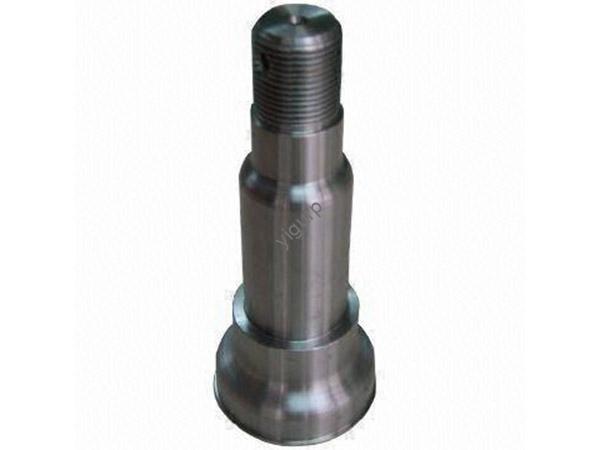
Si estás en construcción, ingeniería, o fabricación, choosing the right steel matters.EN1A structural steel stands out for its versatility and workability—but what exactly makes it a top pick? Esta guía desglosa sus características clave., aplicaciones del mundo real, y cómo se compara con otros materiales, para que puedas tomar decisiones inteligentes para tus proyectos.
1. Material Properties of EN1A Structural Steel
EN1A’s popularity comes from its well-rounded properties. Below is a detailed look at its chemical, physical, mecánico, and other key characteristics.
1.1 Composición química
Elchemical composition of EN1A is carefully controlled to ensure consistency. Here’s a typical range (per EN standards):
| Element | Content Range (%) | Key Role |
|---|---|---|
| Carbon (do) | 0.08 – 0.13 | Keeps steel ductile and easy to machine |
| Manganese (Mn) | 0.30 – 0.60 | Boosts strength without losing flexibility |
| Silicio (Y) | 0.10 – 0.35 | Improves heat resistance during fabrication |
| Sulfur (S) | 0.04 – 0.09 | Enhances machinability (called “free-machining” steel) |
| Phosphorus (PAG) | ≤ 0.045 | Controlled to avoid brittleness |
| Other alloying elements | Trace amounts (p.ej., cobre) | Minimal impact on core properties |
1.2 Physical Properties
EN1A’sphysical properties make it easy to work with across environments:
- Densidad: 7.85 gramos/cm³ (same as most common structural steels)
- Punto de fusión: 1450 – 1510°C
- Conductividad térmica: 49 W/(m·K) at 20°C (good for heat distribution)
- Specific heat capacity: 470 J/(kg·K)
- Coefficient of thermal expansion: 13.2 × 10⁻⁶/°C (20 – 100°C, low enough for stable structures)
1.3 Propiedades mecánicas
These traits make EN1A ideal for light to medium-duty structural work:
- Resistencia a la tracción: 340 – 450 MPa
- Yield strength: ≥ 210 MPa
- Alargamiento: ≥ 28% (high ductility—great for bending and forming)
- Dureza: 100 – 130 media pensión (Brinell scale, fácil de mecanizar)
- Resistencia al impacto: ≥ 35 J at 20°C (handles mild shocks)
- Fatigue resistance: ~170 MPa (suitable for parts under repeated light loads)
1.4 Other Properties
- Resistencia a la corrosión: Moderado (needs coatings like paint or galvanizing for outdoor use)
- Soldabilidad: Bien (no preheating needed for thin sections, reduces fabrication time)
- maquinabilidad: Excelente (the added sulfur makes it cut smoothly—saves on tool wear)
- Magnetic properties: Ferromagnetic (works with magnetic testing tools)
- Ductilidad: Alto (can be bent into complex shapes without cracking)
2. Applications of EN1A Structural Steel
EN1A’s workability and moderate strength make it a go-to for many industries. Here are its most common uses:
- General construction: Used for light beams, paréntesis, and framing in small commercial buildings (p.ej., local shops or offices). A U.K.-based builder used EN1A for a 2-story retail center’s interior support frames.
- Structural frameworks: Ideal for temporary structures like construction scaffolding or event stages. A European event company relies on EN1A for its portable stage frames, thanks to its light weight and ductility.
- Mechanical components: Makes gears, pernos, and small shafts for household appliances (p.ej., washing machines). A leading appliance brand uses EN1A for its washer drum shafts.
- Equipos industriales: Creates conveyor belt frames and small machine parts in factories. A food processing plant used EN1A for its conveyor supports, as it’s easy to clean and machine.
- Piezas automotrices: Used for light-duty components like door hinges, seat brackets, and fuel line clips.
- Construcción naval: Makes small internal parts (p.ej., cabinet frames) in boats and yachts.
- Railway structures: Used for minor components like signal brackets and platform edges.
- Architectural applications: Creates decorative elements (p.ej., barandillas, paneles de pared) in modern homes.
- Infrastructure projects: Used for small drainage covers and sidewalk edging in urban renewal projects.
3. Manufacturing Techniques for EN1A Structural Steel
Turning raw steel into usable EN1A products involves four key steps:
3.1 Rolling Processes
- laminación en caliente: The most common method. Steel is heated to 1100 – 1250°C and pressed into shapes like bars, platos, or angles. Hot-rolled EN1A has a slightly rough surface but is cost-effective.
- laminación en frío: Done at room temperature for thinner sheets or precise shapes (p.ej., pequeños soportes). Cold-rolled EN1A has a smooth finish and tighter size tolerance.
3.2 Tratamiento térmico
Heat treatment adjusts EN1A’s properties for specific uses:
- Recocido: Heated to 800 – 850°C, held, luego se enfrió lentamente. Reduces hardness and makes machining even easier.
- Normalizing: Heated to 850 – 900°C, then cooled in air. Improves strength slightly while keeping ductility.
- Tempering: Rarely used for EN1A (since it’s low-carbon), but can be done at 500 – 600°C if minor hardness adjustments are needed.
3.3 Fabrication Methods
- Corte: Usos corte por plasma (fast for thick sections) o oxy-fuel cutting (affordable for basic shapes). EN1A’s low carbon content prevents excessive melting.
- Welding techniques: Arc welding (most common for on-site work) y soldadura láser (precision for small parts). No preheating is needed for sections under 10mm thick.
- Bending and forming: Easy to do with press brakes or rollers. EN1A’s high elongation means it can be bent into 90-degree angles without cracking.
3.4 Control de calidad
- Métodos de inspección: Ultrasonic testing (checks for internal defects) y magnetic particle inspection (finds surface cracks).
- Certification standards: Must meet ISO 683-1 (structural steels) y ES 10087 (free-machining steels) to ensure quality.
4. Estudios de caso: EN1A in Real Projects
4.1 Construcción: A Community Center in France
A small community center in Lyon used EN1A for its roof trusses and interior columns. Engineers chose EN1A because itsmaquinabilidad let them cut custom brackets quickly, and itsductilidad allowed for curved roof supports. The project was completed 2 weeks early, thanks to easy fabrication.
4.2 Industrial: A Packaging Factory in Germany
A packaging factory used EN1A to build its conveyor belt frames. The frames needed to be light (for easy installation) and easy to modify (for future upgrades). EN1A’sresistencia a la tracción (340 – 450 MPa) was enough to support the conveyor’s weight, and itssoldabilidad let workers add new sections in a day.
5. Comparative Analysis: EN1A vs. Other Materials
How does EN1A stack up against common alternatives? comparemos:
5.1 vs. Other Types of Steel
| Característica | EN1A Acero Estructural | Acero carbono (A36) | Acero aleado (EN19) |
|---|---|---|---|
| Resistencia a la tracción | 340 – 450 MPa | 400 – 550 MPa | 620 – 780 MPa |
| maquinabilidad | Excelente | Bien | Bien |
| Costo (per ton) | $700 – $900 | $600 – $800 | $800 – $1,000 |
5.2 vs. Non-Metallic Materials
- Concreto: EN1A is lighter (7.85 g/cm³ vs. concrete’s 2.4 gramos/cm³) and easier to fabricate. But concrete is cheaper for foundations. Por ejemplo, a small building might use concrete for its base and EN1A for upper framing.
- Materiales compuestos (p.ej., fibra de vidrio): Composites are corrosion-resistant but 2x more expensive. EN1A is better for budget-friendly projects.
5.3 vs. Other Metallic Materials
- Aleaciones de aluminio: Aluminum is lighter but has lower tensile strength (200 – 300 MPa). EN1A is better for parts that need more strength (p.ej., small beams).
- Acero inoxidable: Stainless steel resists corrosion but costs 3x more. EN1A is a better choice for indoor or coated outdoor use.
5.4 Costo & Environmental Impact
- Cost analysis: EN1A’s material cost is slightly higher than carbon steel (A36) but lower than alloy steel (EN19). Es fabrication cost is lower, though—since it’s easy to machine and weld.
- Environmental impact: EN1A is 100% reciclable (guarda 75% energy vs. making new steel). Its production uses less energy than stainless steel or aluminum.
6. Yigu Technology’s View on EN1A Structural Steel
En Yigu Tecnología, we recommend EN1A for light to medium-duty projects where workability and cost balance matter. Esexcelente maquinabilidad cuts down fabrication time, and itsbuena soldabilidad simplifies on-site adjustments—perfect for small construction or industrial jobs. We often pair EN1A with our anti-corrosion coatings for outdoor use, extending its lifespan by 5+ años. For clients needing affordability without sacrificing quality, EN1A is a reliable choice.
FAQ About EN1A Structural Steel
- Can EN1A structural steel be used outdoors?
Sí, but it needs protection (like galvanizing or paint). Es resistencia a la corrosión is moderate, so uncoated EN1A may rust in wet or salty environments. - Is EN1A hard to machine?
No—EN1A is one of the easiest steels to machine. Its added sulfur makes it cut smoothly, reducing tool wear and saving time. - What’s the maximum load EN1A can support?
For a 50mm x 50mm EN1A beam (1m de largo), it can safely support up to 1 ton of static load. For dynamic loads (p.ej., moving equipment), reduce this to 500kg for long-term use.