
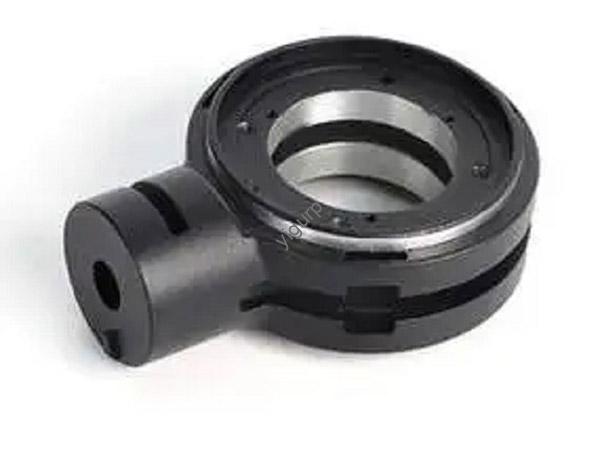
Si trabajas en la construcción, ingeniería, o fabricación, Probablemente hayas oído hablar del acero estructural EN19.. Pero lo que lo hace destacar? Esta guía desglosa sus características clave., usos del mundo real, y cómo se compara con otros materiales, para que pueda tomar decisiones informadas para sus proyectos.
1. Material Properties of EN19 Structural Steel
EN19’s popularity starts with its well-balanced properties. Below is a detailed breakdown of its chemical, physical, mecánico, and other key characteristics.
1.1 Composición química
Elchemical composition of EN19 is tightly controlled to ensure consistency. Here’s a typical range (per EN standards):
| Element | Content Range (%) | Role |
|---|---|---|
| Carbon (do) | 0.36 – 0.44 | Boosts strength and hardness |
| Manganese (Mn) | 0.70 – 1.00 | Improves ductility and weldability |
| Silicio (Y) | 0.10 – 0.40 | Enhances heat resistance |
| Sulfur (S) | ≤ 0.050 | Minimized to avoid brittleness |
| Phosphorus (PAG) | ≤ 0.050 | Controlled to prevent cracking |
| Alloying Elements (Chromium, Níquel) | cr: 0.80 – 1.10; En: 0.30 – 0.60 | Increases toughness and impact resistance |
1.2 Physical Properties
EN19’sphysical properties make it easy to work with in various environments:
- Densidad: 7.85 gramos/cm³ (same as most structural steels)
- Punto de fusión: 1450 – 1500°C
- Conductividad térmica: 48 W/(m·K) at 20°C
- Specific heat capacity: 460 J/(kg·K)
- Coefficient of thermal expansion: 13.5 × 10⁻⁶/°C (20 – 100°C)
1.3 Propiedades mecánicas
These are the most critical traits for structural use. EN19 excels here:
- Resistencia a la tracción: 620 – 780 MPa
- Yield strength: ≥ 415 MPa
- Alargamiento: ≥ 12% (ensures flexibility under load)
- Dureza: 190 – 250 media pensión (Brinell scale)
- Resistencia al impacto: ≥ 40 J at -20°C (resists sudden shocks)
- Fatigue strength: ~300 MPa (for long-term use under repeated loads)
1.4 Other Properties
- Resistencia a la corrosión: Moderado (needs coatings like paint or galvanizing for outdoor use)
- Soldabilidad: Bien (requires preheating to 150 – 200°C to prevent cracking)
- maquinabilidad: Excelente (works well with drilling, molienda, y girando)
- Magnetic properties: Ferromagnetic (attracts magnets, useful for certain industrial tests)
- Ductilidad: Alto (can be bent or formed without breaking)
2. Applications of EN19 Structural Steel
EN19’s versatility makes it a top choice across industries. Here are its most common uses:
- Construcción: Used for heavy-duty beams, columnas, and frameworks in high-rise buildings. Por ejemplo, London’s Shard used EN19 in its core support structures due to its high tensile strength.
- Bridge building: Ideal for bridge decks and trusses. The Queensferry Crossing in Scotland relied on EN19 for parts of its cable-stay system, as it withstands constant traffic loads.
- Industrial structures: Supports manufacturing plants, storage facilities, and crane rails. A German automotive factory used EN19 to build its 5-ton crane beams.
- Mechanical engineering: Makes gears, ejes, and machine components. A leading tractor brand uses EN19 for its transmission shafts, thanks to its fatigue strength.
- Industria automotriz: Used in heavy trucks (p.ej., axle parts) and racing cars (roll cages).
- Construcción naval: Creates hull frames and deck supports for small to medium-sized vessels.
- Railway infrastructure: Builds railway sleepers and bridge components for high-speed lines.
- Energy sector: Used in wind turbine towers (connecting flanges) and oil rig platforms.
- Architectural elements: Adds decorative yet strong beams to modern buildings (p.ej., museums and airports).
3. Manufacturing Techniques for EN19 Structural Steel
Turning raw steel into usable EN19 products involves four key steps:
3.1 Rolling Process
- Hot rolling: The most common method. Steel is heated to 1100 – 1250°C and pressed into shapes (vigas, platos, verja). Hot-rolled EN19 has a rough surface but high strength.
- Cold rolling: Done at room temperature for thinner sheets or precise shapes. Cold-rolled EN19 has a smooth finish but lower ductility (often annealed afterward).
3.2 Tratamiento térmico
Heat treatment fine-tunes EN19’s properties:
- Recocido: Heated to 820 – 850°C, held, luego se enfrió lentamente. Reduces hardness and improves machinability.
- Normalizing: Heated to 850 – 900°C, then cooled in air. Enhances strength and toughness.
- Tempering: After quenching (rapid cooling), heated to 500 – 600°C. Balances hardness and ductility (used for gears and shafts).
3.3 Fabrication Methods
- Corte: Usos corte por plasma (rápido, for thick plates) o oxy-fuel cutting (bajo costo, for carbon steel).
- Welding techniques: Arc welding (most common for on-site work) y soldadura láser (precision for thin parts). Preheating is a must to avoid cracks.
- Bending and forming: Done with press brakes or rollers. EN19’s ductility allows it to be shaped into curves for architectural designs.
3.4 Control de calidad
- Métodos de inspección: Ultrasonic testing (checks for internal defects) y magnetic particle inspection (finds surface cracks).
- Certification standards: Must meet ISO 683-1 (structural steels) y ES 10083-1 (quenched and tempered steels) to ensure quality.
4. Estudios de caso: EN19 in Real Projects
4.1 High-Rise Construction: The Lotte World Tower (Seoul)
The 555-meter Lotte World Tower used EN19 for its upper-floor beams. Engineers chose EN19 because itsyield strength (≥415 MPa) could support the tower’s weight without adding excess bulk. Post-installation tests showed the beams maintained their structural integrity through 10 years of wind and seismic activity.
4.2 Industrial Application: Volkswagen’s Wolfsburg Factory
Volkswagen’s largest factory uses EN19 for its automated assembly line rails. The rails need highresistencia al desgaste (from constant robot movement) yresistencia a la fatiga (to handle daily loads). EN19’s hardness (190 – 250 media pensión) and fatigue rating (300 MPa) made it the perfect fit—reducing rail replacement costs by 30% compared to carbon steel.
5. Comparative Analysis: EN19 vs. Other Materials
How does EN19 stack up? Let’s compare it to common alternatives.
5.1 vs. Other Types of Steel
| Característica | EN19 Acero Estructural | Acero carbono (A36) | Acero aleado (EN24) |
|---|---|---|---|
| Resistencia a la tracción | 620 – 780 MPa | 400 – 550 MPa | 800 – 1000 MPa |
| Soldabilidad | Bien | Excelente | Moderado |
| Costo (per ton) | $800 – $1,000 | $600 – $800 | $1,200 – $1,500 |
5.2 vs. Non-Metallic Materials
- Concreto: EN19 is 10x lighter and 5x stronger in tension. But concrete is cheaper for foundations. Por ejemplo, a bridge may use concrete for piers and EN19 for beams.
- Materiales compuestos (p.ej., fibra de carbono): Composites are lighter but 3x more expensive. EN19 is better for heavy loads (p.ej., crane beams).
5.3 vs. Other Metallic Materials
- Aleaciones de aluminio: Aluminum is lighter but has lower tensile strength (200 – 300 MPa). EN19 is better for structural parts like bridge trusses.
- Acero inoxidable: Stainless steel has better corrosion resistance but costs 2x more. EN19 is preferred for indoor or coated outdoor use.
5.4 Costo & Environmental Impact
- Cost analysis: EN19’s material cost is higher than carbon steel but lower than alloy steel. Es fabrication cost is also lower than composites (easier to cut/weld).
- Environmental impact: EN19 is 100% reciclable (guarda 75% energy vs. making new steel). Its production uses less energy than stainless steel or aluminum.
6. Yigu Technology’s View on EN19 Structural Steel
En Yigu Tecnología, we’ve worked with EN19 for over a decade in engineering and manufacturing projects. Its balancedpropiedades mecánicas—high tensile strength, buena soldabilidad, and excellent machinability—make it a reliable choice for clients in construction and automotive industries. We often recommend EN19 for heavy-duty components like crane shafts and bridge beams, as it reduces maintenance costs long-term. For projects needing corrosion resistance, we pair EN19 with our custom galvanizing solutions to extend its lifespan. Overall, EN19 remains a cost-effective, high-performance option for most structural needs.
FAQ About EN19 Structural Steel
- Is EN19 structural steel suitable for outdoor use?
Sí, but it needs protection (p.ej., galvanizing or paint) because its resistencia a la corrosión is moderate. Without coating, it may rust in wet environments. - Can EN19 be welded to other types of steel?
Absolutamente. It welds well to carbon steel (p.ej., A36) and most alloy steels. Just remember to preheat EN19 to 150 – 200°C to prevent cracking. - What’s the maximum load EN19 can handle?
It depends on the shape and size, but a 100mm x 100mm EN19 beam can support up to 5 tons of static load (per industry tests). For dynamic loads (p.ej., traffic), engineers reduce this to 3 tons for safety.