
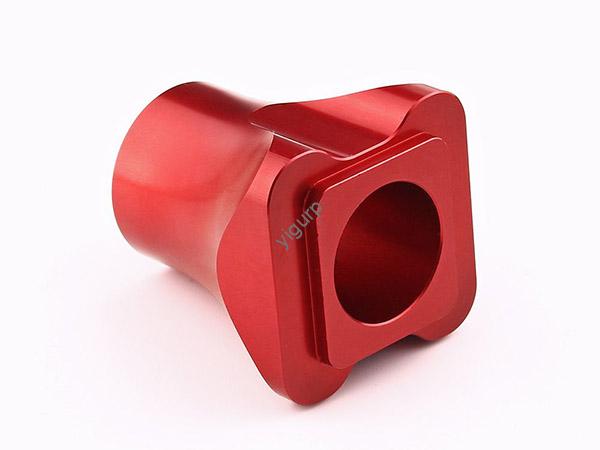
Si trabaja en industrias como la de procesamiento de alimentos, marina, o fabricación de productos químicos, you need bearing steel that resists corrosiony handles wear.EN 1.4125 stainless bearing steel—a European-standard martensitic stainless steel—delivers exactly that. Combina la resistencia a la corrosión del acero inoxidable con la resistencia al desgaste necesaria para los rodamientos.. Esta guía desglosa sus propiedades clave., aplicaciones del mundo real, proceso de fabricación, y cómo se compara con otros materiales, helping you solve corrosion-related bearing challenges.
1. Material Properties of EN 1.4125 Acero inoxidable para rodamientos
EN 1.4125’s unique composition (high chromium and carbon) gives it both stainless and bearing-grade performance. Let’s explore its properties in detail.
1.1 Composición química
EN 1.4125 follows strict European standards (EN 10088-3), ensuring consistent corrosion and wear resistance. Below is its typical chemical makeup:
| Element | Symbol | Content Range (%) | Key Role |
|---|---|---|---|
| Carbón (do) | do | 0.95 – 1.20 | Enhances hardness and wear resistance |
| Cromo (cr) | cr | 16.00 – 18.00 | Provides corrosion resistance (forms oxide layer) |
| Molibdeno (Mes) | Mes | 0.40 – 0.60 | Aumenta la resistencia a la corrosión (especially to chemicals) |
| Manganeso (Minnesota) | Minnesota | ≤ 1.00 | Improves workability |
| Silicio (Y) | Y | ≤ 1.00 | Aids deoxidation during steelmaking |
| Sulfur (S) | S | ≤ 0.030 | Minimized to avoid brittleness |
| Phosphorus (PAG) | PAG | ≤ 0.040 | Controlled to prevent cracking |
| Níquel (En) | En | ≤ 0.60 | Trace amount; minor boost to ductility |
| Nitrógeno (norte) | norte | ≤ 0.10 | Trace element; enhances strength |
1.2 Propiedades físicas
These properties describe how EN 1.4125 behaves under physical conditions like temperature and magnetism:
- Densidad: 7.75 gramos/cm³ (slightly lower than standard carbon bearing steels)
- Punto de fusión: 1,450 – 1,480 °C (2,642 – 2,696 °F)
- Conductividad térmica: 25.0 con/(m·K) en 20 °C (lower than carbon steels, typical of stainless grades)
- Coeficiente de expansión térmica: 10.5 × 10⁻⁶/°C (de 20 – 100 °C)
- Propiedades magnéticas: Ferromagnético (attracts magnets)—unlike austenitic stainless steels (p.ej., AISI 304), making it easy to sort.
1.3 Propiedades mecánicas
EN 1.4125’s mechanical properties are achieved via heat treatment (temple y revenido). Below are typical values:
| Propiedad | Measurement Method | Valor típico |
|---|---|---|
| Dureza (Rockwell) | CDH | 58 – 62 CDH |
| Dureza (Vickers) | HV | 550 – 600 HV |
| Resistencia a la tracción | MPa | ≥ 1,700 MPa |
| Yield Strength | MPa | ≥ 1,500 MPa |
| Alargamiento | % (en 50 milímetros) | ≥ 5% |
| Dureza al impacto | J (en 20 °C) | ≥ 12 J |
| Fatigue Limit | MPa (rotating beam) | ≥ 750 MPa |
1.4 Otras propiedades
EN 1.4125’s standout properties solve corrosion and wear challenges:
- Resistencia a la corrosión: Excellent—resists water, químicos suaves, and food acids (ideal for food processing/marine use). Outperforms carbon bearing steels (p.ej., 100Cr6) but is less resistant than austenitic grades (p.ej., AISI 316) in strong acids.
- Resistencia al desgaste: High carbon and chromium form hard carbides, matching the wear performance of standard bearing steels like JIS SUJ2.
- Templabilidad: Good—achieves uniform hardness across thick sections via heat treatment.
- Estabilidad dimensional: Minimizes distortion during heat treatment, ensuring precision in bearing races and rolling elements.
- Austenitic Structure: No—EN 1.4125 is martensitic (ferromagnetic), which differs from non-magnetic austenitic stainless steels.
2. Applications of EN 1.4125 Acero inoxidable para rodamientos
EN 1.4125’s corrosion + wear resistance makes it ideal for wet, químico, or sanitary environments. Here are its key uses:
- Aspectos: Corrosion-resistant bearings in food processing lines, marine pumps, and chemical mixers—where water or chemicals would rust standard steel.
- Rolling Elements: Balls/rollers in wet bearings (p.ej., washing machine bearings or marine engine bearings).
- Races: Inner/outer rings of bearings in sanitary equipment (p.ej., pharmaceutical mixers) that require frequent cleaning.
- Componentes automotrices: Bearings in car washes or undercarriage parts (exposed to water, sal, y suciedad).
- Maquinaria Industrial: Bearings in chemical processing pumps, wastewater treatment equipment, and humid factory environments.
- Componentes aeroespaciales: Small bearings in aircraft fuel systems (resisting fuel and moisture).
- Dispositivos médicos: Bearings in surgical tools and sterilizable equipment (able to withstand autoclaving).
- Food Processing Equipment: Bearings in conveyors, mixers, and filling machines—meeting food safety standards (p.ej., Cumplimiento de la FDA).
- Marine Applications: Bearings in boat engines, ejes de hélice, and deck equipment (resisting saltwater corrosion).
- Chemical Processing Equipment: Bearings in acid tanks, solvent mixers, and chemical transfer pumps.
3. Manufacturing Techniques for EN 1.4125
Producing EN 1.4125 requires techniques that preserve both corrosion and wear resistance. Here’s the typical process:
- Steelmaking:
- EN 1.4125 is made using an Horno de arco eléctrico (EAF) with argon oxygen decarburization (AOD). This process controls carbon content (critical for hardness) and ensures high chromium levels (para resistencia a la corrosión).
- Laminación:
- Después de la fabricación de acero, the metal is Hot Rolled (en 1,100 – 1,200 °C) into billets or bars. For precision parts, es Cold Rolled (room temperature) to improve surface finish—important for sanitary applications (p.ej., procesamiento de alimentos).
- Precision Forging:
- Partes complejas (like custom bearing rings) are forged into near-final shapes. Forging refines the grain structure, enhancing both strength and corrosion resistance.
- Tratamiento térmico:
- Heat treatment balances hardness and corrosion resistance:
- Recocido de solución: Calentar para 1,000 – 1,050 °C, then air cool to soften the steel for machining.
- Temple: Reheat to 950 – 1,000 °C, then rapid cool in oil to harden (forms martensitic structure).
- Templado: Reheat to 150 – 200 °C to reduce brittleness while maintaining hardness and corrosion resistance.
- Heat treatment balances hardness and corrosion resistance:
- Mecanizado:
- Post-heat treatment, las partes son Ground (for ultra-smooth surfaces, reducing friction and bacterial buildup in food applications) y Turned (for cylindrical shapes like bearing races).
- Tratamiento superficial:
- Optional steps to enhance performance:
- Pasivación: Treat with nitric acid to strengthen the chromium oxide layer (boosting corrosion resistance).
- Pulido: Achieve a mirror finish for sanitary applications (p.ej., procesamiento de alimentos), making cleaning easier.
- Revestimiento: Thin PTFE coatings for extra chemical resistance (p.ej., in strong solvent environments).
- Optional steps to enhance performance:
- Control de calidad:
- Rigorous testing ensures compliance:
- Chemical analysis: Verify chromium and carbon content (via spectrometry) to confirm corrosion/wear resistance.
- Corrosion testing: Salt spray tests (per ASTM B117) to check resistance to saltwater.
- Hardness testing: Ensure HRC 58–62 for wear resistance.
- Dimensional inspection: Use CMMs to check tolerances for bearing fits.
- Rigorous testing ensures compliance:
4. Estudios de caso: EN 1.4125 in Action
Real-world examples show how EN 1.4125 solves corrosion challenges.
Estudio de caso 1: Food Processing Bearing Durability
A food manufacturer faced monthly bearing failures in their bread dough mixers. The original bearings used 100Cr6 steel, which rusted after daily water cleaning. Switching to EN 1.4125 aspectos (with passivation) extended life to 12 meses. This reduced maintenance costs by 80% and eliminated production downtime from bearing replacements.
Estudio de caso 2: Marine Equipment Corrosion Resistance
A boat builder struggled with propeller shaft bearing failures (cada 6 meses) due to saltwater. They replaced standard steel bearings with EN 1.4125 aspectos. Post-switch, bearings lasted 3 años, and the builder saved $20,000 per boat in maintenance costs.
5. EN 1.4125 vs. Other Materials
How does EN 1.4125 compare to other stainless and bearing materials? The table below breaks it down:
| Material | Similarities to EN 1.4125 | Diferencias clave | Mejor para |
|---|---|---|---|
| AISI 304 | Inoxidable; resistente a la corrosión | Austenitic (no magnético); lower hardness (no wear resistance) | Food processing frames (not bearings) |
| AISI 316 | Inoxidable; resistente a la corrosión | Better chemical resistance; no magnético; low hardness | Chemical tanks (not bearings) |
| JIS SUJ2 | Grado de rodamiento; resistente al desgaste | No corrosion resistance; rusts in water | Dry industrial bearings |
| GCr15 | Grado de rodamiento; duro | No corrosion resistance; Chinese standard | Dry machinery bearings |
| 100Cr6 | Grado de rodamiento; resistente al desgaste | No corrosion resistance; European standard | Dry automotive/industrial bearings |
| EN 100CrMo7 | Resistente al desgaste; European standard | No corrosion resistance; lower chromium | Heavy-duty dry bearings |
| AISI M50 | High-temperature bearing steel | No corrosion resistance; higher cost | Aerospace dry bearings |
| Ceramic Bearings (Si₃N₄) | Resistente a la corrosión; resistente al desgaste | No magnético; more expensive; frágil | Ultra-high-speed wet applications |
| Plastic Bearings (PTFE) | Resistente a la corrosión | Low strength; no high-load use | Low-load wet apps (p.ej., small pumps) |
Yigu Technology’s Perspective on EN 1.4125
En Yigu Tecnología, EN 1.4125 is our top choice for clients in food processing, marina, and chemical industries. Its balance of corrosion and wear resistance solves the #1 problem we see: rusted bearings in wet environments. We pair EN 1.4125 with passivation and precision grinding to meet sanitary standards (p.ej., FDA) and tight bearing tolerances. For clients needing extra chemical resistance, we add PTFE coatings—making EN 1.4125 parts last 5–10x longer than standard steel in wet conditions.
FAQ About EN 1.4125 Acero inoxidable para rodamientos
- Is EN 1.4125 magnetic?
Yes—EN 1.4125 is martensitic stainless steel, so it’s ferromagnetic (attracts magnets). This differs from non-magnetic austenitic stainless steels like AISI 304. - Can EN 1.4125 withstand saltwater?
Yes—its high chromium content (16–18%) resists saltwater corrosion, making it ideal for marine applications (p.ej., boat engines). Para protección adicional, passivation or coating is recommended. - How does EN 1.4125 compare to AISI 440C (another stainless bearing steel)?
EN 1.4125 and AISI 440C are similar (both martensitic, corrosion-resistant bearing steels). EN 1.4125 has slightly lower carbon (0.95–1.20% vs. 0.95–1.10% for 440C) but similar performance. EN 1.4125 follows European standards, while AISI 440C follows U.S. standards—they’re often interchangeable.