
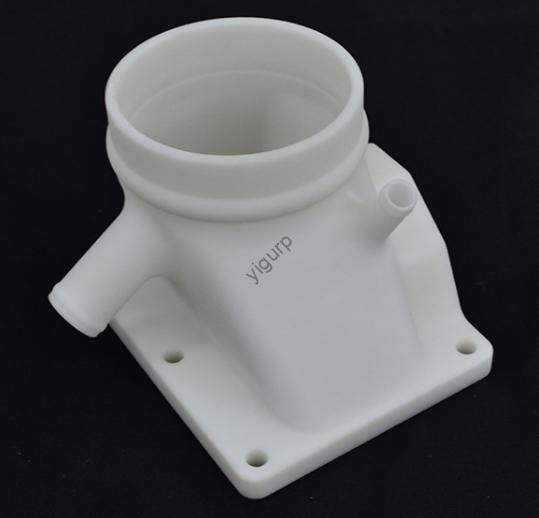
Si trabaja en el desarrollo o fabricación de productos, understanding how piezas prototipo differ from piezas mecanizadas is key to avoiding costly mistakes. Estos dos productos de fabricación sirven para etapas de producción completamente distintas: una se centra en probar ideas., mientras que el otro ofrece consistente, componentes listos para producción. Abajo, Desglosamos sus diferencias con datos claros, ejemplos, and actionable insights to help you choose the right option for your project.
1. Core Production Goal: Testing Ideas vs. Mass Supply
The biggest divide between prototype parts and machined parts lies in their purpose. Prototype parts are built to validate designs, while machined parts are made to meet industrial production needs.
| Aspecto | Prototype Parts | Machined Parts |
| Primary Objective | Verify design feasibility; fix flaws early | Produce consistent parts for assembly or sale |
| Target Stage | Desarrollo de productos (preproducción) | producción en masa (post-design finalization) |
| End-User | Design teams, investors, testing departments | Fabricantes, assembly lines, end customers |
| Typical Output | 1–10 pieces per design (pequeño, iterative batches) | 100–10,000+ pieces per order (large, uniform runs) |
Por ejemplo, if you’re developing a new laptop hinge, you’d first create 3–5 piezas prototipo to check if the hinge opens smoothly and holds the screen securely. Once the design works, you’d make 5,000 piezas mecanizadas to install in production laptops.
2. Manufacturing Technologies: Flexibility vs. Precisión
Prototype parts use diverse, fast methods to test designs, while machined parts rely on specialized techniques for consistent quality.
Prototype Part Technologies (Rápido, Adaptable)
- 3Impresión D: Turns digital designs into physical parts in 4–24 hours; ideal para formas complejas (p.ej., custom smartphone cases).
- Mecanizado CNC: Uses computer-controlled tools to carve parts from solid materials; great for testing strength (p.ej., soportes metálicos).
- Handcrafting: Manual work with tools like drills or sanders; perfect for quick tweaks (p.ej., adjusting the size of a plastic prototype).
- Key benefit: These methods let you modify designs in days—no need for expensive setup changes. Por ejemplo, a 3D printed prototype can be revised and reprinted in under 12 horas.
Machined Part Technologies (Preciso, Scalable)
- Torneado: Spins materials while cutting tools shape them; used for cylindrical parts (p.ej., pernos, tubería).
- Molienda: Uses rotating cutters to remove material from a workpiece; makes flat or complex 3D shapes (p.ej., laptop chassis).
- Molienda: Uses abrasive wheels to smooth surfaces; ensures ultra-tight tolerances (p.ej., componentes de dispositivos médicos).
- Key benefit: These techniques achieve precision within ±0.001 inches—critical for parts that need to fit together perfectly (como componentes del motor). Encima 70% of industrial machined parts use turning or milling for consistency.
3. Características clave: Uniqueness vs. Consistencia
Prototype parts are designed to be one-of-a-kind for testing, while machined parts must meet strict, uniform standards for mass production.
Prototype Part Characteristics
- Diversity: Each prototype can be different. Por ejemplo, you might make one plastic prototype and one metal prototype of a tool handle to test weight and grip.
- Iterativity: They’re meant to be modified. 85% of product teams revise prototypes 2–4 times to fix issues like poor fit or weak spots.
- Non-Production Focus: They don’t need to meet long-term durability standards. A prototype of a water bottle might only be tested for shape—no need to check if it resists cracking after 100 usos.
Machined Part Characteristics
- Precisión: Every part must match exact specs. A batch of machined bolts, Por ejemplo, must all have the same thread size (p.ej., M8 x 1.25mm) to fit into nuts.
- Consistencia: 99% of machined parts in a batch are identical. This is vital for assembly lines—if one part is too big, it can stop production.
- Production Readiness: They’re built to last. Machined parts for cars, por ejemplo, must withstand heat, vibración, and wear for years.
4. Comparación de costos: Short-Term Investment vs. Long-Term Value
Costs differ because prototype parts prioritize speed over scale, while machined parts leverage volume to lower per-unit costs.
Cost Breakdown (para 50 Pieces of a Small Metal Part)
| Cost Type | Prototype Parts (3D Printed + CNC) | Machined Parts (Molienda + Torneado) |
| Setup Cost | \(100–\)300 (no specialized tooling) | \(500–\)1,200 (tooling and programming) |
| Per-Piece Cost | \(15–\)40 | \(3–\)8 |
| Total Cost for 50pcs | \(750–\)2,000 + \(100–\)300 = \(850–\)2,300 | \(150–\)400 + \(500–\)1,200 = \(650–\)1,600 |
- When prototypes are cheaper: For 1–20 pieces. If you need 10 regiones, prototypes cost \(150–\)400 total—far less than machined parts (\(500–\)1,200 configuración + \(30–\)80 regiones).
- When machined parts are cheaper: Para 100+ piezas. Para 200 regiones, machined parts cost \(600–\)1,600 + \(500–\)1,200 = \(1,100–\)2,800, while prototypes cost \(3,000–\)8,000.
La perspectiva de la tecnología Yigu
En Yigu Tecnología, we view piezas prototipo as the “design safety net” and piezas mecanizadas as the “production backbone.” For prototypes, we use 3D printing and CNC machining to deliver iterations in 3–5 days, helping clients catch flaws early (like a poorly fitting gear) before investing in tooling. For machined parts, our precision turning and milling processes ensure 99.5% consistency—critical for clients in automotive and electronics. By combining these two, we help teams move from idea to mass production faster and more affordably.
Preguntas frecuentes
- Can machined parts be used as prototypes?
Sí, but it’s costly. Machined parts require tooling, so making 1–5 as prototypes would cost \(500–\)1,200 in setup fees—far more than 3D printed prototypes (\(100–\)300). Save machined parts for after design finalization.
- How do I know if I need a prototype or a machined part?
If you’re still testing design changes (p.ej., adjusting a part’s size), use a prototype. If your design is fixed and you need 50+ identical parts for production, use a machined part.
- Are prototype parts less durable than machined parts?
Not always, but they’re not built for long-term use. A CNC machined prototype can be as durable as a production machined part, but a 3D printed prototype (made of PLA plastic) may break easily—choose prototype materials based on your test needs.