
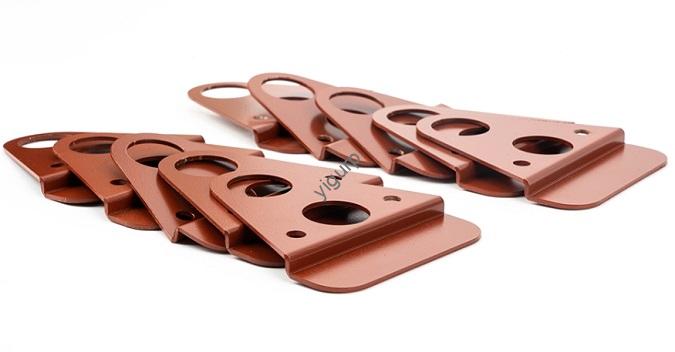
Si eres un desarrollador de productos, ingeniero, o emprendedor navegando por el ciclo de vida del producto, probablemente hayas preguntado: “¿Cuál es la diferencia entre piezas de prototipo y piezas de molde??"Si bien ambas son versiones físicas del diseño de un producto, cumplen funciones completamente diferentes: uno se centra en las pruebas y el refinamiento, el otro sobre la producción en masa para el mercado. Mixing them up can lead to wasted time, sobrecostos presupuestarios, or even flawed final products. En esta guía, we’ll break down their key differences across production methods, requisitos del proceso, and functional purposes, with clear data and examples to help you choose the right one for your project stage.
What Are Prototype Parts and Mold Parts, Exactly?
Before diving into differences, let’s define each term simply—this foundational understanding will make the nuances easier to grasp.
Piezas prototipo: The “Test Drafts” of Product Design
Prototype parts are small-batch or single-piece versions of a product, built early in the design process. Think of them as “working drafts”: their main job is to help you validate if your design works, not to be sold to customers. Por ejemplo, if you’re designing a new plastic water bottle, a prototype part might be a single 3D-printed bottle used to check if the lid seals properly or if the grip feels comfortable.
Prototype parts are flexible—you can tweak them quickly if you find flaws. They’re made with processes that prioritize speed and adaptability, not mass output.
Mold Parts: The “Final Products” for Mass Markets
Mold parts (also called production parts) are the finished, mass-produced versions of a product. They’re made once your design is fully tested and finalized, using specialized molds that can churn out hundreds or thousands of identical pieces. Going back to the water bottle example: once the prototype is perfected, a metal mold is created, and plastic is injected into it to make 10,000+ identical bottles—these are mold parts, ready to be shipped to stores.
Mold parts are all about consistency, control de calidad, and meeting market demand. Every piece must match strict standards to ensure customer satisfaction.
Core Differences: Prototype Parts vs. Mold Parts
The gap between prototype parts and mold parts lies in three critical areas: how they’re made (métodos de producción), how strictly they’re built (requisitos del proceso), and why they’re made (functional purposes). A continuación se muestra un desglose detallado, with a comparison table to highlight key contrasts.
1. Production Methods: Small-Batch Testing vs. Mass-Market Output
The way each type of part is produced is the most obvious difference. Prototype parts are made in small quantities to test designs, while mold parts are mass-produced to meet customer demand.
| Aspecto | Piezas prototipo | Mold Parts |
| Volumen de producción | Single pieces or small batches (1–50 unidades) | producción en masa (1,000+ unidades) |
| Key Processes | 3impresión D, Mecanizado CNC, artesanía | moldeo por inyección, fundición a presión, blow molding |
| Plazo de entrega | Rápido (1–5 days for simple parts) | Más extenso (2–4 weeks to make molds + 1–2 days per batch) |
| Tooling Requirements | Mínimo (no expensive molds needed) | Alto (specialized metal molds cost \(5,000–\)50,000+) |
Ejemplo del mundo real:
- A startup designing a new wireless earbud case would first make 5 piezas prototipo using 3D printing (done in 2 días, no mold needed) to test fit and durability.
- Once the design is perfect, they’d invest in an injection mold ($15,000) to make 50,000 mold parts (the first batch takes 3 days to produce after the mold is ready).
2. Process Requirements: Flexible vs. Strict Standards
Prototype parts and mold parts have very different rules for how they’re built. Prototype parts prioritize “good enough to test,” while mold parts demand “perfect every time.”
Piezas prototipo: Flexible, Low-Stakes Requirements
- Precisión: Tolerances are loose (±0.1–0.5mm). A tiny gap in a prototype lid is okay if it still lets you test the seal—you can fix it later.
- Apariencia: Cosmetic flaws (like small scratches or uneven edges) are acceptable. The goal is to test functionality, not impress customers with looks.
- Flexibilidad de materiales: You can use cheaper or easier-to-work-with materials that mimic the final product. Por ejemplo, a prototype of a metal phone stand might be made of plastic (faster to 3D print) instead of aluminum.
Mold Parts: Estricto, High-Stakes Standards
- Precisión: Tolerances are tight (±0.01–0.05mm). Every mold part must be identical—if one earbud case is 0.1mm too small, it won’t fit the earbud, and customers will return it.
- Apariencia: No cosmetic flaws allowed. Mold parts are inspected for scratches, color inconsistencies, or warping—any defective piece is discarded.
- Material Consistency: Must use the final production material (p.ej., the aluminum phone stand mold parts must be made of aluminum, not plastic) to ensure durability and performance match customer expectations.
Data Point:
In prototype production, only 70–80% of parts need to meet basic standards (since flaws are expected and fixed). For mold parts, the acceptance rate is 99.5%+—any lower means costly reworks or customer complaints.
3. Functional Purposes: Design Validation vs. Market Supply
Why you make each type of part is the most important difference. Prototype parts are tools to improve your design, while mold parts are products to sell to customers.
What Prototype Parts Are Used For:
- Verify design feasibility: Check if your idea can actually be built. Por ejemplo, a prototype of a folding chair might reveal that the hinge is too weak to support weight.
- Test functionality: Ensure the product works as intended. A prototype of a coffee mug with a built-in thermometer would be tested to see if the temperature reading is accurate.
- Find design flaws early: Fixing a flaw in a prototype costs \(100–\)500, but fixing the same flaw in a mold (after mass production starts) costos \(10,000–\)100,000.
- Gather feedback: Show prototypes to stakeholders (p.ej., investors, potential customers) to get input on size, forma, or usability.
What Mold Parts Are Used For:
- Meet market demand: Supply stores, retailers, or direct customers with finished products. A toy company makes 50,000 mold parts of a new action figure to stock shelves for the holiday season.
- Ensure brand consistency: Every mold part must match the brand’s quality standards. A luxury watch brand’s mold parts (p.ej., cajas de relojes) must have perfect finishes to maintain their premium image.
- Generate revenue: Mold parts are the products that make money. Without mass-produced mold parts, a business can’t scale or profit from its design.
Cómo elegir: When to Use Prototype Parts vs. Mold Parts
Knowing which type of part to use depends on where you are in the product lifecycle. Here’s a simple guide:
Use Prototype Parts If:
- You’re in the early design stage (you have an idea but haven’t tested it).
- You need to funcionalidad de prueba (p.ej., “Does this button work?” “Is this part strong enough?").
- You want to tweak the design quickly (p.ej., change the size of a handle or adjust a hinge).
- Your budget is limited (prototypes are cheaper than making molds).
Use Mold Parts If:
- Your design is 100% finalized (no more tweaks needed—you’ve tested all flaws).
- You need to produce large quantities (1,000+ unidades) to sell to customers.
- You need calidad constante (every part must be identical).
- You’re ready to scale your business (mold parts let you meet market demand).
Yigu Technology’s Perspective on Prototype vs. Mold Parts
En Yigu Tecnología, we see prototype parts as the “foundation” of successful mold part production. Our team helps clients build precise prototypes (via CNC machining and 3D printing) that mimic final materials—this ensures design flaws are caught early, saving tens of thousands in mold rework costs later. For prototype parts, we prioritize speed (1–3 days for simple designs) y flexibilidad; for mold parts, we partner with trusted production facilities to ensure strict quality control (±0.03mm tolerance) and on-time delivery. We believe the right sequence—prototype first, then mold parts— is key to launching a successful product, and we guide clients through every step to avoid costly mistakes.
Preguntas frecuentes:
1. Can I use prototype parts as final products to sell?
It’s not recommended. Prototype parts are made with loose standards—they may not be durable enough for regular use, and you can’t produce enough of them to meet market demand. Por ejemplo, a 3D-printed prototype phone case might crack after 1 week of use, while a mold-made case (injected with strong ABS plastic) lasts for years. Selling prototypes could damage your brand reputation.
2. How much more expensive are mold parts compared to prototype parts?
Mold parts have higher upfront costs (para moldes) but lower per-unit costs. A single prototype part for a small plastic component might cost \(20–\)50. A mold for that same component costs \(10,000, but each mold part costs just \)1–$2. If you need 1,000+ regiones, mold parts are cheaper in the long run; si lo necesitas 10 regiones, prototypes are far more cost-effective.
3. What if I find a flaw in my mold parts after production starts?
Fixing flaws in mold parts is costly. You’ll likely need to stop production, modify the mold (which takes 1–2 weeks and costs \(1,000–\)10,000), and discard any defective parts. That’s why it’s critical to test prototype parts thoroughly first—catching a flaw in a \(30 prototype is far better than fixing it in a \)10,000 mold and 1,000 piezas defectuosas.