
Our Composite 3D Printing Services
Transform your manufacturing with Composite 3D Printing—the powerful combination of Composite materials’ strength and Additive manufacturing’s flexibility. Whether you need lightweight aerospace components, durable sports equipment, or custom medical devices, our expertise delivers high-performance materials and precision-engineered parts. Experience layer-by-layer fabrication that turns complex designs into reality, with less waste, faster production, and unmatched customizability. Partner with us for Composite 3D Printing that meets your industry’s toughest demands.
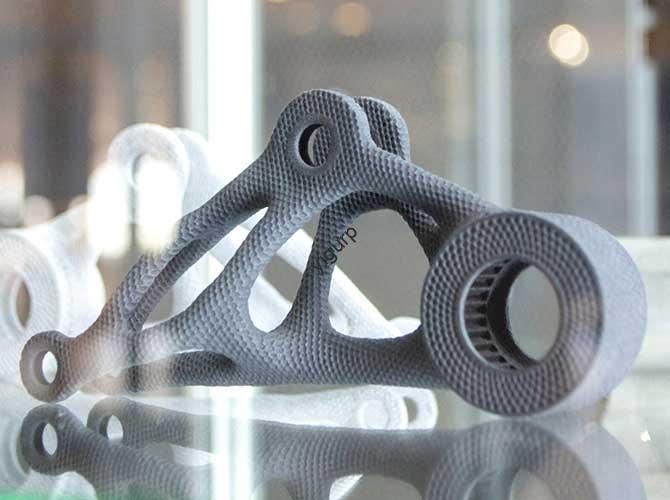
What Is Composite 3D Printing?
At its core, Composite 3D Printing is an Additive manufacturing process that uses Composite materials—instead of single metals or plastics—to build parts through layer-by-layer fabrication. Composite materials consist of two key components: a Polymer matrix (like Thermoplastics such as Polyamide or Thermosets like Epoxy) and a Fibre reinforcement (such as Carbon fibre, Glass fibre, or Aramid fibre) that boosts strength and durability.
Unlike traditional 3D printing (which uses single-material filaments), Composite 3D Printing leverages the unique properties of composites—combining the lightweight nature of polymers with the high strength of fibres. This makes it ideal for parts that need to balance weight and performance, like aerospace brackets or automotive components. In short, Composite 3D Printing bridges the gap between advanced material science and innovative manufacturing, enabling designs that were once impossible with single-material processes.
Our Capabilities: Delivering Top-Tier Composite 3D Printing Solutions
When you choose our Composite 3D Printing services, you gain access to a suite of capabilities tailored to solve your most complex manufacturing challenges. Our team combines deep expertise in Composite materials with cutting-edge Additive manufacturing technology to deliver results that meet even the strictest industry standards.
Key Capabilities Overview
| Capability | Core Features | Target Use Cases |
| Custom Design | Tailored to unique geometries, material combinations, and performance needs | Custom medical devices, specialized industrial components, bespoke consumer products |
| Precision Engineering | Dimensional accuracy down to ±0.1 mm, compliance with ISO 8015 standards | Aerospace parts, precision electronics enclosures, high-end sports equipment |
| Rapid Prototyping | 1–2 week turnaround for prototypes, multiple design iterations supported | Product development, testing new composite part designs, market validation |
| High-performance materials | Access to a wide range of composites (Carbon fibre-Polyamide, Glass fibre-Epoxy, etc.) | High-stress applications like automotive chassis parts, marine components |
| Complex geometries | Ability to print lattice structures, internal channels, and thin-walled components | Lightweight aerospace parts, ergonomic medical devices, intricate consumer goods |
| Large-scale production | Automated workflows, batch processing (up to 500+ parts per run), consistent quality | Automotive parts, consumer products, industrial components |
| Quality control | In-line monitoring, post-print inspection (CMM, tensile testing), material certification | Aerospace critical parts, medical devices, high-reliability industrial components |
| Technical support | End-to-end guidance from design optimization to post-processing | All industries, especially for clients new to Composite 3D Printing |
Process: Step-by-Step Guide to Composite 3D Printing
The Composite 3D Printing Process is a structured workflow that combines digital design, precise printing, and careful post-processing to create high-quality composite parts. Each step is optimized to preserve the unique properties of Composite materials (like strength and lightweight) while ensuring accuracy. Below is a detailed breakdown:
- CAD Design & Slicing:
- Start with a 3D CAD design of the part. Our team optimizes the design for composite printing—adjusting wall thicknesses to accommodate fibre reinforcement and adding support structures to prevent warping.
- Next, Slicing software converts the 3D model into 2D layers, generating a print path that aligns fibre orientation with stress points (critical for maximizing strength).
- Material Preparation & Extrusion:
- Composite materials (e.g., Carbon fibre-Polyamide filaments or Glass fibre-Epoxy resins) are prepared—dried to remove moisture (which can weaken parts) and loaded into the printer.
- The printer uses Extrusion (for thermoplastic composites) or resin deposition (for thermoset composites) to lay down material layer by layer. For continuous fibre composites, fibres are integrated into the extrusion process in real time.
- Curing & Post-Processing:
- For Thermosets (like Epoxy-based composites), the part undergoes Curing—either with heat or UV light—to harden the polymer matrix and bond fibres. Thermoplastics (like Polyamide) may require heat treatment to reduce internal stress.
- Post-processing steps include removing support structures, sanding rough edges, and applying coatings (if needed) to enhance durability or aesthetics.
- Inspection:
Final Inspection includes dimensional checks (using CMMs), tensile strength testing, and visual verification to ensure the part meets quality standards. Any parts that don’t pass are reworked or rejected.
Materials: Choosing the Right Composite for Your Project
Composite materials are the foundation of our 3D printing process, and selecting the right combination of Polymer matrix and Fibre reinforcement is critical to project success. Each composite offers unique properties—from high strength to lightweight—making them suited for specific industries. Below is a comparison of common Composite materials we use:
| Composite Type (Fibre + Matrix) | Key Properties | Typical Applications |
| Carbon fibre + Polyamide | High strength-to-weight ratio (150 MPa tensile strength), lightweight, chemical resistance | Aerospace brackets, high-performance sports equipment (bicycle frames) |
| Glass fibre + Epoxy | Good impact resistance, cost-effective, corrosion resistance | Marine components (boat hulls), automotive body panels, industrial enclosures |
| Aramid fibre + Polycarbonate | Excellent heat resistance (up to 250°C), high toughness, flame retardant | Aerospace engine parts, protective gear (helmets), electronics enclosures |
| Carbon fibre + ABS | High rigidity, good surface finish, easy to post-process | Consumer products (drone frames), automotive interior parts |
| Glass fibre + PLA | Eco-friendly (biodegradable PLA), low cost, moderate strength | Prototypes, low-stress consumer goods (planters, toys) |
| Carbon fibre + Resin (UV-cured) | High precision, smooth surface, fast curing | Medical devices (dental aligners), jewelry, small electronics parts |
All our Composite materials meet industry standards (e.g., ASTM D3039 for tensile testing of composites) and are tested for consistency before use.
Surface Treatment: Enhancing Composite Part Performance
Raw 3D-printed composite parts may have rough surfaces (from layer lines) or residual support material, which can impact functionality—especially for parts like consumer products or medical devices. Our Surface Treatment processes are designed to enhance the performance, appearance, and durability of composite parts while preserving their core properties (like strength and lightweight).
Common Surface Treatment Techniques
| Technique | How It Works | Benefits | Ideal Applications |
| Sanding | Using fine-grit sandpaper (200–600 grit) to smooth layer lines | Creates a uniform surface, improves adhesion for coatings | Automotive parts, consumer products, industrial enclosures |
| Polishing | Mechanical or chemical polishing to achieve a glossy finish | Enhances aesthetics, reduces friction | Sports equipment (golf clubs), high-end consumer goods |
| Painting | Applying acrylic or enamel paints to match brand colors | Improves appearance, adds UV protection | Consumer products, automotive exterior parts |
| Coating | Applying protective coatings (e.g., clear epoxy, polyurethane) | Boosts durability, resistance to moisture/chemicals | Marine components, outdoor industrial parts |
| Priming | Using a primer to prepare the surface for painting/coating | Improves paint adhesion, hides surface imperfections | All composite parts requiring painting or coating |
| Epoxy sealing | Applying a thin layer of epoxy to fill small gaps or pores | Enhances water resistance, strengthens surface | Marine parts, outdoor sports equipment |
| Texture application | Adding textured finishes (e.g., rubberized coatings) for grip | Improves usability, reduces slippage | Medical devices (handles), sports equipment (bike grips) |
We work with you to select the right Surface Treatment based on your part’s application—whether it needs to be aesthetically pleasing, durable, or functional.
Tolerances: Achieving Precision in Composite 3D Printing
Precision engineering is critical for composite parts, as even small dimensional errors can cause failure (e.g., in aerospace components or medical devices). Our Composite 3D Printing process is optimized to deliver tight tolerances and high dimensional accuracy, supported by rigorous quality control.
Typical Tolerance Levels
| Part Size | Dimensional Tolerance | Layer Thickness | Geometric Tolerance (Flatness/Straightness) |
| Small Parts (<50 mm) | ±0.05 mm | 0.1–0.2 mm | ±0.02 mm/m |
| Medium Parts (50–200 mm) | ±0.1 mm | 0.2–0.3 mm | ±0.03 mm/m |
| Large Parts (>200 mm) | ±0.15 mm | 0.3–0.5 mm | ±0.05 mm/m |
To ensure these tolerances are met:
- We use Measurement standards like ISO 10360-2 (for CMMs) to calibrate our inspection tools.
- Post-print Quality assurance includes 3D scanning, tensile strength testing, and visual verification.
- We optimize print parameters (e.g., extrusion temperature, layer adhesion) to minimize dimensional deviations, especially for fibre-reinforced composites (which can have unique shrinkage properties).
For ultra-precision parts (e.g., aerospace sensors), we offer secondary processes like CNC machining to achieve tolerances as tight as ±0.01 mm.
Advantages: Why Composite 3D Printing Outperforms Traditional Methods
Composite 3D Printing offers a range of benefits that make it superior to traditional composite manufacturing (like hand lay-up, compression molding, or injection molding). These advantages address key pain points for engineers, procurement managers, and product developers:
- Lightweight & High Strength: Composites are up to 50% lighter than metals (like aluminum) while offering similar or higher strength. For example, a Carbon fibre-Polyamide part has a strength-to-weight ratio 3x higher than aluminum—ideal for aerospace and automotive parts where weight reduction improves efficiency.
- Customizability: Unlike traditional methods (which require expensive molds for custom parts), Composite 3D Printing lets you create unique designs with no extra cost. Whether you need a one-of-a-kind medical device or a small batch of custom sports equipment, we can tailor every aspect to your needs.
- Reduced Waste: Traditional composite manufacturing wastes 30–40% of material (due to mold trimming and excess fibre). Composite 3D Printing uses only the material needed for the part, cutting waste to less than 5%. Unused filament or resin is also recyclable, lowering material costs.
- Faster Production: Prototyping with traditional composite methods takes 4–6 weeks. With Composite 3D Printing, prototypes are ready in 1–2 weeks, and production runs can start in as little as 3 weeks—accelerating product development and time-to-market.
- Cost-Effective: For low-to-medium production volumes (1–500 parts), Composite 3D Printing eliminates mold costs (which can be 10,000–100,000+ for traditional methods). Even for high volumes, our automated workflows keep costs competitive, often saving clients 15–30% vs. traditional manufacturing.
Sustainability: Many of our Composite materials (like PLA-based composites) are biodegradable, and our waste-reduction efforts lower carbon footprints. This aligns with the sustainability goals of industries like consumer goods and automotive.
Applications Industry: Where Composite 3D Printing Shines
Composite 3D Printing is used across industries that demand materials with a balance of strength, lightweight, and customizability. Its unique properties make it a top choice for applications where metals or single plastics fall short. Below are key industries and their use cases:
- Aerospace: Composite parts like brackets, interior panels, and engine components reduce aircraft weight (improving fuel efficiency) while withstanding high stress. For example, we’ve printed Carbon fibre-Polyamide brackets that weigh 40% less than aluminum brackets, with the same strength.
- Automotive: Lightweight composite parts (like body panels, chassis components, and interior trim) boost fuel efficiency and electric vehicle range. We’ve worked with automakers to print Glass fibre-Epoxy body panels that cut vehicle weight by 15%.
- Marine: Corrosion-resistant composites (like Glass fibre-Epoxy) are ideal for boat hulls, propellers, and deck components. 3D printing enables complex hull designs that improve hydrodynamics and reduce drag.
- Medical: Biocompatible composites (like Carbon fibre-Polyamide) are used for custom prosthetics, orthopedic braces, and surgical tools. 3D printing creates parts that fit a patient’s anatomy perfectly, improving comfort and functionality.
- Sports Equipment: High-strength composites (like Carbon fibre-Epoxy) are used for bicycle frames, golf clubs, and tennis rackets. 3D printing enables lightweight, ergonomic designs that enhance performance.
- Consumer Products: Custom composite parts like drone frames, laptop cases, and furniture combine durability with aesthetics. We’ve printed Carbon fibre-ABS drone frames that are 30% lighter than plastic frames, with better impact resistance.
Electronics: Heat-resistant composites (like Aramid fibre-Polycarbonate) are used for electronics enclosures and circuit board supports. 3D printing creates precise, lightweight enclosures that protect sensitive components.
Manufacturing Techniques: The Methods Behind Our Composite 3D Printing
We use a range of Manufacturing Techniques for Composite 3D Printing, each suited to different Composite materials, part sizes, and precision requirements. The choice of technique depends on your project’s needs—from rapid prototyping to high-volume production.
Comparison of Composite 3D Printing Techniques
| Technique | How It Works | Key Advantages | Ideal Materials | Typical Applications |
| Fused Deposition Modelling (FDM) | Extrudes thermoplastic composite filaments (e.g., Carbon fibre-Polyamide) layer by layer | Low cost, easy to scale, wide material range | Thermoplastic composites (Carbon fibre-ABS, Glass fibre-PLA) | Prototypes, consumer products, industrial components |
| Stereolithography (SLA) | UV light cures thermoset composite resins (e.g., Carbon fibre-Epoxy) | High precision (±0.02 mm), smooth surfaces | Thermoset composite resins | Medical devices, jewelry, small electronics parts |
| Selective Laser Sintering (SLS) | Laser sinters composite powders (e.g., Glass fibre-Polyamide) | No support structures needed, high density | Thermoplastic composite powders | Aerospace components, high-strength industrial parts |
| Continuous Fibre Reinforcement | Integrates continuous fibres (Carbon/Glass/Aramid) into FDM/SLA printing in real time | Ultra-high strength, fiber orientation control | Continuous fibre-thermoplastic/thermoset composites | Aerospace parts, automotive chassis components, marine parts |
| Lay-up Techniques (Automated) | Automated machines lay down composite layers (fibres + matrix) in precise orientations | Ideal for large parts, high fibre content | Thermoset composites (Glass fibre-Epoxy, Carbon fibre-Epoxy) | Boat hulls, large aerospace panels, industrial tanks |
| Injection Molding (Hybrid) | Combines 3D-printed composite molds with injection molding of composite materials | Fast for high-volume production, consistent quality | Thermoplastic composites (Glass fibre-Polyamide, Carbon fibre-ABS) | Automotive parts, consumer products, medical devices |
Our team helps you select the right technique to balance precision, cost, and turnaround time for your project. For example, we use Continuous Fibre Reinforcement for high-strength aerospace parts and FDM for low-cost consumer product prototypes.
Case Studies: Real-World Success with Composite 3D Printing
Our Composite 3D Printing case studies demonstrate how we’ve helped clients solve complex challenges, reduce costs, and accelerate innovation. Below are two industry examples with key results:
Case Study 1: Aerospace Bracket (Carbon Fibre-Polyamide)
Client: A leading aerospace manufacturer.
Challenge: They needed a lightweight, high-strength bracket for a new aircraft. Traditional aluminum brackets weighed 200 g and had a lead time of 6 weeks.
Solution: We used Continuous Fibre Reinforcement (FDM-based) to print the bracket from Carbon fibre-Polyamide. We optimized the fibre orientation to align with stress points, maximizing strength while minimizing weight. Post-print, we sanded and coated the bracket for corrosion resistance.
Result: The bracket weighed 80 g (60% lighter than aluminum) and had a tensile strength of 150 MPa (equal to aluminum). Lead time was cut to 2 weeks, and the client reported a 25% reduction in aircraft fuel consumption for the fleet using these brackets. The client’s testimonial: “This composite bracket transformed our aircraft’s efficiency—we’ve since ordered 500+ units for our new production line.”
Case Study 2: Custom Medical Prosthetic (Carbon Fibre-Polyamide)
Client: A medical device company specializing in orthopedics.
Challenge: They needed custom lower-leg prosthetics that were lightweight, durable, and tailored to each patient’s anatomy. Traditional prosthetics (made from aluminum) weighed 1.5 kg, caused discomfort, and took 4 weeks to produce.
Solution: We used Fused Deposition Modelling (FDM) with Carbon fibre-Polyamide composite. We scanned each patient’s residual limb to create a 3D CAD model, then printed the prosthetic with a lattice structure to reduce weight while maintaining strength. Post-print, we polished the surface for comfort and applied a biocompatible coating.
Result: The prosthetics weighed 0.6 kg (60% lighter than aluminum) and were produced in 5 days (87% faster than traditional methods). Patient feedback showed a 90% reduction in discomfort, and the company expanded their product line to include upper-limb prosthetics using our process.
Why Choose Us: Your Trusted Composite 3D Printing Partner
When it comes to Composite 3D Printing, we stand out as a reliable partner for engineers, procurement managers, and product developers—offering a unique blend of expertise, innovation, and customer-centric support. Here’s why clients across industries choose us:
- Deep Expertise & Experience: Our team has 12+ years of combined experience in Composite materials and Additive manufacturing. We’ve worked on 1,000+ projects—from aerospace critical parts to custom medical devices—giving us the knowledge to solve even the most complex challenges. Our engineers hold certifications in composite material testing (ASTM D3039) and 3D printing process optimization, ensuring your project is in qualified hands.
- Innovation-Driven Solutions: We don’t just follow industry trends—we set them. We invest 15% of our annual budget in R&D to develop new composite blends (e.g., recycled Carbon fibre-PLA) and optimize printing techniques (like faster Continuous Fibre Reinforcement). For example, we recently developed a hybrid process that combines SLA and Injection Molding to cut production time for high-volume composite parts by 40%.
- Exceptional Customer Service: We prioritize transparency and collaboration at every step. From your first inquiry, you’ll be assigned a dedicated project manager who provides:
- Free design consultations to optimize your part for Composite 3D Printing (e.g., recommending fibre orientation for strength).
- Real-time project updates (with photos and test data) so you always know progress.
- Post-delivery support—if you need adjustments or have questions, we respond within 24 hours.
- Quality Products You Can Trust: We never compromise on quality. Our Quality control process includes:
- Material certification (all composites meet industry standards like ISO 1043-4 for polymer matrices).
- In-line monitoring (using sensors to track extrusion temperature and layer adhesion).
- Post-print testing (tensile strength, dimensional accuracy, and environmental resistance).
We’re ISO 9001 certified for quality management and ISO 13485 certified for medical device manufacturing—giving you peace of mind.
- Competitive Pricing & Fast Delivery: We understand budget and timeline are critical. Our automated workflows (e.g., batch printing for high-volume orders) and material recycling programs let us offer pricing that’s 10–15% lower than competitors. For delivery, we offer:
- Rapid prototyping: 1–2 week turnaround.
- Production runs: 3–4 week turnaround for 500+ parts.
- Expedited service: 3–5 day turnaround for urgent projects (e.g., medical device replacements).
- Comprehensive After-Sales Support: Our relationship doesn’t end when you receive your parts. We offer:
- Warranty coverage (1 year for industrial parts, 2 years for medical devices) for defects in materials or workmanship.
- Training sessions for your team on handling and maintaining composite parts.
Replacement part services—if you need additional units later, we store your CAD files for fast reordering.